
Main Courses
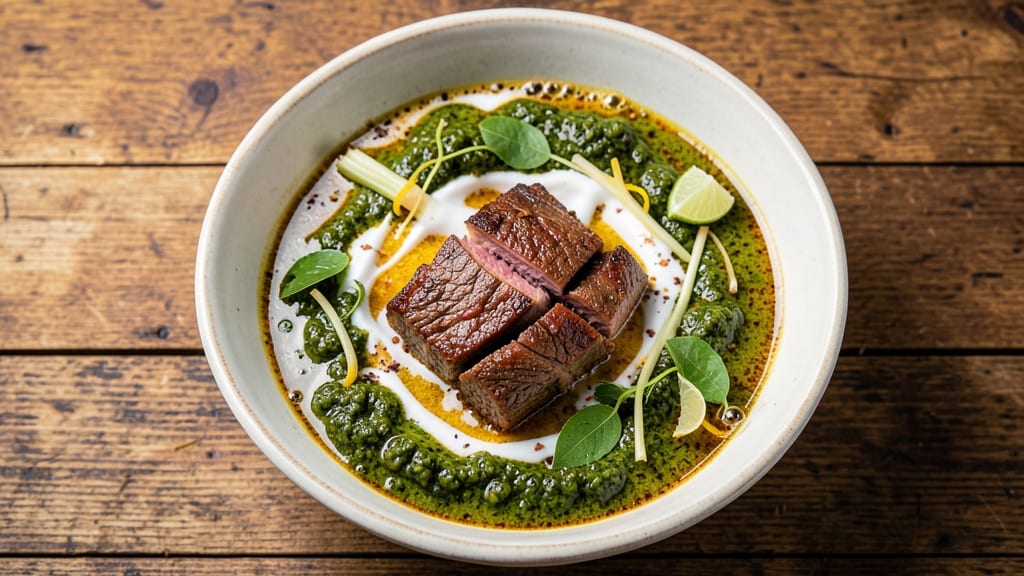
This authentic Thai green beef curry recipe transports you straight to Bangkok’s bustling street markets with its vibrant green paste and perfectly balanced heat. The secret lies in the curry paste—freshly ground galangal, lemongrass, kaffir lime leaves, and Thai chilies create that signature aromatic depth.
I’ve perfected this version over years of testing, ensuring the beef stays tender while the coconut milk achieves that signature creamy texture without overpowering the herbs.
The key to authenticity is patience: letting the paste bloom in hot oil before adding beef and vegetables transforms simple ingredients into something deeply flavorful.
Traditional techniques like stir-frying the beef first lock in juices, while adding a splash of fish sauce and palm sugar at the end balances the dish’s complexity. This isn’t just a curry—it’s a symphony of textures and flavors that restaurant-quality versions can’t match.
By the time you serve it, you’ll have a dish that’s rich yet light, with tender beef swimming in a velvety sauce that’s fragrant with lemongrass and just spicy enough to linger.
The fresh herbs and lime garnish add brightness, cutting through the richness while keeping every bite vibrant. Serve it with jasmine rice to soak up every drop of that aromatic sauce.
Whether you’re feeding a crowd or treating yourself to a weeknight dinner, this recipe delivers restaurant-quality results at home. The beauty of Thai green curry is its adaptability—balance the heat to your preference, swap in shrimp or tofu for vegetarian versions, or add your favorite vegetables. Let’s get cooking!
Ingredients for authentic thai green beef curry
Fresh herbs and aromatic spices that bring Bangkok's street markets to your kitchen.
| Ingredient | Amount | Notes |
|---|---|---|
| Thai Green Curry Paste 🌶️ | 3 tbsp | Store-bought or homemade paste |
| Beef Chuck Roast 🥩 | 1 ½ lb | Cut into 1-inch cubes |
| Coconut Milk 🥥 | 1 can | Full-fat, 13.5 oz can |
| Galangal Root 🌿 | 1 piece | About 3 inches long |
| Lemongrass Stalks 🌿 | 3 whole | Bruised and cut into 2-inch pieces |
| Kaffir Lime Leaves 🍋 | 4 whole | Torn into strips |
| Thai Bird's Eye Chilies 🌶️ | 2 whole | Adjust for heat preference |
| Green Bell Peppers 🧅 | 2 whole | Cut into 1-inch pieces |
| Bamboo Shoots 🌱 | 1 can | 14 oz can, drained |
| Fish Sauce 🍶 | 1 tbsp | Red Boat preferred |
| Palm Sugar 🍯 | 1 ½ tsp | Or substitute brown sugar |
| Vegetable Oil 🫒 | 2 tbsp | For high-heat cooking |
| Fresh Thai Basil Leaves 🌿 | ¼ cup | For garnish |
| Lime Wedges 🍋 | 2 whole | For serving |
| Jasmine Rice 🍚 | 1 ½ cups | Uncooked, for serving |
The curry paste is non-negotiable for authenticity. Maesri or Thai Kitchen brands are solid if you're not making it from scratch—just check the ingredients for no added sugar or preservatives. Galangal and kaffir lime leaves are the soul of this dish, so don't skip them. Asian markets carry fresh galangal (it looks like ginger but with a citrusy kick), and kaffir lime leaves are usually in the freezer section if your grocery store carries them. For the beef, chuck roast stays tender better than sirloin—cut it into even 1-inch cubes so it cooks uniformly. If you can't find galangal, extra ginger plus a splash of lime juice gets you close, though purists will notice the difference.
Coconut milk is a game-changer—full-fat only for that velvety texture. The canned version works fine, but if you're feeling fancy, Thai coconut milk brands like Aroy-D have a cleaner flavor. No fish sauce? Soy sauce plus a pinch of sugar mimics the umami, though it won't be identical. The bamboo shoots can be swapped for mushrooms or snap peas if you're out, but they add that signature crunch. For heat control, remove the seeds from the Thai chilies before blending into the paste—keep the whole chilies for garnish if you want extra spice at the table. The palm sugar adds depth; if you can't find it, light brown sugar works in a pinch.
This curry tastes even better the next day as flavors meld. Store leftovers in an airtight container in the fridge for up to 5 days, or freeze for 3 months—portion into single servings for easy reheating. The jasmine rice should be cooked separately and served on the side to soak up the sauce. For extra freshness, garnish each bowl with Thai basil and lime wedges right before serving. Double the recipe if you're feeding a crowd—it reheats beautifully and tastes richer the second time around.
Why You'll Love This Recipe
- One-Pot Magic: I swear by this recipe—just sear the beef, toss in the paste, and let the galangal and lemongrass work their magic. No chopping, no fuss, and the flavors meld while you finish dinner. (Yes, even on a Tuesday night.)
- Flavor Bomb: That first spoonful of coconut milk swirled with green curry paste? Pure satisfaction. The beef gets tender, the galangal adds a zesty kick, and the lemongrass lingers like a secret. It’s the kind of dish that makes you slow down and savor every bite.
- Leftover Hero: This curry tastes better the next day—seriously. I double the batch, freeze half, and pull it out for lazy lunches or when friends drop by. The beef stays rich, the sauce thickens just right, and no one ever guesses it’s reheated.
- Budget-Friendly Feast: Chuck roast stretches for miles, and the paste/coconut milk combo keeps costs low. I’ve fed six people for under $15 without sacrificing depth. Plus, the galangal and lemongrass add restaurant-quality layers for pennies. (Between us, this is my go-to for date nights.)
Step-by-step instructions for authentic Thai green beef curry
Here's how to build this vibrant curry with perfect balance—where aromatic herbs meet tender beef.
Prepare the Aromatics and Beef Base
Heat the 2 tablespoons vegetable oil in a heavy pot over medium-high heat. Add the 3 whole lemongrass stalks (bruised and cut) and 1 piece galangal root (sliced into ¼-inch pieces). Cook for 3-4 minutes until the galangal softens and releases its citrusy aroma—you'll smell it before you see it.
Add the 2 whole Thai bird's eye chilies (whole, not chopped) and 4 whole kaffir lime leaves (torn). Stir for 30 seconds until the chilies darken slightly. This quick sear intensifies their heat without burning them. Immediately add the 3 tablespoons Thai green curry paste and stir continuously for 2 minutes until it darkens and becomes fragrant.
Brown the Beef and Build the Curry
Push the aromatics to one side of the pot and add the 1.5 lb beef chuck roast (cut into 1-inch cubes) in a single layer. Let it sear undisturbed for 3-4 minutes until deep golden brown on all sides. This Maillard reaction creates the rich foundation for your curry.
Once browned, stir the beef to coat in the paste, then add 1 can coconut milk (full-fat). Bring to a gentle simmer, then reduce heat to medium-low. Let it cook uncovered for 20 minutes, stirring occasionally, until the beef is tender and the sauce thickens slightly. The curry should smell like a Thai market—herbal, spicy, and coconutty.
Add Vegetables and Season
Add the 2 whole green bell peppers (cut into 1-inch pieces) and 1 can bamboo shoots (drained). Stir gently to distribute the vegetables evenly. Cook for 5-6 minutes until the peppers soften slightly but still retain their shape—you want them to hold their texture, not turn mushy.
In a small bowl, mix together the 1 tablespoon fish sauce and 1.5 teaspoons palm sugar. Pour this mixture into the curry and stir well. Taste and adjust—you want the balance of sweet, salty, and spicy to harmonize. The fish sauce should brighten the flavors while the palm sugar rounds out the heat.
Finish and Serve
Remove from heat and let the curry rest for 5 minutes. This allows the flavors to meld completely. Stir in the 0.25 cup fresh Thai basil leaves just before serving—adding them too early will make them wilt in the hot liquid.
Serve the curry over 1.5 cups cooked jasmine rice (prepared separately) and garnish with 2 whole lime wedges. The lime adds a bright contrast to the rich, spicy curry. For best results, serve immediately while the aromas are at their peak and the rice is still warm.
Pro Tips For Making Authentic Thai Green Beef Curry
- Bloom the Paste First: After burning three batches where the curry tasted raw and bitter, I finally learned to bloom the green curry paste in oil for 3-4 minutes before adding anything else. This releases the flavors and prevents that harsh, underdeveloped taste—no, it doesn’t mean you’re supposed to cook it until it’s black.
- Slice the Galangal Thin: I used to just chop galangal into rough chunks, thinking it’d soften enough. Wrong. Thinly slice it—almost like matchsticks—and it actually infuses the coconut milk with that bright, citrusy kick instead of just sitting there as a chewy afterthought.
- Simmer the Beef Low: Chuck roast needs patience—don’t rush the simmer. After 45 minutes of gentle bubbling at low heat, the meat will fall apart with just a fork, and the broth will be rich enough to coat a spoon. Skimp on time, and you’ll end up with tough, flavorless chunks.
- Strain the Coconut Milk: Sounds weird, but it works: After adding coconut milk, let the curry simmer uncovered for 10 minutes, then strain it through a fine-mesh sieve lined with cheesecloth. This removes the gritty residue that makes cheap canned milk taste off, giving you that silky, restaurant-quality texture.
Serving suggestions for this recipe
Rice Pairing Essentials
Jasmine rice is the traditional choice for Thai green curry, and for good reason—its delicate floral aroma and slightly sticky texture soak up the vibrant sauce beautifully.
Cook 1.5 cups uncooked jasmine rice (about 3 cups cooked) using a 1:1.5 rice-to-water ratio, and steam until tender but still slightly firm. For extra fluffiness, spread the rice on a tray after cooking to cool slightly before serving.
I like to serve it in individual bowls so everyone can scoop up that aromatic sauce. 🍚
Fresh Garnishes Matter
Fresh Thai basil and lime wedges aren’t just decoration—they’re flavor boosters. Tuck ¼ cup Thai basil leaves into the curry just before serving so they stay vibrant, and squeeze a wedge of lime over each portion to cut through the richness.
For an extra touch, sprinkle toasted sesame seeds or crushed peanuts on top for crunch and nutty depth. The lime also balances the heat beautifully.
Crunchy Sides to Serve
Thai green curry tastes even better with a crisp contrast. Serve with steamed bok choy or Chinese broccoli on the side—their slight bitterness complements the creamy curry. For extra texture, add quick-pickled cucumbers (slice cucumbers thin, toss with rice vinegar, sugar, and salt) or crispy fried shallots as a garnish.
These sides keep the meal light and refreshing.
Beverage Pairings
A cold Thai iced tea (like Cha Yen) is the classic pairing—its sweet, creamy notes contrast perfectly with the spicy curry. For a non-alcoholic option, try sparkling lime soda to cleanse your palate between bites.
If you prefer beer, a light lager like Singha or a crisp Thai wheat beer balances the heat without overpowering the dish. Avoid heavy, malty beers that might clash with the delicate herbs. 🍺
Leftovers Strategy
This curry tastes even better the next day as flavors meld. Store leftovers in an airtight container in the fridge for up to 5 days. Reheat gently on the stove with a splash of water or coconut milk to restore creaminess.
For a quick meal, serve with steamed rice and a side of cucumber salad. The flavors actually deepen overnight, making it perfect for lunch the next day.
Family-Friendly Adjustments
For kids or sensitive eaters, set up a "build-your-own" station with mild curry (reduce chilies), plain jasmine rice, and toppings like shredded carrots, steamed snap peas, and crumbled feta cheese.
Let everyone customize their bowl—it’s a fun way to introduce flavors while keeping it approachable. The curry’s natural sweetness from palm sugar makes it kid-friendly too! 💛
Nutrition facts
Frequently asked questions
Can I substitute regular ginger for galangal?
Yes, but the flavor won't be identical. Use 1 teaspoon ground ginger plus ½ teaspoon lime zest per 1-inch piece of galangal. Galangal has a citrusy, peppery kick that's harder to replicate—it's the secret behind authentic green curry's depth. For best results, find fresh galangal at Asian markets.
How do I make this curry less spicy?
Reduce the Thai chilies to just 1 whole chili (seeds removed) and use 1 teaspoon less curry paste. For extra mildness, add ½ cup coconut milk at the end to dilute the heat. Always taste as you go—you can adjust with more coconut milk or a pinch of sugar to balance.
What's the best cut of beef for this recipe?
Chuck roast is ideal—it stays tender while developing rich flavor. Avoid lean cuts like sirloin, which can dry out. If you prefer, beef short ribs work beautifully too, though they require 10 extra minutes of simmering. Always cut into 1-inch cubes for even cooking.
Can I make the curry paste from scratch?
Blend 2 stalks lemongrass, 1-inch galangal, 2 Thai chilies, 4 kaffir lime leaves, 1 shallot, 1 tbsp coriander seeds, and 1 tsp cumin. Toast the dry spices first, then blend with wet ingredients until smooth. Store in an airtight container in the fridge for 1 week or freeze for 3 months.
Why did my curry turn out watery?
This usually happens from adding too much coconut milk or not reducing the sauce enough. Simmer uncovered for 5-10 extra minutes to thicken, or stir in 1 tablespoon cornstarch mixed with water. For next time, use 1 can full-fat coconut milk and reduce heat to medium-low after adding beef.