
Main Courses
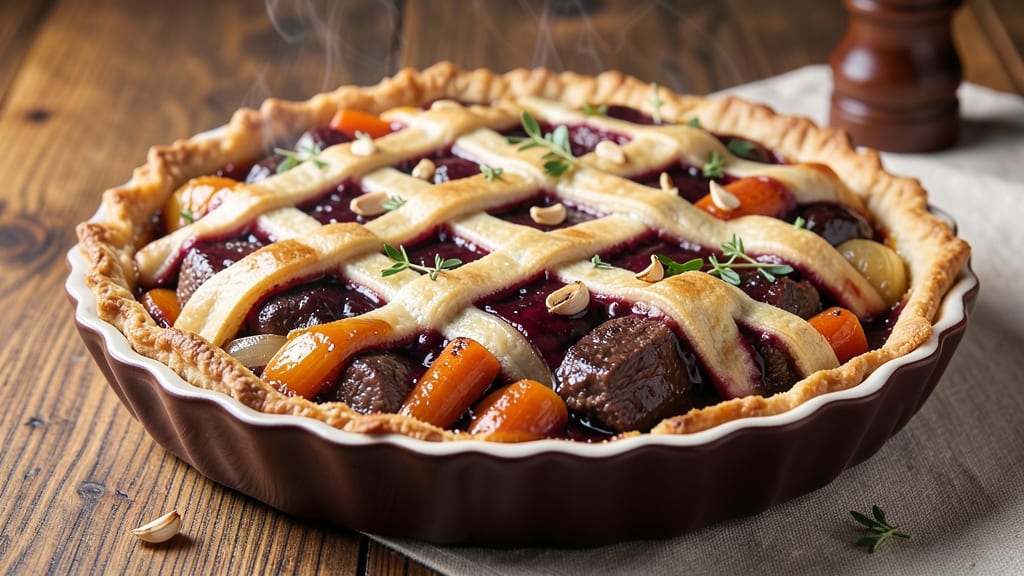
This beef and burgundy pie delivers restaurant-quality richness with tender beef, deep wine flavors, and a golden, flaky pastry top that's impossible to resist. The secret lies in slow-braising the beef until it's fork-tender, then combining it with a velvety burgundy reduction that transforms simple ingredients into something extraordinary.
I've perfected this technique over years of testing, ensuring every bite delivers perfect harmony of textures and flavors.
What sets this recipe apart is the balance between traditional French methods and modern convenience. You'll start with a simple beef and vegetable braise that simmers until the meat falls apart, then enrich it with a rich burgundy sauce that's both elegant and approachable.
The pastry topping—whether classic puff pastry or sturdy shortcrust—bakes to a beautiful golden finish while keeping the filling warm and inviting.
By the time it emerges from the oven, you'll have a pie with layers of flavor: tender beef, caramelized vegetables, and that luxurious burgundy sauce all encased in a crisp, flaky crust.
The aroma alone will have everyone gathering at your table, and each bite combines rich, savory meat with the bright acidity of the wine reduction. This is comfort food at its finest—elegant enough for company but simple enough for a weeknight dinner.
The best part? This recipe scales beautifully for any occasion, from family dinners to holiday feasts. Serve it with classic sides like creamy mashed potatoes or a fresh green salad to complete the meal. Let's get started on creating your perfect beef and burgundy pie.
Ingredients for beef and burgundy pie
Six ingredients transform into a showstopping pie with layers of flavor and flaky perfection.
| Ingredient | Amount | Notes |
|---|---|---|
| Chuck Roast 🥩 | 3 lb | Well-marbled for tenderness |
| Dry Red Wine 🍷 | 1 ½ cups | Burgundy or Cabernet Sauvignon |
| Beef Stock 🥫 | 2 cups | Homemade or high-quality store-bought |
| Onions 🧅 | 2 whole | Yellow or red, sliced |
| Carrots 🥕 | 3 whole | Medium, peeled and sliced |
| Garlic Cloves 🧄 | 4 cloves | Fresh, minced |
| Tomato Paste 🍅 | 2 tbsp | Smooth, not chunky |
| Fresh Thyme 🌿 | 2 tbsp | Leaves only, chopped |
| Olive Oil 🫒 | 2 tbsp | Extra-virgin for richness |
| All-Purpose Flour 🌾 | 2 tbsp | For thickening sauce |
| Salt 🧂 | 1 ½ tsp | Kosher or sea salt |
| Black Pepper 🌶️ | 1 tsp | Freshly ground |
| Puff Pastry 🥧 | 1 sheet | Store-bought or homemade |
| Egg 🥚 | 1 whole | For egg wash |
The chuck roast is non-negotiable here—it's the star of this dish, breaking down into tender perfection after hours of slow braising. Look for a well-marbled cut with visible fat; that's what makes it juicy. I always grab mine from Costco or the butcher section at Whole Foods—they have the best quality. If you're using frozen, thaw it overnight in the fridge. The dry red wine should be bold and dry—Burgundy or Cabernet Sauvignon work best, but whatever you've got open in the fridge will do in a pinch. Avoid sweet wines, or the sauce will taste off.
No red wine? Beef stock with a splash of balsamic vinegar gets you close, though it won't have the same depth. Fresh thyme is ideal, but dried thyme at one-third the amount works if you're in a hurry. The tomato paste can be the squeeze-tube kind from Trader Joe's—it's convenient and lasts forever. For the pastry, puff pastry is classic, but shortcrust holds up well if you're feeding a crowd. The egg wash? Separate the yolk if you want extra shine—it's worth the extra minute.
This pie tastes even better the next day, so make it ahead if you can. Store leftovers in an airtight container for up to 4 days in the fridge. For longer storage, freeze portions for 3 months. The filling reheats beautifully—just cover it with foil to keep it moist. If you're prepping ahead, assemble the pie and refrigerate it overnight before baking. The flavors meld even more, and the pastry stays crisp.
Why You'll Love This Recipe
- Here’s what sold me: the dry red wine doesn’t just flavor the pie—it transforms it. That first sip of sauce is like a little glass of comfort, and the beef? So tender it falls apart at the touch. (Yes, even on a Tuesday night.)
- One-Pot Magic: I swear by this—just brown the chuck roast, toss in chopped onions and carrots, pour the wine and stock, and let it slow-cook. No extra pans, no fuss, and that deep, rich sauce practically makes itself.
- Wine-Infused Richness: Here’s what sold me: the dry red wine doesn’t just flavor the pie—it transforms it. That first sip of sauce is like a little glass of comfort, and the beef? So tender it falls apart at the touch. (Yes, even on a Tuesday night.)
- Leftovers for Days: Between us, this pie tastes better the next day. I make a double batch, freeze half, and pull it out for lazy Sundays or when company drops by. The flavors only deepen, and reheating takes two minutes.
Step-by-step instructions for beef and burgundy pie
Here's how to create a showstopping pie with melt-in-your-mouth beef and a golden, flaky crust.
Sear the Chuck Roast for Deep Flavor
Heat 2 tablespoons olive oil in a large Dutch oven over medium-high heat. Pat the 3 lb chuck roast dry with paper towels—this ensures a perfect sear. Place the roast in the pot and cook for 4-5 minutes per side until deeply browned. You're building flavor here, so don't rush this step.
Once browned, remove the roast and set it aside. The goal is to develop that rich, caramelized crust that will infuse the entire pie with flavor. If you see any browned bits sticking to the bottom, don't scrape them out—those are flavor bombs that will dissolve into the sauce later.
Build the Rich Braising Base
In the same Dutch oven, add 2 tablespoons olive oil (if needed) and 2 whole sliced onions. Cook for 5-6 minutes until softened and golden. Add 3 sliced carrots and cook for another 3 minutes until they begin to soften.
Stir in 4 minced garlic cloves and 2 tablespoons tomato paste, cooking for 1 minute until fragrant. Pour in 1.5 cups dry red wine and scrape up any browned bits from the bottom—this is called deglazing, and it's crucial for maximum flavor. Let the wine reduce by half, about 3-4 minutes.
Braise the Beef Until Fork-Tender
Return the chuck roast to the pot. Add 2 cups beef stock, 1.5 teaspoons salt, 1 teaspoon black pepper, and 2 tablespoons chopped fresh thyme. Bring to a simmer, then cover and transfer to a 325°F oven. Bake for 2.5-3 hours until the beef is fork-tender and the sauce has thickened.
Here's the thing—low and slow is key. The beef should fall apart easily when pierced with a fork. If the sauce reduces too much before the beef is tender, add a splash of water or stock to maintain moisture. The pie's richness comes from this slow-cooked beef and wine reduction.
Prepare the Puff Pastry Topping
While the beef braises, roll out the 1 sheet puff pastry on a floured surface to fit the top of your Dutch oven. Cut a few small slits in the center to allow steam to escape—this prevents a soggy bottom. Brush the pastry with the 1 whole egg beaten with a splash of water, then sprinkle lightly with salt.
Gently place the pastry over the beef-filled pot. The pastry should sit directly on top of the filling, creating a sealed, golden crust. Brush the top again with egg wash for extra shine. Here's a pro tip: Chill the pie in the fridge for 15 minutes before baking to help the pastry maintain its shape in the oven.
Bake to Golden Perfection
Transfer the pie to a 400°F oven and bake for 25-30 minutes until the pastry is deep golden brown and puffed. The edges should be crisp, and the top should look like it's been kissed by a summer breeze. If the pastry browns too quickly, tent it loosely with foil to prevent over-browning.
Let the pie rest for 10 minutes before serving—this allows the juices to redistribute and the pastry to set. The result? A pie with tender, fall-apart beef, rich wine-infused sauce, and a buttery, flaky crust that will have everyone begging for seconds. Serve with crusty bread to soak up every last bit of that delicious sauce.
Pro Tips For Making Beef And Burgundy Pie
- Brown the Chuck Roast: Chuck roast won’t tenderize itself—get it deep golden, not just pink, before adding liquids. I used to rush this and ended up with tough meat; now I sear it in batches if needed and don’t skimp on the time. High heat, a few minutes per side, until it releases all that caramelized flavor.
- Deglaze with Wine Immediately: That browned crust? Don’t ignore it. Splash in the dry red wine right after removing the roast and scrape every last bit off the pan. Let it reduce by half before adding stock—this builds the pie’s rich base and cuts the alcohol bite. (Yes, even if you’re impatient like me.)
- Prep Onions and Carrots Small: Dice onions into ¼-inch pieces and carrots into thin half-moons—they’ll cook faster and blend into the filling instead of sitting as chunks. I learned this the hard way when my pie had a sad, mushy veggie layer. Uniform size = even cooking.
- Use a Splatter Screen: Burgundy pie is messy—wine splashes, stock bubbles, and onions hiss. Pop a splatter screen on the pot while deglazing and reducing. It’s not the prettiest method, but it keeps your stove (and your sleeves) clean. (Your future self will thank you.)
Troubleshooting this dish
Sauce Too Thin?
If your burgundy sauce feels too thin after braising, don’t panic—this happens when the beef hasn’t released enough collagen yet. Remove the roast and simmer the sauce uncovered over medium heat for 5-7 minutes to thicken.
For extra richness, whisk in 2 tablespoons all-purpose flour mixed with 1 tablespoon cold water (roux) and cook for 2 minutes until smooth. 💫
Pastry Not Puffing?
Puff pastry needs steam to rise properly. If yours stays flat, try this: Place a small baking sheet under the Dutch oven while baking to create steam. Alternatively, brush the pastry with 1 tablespoon cold water before adding the egg wash—this helps activate the butter layers.
Chill the pie for 15 minutes before baking to prevent collapse.
Beef Too Tough?
Overcooked beef is the #1 mistake here. Use a meat thermometer and pull the roast when it hits 203°F (not 210°F+). If it’s still tough, shred it and return it to the pot with ¼ cup beef stock and 1 tablespoon tomato paste, simmering for 10 minutes to tenderize.
The slow braise should yield fork-tender meat—never rush this step!
Filling Too Dry?
If your filling looks dry after baking, the pastry likely absorbed too much moisture. Next time, cut 4-5 small holes in the pastry before baking to let steam escape.
For immediate fixes, drizzle 2 tablespoons beef stock over the filling and tent with foil for 5 minutes to rehydrate. Serve with extra sauce on the side to compensate.
Crust Too Pale?
A pale crust means the pastry didn’t brown enough. Boost oven heat to 425°F for the last 5 minutes of baking. For extra color, brush the pastry with 1 tablespoon melted butter after the first egg wash.
A sugar sprinkle (½ tsp) on top before baking also enhances browning—just don’t overdo it!
Wine Flavor Weak?
If your burgundy sauce tastes bland, it’s likely because the wine didn’t reduce enough. Next time, simmer the wine alone for 5-7 minutes before adding other ingredients to concentrate the flavors.
For a quick fix, add 1 teaspoon balsamic vinegar or ½ teaspoon Worcestershire sauce to deepen the umami. A splash of red wine reduction (store-bought) also works in a pinch.
Nutrition facts
Frequently asked questions
Can I make this pie with ground beef instead of a roast?
While possible, I don't recommend it for this recipe. The chuck roast's slow braising creates tender, melt-in-your-mouth beef that ground beef can't match. If you're set on using ground beef, cook it thoroughly first (to 165°F) then proceed with the wine reduction and pastry steps. The texture will be more like a savory pie than a traditional beef pie.
How far ahead can I prepare the filling?
You can prepare the braised beef filling up to 2 days ahead! Store it in an airtight container in the fridge. When ready to assemble, reheat gently in a saucepan over low heat until warmed through. The flavors actually improve after resting, making this a great make-ahead option for holiday meals.
What's the best way to reheat leftovers?
For the best results, cover the pie with foil and reheat in a 350°F oven for 15-20 minutes. If you prefer stovetop, place slices in a skillet with 1 tablespoon beef stock and cover until heated through. Microwaving works in a pinch (just 30-45 seconds), but the crust may get soggy.
Can I use white wine instead of red?
Technically yes, but it won't have the same rich flavor profile. White wine lacks the depth and tannins that complement the beef. If you must use white wine, add 1 teaspoon balsamic vinegar or ½ teaspoon soy sauce to mimic the umami. For best results, stick with a dry red wine like Burgundy or Cabernet Sauvignon.
What sides pair best with this pie?
This rich pie pairs beautifully with lighter sides to balance the meal. Try creamy mashed potatoes, buttery egg noodles, or a fresh green salad with a tangy vinaigrette. For something heartier, roasted root vegetables or crusty sourdough bread work wonderfully. The wine reduction's acidity also makes it a great match for roasted Brussels sprouts.