
Main Courses
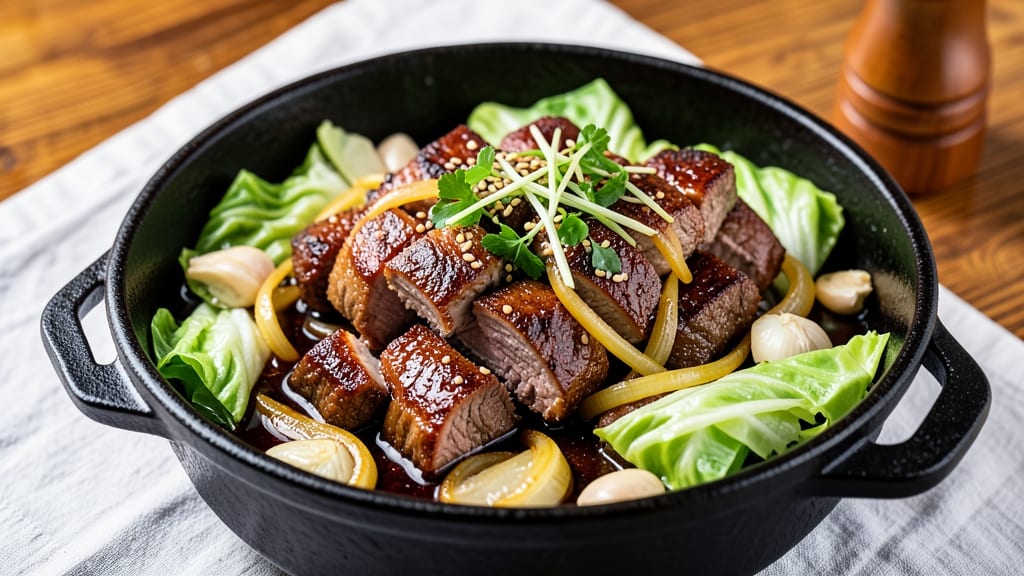
This beef and cabbage hot pot recipe transforms tough cuts into melt-in-your-mouth tenderness with a rich, aromatic broth that simmers for hours. The secret lies in layering flavors—caramelized beef, tender cabbage, and a slow-cooked base of ginger, garlic, and soy—creating a dish that’s both comforting and deeply satisfying.
Unlike quick stir-fries, this method builds depth over time, turning simple ingredients into something restaurant-worthy.
The beauty of hot pot is its versatility—whether you lean into Japanese nabe with miso undertones, Korean jjigae with gochujang heat, or a classic Chinese-style broth.
Here, we focus on a balanced approach: a hearty beef stew where cabbage softens just enough to absorb every savory note while staying slightly crisp at the edges. The broth reduces to a velvety consistency, perfect for ladling over steamed rice or serving alongside crusty bread.
What you’ll end up with is a steaming bowl of slow-simmered beef and cabbage—tender, fragrant, and packed with umami. The cabbage releases its natural sweetness as it cooks, while the beef becomes fork-tender, soaking up the flavors of the broth.
This isn’t just a meal; it’s a sensory experience that brings warmth to any table, especially on chilly evenings when you crave something hearty and nourishing.
The best part? Leftovers reheat beautifully, making it ideal for meal prep or feeding a crowd. Garnish with fresh scallions or a sprinkle of sesame seeds for brightness, and you’ve got a dish that’s equal parts traditional and approachable. Let’s get cooking—your taste buds will thank you.
Ingredients for beef and cabbage hot pot
Sixteen ingredients to create a deeply satisfying beef and cabbage hot pot that simmers into restaurant-quality richness.
| Ingredient | Amount | Notes |
|---|---|---|
| Chuck Roast 🥩 | 2 ½ lb | Cut into 1.5-inch cubes for even cooking |
| Green Cabbage 🥬 | 1 ½ lb | Cut into wedges, core removed |
| Yellow Onion 🧅 | 2 whole | Thinly sliced for caramelization |
| Garlic Cloves 🧄 | 8 cloves | Minced for aromatic base |
| Fresh Ginger 🌿 | ½ cup | Finely grated, skin on |
| Soy Sauce 🍶 | ½ cup | Use light or dark variety |
| Dry Sherry 🍷 | ¼ cup | Or substitute with dry white wine |
| Sesame Oil 🫒 | 1 tbsp | Toasted for nutty aroma |
| Dried Shiitake Mushrooms 🍄 | 4 whole | Rehydrated for umami depth |
| Fresh Scallions 🧅 | ¼ cup | Sliced for garnish |
| Black Peppercorns 🌶️ | 1 tsp | Freshly cracked for heat |
| Diamond Crystal Kosher Salt 🧂 | 1 ½ tsp | For seasoning and broth |
| Vegetable Oil 🫒 | 2 tbsp | For initial searing |
| Asian Pearl Onions 🧅 | 2 whole | Quartered for sweet crunch |
| Sesame Seeds 🌾 | 1 tbsp | Toasted for garnish |
The beef is the foundation—chuck roast is ideal for its fat content, which renders into flavorful drippings. Grab it from the butcher section, not pre-cubed, so you can control the size (aim for 1.5-inch cubes). Trader Joe's or Whole Foods often carry high-quality cuts with good marbling, which is key for tenderness. The cabbage should be firm and crisp—avoid any with yellowing leaves. For the mushrooms, dried shiitake from Asian markets adds an earthy depth that fresh can't match. If you can't find them, rehydrated cremini mushrooms work in a pinch, though they won't have the same umami punch.
No sherry? Dry white wine or extra chicken broth works perfectly—just add a splash of balsamic vinegar for acidity. The ginger needs to be fresh; jarred ginger loses its zing. If you're short on time, microwave the grated ginger for 30 secondsAsian pearl onions stay sweet when cooked, but regular yellow onions work fine too. The soy sauce can be swapped for coconut aminos if you're avoiding gluten, though the flavor will be slightly different. And if you're feeling adventurous, add a dash of gochujang for Korean-inspired heat.
This dish tastes even better the next day as flavors meld—plan ahead if you're feeding a crowd. Store in an airtight container in the fridge for up to 5 days, or freeze portions for 3 months. For serving, keep the broth warm in a slow cooker on low, and let guests assemble their bowls. The cabbage will soften further as it sits, so add it last if you prefer it slightly crisp. Garnish with fresh scallions and toasted sesame seeds just before serving to keep everything vibrant.
Why You'll Love This Recipe
- I swear by this trick: slice the cabbage thick—like, no knife skills required. The chuck roast practically melts into tender shreds while the onions caramelize, so you’re really just tossing in ingredients and letting them do the work. (Yes, even on a Tuesday night.)
- No-Chop Night: I swear by this trick: slice the cabbage thick—like, no knife skills required. The chuck roast practically melts into tender shreds while the onions caramelize, so you’re really just tossing in ingredients and letting them do the work. (Yes, even on a Tuesday night.)
- Ginger-Garlic Magic: That first whiff of sizzling garlic and fresh ginger hitting the pan? It’s like a flavor hug. The ginger keeps things bright while the garlic deepens as it cooks—simple spices that turn this into something ridiculously good without fancy seasonings.
- Leftovers? No Problem: This dish tastes just as good reheated the next day—better, even. The beef gets more tender, and the cabbage soaks up all the juices. I make a double batch on Sundays because it’s my go-to for packed lunches or a quick dinner when I’m too tired to cook.
Step-by-step instructions for beef and cabbage hot pot
Here's the method that transforms tough chuck roast into melt-in-your-mouth beef while preserving the cabbage's natural sweetness.
Sear the Chuck Roast for Deep Flavor
Heat the 2 tablespoons vegetable oil in a large Dutch oven over medium-high heat until shimmering. Working in batches to avoid crowding, add the 2.5 lb chuck roast cut into 1.5-inch cubes, searing each piece for 2-3 minutes per side until deeply browned. This initial sear creates the Maillard reaction that builds rich, caramelized flavors.
As you sear, I press down gently on the beef cubes during the first minute—this prevents them from curling and ensures even contact with the pan. Once all pieces are golden brown, transfer them to a plate and set aside. The pan will look dark and sticky with fond, which we'll deglaze next.
Build the Aromatic Base
In the same Dutch oven, reduce heat to medium and add 2 tablespoons vegetable oil if needed. Add the 2 whole yellow onion (thinly sliced) and cook for 5-6 minutes until softened and beginning to caramelize. Add the 8 cloves garlic cloves (minced) and 0.5 cup fresh ginger (finely grated) and cook for 1 minute until fragrant.
Here's where the umami magic happens: Add the 4 whole dried shiitake mushrooms (rehydrated and sliced) and cook for 3 minutes to release their earthy flavors. Stir in the 1 teaspoon black peppercorns (freshly cracked) and 1.5 teaspoons diamond crystal kosher salt, letting them toast for 30 seconds until aromatic. This aromatic base forms the flavor foundation for the entire dish.
Deglaze and Simmer the Beef
Pour in the 0.5 cup soy sauce and 0.25 cup dry sherry, scraping up all the browned bits from the bottom of the pot with a wooden spoon. This deglazing step captures all that concentrated beef flavor that would otherwise burn. Return the beef to the pot and bring everything to a simmer over medium-high heat. Once simmering, reduce heat to low and cover partially.
Let the beef simmer gently for 1.5 hours, turning the pieces occasionally. You'll notice the beef releases its collagen into the liquid, creating a rich, velvety broth. The cabbage will soften beautifully in this flavorful liquid. If the liquid reduces too much before the beef is tender, add ½ cup water to maintain moisture.
Add Cabbage and Pearl Onions
After the beef has simmered for 1.5 hours, add the 1.5 lb green cabbage (cut into wedges) and 2 whole asian pearl onions (quartered). The cabbage should be added when the beef is nearly tender—this ensures it cooks just until tender-crisp without turning to mush. Stir gently to combine and return to a simmer over low heat for 20-25 minutes.
The cabbage should be tender but still hold its shape with a slight bite. The pearl onions should soften while maintaining their sweetness. Taste the broth and adjust seasoning if needed—you might need a touch more soy sauce or salt to balance the flavors. The dish should be rich, savory, and slightly sweet from the cabbage and onions.
Finish with Sesame Oil and Garnish
Remove the pot from heat and stir in the 1 tablespoon sesame oil and 1 tablespoon toasted sesame seeds. The sesame oil adds a nutty aroma that complements the beef and cabbage beautifully. Let the hot pot sit off heat for 5 minutes to allow the flavors to meld together.
Ladle the hot pot into bowls, garnishing each serving with 0.25 cup fresh scallions (sliced) for a fresh contrast. Serve immediately with steamed rice to soak up the flavorful broth. The beef should be fork-tender with a rich, caramelized exterior, while the cabbage remains vibrant and slightly crisp. Each bite delivers perfect balance between the tender beef, sweet cabbage, and aromatic broth.
Pro Tips For Making Beef And Cabbage Hot Pot
- SEAR THE CHUCK ROAST FIRST: I learned this the hard way—skipping the sear means flavorless beef. Pat the chuck roast very dry with paper towels, then hit it with high heat in a pot until deep brown on all sides (about 3-4 minutes per side). That crust locks in juices and builds depth that simmering alone can’t match.
- SHRED THE CABBAGE THIN: My grandmother swore by this, and she was right: thick cabbage wedges stay tough. Instead, slice the cabbage paper-thin—almost like shredding lettuce—so it softens fast in the broth. A sharp knife and steady hand make this easier than it sounds.
- ADD GINGER AND GARLIC LAST: Sounds weird, but it works: toss the sliced ginger and minced garlic into the pot just before serving. If you add them too early, they’ll turn bitter and lose their bright punch. A quick 30-second toss at the end keeps them fresh and fragrant.
- USE COLD WATER FOR SIMMERING: I was skeptical until I tried it—starting with cold water (not hot) prevents the beef from cooking too fast on the surface while the center stays tough. Bring it to a boil once, then reduce to a gentle simmer. The chuck roast will melt in your mouth, not turn to shoe leather.
Regional styles of this dish
Japanese Nabe Style
In Japan, this dish becomes a comforting nabe where the beef and cabbage simmer in a delicate broth infused with mirin and dashi stock.
I swap the sherry for 3 tablespoons mirin and add 1 cup dashi stock (or substitute with extra water + 1 tsp dashi powder), creating a lighter, more translucent broth. Garnish with thinly sliced green onions and a sprinkle of toasted sesame seeds for that authentic touch.
Serve with steamed rice and a side of miso soup for a complete Japanese meal. 🍜
Korean Jjigae Twist
For a Korean-inspired jjigae, I add 1 tablespoon gochujang (Korean chili paste) to the broth and a splash of 1 tablespoon rice vinegar for tanginess. The cabbage stays whole but is cut into larger wedges to hold up better.
Top with sliced Korean radish and chopped nori strips for extra texture. This version is heartier and packed with bold, spicy-sweet flavors that balance the tender beef. 🌶️
Chinese Hot Pot Adaptation
The Chinese approach focuses on a thicker, oilier broth with a deep umami flavor. I add 1 tablespoon fermented black beans (soaked and rinsed) to the searing stage and finish with 1 teaspoon sugar to caramelize the cabbage slightly.
Serve with steamed buns or congee on the side. The key is a longer simmer time—let it cook for 2-3 hours to develop that rich, savory depth. 🥢
Vietnamese Pho-Inspired
For a Vietnamese twist, I infuse the broth with 1 cinnamon stick, 3 star anise pods, and 1-inch piece of ginger (simmered for 10 minutes before adding beef). The cabbage is replaced with bok choy and thinly sliced daikon for a lighter, fresher profile.
Garnish with fresh cilantro and lime wedges to brighten the dish. This version is lighter but equally aromatic. 🌿
Thai-Inspired Curry Hot Pot
To give it a Thai flair, I stir in 1 tablespoon red curry paste (like Maesri) with the beef and add 1 cup coconut milk at the end for creaminess. The cabbage is swapped for Thai eggplant and baby corn.
Garnish with fresh Thai basil and crushed peanuts for crunch. This version is rich, spicy, and perfect with jasmine rice. 🌶️
Modern Fusion Twist
For a contemporary take, I add 1 cup roasted sweet potatoes (tossed in 1 tbsp smoked paprika) and a splash of 1 tbsp balsamic vinegar to the broth.
Top with avocado slices and crumbled feta cheese for a sweet-savory contrast. This fusion version is perfect for a cozy dinner party with a modern twist. 💫
Nutrition facts
Frequently asked questions
Can I use a different cut of beef for this hot pot?
While chuck roast is ideal for its fat content and tenderness, you can substitute with brisket or short ribs for extra richness. For leaner options like sirloin, add 1 tablespoon cornstarch to the broth to help thicken it. Just remember—fattier cuts yield more flavorful broth, so adjust cooking time accordingly (brisket may need 3-4 hours to become tender).
How do I prevent the cabbage from turning mushy?
Add the cabbage only when the beef is nearly tender (20-25 minutes before serving). Cut it into large wedges (not small pieces) so it cooks evenly. If you're worried about overcooking, start with 10 minutes of simmering and check for doneness. The cabbage should be tender but still hold its shape with a slight bite.
Can I make this recipe in a slow cooker?
Yes! Transfer the seared beef and aromatic base to a 6-quart slow cooker, then add the soy sauce, sherry, and 2 cups water. Cook on low for 6-8 hours or high for 4-5 hours. Add the cabbage and onions during the last 30 minutes of cooking. The slow cooker method yields an even more tender beef and deeply flavorful broth.
What can I serve with beef and cabbage hot pot?
This hearty dish pairs perfectly with steamed jasmine rice or crusty bread to soak up the broth. For extra flair, add a side of pickled vegetables (like kimchi or quick-pickled radishes) for tangy contrast. Garnish with toasted sesame seeds and fresh scallions to brighten each bowl.
How do I reheat leftovers without drying out the beef?
Reheat gently in a pot with 2-3 tablespoons broth or water over low heat for 10-15 minutes, stirring occasionally. Avoid microwaving—it can make the beef tough. For extra moisture, cover the pot with a lid and let the steam work its magic. Leftovers keep well in the fridge for 5 days or frozen for 3 months.