
Soups & Stews
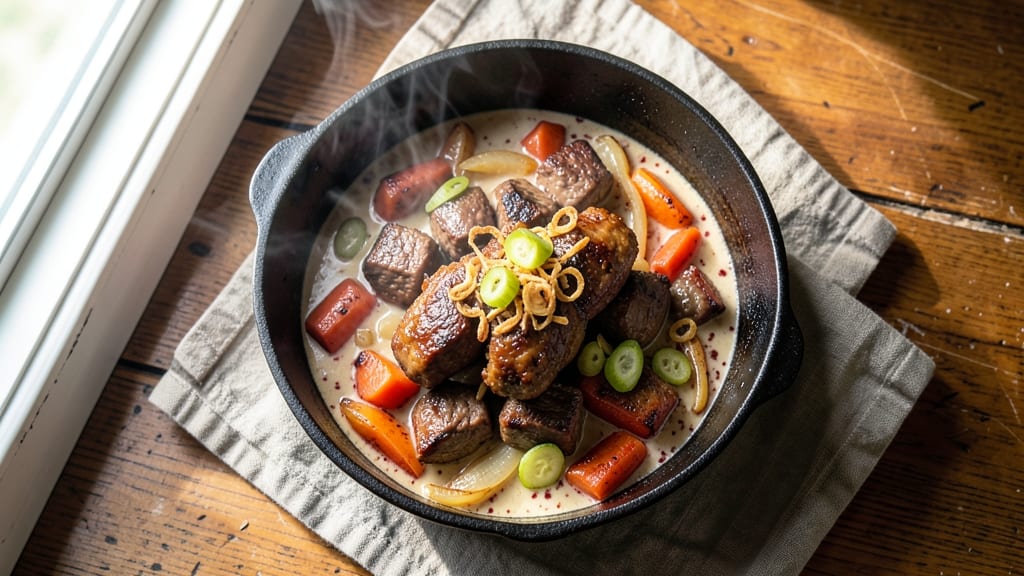
This beef and horseradish stew delivers creamy richness with a bold horseradish kick that lingers long after the last bite. The secret lies in slow-cooked beef that melts in your mouth, balanced by the sharp, peppery punch of horseradish and the velvety depth of a well-built sauce.
After years of perfecting this classic, I’ve developed a method that works equally well on the stovetop or in an Instant Pot—no fancy equipment required, just deep, satisfying flavor.
The beauty of this recipe is in its layers: tender chunks of beef simmered until fork-tender, vegetables that soften just enough to soak up the sauce, and a finish that’s both creamy and bright. The horseradish isn’t overpowering—just enough to cut through the richness and add a signature tang.
What starts as a simple pot of ingredients transforms into a hearty, restaurant-worthy stew that tastes even better the next day.
What makes this stew truly special is its versatility. Serve it with crusty bread to soak up every last drop of the sauce, or pair it with mashed potatoes for a comforting meal.
The slow cooking process ensures the beef is fall-apart tender, while the horseradish adds complexity that elevates it beyond basic beef stew. This is the kind of dish that feels like a hug in a bowl—warm, rich, and impossible to resist.
Ready in just 3 hours (or 1 hour in an Instant Pot), this stew is perfect for chilly evenings or gathering friends around the table. The instructions are straightforward, but the results are anything but ordinary. Let’s get cooking—your taste buds will thank you.
Ingredients for beef and horseradish stew
Six hearty ingredients create this rich, spicy stew that tastes even better the next day.
| Ingredient | Amount | Notes |
|---|---|---|
| Beef Chuck Roast 🥩 | 2 ½ lb | Cut into 1.5-inch cubes |
| Yellow Onions 🧅 | 1 whole | Medium size, chopped |
| Carrots 🥕 | 4 medium | Peeled, sliced into rounds |
| Garlic Cloves 🧄 | 4 cloves | Minced, fresh preferred |
| Fresh Horseradish Root 🌿 | 2 tbsp | Grated, adjust for heat |
| All-Purpose Flour 🌾 | 2 tbsp | For roux, all-purpose works |
| Whole Milk 🥛 | 1 cup | Full-fat for creaminess |
| Beef Broth 💧 | 3 cups | Low-sodium preferred |
| Tomato Paste 🍅 | 2 tbsp | Smooth, no sugar added |
| Dried Thyme 🌿 | 1 tsp | Or 1 tbsp fresh thyme |
| Salt 🧂 | 1 ½ tsp | Kosher or sea salt |
| Black Pepper 🌶️ | ½ tsp | Freshly ground preferred |
| Bay Leaves 🌿 | 2 whole | Remove before serving |
| Unsalted Butter 🧈 | 2 tbsp | Cold, for roux |
The beef is non-negotiable here—chuck roast gives you that fall-apart texture. Look for good marbling at Costco or Whole Foods—the meat should feel soft when pressed. If you can't find chuck, brisket works too. Fresh horseradish is key for that signature kick, but jarred horseradish sauce works in a pinch (just cut the amount in half). For the carrots, medium size is perfect—they soften just enough to soak up the sauce without disappearing. The onions? Yellow or red both work, but yellow adds a touch more sweetness.
No fresh horseradish? Crushed red pepper flakes add heat, but you'll lose that signature tang. The milk is crucial for creaminess—whole milk is best, but 2% works if that's what you've got. Short on thyme? Dried oregano at half the amount gets you close. The tomato paste can be any brand, but San Marzano is ideal if you want that sweet, rich flavor. For the roux, don't rush it—cook it until golden brown for that nutty depth. And if you're using an Instant Pot, sauté the veggies first to build flavor before adding the broth.
This stew tastes even better the next day—plan ahead. Store in an airtight container for 4-5 days in the fridge, or freeze for 3 months. The sauce thickens as it cools, so add a splash of milk or broth when reheating. For extra richness, stir in 2 tbsp butter or cream at the end. And if you've got leftovers, turn them into stew sandwiches—trust me, it's a game-changer.
Why You'll Love This Recipe
- One-Pot Magic: I swear by this—no chopping boards, no extra pots. Just toss the chuck roast, onions, and carrots into a Dutch oven, add the garlic and horseradish, and let the slow cook do the work. My hands stay clean, and my kitchen stays quiet.
- Horseradish Kick: That fresh horseradish root? It’s the star. Grated raw into the broth, it gives this stew a sharp, bright punch that cuts through the richness of the beef. Honestly, it’s the kind of flavor that makes you reach for seconds without even thinking.
- Weeknight Workhorse: This stew is my go-to when I’m too tired to plan. Simmer it all day, and it’s ready for dinner—no stress. It’s also the only dish I can make when my partner’s out of town and I’m craving something hearty but not fussy.
- Budget-Friendly Feast: A chuck roast stretches for days, and the veggies cost pennies. Here’s what sold me—this recipe feeds four for under $15, and the leftovers? Even better the next day. (Yes, even on a Tuesday night.)
Step-by-step instructions for beef and horseradish stew
Here's how to build a rich, velvety stew with that signature horseradish kick and tender beef.
Sear the Beef for Deep Flavor
Heat a large Dutch oven over medium-high heat. Add the 2.5 lb beef chuck roast cut into 1.5-inch cubes and sear undisturbed for 3-4 minutes until deeply browned on all sides. This step develops the Maillard reaction, creating that caramelized crust that forms the stew's foundation.
Work in batches if needed to avoid crowding the pan. Once browned, transfer the beef to a plate and set aside. You'll want to keep those browned bits in the pan—they're pure flavor. Add the 2 tbsp unsalted butter and let it melt, then add the 1 whole yellow onion and 4 medium carrots sliced into rounds. Cook for 5 minutes until softened but not browned.
Build the Horseradish-Rich Base
Add the 4 cloves minced garlic and 2 tbsp tomato paste to the pot, stirring to coat the vegetables. Cook for 1 minute until fragrant. Sprinkle in the 2 tbsp all-purpose flour and stir vigorously for 2 minutes to create a light roux—this will thicken your stew beautifully.
Pour in the 3 cups beef broth and scrape up any browned bits from the bottom of the pot. Add the 2 tbsp grated fresh horseradish root, 1 tsp dried thyme, 1.5 tsp salt, and 0.5 tsp black pepper. Bring to a gentle boil, then return the beef to the pot. Add the 2 whole bay leaves and reduce heat to low. Cover and let it simmer for 1 hour, stirring occasionally.
Finish with Creamy Horseradish Depth
After the initial simmer, stir in the 1 cup whole milk to create that signature creamy texture. The milk will blend seamlessly with the horseradish, creating a velvety sauce with a subtle kick. Return to a gentle simmer and cook uncovered for 20-25 minutes until the beef is fork-tender and the sauce has thickened to your desired consistency.
Here's the thing—you want the sauce to coat the back of a spoon but still be light enough to ladle over the beef. If it gets too thick, add a splash of water or broth. Remove the bay leaves before serving, as they can be bitter. Taste and adjust seasoning—you might need a touch more salt or pepper to balance the horseradish's sharpness.
Rest and Serve for Perfect Texture
Let the stew rest for 10 minutes off the heat before serving. This allows the flavors to meld and the sauce to thicken slightly. The beef will continue to tenderize during this time, ensuring each bite is melt-in-your-mouth perfect.
Serve the stew hot with crusty bread or over buttered egg noodles. The combination of creamy sauce, tender beef, and that bright horseradish finish makes this stew unforgettable. Don't forget to taste as you go—this is where you can adjust the horseradish level to suit your crowd's spice tolerance.
Pro Tips For Making Beef And Horseradish Stew
- Sear the Chuck First: I used to skip this step and wondered why my stew tasted more like boiled beef than rich, caramelized flavor. Hit that chuck roast with a hot pan—no oil needed—until it’s deep brown on all sides. The crust locks in moisture and adds depth that horseradish can’t hide.
- Grate the Horseradish Fresh: Store-bought horseradish sauce is convenient, but fresh is the thing that matters most. Peel and grate the root (no need to wash it first—just scrub well), then mix it in last so the heat doesn’t turn it bitter. A teaspoon goes a long way—start small and adjust.
- Don’t Crowd the Pot: I learned this the hard way—dumping everything in at once turns your stew into a sad, watery soup. Brown the beef first, then remove it before cooking onions and carrots until softened. Add the beef back in with just enough liquid to cover, and let it simmer uncovered for the first 30 minutes.
- Use a Meat Thermometer: Guessing when beef is tender leads to either rubbery chunks or overcooked mush. Chuck should hit 205°F internally—yes, it’ll pull apart easily but stay juicy. If you don’t have one, plan for 3–4 hours of simmering, but trust me, the thermometer is worth it.
Troubleshooting your beef and horseradish stew
Undercooked Beef Fix
If your beef isn't tender after 3 hours of simmering, it's likely undercooked. The solution? Extend the cooking time by another 30-60 minutes at a low simmer. I've found that beef chuck roast needs patience—don't rush it.
For Instant Pot versions, add 15-20 minutes to the high-pressure cook time. The key is maintaining that gentle simmer—never a rolling boil, which can toughen the meat. 🌡️
Sauce Too Thin?
A watery stew usually means the sauce needs thickening. Remove the lid and simmer uncovered for 10-15 minutes to reduce the liquid. If that doesn't work, create a quick slurry with 1 tbsp cornstarch and 2 tbsp cold water, stir it in, and cook for another 5 minutes.
I've used this trick countless times when the sauce gets too loose. For prevention, always simmer uncovered during the final 20 minutes of cooking.
Horseradish Overpowering
Too much horseradish can dominate the dish. Balance it by adding 1-2 tbsp sour cream or crème fraîche at the end to mellow the heat. If you're using jarred horseradish, reduce the amount by half—it's more concentrated than fresh.
For future batches, start with 1 tbsp fresh horseradish and adjust to taste. The goal is a bright, peppery note—not a sinus-clearing experience. 🌿
Vegetables Too Soft
If your carrots and onions disappear into mush, reduce their cooking time. Add them only after the beef has simmered for 1 hour (not at the start). For extra texture, set aside ½ cup chopped carrots and add them in the final 15 minutes of cooking.
I've also had success with roasting the veggies before adding them to the stew—this adds natural sweetness and prevents over-softening.
Lumpy Sauce Solution
Lumps in your sauce usually mean the roux didn't cook properly or the flour clumped. For future batches, whisk the flour into the cold milk first to create a smooth paste before adding it to the pot.
If you're already in trouble, blend 1 cup of the stew with an immersion blender until smooth, then return it to the pot. Stir vigorously to distribute the sauce evenly. This trick works like magic for instant creaminess. 💫
Instant Pot Specifics
If your Instant Pot stew is bland, it's likely because the flavors didn't develop enough. Always sauté the onions, carrots, and garlic for 5 minutes before adding liquid. For extra depth, add 1 tsp Worcestershire sauce or a splash of red wine with the broth.
And never skip the natural release—let the pressure drop completely before opening the lid. This ensures even cooking and maximum flavor extraction.
Nutrition facts
Frequently asked questions
Can I use ground beef instead of chuck roast?
Ground beef won't give you the same melt-in-your-mouth texture, but it works in a pinch for a quicker version. Use 1.5 lbs of lean ground beef (85/15 blend) and brown it thoroughly before adding other ingredients. Cook for only 45-60 minutes total to prevent drying out. For best results, add 1 tbsp tomato paste at the end to boost richness.
How do I adjust the horseradish heat level?
The recipe uses fresh horseradish, which is milder than jarred versions. For a gentle kick, start with 1 tbsp grated fresh horseradish and adjust to taste. If using jarred horseradish, reduce to 1 tsp (it's much stronger). To mellow the heat, stir in 1 tbsp sour cream or crème fraîche at the end. The sauce should brighten the stew—not overpower it!
Can I make this in a slow cooker?
Brown the beef and veggies first, then transfer everything to your slow cooker. Add all ingredients except milk, cook on low for 7-8 hours or high for 4-5 hours. Stir in the milk during the last 30 minutes of cooking to prevent curdling. The slow cooker method actually enhances the beef's tenderness even more.
What's the best way to reheat leftovers?
Reheat gently on the stovetop over medium-low heat for 10-15 minutes, stirring occasionally. If the sauce thickens too much, add 1-2 tbsp milk or broth to restore creaminess. For microwave reheating, use 50% power for 2-3 minutes, stirring halfway. The stew tastes even better the next day as flavors meld!
Can I substitute horseradish with something else?
For a similar peppery kick, try 1 tsp prepared mustard or ½ tsp cayenne pepper. For a sweeter alternative, add 1 tbsp honey or maple syrup with the tomato paste. However, horseradish provides that unique sharpness that's hard to replicate. If you love the flavor but hate the heat, try horseradish root powder (½ tsp) for just the taste without the burn.