
Soups & Stews
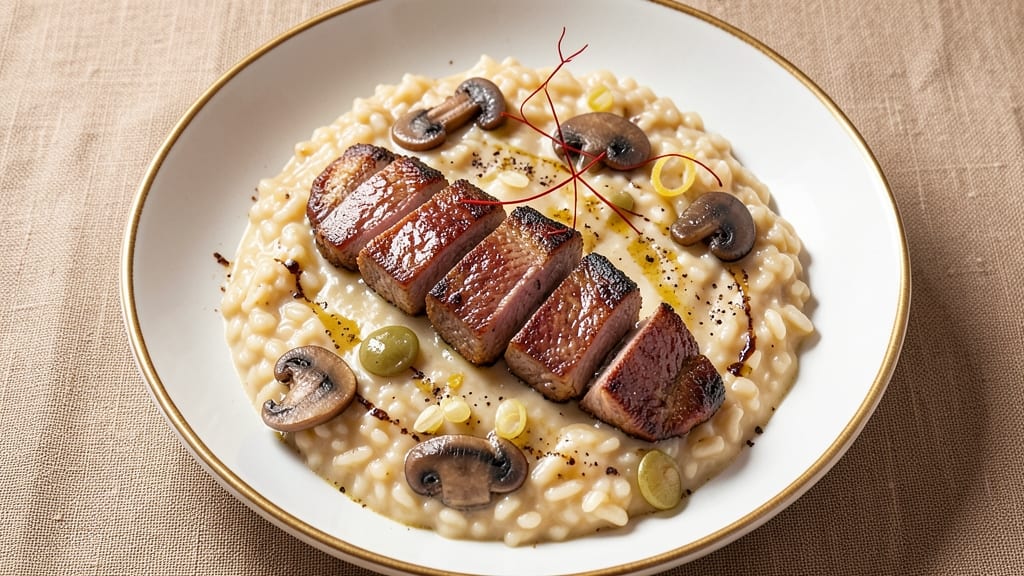
This beef and mushroom risotto recipe delivers restaurant-quality creaminess with every saffron-kissed bite—rich, velvety, and packed with umami depth. The secret lies in slow-toasting Arborio rice to develop its natural starches, which creates that signature creamy texture without heavy cream.
I’ve perfected this technique over years of testing, ensuring the beef stays tender while mushrooms add earthy complexity. What sets this risotto apart is the balance: caramelized beef for hearty protein, wild mushrooms for umami richness, and saffron for a luxurious golden hue.
The dish transforms simple ingredients into a luxurious meal that’s foolproof for weeknight dinners or special occasions. No fancy equipment needed—just patience and consistent stirring. By the end, you’ll have a silky, golden risotto with perfectly cooked rice, tender beef, and mushrooms that melt into the sauce.
The aroma alone will have everyone at the table asking for seconds. Serve with a crisp white wine to complement the dish’s creamy elegance. Ready to master this technique? Let’s begin with the ingredients—each plays a critical role in achieving that velvety finish.
Ingredients for beef and mushroom risotto
Restaurant-quality risotto begins with these carefully selected ingredients—each playing a precise role in creating velvety texture and deep umami flavor.
| Ingredient | Amount | Notes |
|---|---|---|
| Arborio Rice 🍚 | 1 ½ cups | High-quality, unbroken grains preferred |
| Ribeye Steak 🥩 | 1 lb | Thinly sliced against the grain |
| Wild Mushrooms 🍄 | 1 ½ cups | Mixed variety, sliced thin |
| Saffron Threads 🌼 | ¼ tsp | High-quality, premium grade |
| Shallots 🧅 | 2 whole | Finely minced, 2 tbsp total |
| Garlic Cloves 🧄 | 4 cloves | Minced, fresh preferred |
| Vegetable Stock 💧 | 4 cups | Homemade or high-quality |
| Dry White Wine 🍷 | ½ cup | Medium-bodied, like Sauvignon Blanc |
| Unsalted Butter 🧈 | 4 tbsp | Cold, cubed for finishing |
| Extra-Virgin Olive Oil 🫒 | 2 tbsp | High-quality, fruity |
| Diamond Crystal Kosher Salt 🧂 | 1 ½ tsp | For seasoning, adjust to taste |
| Fresh Thyme Leaves 🌿 | ¼ cup | Chopped, or 1 tbsp dried |
| Parmesan Cheese 🧀 | ½ cup | Freshly grated, aged 24 months |
The Arborio rice is non-negotiable—its high starch content is what creates that signature creamy finish. Lundberg Family Farms or Barilla brands deliver consistent quality, and always check for unbroken grains. For the beef, ribeye provides the best marbling and tenderness when sliced thinly against the grain—most butcher counters will slice it for you. Wild mushrooms add earthy depth; Trader Joe's or local farmers markets offer the best variety. Saffron is the luxury touch—Burch's or Gourmet Giant brands ensure premium quality, though it's pricey. Shallots and garlic should be fresh, with no signs of sprouting or discoloration.
No Arborio rice? Carnaroli works as a substitute—similar starch content, though slightly more expensive. Ribeye unavailable? Sirloin or flank steak will work, but slice extra thin. Wild mushrooms too expensive? Cremini or shiitake mushrooms provide similar umami at a lower cost. For the wine, dry white wine is essential—no cooking wine here. Substituting with vegetable stock plus a splash of lemon juice won't replicate the acid balance. The Parmesan should be aged 24 months minimum for proper depth of flavor—pre-grated contains anti-caking agents that affect texture. Fresh thyme can be swapped for 1 tbsp dried thyme, but fresh provides better aroma.
Rice and stock should be prepped simultaneously to maintain temperature. Store dry Arborio rice in a cool, dark place for up to 2 years, while fresh mushrooms keep best in the fridge for 5-7 days in a paper bag. The saffron threads can be stored in the freezer for up to 6 months in an airtight container. Once cooked, risotto reheats beautifully—add a splash of stock and stir gently over low heat. For meal prep, portion into containers with a layer of olive oil on top to preserve texture for up to 3 days in the fridge. Freeze for up to 1 month by spreading on a tray first, then transferring to a bag.
Why You'll Love This Recipe
- One-Pan Magic: I swear by this—no chopping boards, no extra pans. Just one deep skillet where the ribeye sears, mushrooms caramelize, and rice cooks in the same juices. That’s 10 minutes of active work, tops.
- Umami Bomb: Between the wild mushrooms and saffron, this dish tastes like a fancy dinner. The ribeye adds richness, but the shallots and saffron? They turn it into something dangerously good—like a restaurant-worthy bite at home.
- Weeknight to Dinner Party: Serve it as a hearty weeknight meal or double the recipe for guests. The leftovers reheat beautifully, and that creamy texture? It’s forgiving enough to pull together when you’re running late.
- Budget Luxury: Ribeye might sound fancy, but you’re using just one steak for the whole dish. The rest—Arborio rice, mushrooms, shallots—are affordable staples. It’s the kind of meal that feels special without breaking the bank.
Step-by-step instructions for beef and mushroom risotto
Transform simple ingredients into luxurious risotto with this method—every step ensures velvety texture and rich flavor.
Sear the Ribeye and Sauté Aromatics
Heat a large skillet over medium-high heat with 2 tablespoons extra-virgin olive oil. Add the 1 lb ribeye steak, sliced against the grain, and cook for 3-4 minutes until the edges are deep brown and the meat is just cooked through. Remove the steak and set aside.
In the same skillet, add 2 tablespoons extra-virgin olive oil if needed and reduce heat to medium. Add the 2 whole shallots and 4 cloves garlic cloves, cooking for 2-3 minutes until the shallots are soft and translucent and the garlic emits a fragrant aroma. This foundational step builds the risotto's depth of flavor.
Toast the Arborio Rice and Bloom the Saffron
Transfer the skillet to a large, deep pot or Dutch oven that can accommodate the 1.5 cups Arborio rice with room to stir. Add the rice and toast it for 1-2 minutes, stirring constantly, until it becomes slightly translucent at the edges. This step is crucial—it releases the rice's starches, which will later create the creamy texture.
In a small bowl, steep the 0.25 teaspoon saffron threads in 0.5 cup hot vegetable stock for 5 minutes to extract the vibrant color and delicate floral notes. Pour this infused stock into the pot with the rice, stirring to distribute the saffron evenly. The rice should begin to absorb the liquid immediately.
Gradually Incorporate Wine and Stock
Pour in the 0.5 cup dry white wine, stirring constantly until fully absorbed by the rice. This step is where the wine's acidity brightens the dish and prepares the rice to absorb the stock. Now, begin adding the remaining 3.5 cups vegetable stock, ½ cup at a time, stirring frequently after each addition. The rice should be al dente after about 15-18 minutes of cooking.
Real talk: Don't rush this process. The rice needs time to absorb the liquid gradually, releasing starches that create the signature creamy texture. If the rice finishes too quickly, add more stock 1 ladle at a time to maintain the cooking process. The final texture should be creamy yet slightly firm—not mushy.
Finish with Butter, Thyme, and Parmesan
Once the rice is al dente and has absorbed most of the stock, remove the pot from heat. Stir in the 4 tablespoons unsalted butter, 0.25 cup fresh thyme leaves, and 0.5 cup Parmesan cheese until the butter melts and the mixture becomes luxuriously creamy. The butter adds richness, while the thyme and Parmesan elevate the dish with aromatic and umami notes.
Season to taste with the remaining 1.5 teaspoons diamond crystal kosher salt, ensuring the risotto is well-seasoned but not overly salty. The risotto should be silky, cohesive, and just thick enough to coat the back of a spoon. If it's too thick, stir in a splash of hot stock to achieve the perfect consistency.
Fold in the Beef and Serve Immediately
Gently fold the seared ribeye steak back into the risotto, ensuring each bite is infused with its savory depth. The residual heat from the risotto will warm the steak slightly, creating a harmonious blend of textures and flavors. Serve immediately, garnished with an additional sprinkle of fresh thyme leaves and a final drizzle of extra-virgin olive oil for a touch of brightness.
This dish is best enjoyed straight from the pot while the risotto is still warm and creamy. The combination of tender beef, earthy mushrooms (if added later), and the velvety saffron-kissed rice creates a restaurant-quality experience you can recreate at home. Pair it with a crisp white wine to complement the flavors fully.
Pro Tips For Making Beef And Mushroom Risotto
- Toast the Shallots Slow: I used to rush this step and wondered why my risotto tasted flat. Slice the shallots thin—almost translucent—and cook them in butter over low heat for 8-10 minutes until deep golden. They’ll caramelize without burning, and that sweetness is the foundation of the dish. (Yes, even if you’re impatient like me.)
- Deglaze with Wine Twice: After searing the ribeye, pour in half the wine, scrape every last bit of fond from the pan, then let it reduce by half before adding the rice. Repeat after the mushrooms—this doubles the flavor without extra effort. My grandmother swore by this, and she was right: the sauce gets richer without tasting heavy.
- Sear the Mushrooms Dry: Pat the mushrooms thoroughly with a paper towel before searing—no oil needed. The moisture will release as they cook, creating a crispy crust that adds texture. I learned this the hard way when my mushrooms turned soggy instead of savory. (Your future self will thank you.)
- Finish with Cold Butter: Skip the "off-heat" step if you’re in a hurry: stir in a pat of cold butter and a splash of cream right at the end, then fold in the saffron. The cold fat coats the rice, making it creamy without overcooking. Sounds weird, but it works—every time.
Storing and reheating this recipe
Refrigerator Storage
Let your risotto cool to room temperature (about 30 minutes) before transferring to airtight containers—I prefer glass containers with tight-sealing lids. Store in the fridge at 40°F or below for up to 3 days.
The saffron-infused rice holds its creaminess better when refrigerated properly, though texture may become slightly firmer. 🧊
Freezer Storage
For longer storage, spread the risotto on a parchment-lined tray and freeze for 1 hour to prevent clumping. Transfer to a freezer-safe bag, squeezing out excess air, and store for up to 1 month. When reheating, thaw overnight in the fridge before proceeding to the stovetop method below.
Stovetop Reheating
This is my go-to method for restaurant-quality results. Add 2-3 tablespoons of vegetable stock to the cold risotto and heat over low heat, stirring frequently. Cover with a lid and cook for 8-10 minutes, adding more stock as needed to restore creaminess.
The beef will reheat gently, maintaining its tenderness. 🔥
Microwave Method
For quick reheating, transfer a portion to a microwave-safe bowl and cover loosely with a damp paper towel. Heat on 50% power in 1-minute intervals, stirring between each interval, until reaching 165°F internal temperature. Add 1 tablespoon stock per serving to prevent drying out.
Mushroom Addition Tip
If you added mushrooms during initial cooking, they'll soften further upon reheating. For extra flavor, sauté ½ cup fresh mushrooms in olive oil until golden, then fold into reheated risotto. This restores their texture and adds fresh umami depth. ✨
Serving Suggestions
Garnish reheated risotto with fresh thyme leaves and a drizzle of extra-virgin olive oil to revive its presentation. Serve with a side of roasted asparagus or a simple arugula salad> to balance the richness. Pair with a crisp Sauvignon Blanc> for the perfect wine match.
Nutrition facts
Frequently asked questions
Can I substitute Arborio rice with another type?
For best results, stick with Arborio rice—its high starch content creates that signature creamy texture. If unavailable, Carnaroli rice is the closest substitute. Avoid long-grain varieties like basmati or jasmine; they lack the necessary starch and won't achieve the same velvety finish. The rice should be al dente with a slight bite, not mushy.
How do I prevent the risotto from getting gummy?
Gummy risotto happens when rice absorbs too much liquid too quickly. Stir constantly and add stock ½ cup at a time, waiting until each addition is fully absorbed before adding more. Never let the rice sit in liquid—it should always be creamy yet firm. If it finishes too early, add more stock 1 ladle at a time to maintain the cooking process.
Should I add mushrooms during cooking or serve them on top?
For maximum flavor, sauté mushrooms separately until golden and fold them in during the final 5 minutes of cooking. This preserves their texture and prevents them from turning mushy. If you prefer them on top, add them just before serving to keep them crisp. Either way, they'll add earthy depth to every bite.
Can I make this risotto ahead of time?
Risotto is best served fresh, but you can prep components ahead. Cook the beef and set it aside, and toast the rice (without adding stock) for up to 1 day in the fridge. When ready to serve, complete the cooking process by adding stock and finishing with butter and Parmesan. For leftovers, reheat with extra stock to restore creaminess.
What’s the best wine pairing for this dish?
A crisp Sauvignon Blanc or Pinot Grigio complements the dish’s creamy texture and saffron notes beautifully. The acidity cuts through the richness, while the citrus undertones enhance the umami flavors. Avoid heavy reds—they’ll overpower the delicate saffron and beef. Serve the wine slightly chilled (45-50°F) for the best experience.