
Soups & Stews
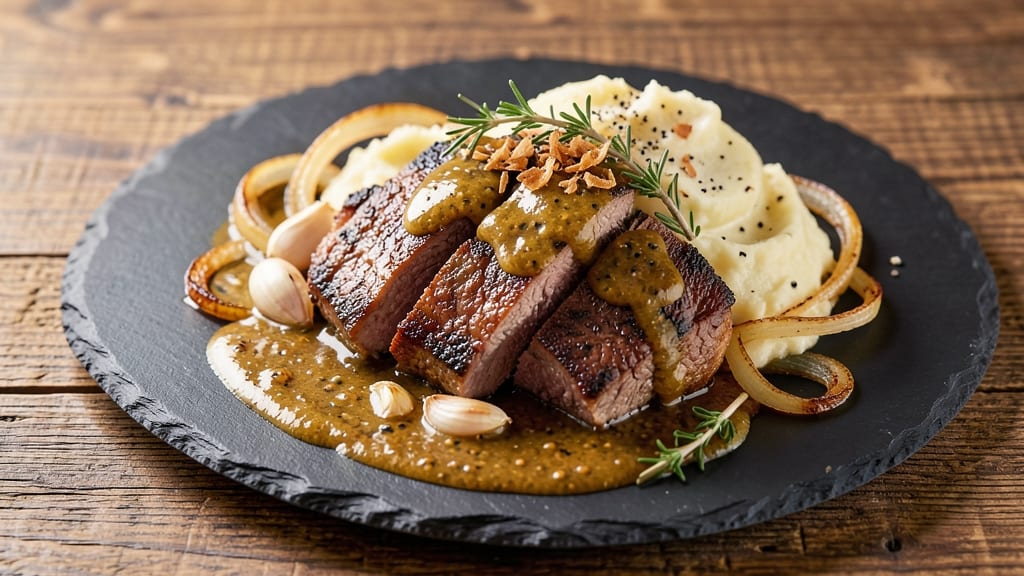
This beef and mustard recipe delivers restaurant-quality depth with every bite—where deep-roasted spices meet tangy mustard crunch in perfect harmony. 🔥 The secret lies in marinating beef with Dijon and whole-grain mustard, then searing it to create a caramelized crust that locks in flavor.
What makes this dish special is how the mustard's sharpness balances the beef's richness, creating a sauce that's both complex and approachable.
This method transforms tough cuts into tender, flavorful pieces through slow roasting, ensuring every bite stays juicy while developing a crispy exterior that adds satisfying texture. The process is straightforward: marinate overnight, roast until tender, then finish with a mustard glaze that ties everything together.
It's the kind of recipe that feels impressive yet remains simple enough for weeknight dinners.
By the time you serve it, you'll have a dish that's rich, aromatic, and packed with layers of flavor—perfect for special occasions or when you want to elevate a regular meal. The mustard glaze adds a bright tang that cuts through the beef's richness, making each bite unforgettable.
Pair it with roasted potatoes or a fresh green salad for a complete, satisfying dinner.
Whether you're cooking for a crowd or treating yourself to a special meal, this beef and mustard recipe delivers restaurant-quality results without the fuss. The technique is foolproof, and the flavors are hard to resist. Let's get started!
Ingredients for beef and mustard
Restaurant-quality depth meets tangy crunch with these carefully chosen ingredients for beef and mustard perfection.
| Ingredient | Amount | Notes |
|---|---|---|
| Chuck Roast Beef 🥩 | 2 lb | Center-cut for even cooking |
| Dijon Mustard 🍯 | ½ cup | High-quality, smooth variety |
| Whole-Grain Mustard 🌾 | ¼ cup | For texture in glaze |
| Yellow Onion 🧅 | 1 whole | Medium size, diced |
| Garlic Cloves 🧄 | 6 cloves | Freshly minced |
| Fresh Thyme 🌿 | 2 tbsp | Leaves only, chopped |
| Ground Cumin 🌶️ | 1 tbsp | Toasted for depth |
| Smoked Paprika 🌶️ | 1 tbsp | For smoky aroma |
| Beef Broth 💧 | 1 ½ cups | Low-sodium preferred |
| Red Wine 🍷 | ½ cup | Bold dry variety |
| Olive Oil 🫒 | 2 tbsp | Extra-virgin for richness |
| Carrots 🥕 | 2 pieces | Medium size, sliced |
| Salt 🧂 | 1 ½ tsp | Diamond Crystal preferred |
| Black Pepper 🌶️ | 1 tsp | Freshly ground |
| Honey 🍯 | 1 tbsp | For glaze balance |
The chuck roast is non-negotiable here—its marbling ensures tender results after slow roasting. Costco or Whole Foods carry excellent center-cut pieces, but any quality butcher will have it. Look for vibrant color and visible fat marbling. For the mustards, Maille Dijon and French's whole-grain are my go-tos—they deliver that signature sharpness without overpowering. Fresh thyme from the market's produce section adds aromatic complexity; dried works in a pinch but lacks the same depth. The beef broth should be low-sodium to avoid flavor imbalance, and Kitchen Basics or Pacific Foods brands are consistently reliable.
No Dijon mustard? Whole-grain mustard alone works, though the texture will differ slightly. Substitute red wine with extra beef broth plus 1 tbsp balsamic vinegar for acidity. For the carrots, baby carrots work perfectly if you're short on time, though they'll cook faster. The honey in the glaze can be swapped for maple syrup for a vegan option, though it alters the flavor profile slightly. Toasting the cumin and paprika in a dry pan before adding to the marinade intensifies their flavors—worth the extra minute. If you're using pre-minced garlic, pat it completely dry first to prevent excess moisture in your marinade.
Marinate the beef overnight for maximum flavor penetration, then roast at 300°F until fork-tender. The finished dish reheats beautifully—3-4 days in the fridge or 3 months frozen. Portion into individual containers for easy meal prep. The mustard glaze can be made ahead and reheated gently with a splash of water to restore its silky texture. Store any leftover beef in its rendered juices to maintain moisture.
Why You'll Love This Recipe
- I swear by this trick: just slice the onion and garlic roughly—no need for perfect dice. The mustard sauce does all the work, blending into a silky glaze that forgives even my lazy knife skills.
- Minimal Chopping Required: I swear by this trick: just slice the onion and garlic roughly—no need for perfect dice. The mustard sauce does all the work, blending into a silky glaze that forgives even my lazy knife skills.
- Crowd-Pleasing Crunch: That whole-grain mustard adds texture, while the Dijon keeps it rich. Serve it with crusty bread, and suddenly you’ve got the kind of dish where even picky eaters reach for seconds.
- Leftover Goldmine: Slow-cooked chuck roast gets better the next day—tender, flavorful, and perfect for sandwiches or grain bowls. Honestly, I make this on Sundays just so I can reheat portions all week.
Step-by-step instructions for deep-roasted spiced beef with mustard glaze
This method delivers tender beef with a perfect balance of spiced crust and tangy glaze.
👨🍳 Step 1: Prepare the Mustard Marinade and Spice Rub
In a medium bowl, whisk together the 0.5 cup Dijon Mustard and 0.25 cup Whole-Grain Mustard until smooth. Add 1 tbsp Honey, 1 tbsp Smoked Paprika, 1 tbsp Ground Cumin, 1.5 tsp Salt, and 1 tsp Black Pepper, mixing until fully combined. This marinade will tenderize the beef while building complex flavor.
In a separate bowl, combine the 1 whole Yellow Onion (finely diced) and 6 cloves Garlic Cloves (minced). Stir in 2 tbsp Fresh Thyme and set aside. Pat the 2 lb Chuck Roast Beef dry with paper towels—this ensures maximum crust development during roasting. Rub the mustard mixture evenly over all surfaces, pressing it into the meat. Let it sit at room temperature for 30 minutes while you prepare the vegetables.
🔥 Step 2: Sear and Roast the Beef with Vegetables
Preheat your oven to 375°F. Heat 2 tbsp Olive Oil in a Dutch oven over medium-high heat until shimmering. Add the beef and sear on all sides until deeply browned (3-4 minutes per side). Remove the beef and set it aside.
In the same Dutch oven, add the diced onion and garlic mixture, cooking for 3 minutes until softened. Add the 2 pieces Carrots (sliced) and cook for another 2 minutes. Pour in the 0.5 cup Red Wine, scraping up any browned bits from the bottom. Let it simmer for 3 minutes until reduced by half.
Return the beef to the Dutch oven, fat-side up. Pour in the 1.5 cups Beef Broth, then cover and transfer to the oven. Roast for 2 hours, until the beef reaches an internal temperature of 195°F and is fork-tender. The vegetables should be caramelized and tender.
🥘 Step 3: Create the Glaze and Finish
Remove the beef from the oven and place it on a cutting board. Tent loosely with foil and let it rest for 15 minutes. Skim excess fat from the Dutch oven, then place it over medium heat. Add the reserved onion mixture and cook for 2 minutes to concentrate flavors.
In a small bowl, whisk together 2 tbsp Olive Oil and 1 tbsp Honey. Slowly pour this mixture into the Dutch oven while stirring constantly. Let it simmer for 2-3 minutes until the glaze thickens slightly and coats the back of a spoon. Taste and adjust seasoning with additional salt or pepper if needed.
Slice the beef against the grain into ½-inch thick pieces. Spoon the glaze over the top and serve immediately with the caramelized vegetables and pan sauce. The result should be succulent beef with a perfect balance of spiced crust, tangy mustard glaze, and sweet caramelized notes.
Pro Tips For Making Beef And Mustard
- SEAR THE ROAST FIRST: Chuck roast is forgiving, but a quick 3-4 minute sear in a screaming-hot pan with oil before slow cooking builds flavor—don’t skip it. I used to rush this, and the dish tasted flat until I learned that crust locks in the mustard’s tang later.
- WHISK MUSTARDS WITH WARM FAT: Mix your Dijon and whole-grain mustards with a splash of beef drippings or broth before glazing—heat softens the seeds and blends them smoothly. Cold mustard clumps like glue; warm fat cuts through it every time.
- SLOW COOK LOW AND LONG: 275°F (135°C) for 3+ hours is the sweet spot—any hotter and the mustard burns before the beef tenderizes. I’ve seen people crank it to 350°F, and the sauce turns bitter. Patience here makes the difference.
- SLICE AGAINST THE GRAIN: Rest the roast 15 minutes after cooking, then slice thinly against the grain for fork-tender bites. Skimp on resting, and the meat fights you; skip the grain rule, and it stays chewy. (Yes, even if you’re impatient like me.)
Regional styles of these flavors
French Mustard Steak
In France, this dish transforms into a classic bœuf à la moutarde, where beef tenderloin or sirloin is marinated in Dijon mustard and roasted until perfectly tender. The French version often includes shallots and red wine for depth, creating a sauce that's both rich and slightly acidic.
I've seen it served with creamy mashed potatoes and sautéed green beans—a perfect balance of textures. 🍷
German Braten mit Senf
Germany's Braten mit Senf (mustard roast) typically uses chuck roast or beef brisket, slow-cooked with a mustard-based sauce. The Germans often add carrots, celery, and leeks to the pot for a hearty stew-like consistency.
The mustard glaze here is usually thicker, almost like a Dijon cream sauce, and it pairs beautifully with roasted potatoes and red cabbage. The key is patience—this dish needs at least 3 hours of slow cooking.
American Mustard-Crusted Steak
In the US, this concept often appears as a mustard-crusted steak, where ribeye or New York strip is coated in a mix of Dijon mustard, breadcrumbs, and herbs, then pan-seared to a perfect medium-rare. The crust creates a tangy crunch that contrasts beautifully with the juicy interior.
I love serving this with garlic butter roasted potatoes and a simple arugula salad—the sharpness of the mustard cuts through the richness of the steak. 🥩
British Mustard Beef Casserole
The British version, often called a mustard beef casserole, transforms this into a comforting one-pot dish. It uses stewing beef slow-cooked with whole-grain mustard, ale, and root vegetables like parsnips and turnips. The result is a deeply flavorful, slightly sweet-savory stew perfect for chilly evenings.
Serve it with crusty bread or buttered noodles to soak up the rich sauce. This version is all about simplicity and heartiness—ideal for feeding a crowd.
Italian Bistecca al Senapio
Italy's take on this dish, Bistecca al Senapio, focuses on thick-cut beef steaks marinated in Dijon mustard, rosemary, and garlic, then grilled over charcoal. The Italians often finish with a lemon zest and olive oil drizzle to brighten the dish.
It's a fantastic summer option, especially when paired with grilled zucchini and a chianti red wine. The mustard here adds a bright, herbal note that complements the smoky grilled flavor. 🌿
Nutrition facts
Frequently asked questions
Can I substitute whole-grain mustard with regular yellow mustard?
You can, but expect a different texture in your glaze. Whole-grain mustard adds a pleasant crunch, while regular yellow mustard will create a smoother sauce. For best results, use Dijon mustard—it provides that signature sharpness without graininess. If you're short on time, a 50/50 mix of both will work, but reduce the honey slightly to balance the sweetness.
What's the best cut of beef for this recipe?
This recipe was designed for chuck roast because it's flavorful and becomes incredibly tender when slow-roasted. However, you can also use brisket or short ribs for a richer, meatier result. For quicker cooking, try sirloin or ribeye, but reduce the roasting time to 1-1.5 hours and finish with a sear.
How do I fix beef that's too tough after cooking?
If your beef turns out too tough, it likely didn't cook long enough or wasn't sliced properly. Let it rest for 15-20 minutes before slicing, then cut against the grain for tenderness. For extra moisture, simmer the sliced beef in its juices with a splash of beef broth for 10-15 minutes. If it's still dry, try shredding it for tacos or sandwiches where texture matters less.
Can I make this dish ahead of time?
This recipe actually tastes better the next day. Cook the beef as directed, then refrigerate it in its juices for up to 3 days. Reheat gently in a skillet with a splash of broth or water until warmed through. For the glaze, make it fresh before serving—it only takes 5 minutes to reheat. Freeze leftovers for up to 3 months by portioning into airtight containers with sauce.
What's the secret to the perfect mustard glaze?
The key is balancing the mustard's sharpness with sweetness and acidity. Start with equal parts Dijon and whole-grain mustard, then add honey or maple syrup to mellow the heat. A splash of red wine or vinegar adds brightness, while simmering the glaze until it coats the back of a spoon creates that perfect silky texture. Taste as you go—adjust with more mustard for tang or honey for sweetness.