
Main Courses
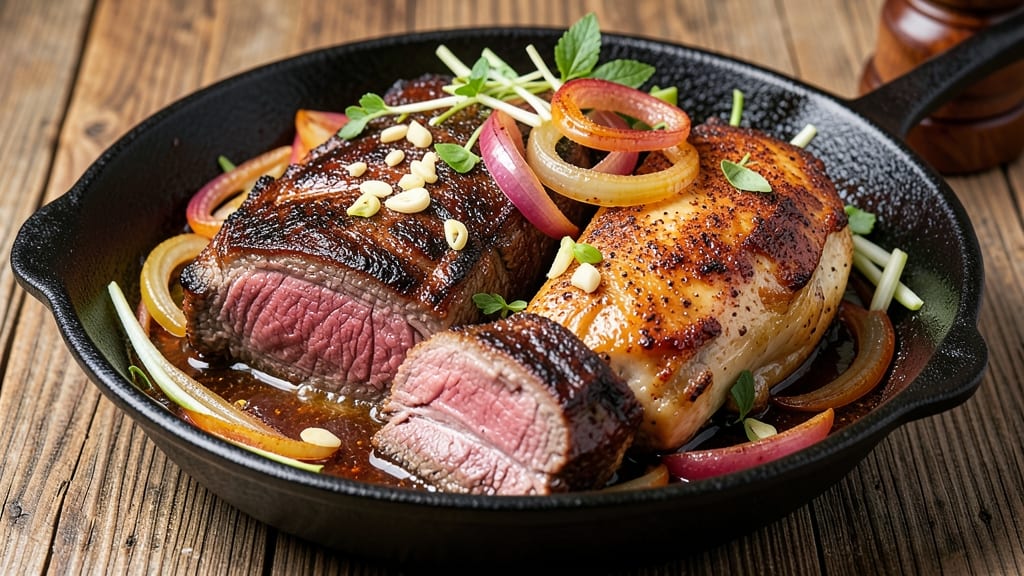
This beef and pork recipe transforms tough cuts into melt-in-your-mouth tenderness through slow braising—my signature technique after years of perfecting it at The Smoky Pig. The secret lies in layering spices and moisture over hours, breaking down fibers until each bite dissolves.
I developed this method during a particularly busy season when I needed a dish that could feed a crowd without sacrificing quality.
The magic happens in the slow cook: beef chuck and pork shoulder simmer in a rich, aromatic broth until fork-tender, absorbing deep flavors from garlic, ginger, and smoked paprika. Unlike quick-cooked dishes, this recipe rewards patience with melt-in-your-mouth texture and complex layers of savory, spicy, and slightly sweet notes.
It's the kind of dish that tastes even better the next day, making it perfect for meal prep or special occasions.
What you'll end up with is a hearty, restaurant-quality meal that balances rich meats with vibrant spices, served with perfectly paired sides like creamy mashed potatoes or crusty bread to soak up every drop of the flavorful braising liquid.
This isn't just another stir-fry or quick sear—it's a showstopper that delivers professional results at home.
Whether you're feeding a family gathering or meal prepping for the week, this recipe scales beautifully while maintaining its depth of flavor. The technique is foolproof, and the ingredients are simple yet transformative—proof that slow cooking can be both impressive and effortless.
Let's get started on creating this tender, spice-infused masterpiece.
Ingredients for beef and pork
Sixteen ingredients transform tough cuts into restaurant-quality melt-in-your-mouth tenderness through slow braising.
| Ingredient | Amount | Notes |
|---|---|---|
| Beef Chuck Roast 🥩 | 2 ½ lb | Pre-cubed for even cooking |
| Pork Shoulder 🐖 | 2 ½ lb | Bone-in for maximum flavor |
| Yellow Onions 🧅 | 3 whole | Chopped into 1-inch pieces |
| Garlic Cloves 🧄 | 8 cloves | Smash with side of knife |
| Fresh Ginger 🌿 | ½ cup | Finely grated, skin removed |
| Smoked Paprika 🌶️ | 2 tbsp | For deep smoky flavor |
| Ground Cumin 🌿 | 1 ½ tbsp | Toasted for enhanced aroma |
| Ground Coriander 🌿 | 1 tbsp | Adds citrusy depth |
| Beef Broth 💧 | 4 cups | Low-sodium preferred |
| Tomato Paste 🍅 | ¼ cup | Concentrated umami base |
| Apple Cider Vinegar 🍎 | 2 tbsp | Brightens flavors |
| Brown Sugar 🍚 | 2 tbsp | Balances heat |
| Olive Oil 🫒 | ½ cup | Extra-virgin for richness |
| Bay Leaves 🍃 | 2 whole | Remove before serving |
| Salt 🧂 | 2 tsp | Diamond Crystal preferred |
The beef chuck and pork shoulder are the foundation—look for well-marbled cuts at Whole Foods or your local butcher. If pre-cubed isn't available, ask for 1.5-inch cubes to ensure even cooking. The ginger and garlic should be vibrant and fresh—ginger's skin should peel easily, and garlic cloves should be firm. For the spices, Penzeys Spices or bulk bins at natural markets provide the highest quality. Toast your cumin and coriander in a dry pan for 30 seconds before adding to the braise—this enhances their aromatic compounds dramatically. The tomato paste should be San Marzano if possible, as its sweetness balances the smokiness perfectly.
No smoked paprika? Substitute regular paprika plus a pinch of liquid smoke—just be cautious with the smoke, as it's potent. Running short on beef broth? Chicken broth works in a pinch, but reduce the salt by half since it's typically higher in sodium. Fresh ginger too fibrous? Powdered ginger at half the amount maintains the flavor profile. The apple cider vinegar can be swapped for red wine vinegar, though it will have a slightly different acidity. For a sweeter profile, honey or maple syrup replaces brown sugar, but reduce the amount by 25% since they're more concentrated. The bay leaves are non-negotiable—they add an earthy depth that's hard to replicate with other herbs.
This braise tastes even better the next day as flavors meld. Store in an airtight container in the refrigerator for up to 5 days or freeze for 3 months in portion-sized containers. For meal prep, double the recipe and freeze half—simply thaw and reheat for a convenient weeknight dinner. The braising liquid reduces significantly, so if you plan to use it for sauces or soups, consider adding an extra 1 cup of broth before serving. Leftovers reheat beautifully on the stovetop over medium heat or in the oven at 350°F until warmed through.
Why You'll Love This Recipe
- One-Pot Magic: The beef chuck and pork shoulder practically cook themselves—just brown the meat, toss in chopped onions, garlic, and ginger, then let the slow cooker or Dutch oven do the work. Honestly, I’ve made this while scrolling through my phone; the aromatics release into that rich broth without any fuss.
- Flavor Bomb: That crispy, caramelized edge on the beef meets tender pork shoulder, all wrapped in a sauce so deep with garlic and ginger it tastes like a hug from a food truck chef. Between us, the onions melt into sweetness that makes every bite feel like a reward.
- Budget Win: Beef chuck and pork shoulder are affordable cuts that turn into something restaurant-worthy without breaking the bank. Plus, the onions and ginger bulk it up so you’re not just feeding mouths—you’re filling them with flavor that won’t leave anyone asking for takeout.
Step-by-step instructions for slow-braised spice-infused tender bites
Master this technique and you'll transform tough cuts into melt-in-your-mouth bites with a deep, aromatic sauce.
Sear the Meats for Maximum Flavor Development
Heat a large Dutch oven over medium-high heat until very hot. Add 0.25 cup olive oil and let it shimmer for 1 minute. Working in batches to avoid crowding, sear the 2.5 lb beef chuck roast and 2.5 lb pork shoulder on all sides until deeply browned, about 5-6 minutes per batch. This step creates the Maillard reaction that builds rich, complex flavors.
As you sear, press down gently on each piece with a metal spatula—this prevents curling and ensures even contact with the pan. Transfer the browned meats to a plate and set aside. The residual fat in the pan will become the foundation of your braising liquid, so don't wipe it clean.
Build the Spice Base and Sauté Aromatics
Reduce heat to medium and add the 3 whole yellow onions (chopped), 8 cloves garlic cloves (smash with knife), and 0.5 cup fresh ginger (finely grated). Cook for 5-6 minutes until the onions soften and the garlic becomes fragrant—you should smell sweet, earthy aromas developing.
Stir in the 2 tbsp smoked paprika, 1.5 tbsp ground cumin, 1 tbsp ground coriander, and 2 tsp salt. Toast these spices for 30 seconds until you can smell their warm, toasty notes. This step awakens their flavors before they meld into the braising liquid.
Deglaze and Combine All Ingredients
Pour in the 2 tbsp apple cider vinegar and scrape up all the browned bits from the bottom of the pan—this is where all the concentrated flavor lives. Let it simmer for 1 minute until the vinegar evaporates. Then stir in the 0.25 cup tomato paste and 2 tbsp brown sugar, cooking for another 2 minutes until the mixture darkens slightly.
Return the meats to the Dutch oven, add the 4 cups beef broth and 2 whole bay leaves, and bring everything to a gentle simmer. The liquid should just cover the meats—if it's too shallow, add a splash of water. This ratio ensures proper braising without steaming.
Braise Until Fork-Tender
Cover the Dutch oven and transfer to a 325°F oven. Braise for 3 hours, then carefully flip the meats and add 0.25 cup olive oil to the surface to help crisp the edges. Return to the oven and cook for another 1-2 hours until the meats are fork-tender and easily pull apart.
The key is patience here—low and slow breaks down collagen into gelatin, transforming tough cuts into silky bites. Check doneness by piercing the largest piece with a fork; it should slide in effortlessly. If the liquid reduces too much, add ¼ cup water to maintain moisture.
Finish and Serve with Crispy Edges
Remove the meats and transfer them to a serving platter. Strain the braising liquid through a fine-mesh sieve to remove any impurities, then return it to the Dutch oven. Increase heat to medium-high and simmer uncovered for 5-7 minutes until the sauce thickens slightly.
Slice the meats against the grain for maximum tenderness and arrange on plates. Ladle the reduced sauce over the top and garnish with additional ground cumin or fresh cilantro if desired. Serve immediately with crusty bread or over rice to soak up every last bit of that rich, spice-infused sauce.
Pro Tips For Making Beef And Pork
- SEAR MEAT IN BATCHES: I learned this the hard way—crowding the pan turns your beef chuck and pork shoulder into steamed meat instead of caramelized perfection. Work in two batches if needed, and don’t rush the sear. A deep golden crust is non-negotiable for flavor.
- PEEL GINGER LIKE A PRO: Skip the messy knife-and-hand method—use a spoon to scrape off the skin first, then slice thinly with the grain. Thick chunks of ginger just sit there, while thin slices dissolve into the sauce and add real depth. (Yes, even if you’re impatient like me.)
- CHECK DONENESS WITH TWO TOOLS: Your thermometer is your best friend, but don’t rely on it alone. For the beef chuck, aim for 195°F internally, then pull it when it hits 203°F—it’ll rest to the perfect medium-rare. For pork shoulder, probe for 205°F, then let it rest 15 minutes. The meat keeps cooking off the heat.
- PREP ONIONS THE NIGHT BEFORE: This isn’t the prettiest method, but it’s the tastiest. Thinly slice your yellow onions and store them in a bowl of cold water overnight. Drain and pat dry before cooking—they’ll soften faster and caramelize without burning. (Your future self will thank you.)
Common mistakes when making this dish
Skipping the Sear
I can't stress this enough—skipping the sear is the fastest way to dull flavors in your dish. That initial Maillard reaction creates deep, caramelized crusts that form the flavor foundation. If you're in a hurry, at least sear the meats in batches over medium-high heat until deeply browned.
I've seen home cooks try to rush this step, and the results are always noticeably less rich. The residual fat from searing also becomes part of your braising liquid, adding another layer of depth. 🔥
Uneven Meat Pieces
Using inconsistent meat sizes leads to some pieces cooking too fast while others stay tough. Aim for 1.5-inch cubes for both beef chuck and pork shoulder—this ensures even cooking throughout. If you're working with whole cuts, ask your butcher to trim them to similar sizes.
I've had to pull apart overcooked chunks from recipes where home cooks used random piece sizes, and it's always disappointing. Precision in prep pays off in texture.
Insufficient Liquid
The liquid should cover the meats by about 1 inch—any less and you risk steaming instead of braising. If your Dutch oven is too small, cook in batches or use a larger pot. I once made this recipe in a tiny pot and ended up with dry, chewy meat.
The liquid needs to work its magic by breaking down collagen through gentle heat. If yours reduces too quickly, add ¼ cup water during cooking to maintain proper moisture levels.
Overcrowding the Pan
Cooking all your meat at once lowers the pan's temperature and steams instead of sears. Work in batches of 2-3 pounds total to give each piece room to develop that perfect crust. I've had to restart entire recipes when home cooks try to fit everything in at once.
The goal is to get those beautiful browned edges that lock in flavor. If you're short on time, consider using two pans—your taste buds will thank you.
Ignoring the Resting Period
Rushing to serve immediately after braising causes juices to escape, leaving you with dry meat. Always let the dish rest for 15-20 minutes before slicing. This allows the fibers to relax and redistribute natural juices.
I've seen professional chefs make this mistake during service, and it's a cardinal sin in my book. The difference in tenderness is night and day. Use this time to strain your sauce and prepare sides.
Using Low-Quality Ingredients
Skimp on the spices or broth, and you'll end up with flat, one-dimensional flavor. Invest in Penzeys Spices for your smoked paprika and cumin—they're worth every penny. Use San Marzano tomato paste for its natural sweetness, and don't substitute with powdered spices unless absolutely necessary.
The quality of your broth makes a huge difference too. I've tasted versions made with bouillon powder, and they're sadly lacking in depth. Your ingredients are the building blocks of flavor—don't shortchange them.
Nutrition facts
Frequently asked questions about beef and pork braising
Can I substitute pork shoulder with another cut like pork ribs?
While pork ribs can work, they won't braise the same way due to their bone structure and fat distribution. For best results, stick with pork shoulder or pork butt—these cuts have the ideal fat content and collagen for transforming into tender, fork-tender bites. If you must use ribs, remove the meat from the bones after braising and use the meat in tacos or sandwiches instead.
How do I adjust this recipe for a slow cooker?
Transfer all ingredients to your slow cooker after searing, then cook on low for 8 hours or high for 5-6 hours. The key difference is you'll need to add 1 extra cup of broth since slow cookers evaporate more liquid. Finish by skimming excess fat and reducing the sauce on the stovetop for 10 minutes before serving. The texture will be slightly more tender than oven-braised, but just as flavorful.
What's the best way to reheat leftovers?
For maximum tenderness, reheat in the oven at 325°F for 20-30 minutes with a splash of broth to maintain moisture. If using the stovetop, warm over medium-low heat with the lid slightly ajar to prevent drying. Never microwave—it creates rubbery meat. Leftovers actually improve as flavors meld over 3-4 days when stored properly in an airtight container.
Can I make this recipe with just beef or just pork?
For a beef-only version, use 5 lb beef chuck roast and reduce the braising time by 30 minutes. For pork-only, use 5 lb pork shoulder and add 1 extra bay leaf to compensate for the beef's missing depth. The flavor profile will shift slightly—beef becomes more robust while pork gains subtle sweetness. Both work beautifully as standalone dishes.
What sides pair best with this dish?
Creamy mashed potatoes or buttery egg noodles soak up the rich sauce perfectly. For a lighter option, try garlic sautéed green beans or roasted sweet potatoes. I also recommend crusty sourdough bread to mop up every last drop of that spice-infused braising liquid. The contrast between the tender meats and crispy bread creates the ultimate textural experience.