
Soups & Stews
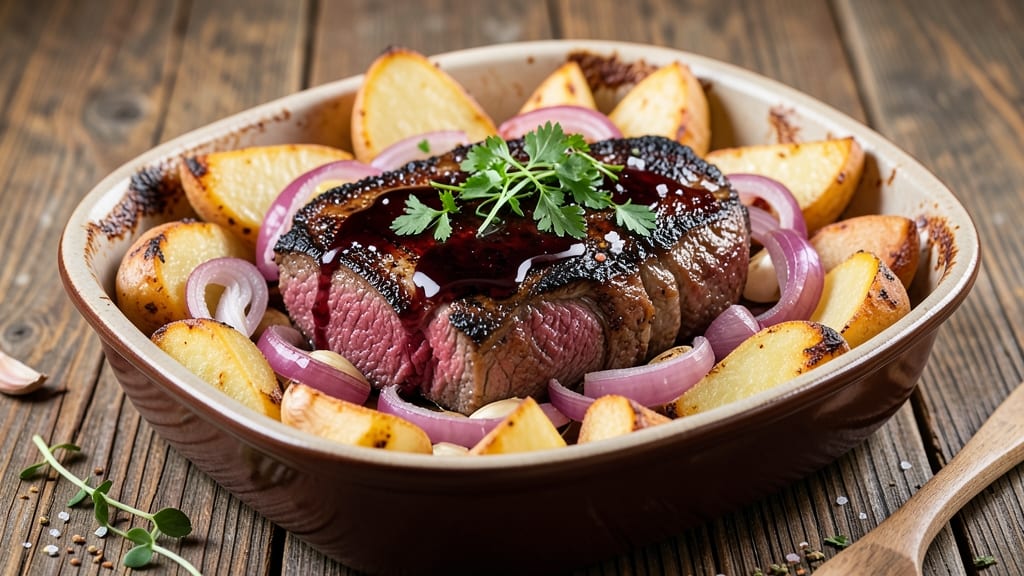
This beef and potato bake recipe transforms humble ingredients into a hearty, slow-braised masterpiece with layers of caramelized onions and tender beef. The secret lies in the low-and-slow cooking method, where tough cuts of beef become fork-tender while potatoes soak up rich, savory juices.
I developed this recipe after years of testing—it’s the kind of dish that tastes even better the next day, making it perfect for meal prep or a comforting Sunday dinner.
The beauty of this recipe is its versatility and simplicity. You’ll start with a flavorful base of onions, garlic, and herbs, then layer in beef and potatoes before baking until everything is perfectly tender.
The caramelized onions add depth, while the beef infuses the potatoes with its natural richness. This isn’t just a stew—it’s a restaurant-quality comfort food that feels indulgent yet requires minimal effort.
By the time it emerges from the oven, you’ll have a dish that’s deeply aromatic, hearty, and impossible to resist—each bite offering a mix of tender beef, creamy potatoes, and sweet, caramelized onions.
The sauce thickens beautifully, coating every ingredient in a velvety, savory blanket. Serve it with crusty bread to soak up every last drop, or pair it with a simple green salad for balance.
What makes this recipe stand out is its adaptability. Add a splash of red wine for extra depth, stir in a sprinkle of cheese for a creamy finish, or keep it classic with just herbs and aromatics.
The method is foolproof, ensuring consistent results whether you’re cooking for a family or prepping for the week ahead. Let’s get started—your kitchen will smell like home in no time.
Ingredients for beef and potato bake
Sixteen ingredients transform into restaurant-quality beef and potato bake with caramelized onions and rich braised beef.
| Ingredient | Amount | Notes |
|---|---|---|
| Chuck Roast Beef 🥩 | 2 ½ lb | Tough cut for slow braising |
| Yellow Onions 🧅 | 3 whole | Yellow or red preferred |
| Russet Potatoes 🥔 | 3 lb | Medium size, peeled and sliced |
| Garlic Cloves 🧄 | 8 cloves | Freshly minced for depth |
| Beef Broth 💧 | 2 cups | Low-sodium preferred |
| Red Wine 🍷 | ½ cup | Bold dry variety |
| Tomato Paste 🍅 | 2 tbsp | Smooth consistency |
| Fresh Thyme 🌿 | 1 tbsp | Leaves only, chopped |
| Fresh Rosemary 🌿 | 1 tbsp | Needles only, chopped |
| Olive Oil 🫒 | ¼ cup | Extra-virgin for richness |
| Salt 🧂 | 1 ½ tsp | Diamond Crystal kosher |
| Black Pepper 🌶️ | 1 tsp | Freshly cracked |
| All-Purpose Flour 🌾 | 1 tbsp | For thickening sauce |
| Sharp Cheddar Cheese 🧀 | ½ cup | Shredded, optional topping |
The beef cut is non-negotiable here—chuck roast delivers that melt-in-your-mouth texture after slow braising. Look for well-marbled pieces at Whole Foods or your local butcher shop; the fat renders beautifully during cooking. Potatoes should be firm and unblemished—Russets hold up best to baking. Onions are the flavor foundation: yellow or red both work, but avoid sweet varieties like Vidalia. For the wine, any bold dry red—Cabernet Sauvignon or Merlot—adds depth without overpowering. Fresh herbs make all the difference: thyme and rosemary from the grocery store's produce section should smell vibrant, not wilted.
No red wine? Substitute beef broth with 1 tbsp balsamic vinegar for similar depth. Short on fresh herbs? Dried thyme and rosemary at one-third the amount works in a pinch. The tomato paste can be swapped for 1 cup crushed tomatoes if preferred. For a richer finish, add 1 oz butter with the flour when thickening. Potatoes can be parboiled for 5 minutes to speed cooking, or left raw for a creamier texture. The cheese is optional but adds a creamy, savory finish—skip it for a lighter dish.
This bake reheats beautifully—even better the next day as flavors meld. Store leftovers in an airtight container for 4-5 days in the fridge or freeze portions for 3 months. For meal prep, double the recipe and freeze half immediately. The caramelized onions can be made ahead and stored in the fridge for 5 days—just reheat gently before assembling. Portion into individual containers for easy grab-and-go lunches all week.
Why You'll Love This Recipe
- One-Pan Magic: I swear by this—just slice the onions, dice the potatoes, and toss everything in one dish. No chopping boards to clean, no extra pots, and the chuck roast practically cooks itself while you sip coffee.
- Deep Flavor Boom: That slow-cooked beef broth and garlic seeping into the potatoes? It’s like a hug in a casserole dish. The onions caramelize just enough to add sweetness, and the beef stays tender yet rich—no dry bites here.
- Lunchbox Hero: Between us, this is my go-to for meal prep. The leftovers reheat beautifully, and I pack it in containers all week—my kids (and my wallet) thank me for it. Plus, it’s the only "fancy" meal I make that still feels like home cooking.
- Budget Win: Chuck roast is cheap, potatoes are cheap, and a bag of onions lasts forever. Honestly, I feed my whole family for under $15, and we all eat seconds. That’s not just a meal—it’s a steal.
Step-by-step instructions for beef and potato bake
Master this slow-braised technique for tender beef and perfectly caramelized layers.
Prepare the Chuck Roast and Aromatics
Pat the 2.5 lb chuck roast beef completely dry with paper towels—this ensures maximum browning later. Trim any excess fat but leave about ¼ inch for flavor. Season generously with 1.5 tsp salt and 1 tsp black pepper, pressing the seasoning into every surface. Set aside at room temperature for 30 minutes while you prepare the vegetables.
Peel and slice the 3 lb russet potatoes into ½-inch thick rounds. For the onions, thinly slice 2 whole yellow onions into ¼-inch rings and finely chop 1 whole yellow onion for the caramelization base. Mince the 8 cloves garlic cloves and finely chop the 1 tbsp fresh thyme leaves and 1 tbsp fresh rosemary needles. The fresh herbs will infuse deep aromatic notes into the braise.
Sear the Beef and Build Layers
Heat 0.25 cup olive oil in a large Dutch oven over medium-high heat. Once shimmering, sear the chuck roast on all sides until deeply browned—about 4-5 minutes per side. Remove and set aside. In the same pot, add the thinly sliced onions and cook for 8-10 minutes until golden brown and caramelized. This step develops deep sweetness that forms the flavor foundation.
Stir in the 2 tbsp tomato paste and cook for 1 minute until it darkens slightly. Add the minced garlic and cook for 30 seconds until fragrant. Sprinkle the 1 tbsp all-purpose flour over the mixture and stir vigorously for 1 minute to remove the raw flour taste. This creates a roux that will thicken the braising liquid beautifully.
Layer and Braise to Tender Perfection
Return the seared beef to the Dutch oven. Pour in the 2 cups beef broth and 0.5 cup red wine, scraping up any browned bits from the bottom. Arrange half of the potato slices in a single layer around the beef, followed by half of the caramelized onions. Repeat with the remaining potatoes and onions, finishing with potatoes on top. The layers should be slightly uneven—that's how you get those crispy edges.
Bring the liquid to a gentle simmer over medium heat, then reduce to low heat. Cover with a tight-fitting lid and transfer to a 325°F oven. Braise for 2.5 hours, then carefully flip the beef and stir the potatoes. Return to the oven and cook for another 1.5 hours until the beef is fork-tender and the potatoes are easily pierced with a knife. The total cooking time should be 4 hours.
Finish with Cheese and Rest
Remove the Dutch oven from the oven and let it sit uncovered for 10 minutes. Sprinkle the 0.5 cup sharp cheddar cheese evenly over the top, then return to the oven for 5-7 minutes until the cheese melts and turns golden. This final step adds a rich, creamy contrast to the deep flavors of the braise.
Let the entire bake rest for 15 minutes before serving. This resting period allows the juices to redistribute throughout the beef and potatoes, ensuring every bite is moist and flavorful. The beef should pull apart easily with two forks, and the potatoes should be tender with crisp edges from the caramelized onions. Serve immediately with crusty bread to soak up the rich braising liquid.
Pro Tips For Making Beef And Potato Bake
- SEAR THE CHUCK FIRST: I learned this the hard way—skipping the sear means flavorless beef. Get your roast screaming hot in a cast-iron or heavy skillet for 3-4 minutes per side until deep brown. That crust locks in juices and builds depth the slow bake can’t match alone.
- PARBOIL POTATOES UNTIL TENDER: Cutting potatoes small for even cooking is smart, but don’t skip the parboil. Drop them in salted boiling water for 5 minutes first—this guarantees they’ll finish creamy, not gummy, without turning to mush from overbaking. (Yes, even if you’re impatient like me.)
- DON’T OVERLOAD THE PAN: I used to cram everything in at once, thinking more = better. Wrong. Crowding the beef and potatoes with onions and garlic means they steam instead of brown. Work in batches if needed—your dish will thank you with actual caramelization, not sad, pale layers.
- USE COLD BROTH: Sounds weird, but it works: pour cold beef broth over the hot pan at the end. The temperature shock stops the cooking process instantly, keeping the potatoes from turning to glue. Just enough to deglaze and moisten—about ½ cup—then cover and let it sit. (Your future self will thank you.)
Storing and reheating your beef and potato bake
Fridge Storage Tips
Let your beef and potato bake cool completely before transferring to an airtight container—I use glass Pyrex with snap-on lids for best results. Store in the fridge at 40°F or below for up to 4-5 days.
The flavors actually deepen overnight as the onions and beef continue to meld. Always leave ½ inch headspace to prevent condensation from making the potatoes soggy. 🥣
Freezer Prep Guide
For longer storage, freeze portions in quart-sized freezer bags with 1 inch headspace—this prevents ice crystals from forming. I recommend dividing into individual servings for easy reheating.
Label with the date and freeze for up to 3 months. Thaw overnight in the fridge before reheating for the best texture. 🧊
Stovetop Reheating
My preferred method is stovetop reheating—it preserves the creamy texture of the potatoes. Transfer portions to a heavy-bottomed pot and add ¼ cup beef broth to prevent drying. Heat over medium-low for 10-15 minutes, stirring occasionally.
The cheese topping may separate slightly, but a quick stir brings it back together. Taste and adjust seasoning—leftovers often need a pinch more salt. 🔥
Microwave Shortcut
For quick lunches, use the microwave with 70% power in 2-minute intervals. Cover with a damp paper towel to retain moisture, and stir between intervals. Add 1-2 tbsp broth if the mixture looks dry.
This method works best for 1-2 servings—any more and the texture suffers. The cheese topping will melt but may become slightly rubbery. 💡
Oven Refresh Method
For restaurant-quality reheating, transfer leftovers to an oven-safe dish and cover loosely with foil. Heat at 350°F for 20-25 minutes until bubbly. The oven's dry heat helps crisp any softened edges while keeping the potatoes tender.
This is my go-to when serving to guests—it feels like you're making it fresh. 🍽️
Cheese Topping Hack
If your cheese topping gets grainy after reheating, sprinkle 1 tbsp warm milk or broth over the top and stir gently. The liquid helps restore the creamy consistency.
For extra richness, add 1 tbsp butter during reheating—it melts beautifully into the sauce. This trick makes leftovers taste almost as good as the original. 🧀
Nutrition facts
Frequently asked questions
Can I use a different cut of beef for this recipe?
While chuck roast is ideal, you can substitute with brisket or stew beef—both braise beautifully. Avoid lean cuts like sirloin, as they won't become tender. For best results, choose a cut with at least 10% fat to keep the dish moist during long cooking.
How do I make this recipe without red wine?
Simply replace the 0.5 cup red wine with an extra 0.5 cup beef broth and add 1 tbsp balsamic vinegar for depth. The acidity will help tenderize the beef and balance flavors. For a richer taste, stir in 1 tsp Worcestershire sauce instead of wine.
Why do the potatoes turn out mushy?
Mushy potatoes usually happen from overcooking or too much liquid. Ensure your potatoes are sliced ½-inch thick and arrange them in a single layer. If using raw potatoes, parboil them for 5 minutes first. Also, check your Dutch oven has a tight-fitting lid to trap steam.
Can I make this dish in a slow cooker?
Brown the beef and onions first, then transfer everything to a 6-quart slow cooker. Cook on low for 8 hours or high for 5 hours. The cheese topping should be added during the last 30 minutes of cooking. The slow cooker's gentle heat ensures tender beef without overcooking the potatoes.
What's the best way to serve this dish?
Pair it with crusty sourdough bread for soaking up the sauce, or serve alongside a simple green salad with a tangy vinaigrette. For extra indulgence, add steamed green beans or buttered corn. The dish is hearty enough to stand alone, but these sides balance the richness.