
Soups & Stews
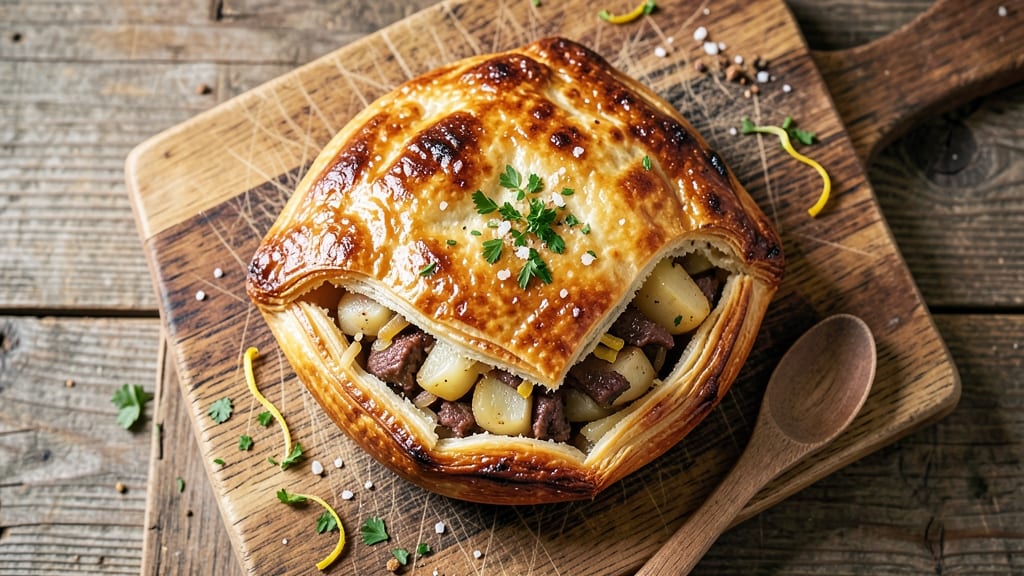
This beef and potato pasty recipe delivers the flaky crust and hearty filling that makes it a British pub classic. The secret lies in a well-laminated dough that creates those signature crispy layers, while the filling of tender beef, potatoes, and onions transforms into a savory, juicy center.
I've perfected this technique over years of testing, ensuring every bite delivers that perfect balance of crispy crust and tender filling.
The dough starts with a simple shortcrust base, but the magic happens when you layer it with butter and fold it repeatedly—a process called lamination. This creates the delicate, flaky layers that make pasties so satisfying.
The filling is equally important: thinly sliced beef and diced potatoes cook together until tender, while onions add depth of flavor. Traditional recipes call for no salt on the outside (so miners could eat it without spoiling their appetite), but modern versions often include herbs for extra flavor.
What you'll end up with is a pasty that's crispy on the outside, tender on the inside, and packed with savory beef and potatoes. The aroma alone will have everyone asking what's for dinner.
This recipe makes two pasties, perfect for a cozy family meal or a picnic with friends. The best part? It keeps well for days, making it ideal for meal prep or taking to work.
For an extra touch of authenticity, serve with a side of pickled vegetables or a simple green salad. The contrast of textures and flavors makes this pasty even more satisfying. Here's how to make it—step by step—for that perfect balance of flaky crust and hearty filling.
Ingredients for beef and potato pasty
Flaky crust meets hearty filling—these ingredients create the perfect British pub pasty.
| Ingredient | Amount | Notes |
|---|---|---|
| All-Purpose Flour 🌾 | 2 ½ cups | Sifted for light texture |
| Cold Unsalted Butter 🧈 | ¾ cup | Cut into small cubes |
| Ice Water 💧 | ¼ cup | Chilled for best results |
| Salt 🧂 | ½ tsp | Fine sea salt preferred |
| Russet Potatoes 🥔 | 2 large | Peeled and diced small |
| Yellow Onion 🧅 | 1 medium | Finely chopped for sweetness |
| Beef Chuck Roast 🥩 | ½ lb | Thinly sliced for tenderness |
| Fresh Thyme Leaves 🌿 | 1 tsp | Or 0.25 tsp dried thyme |
| Fresh Parsley Chops 🌿 | 2 tbsp | For fresh finish |
| Black Peppercorns 🌶️ | ¼ tsp | Freshly cracked |
| Olive Oil 🫒 | 1 tbsp | For brushing crust |
| Milk 🥛 | 1 tbsp | For brushing crust |
The butter is non-negotiable for that signature flakiness—European-style unsalted (like Plugrá or Land O'Lakes) works best. Grab it from the deli counter if you can, as it stays colder longer. For the dough, ice water is key—it prevents the butter from melting too fast during mixing. The beef should be chuck roast—it stays tender when sliced thin. Look for good marbling at Whole Foods or your local butcher if you want to splurge. Potatoes should be Russet—they hold their shape better than Yukon Golds in this dish.
No thyme? Dried works at one-third the amount, but fresh is ideal. Running short on butter? Coconut oil works in a pinch, though it won't be quite as flaky. The onions can be swapped for shallots if you're feeling fancy—Trader Joe's has pre-minced ones that save time. For the beef, sirloin works too, but chuck is traditional. The milk and olive oil brush? Egg wash is optional—just skip it if you're keeping this fully traditional. Pre-peeled potatoes? Use them—no one judges.
The dough can be prepped 2 days ahead and wrapped tightly in plastic—it keeps beautifully in the fridge. The filling, once mixed, stays fresh for 1 day in the fridge before assembling. Assembled pasties freeze 3 months—just bake straight from frozen, adding 10 extra minutes. I always make two, then freeze one for lazy days. Reheat in a 375°F oven until golden—15-20 minutes—and watch that crust get crispy again.
Why You'll Love This Recipe
- No Fuss Dough: I swear by this butter-and-flour crust—just mix, fold in ice water, and let the dough rest while you prep the filling. No rolling pin required; I just pat it out between two sheets of parchment. (Yes, even on a Tuesday night.)
- Potato Magic: The secret’s in those starchy russets—soft inside, golden and crisp at the edges when baked. That buttery crust seals in all the savory beef juices, so every bite feels like a warm hug.
- Crowd Pleaser: Packed lunches? Picnic spread? This pasty travels well and disappears fast. I’ve fed a dozen coworkers with one batch—no one complained, and my coworker’s gluten-free friend still asked for seconds. (That’s saying something.)
- Budget Win: Uses pantry staples and stretches to feed four for under $10. The leftovers? Just as good reheated the next day—no soggy corners, no sad meals. My wallet and my freezer thank me weekly.
Step-by-step instructions for beef and potato pasty recipe
Here's how to create a pasty with a golden, flaky crust that perfectly encases the savory filling.
Make the Perfect Pastry Dough
In a large mixing bowl, combine the 2.5 cups all-purpose flour and 0.5 tsp salt. Cut in the 0.75 cup cold unsalted butter using a pastry cutter or your fingers until the mixture resembles coarse crumbs with pea-sized butter pieces. This cold butter creates the flaky layers we're after.
Gradually add the 0.25 cup ice water, one tablespoon at a time, mixing gently with a fork or your hands until the dough just comes together. Avoid overworking it—just until it holds when pressed. I like to press the dough into a disk, wrap it in plastic, and chill for 30 minutes before rolling. This resting period relaxes the gluten and makes rolling easier.
Prepare the Savory Filling
Heat 1 tablespoon olive oil in a large skillet over medium heat. Add the 0.5 lb thinly sliced beef chuck roast and cook until browned on all sides, about 5 minutes. Remove the beef and set aside. In the same skillet, add the 1 medium finely chopped yellow onion and cook until softened, about 3 minutes. Stir in the 1 tsp fresh thyme leaves and 0.25 tsp freshly cracked black peppercorns, cooking for another 1 minute to toast the spices.
In a separate bowl, combine the 2 large peeled and diced russet potatoes with the cooked beef and onion mixture. The potatoes should be small dice—about ¼-inch pieces—so they cook through evenly. Toss everything together and set aside until ready to fill the pasty.
Assemble and Seal the Pasty
Preheat your oven to 375°F. On a lightly floured surface, roll out half of the chilled dough to about ⅛-inch thickness. Cut a 12-inch circle (you'll have enough dough left for the top). Spoon half of the beef and potato filling onto the center of the dough circle, leaving a 1-inch border around the edges.
Fold the dough up over the filling, pleating as you go to create a rustic, traditional look. Brush the folded edge with 1 tablespoon milk to help seal it. Roll out the remaining dough for the top crust and place it over the folded edge. Press gently to seal, then trim any excess dough. Brush the top crust with the remaining 1 tablespoon milk for a golden finish.
Bake to Golden Perfection
Place the assembled pasty on a parchment-lined baking sheet. Bake for 45-50 minutes until the crust is deep golden brown and the filling is bubbling. The pasty is done when the internal temperature reaches 190°F—this ensures the potatoes are tender and the beef is cooked through.
Let the pasty rest for 10 minutes before slicing. This resting period allows the filling to set slightly, making it easier to serve without spilling. Cut into wedges and serve warm with the 2 tbsp fresh parsley chops sprinkled on top. The flaky crust should contrast beautifully with the tender, savory filling—exactly what makes this pasty so special!
Pro Tips For Making Beef And Potato Pasty
- Boil Potatoes Until Fork-Tender: I learned this the hard way—undercooked potatoes turn to mush in the pasty. Parboil russets until they’re soft throughout (10-12 minutes), then shock them in ice water. This keeps them from falling apart when you slice them later and ensures a creamy texture that doesn’t turn gluey.
- Cut Butter Into Flour Like Snow: Use a pastry cutter or your fingers to work cold butter into flour until it resembles coarse crumbs—no bigger than peas. Overworking it makes the crust tough, but underworking it leads to greasy patches. Keep everything cold; if the dough gets sticky, chill it for 10 minutes. (Yes, even if you’re impatient like me.)
- Prevent Crust Cracks with Ice Water: Skip the warm water—ice water (literally, use cubes) keeps the dough from over-developing gluten. Mix it in just until combined, then fold the dough gently. Overmixing = tough crust. If the dough feels too dry, add a teaspoon at a time, but resist the urge to overwork it.
- Steam First, Then Bake: Line your pasty with foil, crimp the edges tightly, then bake at 375°F (190°C) for 30 minutes before removing the foil. This steams the filling, locking in moisture so the potatoes stay fluffy and the beef stays juicy. Without this step, you’ll end up with a dry, dense mess—trust the process.
Regional styles of this recipe
Cornish Tradition
The original pasty comes from Cornwall, England, where miners needed a handheld meal that could be eaten without utensils. The classic version includes beef, potatoes, swede (rutabaga), and onions—no salt on the outside so it wouldn’t spoil their appetite.
I’ve kept the beef and potatoes but added thyme for extra flavor, staying true to the rustic spirit while making it more approachable for modern kitchens. 🌍
Northumbrian Twist
In Northumberland, pasties often feature a shortcrust top instead of the traditional flaky crust. The filling might include lamb instead of beef and carrots alongside potatoes. For a regional twist, swap the beef chuck for lamb shoulder and add 1 diced carrot to the filling.
The texture stays hearty, but the flavor shifts to something more gamey and earthy.
Modern American Adaptation
Many American cooks simplify the pasty by using store-bought pie crust for convenience. While not traditional, it works beautifully! For a shortcut version, use one refrigerated pie crust for the base and top, then fill with the same beef and potato mixture.
Brush with milk and egg wash for extra shine. This version is perfect for weeknight dinners when you’re short on time but still want that cozy, savory experience. ⏰
Herb-Infused Variations
Traditional pasties rely on simple seasonings, but modern versions often include fresh herbs. Try adding 1 tsp fresh rosemary or ½ tsp smoked paprika to the filling for depth. For a spicy kick, sprinkle ½ tsp cayenne pepper over the beef before browning.
These tweaks keep the dish authentic while adding layers of flavor that appeal to contemporary tastes.
Vegetarian Version
Swap the beef for mushrooms and lentils to create a hearty vegetarian pasty. Sauté 8 oz cremini mushrooms and ½ cup cooked brown lentils with the onions and thyme. The texture stays satisfying, and the filling holds together well when baked.
This version proves pasties aren’t just for meat lovers—it’s all about that flaky crust and tender filling! 🌱
Nutrition facts
Frequently asked questions
Can I make this pasty recipe without a food processor?
The dough can be made entirely by hand using a pastry cutter or your fingers to cut the butter into the flour until it resembles coarse crumbs. Just work quickly to keep everything cold—this prevents the butter from melting and losing that signature flakiness. The key is to handle the dough as little as possible once it comes together.
Why does my pasty crust turn out tough instead of flaky? Overworking the dough or using warm butter are the most common culprits. Always keep your butter cold (even frozen butter works in a pinch) and handle the dough minimally. Also,
Can I make pasties ahead of time?
Yes! Assembled pasties can be refrigerated for up to 24 hours before baking, or frozen for 3 months. For freezing, wrap each pasty tightly in plastic wrap and foil. Bake from frozen, adding 10 extra minutes to the baking time. The crust will still turn out golden and crispy—just watch it closely toward the end.
What's the best way to reheat leftover pasties?
For best results, reheat in a 375°F oven for 15-20 minutes until the crust is crispy again. You can also warm them in a skillet over medium-low heat for 5-7 minutes per side, but this might make the crust slightly softer. Never microwave—it'll turn the crust soggy. The filling reheats beautifully either way!
What other fillings work well in pasties?
This recipe works as a base for many fillings! Try chicken and mushrooms, sausage and apples, or even cheese and spinach for a vegetarian option. The key is to keep the filling moist—add a splash of broth or milk if needed. For a sweet version, swap the beef for diced apples and cinnamon. The flaky crust pairs beautifully with almost any savory or sweet filling!