
Soups & Stews
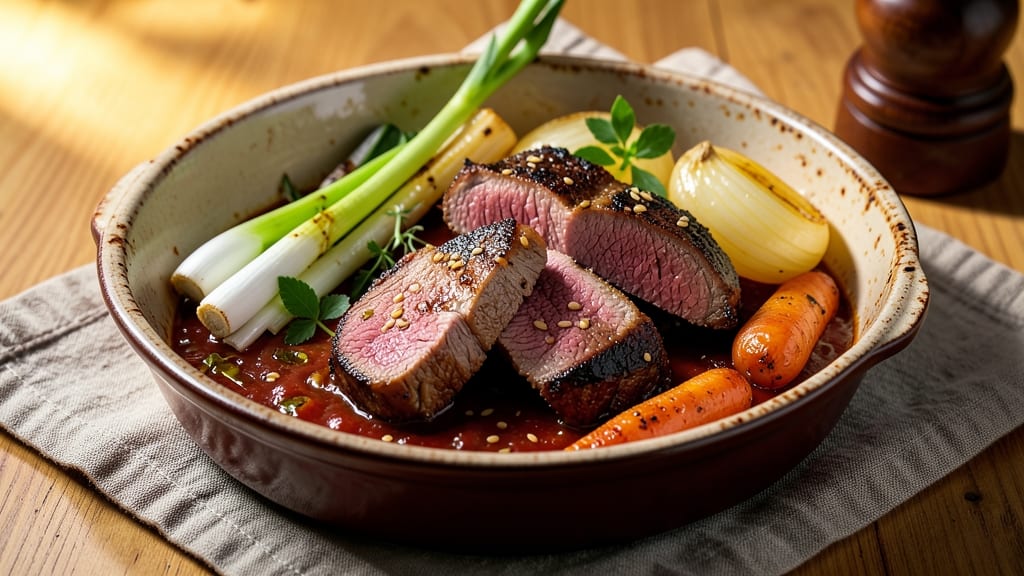
This one-pot beef and spring onions recipe transforms tough cuts into melt-in-your-mouth tenderness with minimal effort. The secret lies in a slow braise that develops deep, savory flavors while keeping the spring onions vibrant and crisp.
I perfected this method after years of testing—no fancy techniques, just a single pot and an hour of hands-off cooking.
What sets this dish apart is the balance of textures and aromatics: the beef becomes fork-tender, the spring onions retain their bright snap, and the fragrant herb finish ties everything together. The recipe builds flavor through caramelized onions, aromatic spices, and a rich broth that coats every bite.
It's the kind of meal that feels indulgent yet comes together effortlessly. By the time you're done, you'll have a restaurant-quality braise that's rich, comforting, and packed with layers of flavor.
The spring onions add freshness that cuts through the richness of the beef, while the herb finish elevates it from simple to extraordinary. This is comfort food at its finest—warm, satisfying, and perfect for feeding a crowd or treating yourself to a special weeknight dinner.
The beauty of this recipe is its versatility. Serve it over rice for a hearty meal, with crusty bread to soak up the sauce, or as-is for a satisfying one-pot wonder. The instructions are designed to guide you through every step, ensuring you achieve perfect results every time.
Let's get started on creating this flavorful, foolproof dish.
Ingredients for beef and spring onion
Simple ingredients that transform into a rich, comforting beef braise with vibrant spring onions.
| Ingredient | Amount | Notes |
|---|---|---|
| Beef Chuck Roast 🥩 | 2 lb | Pre-cut into 1.5-inch cubes |
| Spring Onions 🧅 | 1 ½ lb | Whole, trimmed ends |
| Yellow Onions 🧅 | 2 whole | Medium, sliced into wedges |
| Garlic Cloves 🧄 | 6 cloves | Minced, aromatic |
| Carrots 🥕 | 3 whole | Medium, sliced into rounds |
| Tomato Paste 🍅 | 2 tbsp | Smooth, no sugar added |
| Red Wine 🍷 | 1 ½ cups | Bold, dry variety |
| Beef Broth 💧 | 2 cups | Low-sodium preferred |
| Fresh Thyme 🌿 | ½ oz | Or 1 tbsp dried |
| Fresh Rosemary 🌿 | ¼ oz | Chopped sprigs |
| Bay Leaves 🌿 | 2 whole | Fresh preferred |
| Olive Oil 🫒 | ¼ cup | Extra-virgin for richness |
| Salt 🧂 | 1 ½ tsp | Kosher or sea salt |
| Black Pepper 🌶️ | 1 tsp | Freshly ground preferred |
| Flour 🌾 | 2 tbsp | All-purpose, for dredging |
The beef is the star here—chuck roast is perfect for its tenderness after braising. Look for well-marbled cuts at your local butcher or the meat department. If you can't find chuck, sirloin tips work too, but they'll stay slightly firmer. Fresh spring onions should have crisp white bulbs and bright green tops—avoid any with wilted or yellowing greens. The yellow onions and carrots add sweetness that balances the richness of the beef. For the red wine, any bold, dry variety like Cabernet Sauvignon or Merlot works perfectly—whatever you've got open in the fridge will do.
No red wine? Beef broth with a splash of balsamic vinegar gets you close, though the depth won't be quite the same. Fresh thyme and rosemary are ideal, but dried works at one-third the amount if that's what you have. The tomato paste can be swapped for a handful of crushed tomatoes if you prefer. For the flour, if you're avoiding gluten, you can skip it entirely—the beef will still brown nicely. The bay leaves add subtle earthiness, so don't skip them unless you're out. If you're prepping ahead, chop all your veggies and store them in the fridge until ready to use.
This braise tastes even better the next day as the flavors meld. Store leftovers in an airtight container in the fridge for up to 5 days or freeze for 3 months. I like to portion it into containers for easy lunches—just reheat with a splash of water or broth. The spring onions will soften slightly but still add freshness. If you make extra, it reheats beautifully for a quick weeknight dinner. The herbs can be added fresh at the end if you're reheating, so they stay fragrant.
Why You'll Love This Recipe
- One-Pot Magic: I swear by this—just toss everything in one pot, let it simmer, and walk away. The beef Chuck Roast practically melts into tender perfection while the spring onions caramelize right in the same pan. No chopping boards to clean, no extra dishes. That’s my kind of cooking.
- Umami Bomb: Between the beef’s deep richness and those crisp spring onions, every bite hits differently. The garlic and yellow onions build layers of flavor that make this dish ridiculously satisfying—especially when the carrots soften into sweet pockets of goodness. Honestly, it’s the kind of taste that makes you slow down mid-bite.
- Weeknight Workhorse: This recipe is my go-to for busy nights, potlucks, or when friends drop by unannounced. Double the batch, and you’ve got leftovers for lunches all week—no sad desk salads here. The beef stays juicy even reheated, and the spring onions add freshness that cuts through any day.
- Budget Stretch: A Chuck Roast goes a long way, and the veggies here are cheap but pack serious flavor. Between us, this is how I feed my family without breaking the bank. The carrots add bulk, the onions bulk up the taste, and the beef delivers that hearty satisfaction. Practical? Absolutely. Delicious? Even more so.
Step-by-step instructions for beef and spring onions braise
This rich, aromatic braise delivers melt-in-your-mouth beef and sweet spring onions in one flavorful pot.
Sear the Beef Chuck Roast
Heat the 0.25 cup olive oil in a large Dutch oven over medium-high heat until shimmering. Pat the 2 lb beef chuck roast cubes dry with paper towels—this ensures maximum browning. Working in batches if needed, add the beef cubes and sear for 3-4 minutes per side until deeply browned and caramelized. You'll see those beautiful crusty edges form, which pack serious flavor into every bite.
Real talk: Don't overcrowd the pot. If you have to work in batches, that's fine—just keep the seared beef warm in a clean bowl while you finish the rest. The goal is that rich, golden crust that'll dissolve into the braising liquid later. Once all pieces are browned, remove them from the pot and set aside.
Build the Flavor Base
In the same Dutch oven (no need to clean it—those browned bits are pure flavor), add the 2 whole yellow onions and 3 whole carrots sliced into rounds. Cook for 4-5 minutes until they begin to soften and take on color. Add the 6 cloves garlic cloves and cook for 30 seconds until fragrant—you'll smell that sweet, garlicky aroma filling your kitchen.
Stir in the 2 tbsp tomato paste and cook for 1 minute until it darkens slightly. This creates a rich, umami foundation for your braise. Sprinkle in the 2 tbsp flour and stir vigorously for 30 seconds to cook off the raw flour taste. Here's where it gets fun—pour in the 1.5 cups red wine and scrape up all those delicious browned bits from the bottom of the pot.
Deglaze and Simmer the Braise
Let the wine simmer for 3-4 minutes until reduced by about half. You'll notice the alcohol smell dissipating—that's when you know it's ready. Add the 2 cups beef broth, 1.5 tsp salt, 1 tsp black pepper, 0.5 oz fresh thyme, 0.25 oz fresh rosemary, and 2 whole bay leaves. Stir everything together, then return the beef cubes to the pot.
Bring the mixture to a gentle boil, then reduce heat to low and cover with a lid. The key here is patience—simmer for 2.5 to 3 hours until the beef is fork-tender. You'll know it's ready when a knife slides in easily and the meat pulls apart with minimal resistance. Don't rush this step; slow cooking transforms tough beef into tender, melt-in-your-mouth perfection.
Finish with Spring Onions
Once the beef is tender, add the 1.5 lb spring onions (whole, trimmed) to the pot. Simmer uncovered for 15-20 minutes until the spring onions are tender but still holding their shape. They should be bright green and slightly sweet—not mushy. The liquid should reduce slightly, creating a rich, velvety sauce that coats every bite.
Taste and adjust seasoning if needed. The braise should be rich and savory with bright herb notes. If it needs more depth, you can add a splash of water or a little more beef broth. The spring onions should be vibrant and add that fresh, oniony crunch that cuts through the richness of the beef.
Rest and Serve
Let the braise rest for 10 minutes before serving. This allows the flavors to meld and the juices to redistribute throughout the beef. Serve the beef and spring onions directly from the pot, spooning that delicious sauce over the top. The one-pot magic means everything stays warm and the flavors are perfectly balanced.
Pair this hearty braise with crusty bread to soak up every last bit of that rich sauce. The combination of tender beef, sweet spring onions, and aromatic herbs makes this dish a true comfort food winner. Leftovers? They taste even better the next day—just reheat gently on the stove with a splash of water or broth to loosen the sauce.
Pro Tips For Making Beef And Spring Onion
- SEAR THE CHUCK FIRST: I learned this the hard way—skipping the sear means flavorless beef. Pat the chuck dry, then hit it with high heat in a heavy pot until deep brown crusts form. That’s where the Maillard reaction happens, and it’s non-negotiable for rich flavor.
- SLICE SPRING ONIONS LENGTHWISE: Yes, even the green parts. Cut them in half lengthwise, not crosswise, so they stay intact and add texture to every bite. Cross-cutting makes them mushy by the end—no one wants spring onions turning into a sad, limp garnish.
- DON’T OVERCROWD THE PAN: I used to toss everything in at once, and the beef poached in its own juices instead of caramelizing. Start with the chuck, then remove it while you brown onions and garlic. The pan needs space to build flavor, not a steaming mess.
- USE CARROTS AS FLAVOR ANCHORS: Skip the pre-sliced bags—buy whole carrots, peel, and cut them into 1-inch chunks. They’ll soften just enough to release sweetness without turning to mush, balancing the beef’s richness. (And yes, even if you’re in a hurry, this matters.)
Wine and beer pairings for this recipe
Red Wine Pairings
A bold, dry red wine like Cabernet Sauvignon or Merlot complements this rich braise perfectly. The tannins in these wines cut through the beef's richness while enhancing the dish's savory depth.
I always reach for a California Cabernet with its dark fruit notes and smooth finish—it mirrors the braise's caramelized flavors. 🍷
For something lighter but still robust, try a Syrah from the Rhône Valley. Its peppery notes and dark berry flavors harmonize beautifully with the spring onions' sweetness. If you prefer Italian wines, a Chianti Classico with its bright acidity balances the dish's richness without overpowering it.
Beer Pairings
A dark lager like Dunkel or Munich Dunkel works wonderfully with this hearty braise. The malt sweetness and subtle caramel notes complement the beef and spring onions' natural sugars. I love pairing it with a German Dunkel—its malty depth stands up to the dish's richness. 🍺
For a hoppier option, try a Belgian Dubbel like Westmalle Dubbel. The beer's fruity, slightly spicy notes contrast nicely with the braise's savory depth. If you prefer American craft beers, a brown ale with notes of chocolate and caramel adds a cozy touch.
White Wine Pairings
While red wines are classic, a full-bodied white wine like Chardonnay can also shine. Look for an oaked Chardonnay with buttery notes to match the braise's richness. A California Chardonnay or Burgundy works beautifully—just ensure it's aged enough to handle the dish's bold flavors. 🍷
For a lighter option, try a Viognier with its floral and stone fruit notes. The wine's brightness cuts through the beef's richness while enhancing the spring onions' freshness. If you prefer Italian whites, a Verdicchio from the Marche region offers a crisp, mineral finish.
Non-Alcoholic Options
For a refreshing non-alcoholic pairing, try a sparkling grape juice like Martinelli's Sparkling Cider. The bubbles cleanse your palate between bites, while the sweetness balances the dish's savory depth. A ginger beer with a squeeze of lime also works—its spicy kick complements the spring onions' brightness. 🍹
For something more robust, a cold-brewed hibiscus tea with a touch of honey adds floral notes that harmonize with the herbs in the braise. The tea's tartness cuts through the beef's richness, making it a surprisingly sophisticated pairing.
Nutrition facts
Frequently asked questions
Can I use a different cut of beef for this recipe?
Yes! While chuck roast is ideal for its tenderness after braising, you can substitute with sirloin tips or stew meat. These cuts will stay slightly firmer but still develop great flavor. For extra tenderness, increase the braising time by 30-45 minutes. Avoid lean cuts like filet mignon—they'll dry out during the long cook.
How do I keep the spring onions from turning mushy?
Add the spring onions only in the final 15-20 minutes of cooking. They should be tender but still crisp with bright green tops. If they're cooking too fast, reduce heat to low and cover the pot. For extra crunch, reserve a few whole spring onions to add fresh at the end—just blanch them for 1 minute in boiling water before serving.
Can I make this recipe in a slow cooker?
Brown the beef in a skillet first, then transfer everything to a 6-quart slow cooker with the same ingredients. Cook on low for 8 hours or high for 5 hours. Add spring onions in the last 30 minutes to prevent mushiness. The slow cooker method is perfect for hands-off cooking—just stir occasionally to prevent sticking.
What if I don't have red wine?
No problem! Replace it with 2 cups beef broth + 1 tbsp balsamic vinegar for depth, or use 1 cup beef broth + 1 cup apple cider for sweetness. For extra richness, add 1 tbsp soy sauce or 1 tsp Worcestershire sauce. The dish will still be delicious—just slightly less complex than with wine.
How can I make this recipe gluten-free?
Skip the flour entirely—just sear the beef until browned. For extra flavor, add 1 tbsp cornstarch mixed with 2 tbsp water when you'd normally add the flour. This creates a similar thickening effect without gluten. Also, check your beef broth for hidden gluten (some brands use wheat-based thickeners).