
Sauces & Condiments
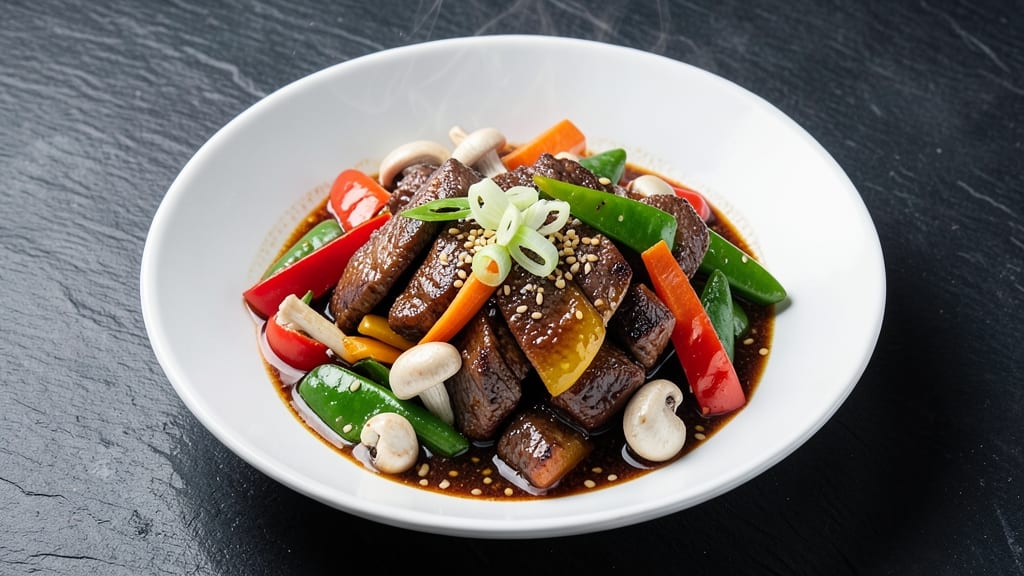
This beef and vegetable stir-fry sauce recipe transforms any homemade meal into a restaurant-worthy dish with just five minutes of prep. The secret lies in balancing umami-rich soy sauce with sweet, aromatic ingredients like garlic, ginger, and a touch of honey—creating a glaze that caramelizes beautifully during cooking.
I developed this sauce after years of testing stir-fry recipes, and it consistently delivers that perfect harmony of savory, slightly sweet, and tangy flavors.
The foundation of this sauce is simplicity: a combination of soy sauce, oyster sauce, and a splash of rice vinegar for brightness. Fresh garlic and ginger add depth, while a hint of honey or brown sugar rounds out the flavor profile.
What makes this sauce special is its versatility—it works equally well with beef, chicken, shrimp, or even tofu, and pairs perfectly with an array of vegetables like bell peppers, broccoli, and snap peas.
Once you’ve mixed the ingredients, this sauce can be made ahead and stored in the refrigerator for up to a week or frozen for longer shelf life. The flavors deepen over time, making it an ideal pantry staple for quick weeknight dinners.
Whether you're cooking for one or feeding a crowd, this 5-minute prep sauce ensures every bite is packed with bold, balanced flavor that elevates your stir-fry to new heights.
Ready to take your stir-fry game to the next level? This sauce is the game-changer you’ve been waiting for—simple to make, impossible to resist, and guaranteed to become a regular in your recipe rotation. Let’s get started with the ingredients!
Ingredients for beef and vegetable stir fry sauce
Five simple ingredients create this umami-packed stir-fry sauce that elevates any dish.
| Ingredient | Amount | Notes |
|---|---|---|
| Soy Sauce 🥢 | ½ cup | High-quality, preferably Japanese |
| Oyster Sauce 🦪 | ¼ cup | Thick and rich, not watery |
| Rice Vinegar 🍶 | 2 tbsp | Seasoned or unseasoned |
| Honey 🍯 | 2 tbsp | Pure, not artificial |
| Garlic Cloves 🧄 | 4 cloves | Freshly minced for best flavor |
| Fresh Ginger 🌿 | 1 tbsp | Grated, not powdered |
| Sesame Oil 🫒 | 1 tbsp | Toasted, for aroma |
| Cornstarch 🌾 | 1 tsp | For thickening sauce |
| Water 💧 | ½ cup | Room temperature |
| Salt 🧂 | ½ tsp | Adjust to taste |
The soy sauce is non-negotiable—Kikkoman or Yamasa are my go-tos, but any good Japanese brand works. Oyster sauce? Lee Kum Kee is the gold standard, but don't stress if that's not available. The fresh ginger and garlic are where the magic happens—grate the ginger yourself for maximum zing, and mince the garlic finely so it blends smoothly. If you're using powdered ginger, cut it in half. For the honey, raw or local works best—it's got more depth than the processed stuff. Sesame oil might be pricey, but a little goes a long way—Trader Joe's has a great affordable option.
No oyster sauce? Hoisin sauce plus a dash of soy sauce works in a pinch. Short on honey? Brown sugar dissolved in warm water does the trick. The cornstarch is key for that glossy finish—if you don't have any, arrowroot powder works too. Want to make this spicier? Add a pinch of red pepper flakes or a dash of sriracha. The sauce thickens as it cools, so if it's too thick while cooking, just add a splash of water. For extra umami, a teaspoon of fish sauce (if not vegan) or soy sauce boosts the flavor profile.
This sauce keeps beautifully—up to 1 week in the fridge in an airtight container. The flavors actually improve over time, so make extra. Freeze portions in ice cube trays for easy single-use servings. When reheating, warm gently on the stove and stir in a splash of water if it thickens too much. It's perfect for marinades, dipping sauces, or tossing with cooked veggies and protein. The 5-minute prep makes it ideal for busy weeknights—just mix, taste, and adjust.
Why You'll Love This Recipe
- Pantry Magic: I swear by this sauce—no fancy ingredients, just what’s already lurking in my cabinet. That jar of oyster sauce? The honey I bought on sale? They transform into something ridiculously good with zero extra shopping.
- Umami Bomb: The garlic hits first—sharp and bright—then the soy and oyster sauce wrap around your tongue like a warm hug. Honestly, the honey adds this unexpected depth that makes it taste like you slaved over it (even though you didn’t).
- Leftover Hero: This sauce keeps for weeks in the fridge, and it only gets better as flavors meld. Toss it with last night’s rice, freeze half for next month, or drizzle it over cold noodles—it’s the ultimate lazy-day savior.
- Budget Stretch: For under $5, I feed my family four meals that actually taste like a restaurant. Between us, that’s a win. The vinegar cuts costs, the honey sweetens without breaking the bank, and the garlic? You’ll use it all before it spoils.
Step-by-step instructions for beef and vegetable stir fry sauce
Here's how to whip up this umami-rich sauce in minutes—no fancy skills required.
Prepare the Aromatics
Start by mincing the 4 cloves garlic cloves and grating the 1 tablespoon fresh ginger. I like to use a fine grater for the ginger so it blends smoothly into the sauce without any noticeable texture. Let the ginger sit in a small bowl for 5 minutes while you prep the rest—this helps release its natural oils and intensifies the flavor.
In a separate small bowl, whisk together the 0.5 cup soy sauce, 0.25 cup oyster sauce, 2 tablespoons rice vinegar, 2 tablespoons honey, and 0.5 teaspoon salt. This creates the flavor base that will develop into a rich, balanced sauce. The vinegar adds brightness, while the honey rounds out the acidity and adds just a touch of sweetness that complements the savory elements.
Build the Sauce Base
Pour the wet ingredients into a small saucepan and place it over medium heat. Add the minced garlic and grated ginger, stirring constantly for 2-3 minutes until the mixture begins to bubble gently. You'll notice the aroma filling your kitchen—that's your cue that the aromatics are releasing their full flavor potential.
Let the sauce simmer for 3-4 minutes until it thickens slightly and reduces by about 20%. You're looking for a syrupy consistency that will coat the back of a spoon. If it thickens too quickly, add 1 tablespoon of the 0.5 cup water to keep it smooth. The goal is a sauce that's thick enough to cling to your stir-fried beef and vegetables but still pourable.
Thicken and Finish
In a small bowl, mix the 1 teaspoon cornstarch with 2 tablespoons of the 0.5 cup water until completely dissolved. This slurry is your secret weapon for achieving that perfect glossy, restaurant-quality finish. Slowly pour the cornstarch mixture into the simmering sauce while stirring constantly.
Continue cooking for 1-2 minutes until the sauce reaches your desired consistency. It should coat the back of a spoon but still be smooth enough to drizzle. For extra depth of flavor, stir in the 1 tablespoon sesame oil just before removing from heat. This adds a nutty aroma that perfectly complements the umami richness of the sauce. Taste and adjust seasoning if needed—you might want to add a touch more soy sauce for saltiness or a splash of rice vinegar for brightness.
Ready to Use
Remove the sauce from heat and let it cool for 2-3 minutes. This resting period allows the flavors to meld together and the sauce to reach its ideal consistency. The sauce will thicken slightly as it cools, so don't worry if it looks a bit runny right after cooking.
Your umami-packed stir fry sauce is now ready to use! I recommend using it immediately on your stir-fried beef and vegetables, but it will keep in an airtight container in the refrigerator for up to 5 days. When reheating, warm gently over low heat and stir in a splash of water if it thickens too much. This sauce is incredibly versatile—try it with chicken, shrimp, or even tofu for a delicious meal.
Pro Tips For Making Beef And Vegetable Stir Fry Sauce
- Bloom the Garlic: Mince those cloves fine—like sand, not confetti—and toss them in the hot wok with a splash of water first. I learned this the hard way: raw garlic burns fast and tastes bitter. Let it sizzle for 30 seconds until fragrant before adding everything else.
- Balance the Honey: Add the honey last, when the sauce is already simmering. Too early, and it burns into a bitter sludge. Stir it in just before tossing the beef—this keeps the sweetness bright and glossy, not cloying. (Yes, even if you’re impatient like me.)
- Deglaze with Vinegar: After cooking the beef, hit the pan with a quick splash of rice vinegar before adding the sauces. It cuts through any stuck-on bits and brightens the whole dish. Skip this, and your stir-fry tastes like it’s missing something—like a missing note in a song.
- Simmer the Sauces: Reduce the soy and oyster sauce mixture over low heat for 2–3 minutes before tossing. This thickens it naturally and mellows the saltiness. I used to dump it all in raw, and the sauce would turn watery—now it clings to the beef like it’s supposed to.
Essential equipment for perfect results
Wok Essentials
Your wok is the star of stir-fry cooking, and a carbon steel wok from Mauviel or Baldwin is my top recommendation for that classic high-heat sear. If you're on a budget, a stainless steel wok like the T-fal version works well too.
Sauce Thickener Tools
A small whisk or rubber spatula is essential for mixing your sauce smoothly without splattering. I prefer a silicone spatula for its flexibility—it scrapes every last bit of sauce from the pan. For the cornstarch slurry, a small bowl and fork work perfectly, but a shot glass also gets the job done when you're short on time. Keep these tools handy as you build the sauce to maintain that glossy, restaurant-quality finish.
Measuring Precision
For accurate measurements, I recommend a set of digital kitchen scales (like OXO Good Grips) for ingredients like soy sauce and honey where precision matters. A measuring spoons set from Amazon Basics is perfect for the cornstarch and sesame oil.
Don't skip measuring—even small variations can throw off the sauce's balance. Pro tip: Use a small ladle to transfer the sauce from pan to bowl without spills while cooking.
Heat Control Accessories
A long-handled spatula (I love the Nordic Ware brand) gives you the reach and control needed to stir-fry beef and veggies without burning yourself. For sauce simmering, a small saucepan with lid helps contain splatter while building flavor.
If you're new to stir-fry cooking, a thermometer (like Thermoworks Smoke) helps monitor heat—ideal wok temps hover around 350-400°F for that perfect sear.
Storage Containers
Once your sauce is ready, store it in glass airtight containers (like Pyres Glass) for up to 5 days in the fridge. For longer storage, silicone ice cube trays work great—freeze individual portions to use as needed.
Label your containers with the date to track freshness. I also keep a small jar in my pantry for quick access during weeknight cooking—just grab and go! ❄️
Nutrition facts
Frequently asked questions
Can I make this sauce without oyster sauce?
Swap the 0.25 cup oyster sauce with 2 tablespoons hoisin sauce plus 1 tablespoon extra soy sauce for similar depth. For a vegetarian version, use 2 tablespoons mushroom sauce or 1 tablespoon soy sauce plus 1 tablespoon maple syrup to maintain sweetness and umami.
How do I adjust the sweetness level?
The 2 tablespoons honey provides balanced sweetness, but you can reduce it to 1 tablespoon for less sweetness or increase to 3 tablespoons for a richer caramelized flavor. For a sugar-free version, omit the honey entirely and add 1 teaspoon molasses instead.
Can I use this sauce for other proteins besides beef?
This sauce works beautifully with chicken, shrimp, pork, or tofu! For seafood, reduce the soy sauce to 0.375 cup to avoid overpowering delicate flavors. With tofu, add 1 teaspoon fish sauce (if not vegan) or an extra 0.5 teaspoon salt to enhance umami.
Why did my sauce turn out too thick?
Sauces naturally thicken as they cool, but if it's too thick while cooking, stir in 1 tablespoon water at a time until smooth. For future batches, reduce the cornstarch to 0.5 teaspoon or use arrowroot powder instead—it thickens more gently. Always stir constantly when adding the cornstarch slurry.
How can I make this sauce spicier?
Add 0.5 teaspoon red pepper flakes or 1 teaspoon sriracha while simmering, or stir in 1 teaspoon chili garlic sauce at the end. For heat control, start with 0.25 teaspoon red pepper flakes and adjust to taste—spices intensify as the sauce cools.