
Soups & Stews
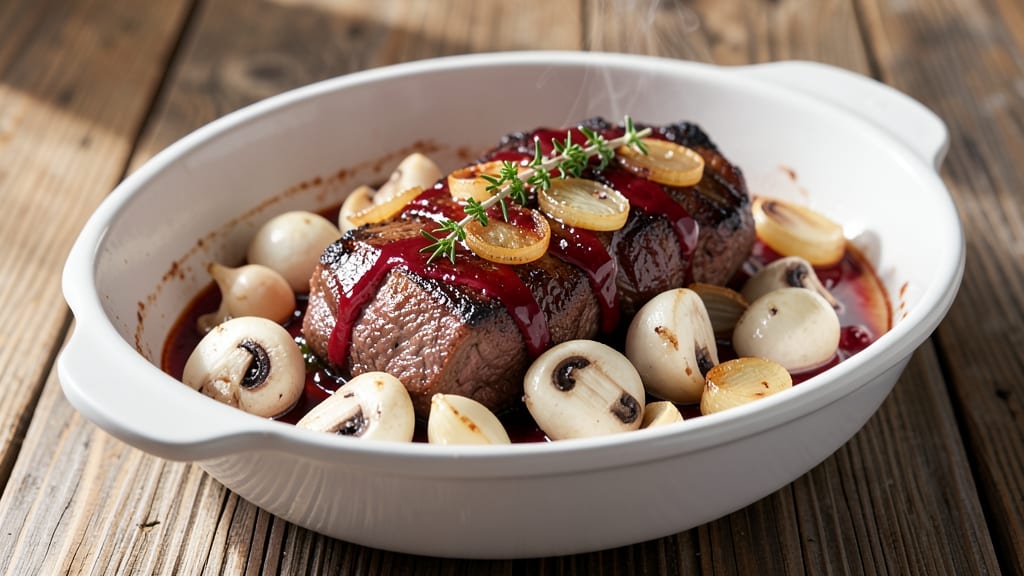
A beef au vin recipe transforms tough beef into melt-in-your-mouth tenderness through slow braising, where rich red wine, aromatic herbs, and caramelized shallots create a sauce that's both elegant and deeply satisfying. This classic French technique—searing beef deeply before simmering it in wine—builds layers of flavor that turn a simple dinner into a restaurant-worthy experience. The key lies in patience: letting the wine reduce while the beef becomes fork-tender, with mushrooms adding earthy depth.
The process begins with a Dutch oven, where beef sears to a deep brown crust before wine, broth, and herbs transform it into a velvety sauce. Deglazing the pan captures every flavorful bit, while thyme and bay leaf infuse the wine with aromatic warmth.
Unlike quick weeknight meals, this dish rewards time—each hour of braising breaks down the meat until it's fall-apart tender, coated in a sauce that balances wine's acidity with sweet mushrooms and shallots.
What sets this apart is how the wine's acidity tenderizes the beef while developing complex flavors—think dark fruit, caramelized edges, and a hint of spice from the herbs. The result is a dish that feels indulgent yet approachable, perfect for impressing guests without requiring advanced skills.
Serve it with creamy mashed potatoes or crusty bread to soak up every last drop of that deep red sauce.
For home cooks, the secret is in the technique: don't rush the sear or the reduction. Let the wine simmer until it thickens naturally, and trust the process—this is a dish where time turns simple ingredients into something extraordinary.
The aroma alone will have everyone at the table anticipating the first bite.
Ingredients for beef au vin
Elegant yet approachable ingredients transform simple beef into restaurant-quality braise.
| Ingredient | Amount | Notes |
|---|---|---|
| Beef Chuck Roast 🥩 | 2 lb | Cut into 1.5-inch cubes, trimmed of fat |
| Dry Red Wine 🍷 | 2 cups | Bold variety like Cabernet Sauvignon or Merlot |
| Beef Broth 💧 | 1 cup | Low-sodium preferred for flavor balance |
| Shallots 🧅 | 6 whole | Minced, approximately 0.5 cup total |
| Garlic Cloves 🧄 | 4 cloves | Minced, for aromatic depth |
| White Mushrooms 🍄 | 16 oz | Sliced into 0.5-inch pieces, stems removed |
| All-Purpose Flour 🌾 | 2 tbsp | For dredging beef before searing |
| Fresh Thyme 🌿 | 2 sprigs | Or 1 tsp dried thyme if fresh unavailable |
| Bay Leaves 🍃 | 2 whole | For deep herbal infusion |
| Tomato Paste 🍅 | 1 tbsp | For sauce depth and color |
| Olive Oil 🫒 | 2 tbsp | Extra-virgin for high-temperature searing |
| Diamond Crystal Kosher Salt 🧂 | 1 ½ tsp | For seasoning and flavor development |
| Freshly Ground Black Pepper 🌶️ | 1 tsp | For balanced seasoning |
| Unsalted Butter 🧈 | 2 tbsp | For finishing sauce richness |
The beef selection is critical—chuck roast delivers that signature fall-apart texture through its connective tissue, while sirloin or ribeye would remain too firm. For optimal quality, source from Whole Foods or a trusted butcher where you can verify the marbling; well-marbled beef ensures juiciness during the long braise. The wine should be dry and bold, like a Cabernet Sauvignon or Merlot—avoid sweet varieties that will cloy with the rich sauce. Fresh thyme and bay leaves from Penzeys Spices or local farmers' markets elevate the dish with their vibrant aromatics, but dried alternatives work in a pinch (use one-third the amount).
No red wine on hand? Substitute with beef broth and 1 tbsp balsamic vinegar for acidity, though the sauce will lack the wine's complex fruit notes. Swap shallots for 1 cup finely diced yellow onion if unavailable, though shallots provide a more delicate sweetness. The mushrooms can be cremini or oyster varieties for deeper umami, but white mushrooms maintain the classic presentation. For a quicker prep, use pre-minced shallots and garlic from the refrigerated section at Trader Joe's, though fresh mincing yields superior flavor. The tomato paste can be substituted with 1 cup crushed tomatoes if preferred, though paste provides a more concentrated depth.
This dish rewards patience—plan for 3-4 hours of active and passive cooking time. The beef can be prepped and refrigerated overnight in the wine mixture for enhanced tenderness. Store leftovers in an airtight container for up to 5 days in the refrigerator, though the flavor deepens upon reheating. For freezer storage, portion into individual servings and freeze for up to 3 months. The sauce thickens as it cools, so a splash of broth or water can be added when reheating if needed. Serve with creamy mashed potatoes or crusty baguette to complement the rich sauce.
Why You'll Love This Recipe
- One-Pot Magic: I swear by this—the beef roast and wine simmer together in the same pot, so you’re not juggling a million dishes. Just brown the meat, toss in the shallots and garlic, then let the wine and broth do their thing while you sip your own glass.
- Rich Without Effort: That deep, velvety sauce? It’s all thanks to the red wine and beef broth reducing down—no fancy techniques, just patience. The garlic and shallots caramelize into something so savory, you’ll forget how little work it took.
- Weeknight Hero: Between us, this is my go-to when I need something impressive but not stressful. Serve it over mashed potatoes for a cozy night in, or slice it cold for sandwiches the next day. (Yes, even on a Tuesday night.)
- Leftovers That Win: The sauce gets better after a day in the fridge—honestly, it’s my secret weapon for lunch. I’ll reheat a portion with crusty bread and a side salad, and suddenly, dinner feels like a whole meal again. Budget-friendly? Absolutely.
Step-by-step instructions for beef au vin
A rich, wine-infused braise that transforms tough beef into melt-in-your-mouth tenderness. Precision timing and technique ensure deep flavor without bitterness.
Sear the Beef for Maximum Flavor
Pat the 2 lb beef chuck roast dry with paper towels and cut into 1.5-inch cubes, trimming excess fat. Season generously with 1.5 tsp diamond crystal kosher salt and 1 tsp freshly ground black pepper on all sides. Let sit at room temperature for 30 minutes while you prepare the pan.
Heat a large Dutch oven over medium-high heat until smoking hot. Add 2 tbsp olive oil and swirl to coat. Working in batches to avoid crowding, add the beef cubes and sear for 2-3 minutes per side until deeply browned with a crust. Transfer seared beef to a plate and set aside. The browned bits left in the pan will form the foundation of your sauce.
Deglaze and Build the Sauce Base
Return the Dutch oven to medium heat and add 2 tbsp all-purpose flour, stirring vigorously for 1 minute to cook out the raw flour taste. Immediately pour in 2 cups dry red wine, scraping up all the browned bits with a wooden spoon. This deglazing step captures all the beefy flavor that would otherwise stick to the bottom.
Simmer the wine mixture for 5-6 minutes until reduced by half. Add 1 cup beef broth, 1 tbsp tomato paste, 6 minced shallots, 4 minced garlic cloves, 2 sprigs fresh thyme, and 2 whole bay leaves. Stir well and bring to a gentle simmer. The sauce should coat the back of a spoon but still be pourable.
Braise Until Fork-Tender
Return all the seared beef to the Dutch oven along with any accumulated juices. Bring the mixture to a gentle simmer, then reduce heat to low. Cover tightly with a lid and transfer to a 350°F oven for 2.5-3 hours. This slow cooking time breaks down the connective tissue, transforming tough beef into fork-tender morsels.
Check for doneness after 2 hours—the beef should be tender enough to pierce easily with a fork. If it's not quite there, return to the oven for another 30-minute interval. Avoid lifting the lid during cooking to prevent steam from escaping, which would dry out the beef.
Finish with Mushrooms and Butter
Remove the Dutch oven from the oven and discard the thyme sprigs and bay leaves. Increase heat to medium and add 16 oz sliced white mushrooms, stirring to combine. Cook for 5-6 minutes until the mushrooms release their moisture and begin to soften. This step adds earthy depth and texture contrast to the dish.
Reduce heat to low and stir in 2 tbsp unsalted butter, letting it melt into the sauce. The butter adds richness and helps emulsify the sauce for a silky finish. Taste and adjust seasoning with additional diamond crystal kosher salt or freshly ground black pepper as needed. The sauce should be balanced—acidic from the wine, savory from the beef, and slightly sweet from the tomato paste.
Rest and Serve
Let the beef au vin rest for 10-15 minutes before serving. This resting period allows the juices to redistribute throughout the beef and the sauce to thicken slightly. Serve directly from the Dutch oven, ladling the beef and sauce over mashed potatoes, egg noodles, or crusty bread to soak up every last bit of that luxurious sauce.
The final dish should feature tender beef that nearly falls apart at the touch, a glossy sauce with deep red wine notes, and mushrooms that have absorbed the flavors without disappearing. Each bite should deliver a perfect balance of richness, acidity, and umami—proof that slow cooking transforms simple ingredients into something extraordinary.
Pro Tips For Making Beef Au Vin
- SEAR THE ROAST LONG: I learned this the hard way—rushing the sear means a pale, flavorless crust. Get that beef chuck roast deep brown on all sides (about 8–10 minutes total, flipping once), even if it looks uneven. The Maillard reaction needs time, and skipping this step means your wine sauce will taste like it’s missing its soul.
- SWEEP OUT THE PAN: After searing, don’t just dump in the wine. Wipe out the fond (those browned bits) with a paper towel—it’s the flavor bomb of this dish. A quick 30-second scrape with a wooden spoon won’t cut it; grab that towel and work it. That fond turns into the base of your sauce, not a burnt aftertaste.
- DEGLAZE HOT, REDUCE LOW: Pour in that red wine right after removing the roast—the pan’s still screaming hot, and the alcohol will sizzle like a dream. Let it bubble hard for 2 minutes, then lower the heat to medium-low to reduce. I used to walk away too soon, and the sauce ended up thin and sad. Patience here makes all the difference.
- USE A SPLASH OF BROTH FIRST: Before adding the full beef broth, toss in a quick ¼ cup to help loosen the fond and deglaze faster. It’s a tiny shortcut that keeps your sauce from turning into wine-flavored water. (Yes, even if you’re impatient like me.) The broth also balances the acidity of the wine—trust the process.
Storing and reheating your leftovers
Refrigerator Storage
Let your beef au vin cool completely before transferring to an airtight container—I use glass Pyrex with a tight-sealing lid. Store in the fridge for up to 4 days, though the flavors actually deepen overnight as the wine and herbs meld.
The sauce thickens slightly when chilled, so a splash of beef broth when reheating restores its velvety texture. 🥫
Freezer Prep Tips
For long-term storage, portion the beef au vin into freezer-safe containers or quart-sized freezer bags, leaving 1-inch headspace for expansion. Freeze for up to 3 months—the beef remains tender, though the sauce may separate slightly.
Thaw overnight in the fridge before reheating for best results. Avoid refreezing after thawing. ❄️
Stovetop Reheating
My preferred method is stovetop reheating, which preserves the sauce’s richness. Transfer the beef and sauce to a heavy-bottomed pot (like your Dutch oven) and heat over medium-low heat for 10-15 minutes, stirring occasionally.
Add 2-3 tablespoons of beef broth if the sauce looks too thick. Taste and adjust seasoning—leftovers often need a pinch more salt or black pepper. 🔥
Microwave Shortcuts
For quick meals, use the microwave on 50% power in 2-minute intervals, stirring between each interval. Cover with a microwave-safe lid or damp paper towel to prevent drying. Start with 6-8 minutes total, then check for doneness—165°F internal temperature for the beef.
Add a splash of broth if the sauce separates. Not as ideal as stovetop, but convenient for busy nights. ⏰
Sauce Rescue
If your reheated sauce is too thick, whisk in 1-2 tablespoons of beef broth or red wine to loosen it. For separated sauce, remove the beef and simmer the sauce alone for 2-3 minutes to emulsify.
Stir in a pat of cold butter (about 1 tbsp) to restore silkiness. The beef will absorb flavors as it reheats, so don’t worry about over-mixing. 💡
Serving Leftovers
Leftover beef au vin makes an even better sandwich the next day! Pile the beef and sauce onto toasted baguette slices, top with caramelized onions, and drizzle with extra sauce.
For a lighter option, serve over mashed potatoes or egg noodles. The flavors are so rich that leftovers often taste better reheated—proof that patience pays off. 🍞
Nutrition facts
Frequently asked questions
Can I use a different cut of beef for this recipe?
Chuck roast is ideal because its connective tissue breaks down beautifully during braising, creating that signature tender texture. However, you can substitute with stew beef or brisket for similar results. Avoid leaner cuts like sirloin or filet mignon, as they'll dry out. If using a tougher cut, increase braising time by 30-60 minutes.
What if I don't have red wine? Can I substitute?
Yes! Use 2 cups beef broth plus 1 tbsp balsamic vinegar for acidity. For deeper flavor, add 1 tbsp red wine vinegar and ½ tsp red food coloring (optional). The sauce will lack wine's complexity, but it'll still be delicious. Avoid sweet wines—they'll make the dish cloying rather than balanced.
How do I know when the beef is fully tender?
The beef is done when it's fork-tender—it should pierce easily with minimal resistance. For chuck roast, this typically takes 2.5-3 hours in the oven. Test by inserting a fork into the thickest piece; if it slides in like butter, it's ready. If the beef still feels firm after 3 hours, add ¼ cup water and cook 30 more minutes.
Can I make this recipe in a slow cooker?
Brown the beef in a skillet first, then transfer everything (including the browned bits) to a 6-quart slow cooker. Cook on low for 7-8 hours or high for 4-5 hours. The slow cooker's gentle heat will tenderize the beef beautifully. Just add the mushrooms during the last 30 minutes of cooking to prevent them from turning mushy.
Why did my sauce turn bitter?
Bitterness usually comes from over-reducing the wine or letting the sauce boil too vigorously. To fix it, whisk in 1 tbsp unsalted butter or 1 tbsp heavy cream to balance the acidity. For prevention, keep the sauce at a gentle simmer (small bubbles) rather than a rolling boil. If the wine tastes harsh, use a drier red wine next time—sweeter varieties can develop bitterness faster.