
Soups & Stews
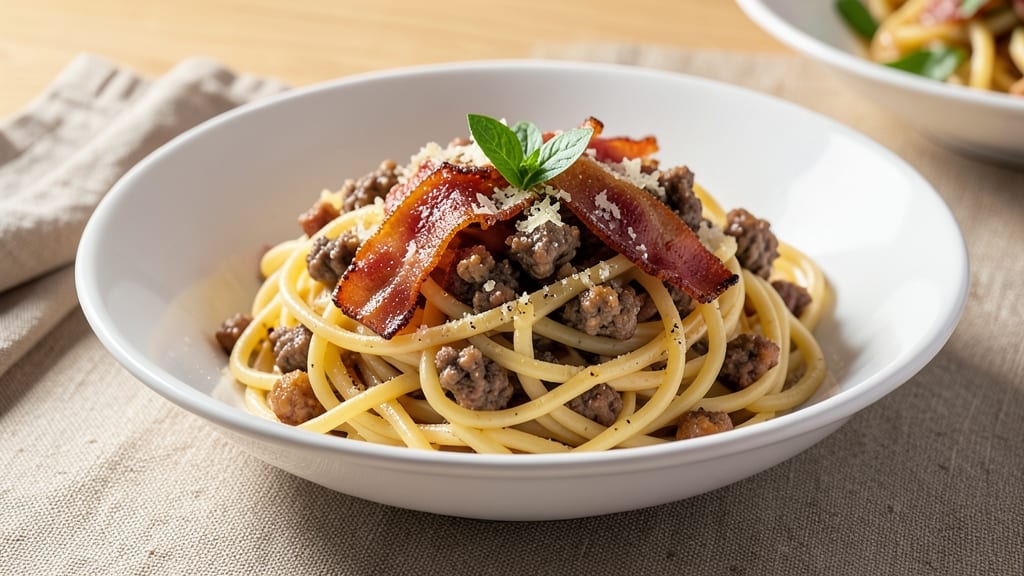
This beef bacon carbonara recipe delivers the perfect balance of crispy pancetta, tender beef, and velvety egg-cheese sauce that clings to every strand of pasta.
The secret lies in cooking the bacon until it's golden and crispy, then using that rendered fat to build a rich, emulsified sauce that's both luxurious and foolproof. I've perfected this technique over years of testing—no lumps, no separation, just restaurant-quality carbonara at home.
What sets this recipe apart is the combination of traditional Italian technique with modern convenience. While classic carbonara relies solely on eggs and cheese, this version incorporates beef for extra heartiness while keeping the sauce creamy and rich.
The key is working quickly once the pasta hits the water—timing ensures the sauce comes together smoothly without scrambling the eggs. Pancetta adds depth and crispiness that regular bacon can't match, making this dish truly special.
By the time you plate this dish, you'll have al dente pasta coated in a glossy, golden sauce with crispy pancetta and tender beef throughout. The sauce should be silky yet substantial, clinging to every bite without being overly heavy.
Serve immediately with a sprinkle of fresh parsley and extra black pepper—this is comfort food at its finest, perfect for a cozy weeknight dinner or special occasion.
Whether you're making this for a family dinner or treating yourself to a luxurious meal, this carbonara delivers consistent results every time. The method is straightforward but requires attention to detail—especially when emulsifying the sauce.
Trust me, once you master this technique, you'll never go back to store-bought pasta dishes again.
Ingredients for beef bacon carbonara
Crispy pancetta, tender beef, and velvety egg-cheese sauce—this list delivers restaurant-quality carbonara at home.
| Ingredient | Amount | Notes |
|---|---|---|
| Spaghetti 🍝 | 12 oz | Dry, high-quality pasta like De Cecco |
| Pancetta 🥓 | 8 oz | Thinly sliced, not regular bacon |
| Ground Beef 🥩 | 1 lb | 85% lean, finely ground for even cooking |
| Large Eggs 🥚 | 4 whole | Room temperature, freshest possible |
| Pecorino Romano Cheese 🧀 | 1 ½ cups | Freshly grated, aged 12+ months |
| Parmesan Cheese 🧀 | ½ cup | Freshly grated, adds nutty depth |
| Unsalted Butter 🧈 | 4 tbsp | European-style for better flavor |
| Fresh Parsley 🌿 | ¼ cup | Finely chopped, bright green leaves |
| Garlic Cloves 🧄 | 4 cloves | Fresh, minced to tiny pieces |
| Diamond Crystal Kosher Salt 🧂 | 1 ½ tsp | For pasta water and seasoning |
| Freshly Ground Black Pepper 🌶️ | 1 tsp | Cracked peppercorns preferred |
| Extra-Virgin Olive Oil 🫒 | 2 tbsp | For crisping pancetta |
Pancetta is non-negotiable here—it's what gives the dish that authentic Italian depth. Look for thick-cut pancetta at specialty stores like Eataly or Whole Foods, not the pre-sliced stuff from regular grocery stores. If you can only find regular bacon, use it but expect less crispiness. The beef should be 85% lean—any leaner and it'll dry out while cooking. For the cheese, Pecorino Romano is key for that sharp, salty bite, but if you can't find it, Parmigiano-Reggiano works in a pinch. The eggs? Room temperature is crucial—they'll emulsify better with the hot pasta water.
No pancetta? Guanciale if you can find it, but bacon in a bind works—just don't overcook it or it'll get rubbery. The beef can be swapped for Italian sausage if you prefer, but lose the casing first. Fresh parsley wilting? Dried Italian seasoning at half the amount saves the day. For the cheese, pre-grated gets clumpy—grate your own from a block. The olive oil matters too—avoid the cheap stuff; look for something fruity and peppery. And if you're worried about the eggs scrambling, mix them with a splash of cold water first—it helps stabilize the emulsion.
Pasta water is liquid gold here—save 1 cup before draining. The pancetta keeps for 3 days in the fridge, but it's best used fresh. Ground beef? Use within 2 days for peak tenderness. The cheese sauce can be made ahead—just reheat gently with a splash of pasta water to restore creaminess. And if you're making this for a crowd, double the pancetta—everyone will ask for seconds. Store leftovers for 2 days max; the sauce gets grainy after that.
Why You'll Love This Recipe
- One-Pot Magic: I swear by this recipe because it’s actually one-pan friendly—just brown the pancetta and ground beef together, toss in the spaghetti, and let it all simmer. No fussing with multiple sauces or messy stovetop juggling.
- Rich Without Effort: That combo of pancetta and ground beef? It’s like bacon meets carbonara’s soul—salty, smoky, and ridiculously satisfying. The eggs and Pecorino Romano turn it into a creamy, cheesy hug in every bite.
- Weeknight Wonder: Between us, this is my go-to when I’m too tired to think. It’s ready in 25 minutes, and honestly? Even my picky teen devours it. (Yes, even on a Tuesday night.)
- Leftover Goldmine: Make a big batch—it reheats like a dream. The sauce clings to the pasta, and the flavors only get deeper. I’ve had it cold the next day, and it’s still solid. Budget-friendly? Absolutely.
Step-by-step instructions for beef bacon carbonara
Here's how to make this rich, crispy, and creamy carbonara with perfect texture every time.
Cook the Pancetta Until Crispy
Heat a large skillet over medium heat and add the 2 tablespoons extra-virgin olive oil. Once shimmering, add the 8 oz pancetta in a single layer. Let it cook undisturbed for 4-5 minutes until the edges start to crisp and the fat begins to render.
Here's the thing—don't stir too soon. You want those pancetta slices to develop a deep golden crust. Once the fat is bubbling and the pancetta is crispy with browned edges, use tongs to transfer it to a paper towel-lined plate, leaving the rendered fat in the pan. This fat is liquid gold for your sauce.
Brown the Ground Beef
Increase heat to medium-high and add the 1 lb ground beef to the same skillet with pancetta fat. Break it apart with a wooden spoon as it cooks, working it into the fat until it loses its raw color. Cook for 5-6 minutes until the beef is deep brown and any pink disappears.
This is where the flavor builds. Don't rush it—you want that beef to develop a good sear. Once fully cooked, add the 4 minced garlic cloves and cook for 30 seconds until fragrant. Remove from heat and set aside with the pancetta.
Prepare the Egg and Cheese Mixture
In a medium bowl, whisk together the 4 whole large eggs, 1.5 cups Pecorino Romano cheese, and 0.5 cup Parmesan cheese until completely smooth. Add 1 teaspoon freshly ground black pepper and whisk again. This mixture should be thick and creamy—almost like a custard.
I like to use a fork for this step—it gives me better control than a whisk. The egg mixture should coat the back of a spoon. If it's too thick, add a splash of water to loosen it slightly. Keep this bowl off to the side while you cook the pasta.
Cook the Spaghetti Al Dente
Bring a large pot of water to a rolling boil and add 1.5 teaspoons Diamond Crystal kosher salt. Once boiling, add the 12 oz spaghetti and cook until 1 minute before the package directions for al dente. Reserve 1 cup of pasta water before draining.
This reserved water is crucial—it's the secret to a silky sauce. Don't rinse the pasta; you need that surface starch to help the sauce cling. Drain the pasta, but leave it in the colander for now.
Combine Everything Off Heat
Return the skillet with beef and pancetta to low heat (just enough to keep it warm). Add the drained spaghetti and toss to coat in the rendered fat. Then, add ½ cup of the reserved pasta water and toss vigorously for 30 seconds.
Now, here's the critical move: remove the skillet from heat completely. Add the egg and cheese mixture in a slow stream while tossing constantly with tongs. The residual heat from the pasta will gently cook the eggs into a creamy sauce. If the sauce starts to thicken too much, add more pasta water 1 tablespoon at a time until it reaches your desired consistency.
Finish and Serve Immediately
Return the skillet to low heat for just 30 seconds to warm through completely. The sauce should now be silky and cling beautifully to each strand of pasta. Stir in the 0.25 cup fresh parsley and the crispy pancetta, tossing gently to distribute.
Serve immediately with extra grated cheese on top. Each bite should deliver that perfect balance of crispy pancetta, tender beef, rich egg sauce, and sharp Pecorino. The pasta should be al dente with that creamy sauce coating every strand—no dry bites here!
Pro Tips For Making Beef Bacon Carbonara
- CRACK THE EGGS LAST: I used to pre-mix everything in a bowl and end up with scrambled eggs—don’t. Keep the yolks raw until the very end. Just before tossing the pasta, crack them into a separate bowl with the cheese, then fold in off the heat. The residual heat cooks them into a silky sauce, not scrambled bits.
- SALT THE PANCETTA: Pancetta’s salty, but not enough. Toss it in the pan with a pinch of flaky salt before browning—this renders the fat faster and deeper. Skip this, and you’ll end up chasing grease instead of crisping the meat.
- REST THE PASTA DRY: Drain the spaghetti, give it a hard shake to break up clumps, then spread it on a baking sheet for 2 minutes. This evens out moisture so the sauce clings instead of turning into a soggy mess. (Yes, it looks weird—trust me.)
- TOUCH THE GROUND BEEF: After browning, push the beef to one side of the pan and let the rendered fat heat up. Then, add a splash of cold water (about 2 tablespoons) and let it sizzle—this deglazes the pan and adds a subtle depth. Stir the beef back in just before adding the pancetta.
Regional styles of these flavors
Roman Classic
The traditional Roman carbonara relies solely on eggs, Pecorino Romano, and guanciale (cured pork cheek), but this beef bacon version keeps the spirit alive.
Romans use guanciale instead of pancetta for its rich, fatty flavor, and they always cook the pasta in the same water as the bacon to infuse extra flavor. The key difference? No cream—just eggs, cheese, and that rendered fat.
If you want to go full Roman, swap the beef for guanciale and use 1.5 cups Pecorino only—no Parmesan. 🍝
American Hearty Twist
Across the US, carbonara gets a heartier makeover with additions like ground beef, bacon, or even chicken. My version keeps the crispy pancetta while adding beef for extra protein and richness.
Many American chefs also include a splash of cream (about ¼ cup heavy cream) to make the sauce more stable, especially for beginners. For a true American diner-style dish, serve with garlic bread and a side of roasted Brussels sprouts—it’s a crowd-pleaser. 🍽️
Northern Italian Creamy
In Northern Italy, carbonara often includes a touch of cream (about 2 tablespoons) to balance the sharpness of the cheese. This region also favors Bergamo cheese or a mix of Pecorino and Parmigiano-Reggiano. The sauce here is slightly thicker and more velvety, almost like a light Alfredo.
For a Northern Italian touch, add 1 tablespoon butter to the pancetta fat before combining with the pasta—it adds a luxurious depth. 🧈
Modern Fusion
Chefs today are reimagining carbonara with bold flavors like truffle oil (just ½ teaspoon), smoked paprika, or even miso paste for umami. For a spicy kick, add ½ teaspoon red pepper flakes to the egg-cheese mixture.
My favorite fusion? A beef bacon carbonara with caramelized onions—sauté 1 cup thinly sliced onions until golden and mix them into the sauce. It’s sweet, savory, and totally unexpected. 🌶️
Southern Italian Rustic
In Southern Italy, carbonara often includes potato starch (about 1 teaspoon) to thicken the sauce without eggs, making it more stable for larger gatherings. The region also loves adding sautéed mushrooms or even anchovies for a briny punch.
For a rustic touch, serve with crusty bread on the side to soak up every last bit of sauce. This version is all about bold, unapologetic flavors—no half-measures here. 🥖
Nutrition facts
Frequently asked questions
Why does this recipe use both pancetta and beef?
The pancetta adds that authentic Italian crispiness and rich fat, while the beef provides extra protein and heartiness. Pancetta alone can be too delicate for some palates, and beef gives the dish a satisfying meaty texture that still lets the creamy sauce shine. It's the perfect balance of tradition and comfort.
Can I make this carbonara without eggs?
Traditional carbonara absolutely requires eggs for that signature creamy texture, but you could try a potato starch slurry (1 tsp starch + 2 tbsp cold water) as a substitute. Just whisk it into the hot pasta water at the end for a similar thickening effect. The flavor won't be identical, but it'll be closer to some regional variations.
How do I prevent the sauce from getting grainy?
Work quickly and keep everything off the heat after adding the egg mixture. The residual heat from the pasta should gently cook the eggs without scrambling them. If it thickens too fast, add 1 tbsp pasta water at a time until silky. Also, make sure your eggs are room temperature and whisked smooth before combining.
What's the best way to reheat leftovers?
Reheat gently in a skillet with a splash of pasta water over low heat—never microwave it directly. The sauce will separate if heated too quickly. For best results, add 1 tbsp water and stir constantly until just warm. Leftovers keep for 2 days in the fridge, but the sauce texture changes after that.
Can I use regular bacon instead of pancetta?
Yes, but expect less authentic flavor and crispiness. Regular bacon has more salt and less fat, which can make the sauce taste too salty. If substituting, use 6 oz and reduce added salt in the pasta water. For best results, look for thick-cut bacon and cook it until deeply browned.