
Soups & Stews
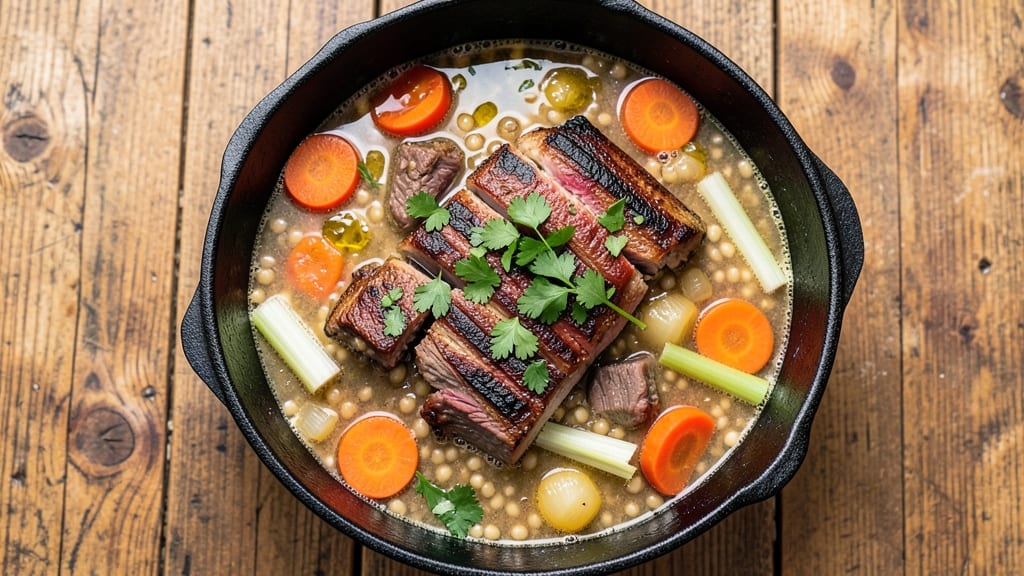
This beef barley soup recipe transforms a simple Dutch oven into a flavor powerhouse, delivering deep, slow-simmered richness that warms both body and soul.
The key lies in searing beef and vegetables until caramelized, then letting them meld into a robust broth with perfectly chewy barley—each bite packed with hearty satisfaction. I’ve perfected this version over years of testing, balancing traditional techniques with modern shortcuts for foolproof results.
The Dutch oven’s cast iron embrace ensures even heat distribution, creating a soup that’s tender yet substantial, with barley that softens just enough to hold its shape.
Unlike quick versions, this method develops layers of flavor as the soup simmers for hours, turning tough cuts into melt-in-your-mouth beef and vegetables into sweet, caramelized perfection. The aroma alone—earthy, savory, and slightly smoky—will have your kitchen (and guests) craving seconds.
What you’ll achieve is a soup that’s as comforting as it is impressive: a velvety broth thickened naturally by barley and vegetables, studded with tender beef, crisp carrots, and celery that’s sweet from slow cooking.
The barley absorbs the deep flavors while maintaining its satisfying bite, making every spoonful a balance of texture and taste. This isn’t just soup—it’s a meal that feels like a hug in a bowl.
Best served with crusty bread to soak up every last drop, this recipe scales effortlessly for crowds or leftovers that taste even better the next day. Whether you’re feeding a family or meal prepping for the week, the Dutch oven’s even heat ensures consistent, restaurant-quality results every time.
Let’s get started—your taste buds (and dinner table) will thank you.
Ingredients for beef barley soup recipe dutch oven
Hearty beef, caramelized veggies, and chewy barley—this Dutch oven soup delivers restaurant-quality depth with minimal effort.
| Ingredient | Amount | Notes |
|---|---|---|
| Chuck Roast 🥩 | 2 lb | Cut into 1-inch cubes, trimmed of fat |
| Yellow Onion 🧅 | 2 whole | Cut into 1-inch chunks |
| Carrots 🥕 | 4 whole | Medium size, cut into 1-inch chunks |
| Celery Stalks 🧄 | 4 whole | Cut into 1-inch pieces |
| Garlic Cloves 🧄 | 6 cloves | Smash lightly with knife blade |
| Pearl Barley 🌾 | 1 cup | Rinsed thoroughly |
| Beef Broth 💧 | 6 cups | Low-sodium preferred |
| Tomatoes 🍅 | 2 whole | Medium size, quartered |
| Tomato Paste 🍅 | 2 tbsp | Squeeze tube preferred |
| Dried Thyme 🌿 | 1 tsp | Or 1 tbsp fresh |
| Bay Leaves 🍃 | 2 whole | Remove before serving |
| Black Peppercorns 🌶️ | 1 tsp | Freshly cracked |
| Salt 🧂 | 1 ½ tsp | Adjust to taste |
| Olive Oil 🫒 | 2 tbsp | For searing |
| Whole Grain Mustard 🌶️ | 1 tsp | Optional for depth |
The chuck roast is your flavor anchor—look for good marbling at Costco or your butcher's counter. Pre-cut cubes save time, but if buying whole, trim excess fat and ask for even 1-inch pieces. Carrots and celery should be firm with vibrant color—no rubbery or wilted stalks. The barley? Bob's Red Mill or store-brand works fine, but rinse it well to remove excess starch. For the tomatoes, vine-ripened ones have more flavor, but canned San Marzano in a pinch gives consistent results. Fresh thyme is ideal, but dried works at one-third the amount—just crush the leaves between your fingers before adding.
No beef broth? Vegetable broth plus 1 tbsp soy sauce mimics the depth. Short on carrots? Substitute parsnips or sweet potatoes for similar sweetness. The tomato paste can be skipped if you're using fresh tomatoes, but it adds that concentrated umami punch. For extra richness, stir in 1 tbsp Worcestershire sauce (check for vegetarian version if needed). The mustard is optional but adds complexity—Dijon-style works if you don't have whole grain. Pro tip: Toast the barley in the Dutch oven for 2 minutes before adding liquid—it deepens the nutty flavor and prevents mushiness.
This soup tastes even better the next day as flavors meld. Store in the fridge for up to 5 days or freeze portions for 3 months. For reheating, add a splash of broth to prevent thickening. The Dutch oven keeps heat even, so you can reheat directly on the stove. Double the recipe—it's perfect for meal prep. The barley holds up beautifully, and the beef becomes more tender with each reheat. Leftovers make amazing sandwiches with crusty bread and a drizzle of hot sauce or grated Parmesan if you're not strict vegan.
Why You'll Love This Recipe
- Dutch Oven Magic: The chuck roast turns fork-tender while you sip coffee—no fancy equipment, just a heavy pot and patience. I swear, the slow simmer makes it taste like you’ve been cooking all day, even if you didn’t.
- Carrot-Celery Crunch: That first bite? The carrots stay just firm enough to bite into, celery adds a fresh snap, and the onions caramelize into sweetness. It’s like a hug in a bowl, but with actual texture.
- Leftovers I Actually Love: Between us, this soup only gets better the next day. The flavors meld into something deeper, and reheating it? Zero effort. I make a double batch on Sundays and live off it for days.
- Budget-Friendly Powerhouse: A chuck roast on sale and a bag of carrots from the bin? This is the kind of meal that stretches a grocery budget without sacrificing flavor. Plus, barley’s cheap and filling—win-win.
Step-by-step instructions for slow-simmered Dutch oven beef barley soup
This method delivers rich, layered flavors through careful searing and long simmering—exactly what makes Dutch oven soups special.
Sear the Chuck Roast for Deep Flavor
Heat the Dutch oven over medium-high heat until hot, then add the 2 tablespoons olive oil. Working in batches if needed, add the 2 lb chuck roast cut into 1-inch cubes, letting each piece develop a deep brown crust before stirring. This searing creates the Maillard reaction that forms the soup's foundation. You'll know it's ready when the meat releases easily from the pan and has a rich caramelized color.
Once all the beef is browned, remove it from the pot and set aside. The goal is to build flavor without burning, so watch the pan carefully. If it starts smoking too much, reduce the heat slightly. Here's the thing—those browned bits you're creating are pure flavor gold that will dissolve into the broth later.
Build the Vegetable Base with Aromatics
In the same Dutch oven, add the 2 whole yellow onions cut into 1-inch chunks, 4 whole carrots and 4 whole celery stalks also cut into 1-inch pieces. Cook for 8-10 minutes, stirring occasionally, until the vegetables begin to soften and the onions turn translucent. This step develops their natural sweetness and creates a flavorful foundation.
Add the 6 cloves garlic that you've lightly smashed with your knife blade and the 2 whole tomatoes cut into quarters. Cook for another 3-4 minutes until the garlic becomes fragrant. You'll smell that wonderful aromatic punch—this is when the soup starts to come together. Don't let the garlic burn; it should just be golden around the edges, not dark brown.
Develop Richness with Tomato Paste and Seasonings
Stir in the 2 tablespoons tomato paste and cook for 1-2 minutes until it darkens slightly and becomes incorporated. This step deepens the soup's color and adds a subtle sweetness that balances the hearty beef flavors. Add the 1 teaspoon dried thyme, 2 whole bay leaves, 1 teaspoon black peppercorns, and 1.5 teaspoons salt. Stir everything together and cook for another 1 minute to toast the spices gently.
Here's where the magic happens: Pour in the 6 cups beef broth and return the browned beef to the pot. The broth should just cover the ingredients, leaving room for the barley to absorb liquid as it cooks. Give everything a good stir to combine all the flavors. The soup should smell rich and inviting—like a warm hug in a bowl.
Simmer Until Barley is Perfectly Tender
Bring the soup to a gentle boil, then reduce the heat to low. Cover the Dutch oven and let it simmer for 1 hour 15 minutes. This slow cooking time is crucial—it allows the beef to become fork-tender while the barley absorbs the broth and becomes plump and chewy. Check occasionally to ensure the liquid doesn't reduce too much; if needed, add a little water or broth.
After the initial hour, stir in the 1 cup rinsed pearl barley and the 1 teaspoon whole grain mustard. The barley should be fully submerged in the broth. Return to a simmer and cook uncovered for another 30-45 minutes, until the barley is tender but still has a slight bite. You'll know it's ready when it's plump and the liquid has thickened slightly but isn't gluey.
Finish and Adjust for Perfect Balance
Remove the 2 whole bay leaves before serving. Taste the soup and adjust the seasoning if needed—add more salt or pepper to your preference. The soup should be rich and flavorful, with the beef falling apart easily and the barley holding its shape. If it's too thick, add a little more broth or water to reach your desired consistency.
Let the soup sit off the heat for 5-10 minutes before serving. This resting time allows the flavors to meld even more, creating a harmonious blend of beefy richness, barley chewiness, and vegetable sweetness. Serve hot with crusty bread to soak up every last drop of that comforting broth.
Pro Tips For Making Beef Barley Soup Recipe Dutch Oven
- SEAR THE ROAST FIRST: I learned this the hard way—skipping the sear means flavorless beef. Brown that chuck roast in the Dutch oven over medium-high heat until it hits 145°F internally, then pull it out. That crust locks in juices and adds depth the slow simmer can’t match.
- CHOP VEGETABLES UNIFORM: No one wants mushy carrots or crunchy celery in the same bite. Cut onions into ½-inch dice, carrots into ¼-inch rounds, and celery into ½-inch pieces—big enough to stay intact but small enough to soften evenly. (Yes, even if you’re impatient like me.)
- DON’T SKIP THE BLOOM: After searing the beef, splash in 2 tablespoons of oil and let the onions sit for 30 seconds before stirring. This blooms their flavors and prevents burning—no, the Dutch oven won’t explode, but your soup will taste like ash if you rush it.
- USE BARLEY THAT’S ACTUALLY COOKED: Pearled barley’s done when it’s tender but not mushy—test it at 20 minutes, then simmer another 5-10 minutes if needed. Overcooking turns it into glue; undercooking leaves you with crunchy bits. (I’ve done both. You don’t want to.)
Storing and reheating this beef barley soup recipe dutch oven
Refrigerator Storage
Let your soup cool completely before transferring it to an airtight container—I prefer glass Pyrex with snap-on lids. Store it in the fridge at 40°F or below for up to 5 days, though I find the flavors actually deepen after 24 hours as the ingredients meld together. The barley maintains its texture beautifully, and the beef becomes even more tender. Just
Freezer Storage
For longer storage, portion the soup into freezer-safe containers or quart-sized freezer bags, leaving 1 inch of headspace for expansion. Label with the date and freeze for up to 3 months. The Dutch oven’s even heat distribution means you can thaw portions directly in the fridge overnight or reheat from frozen—just add ¼ cup broth to prevent thickening. I’ve found that freezing the soup in single-serving portions makes it perfect for quick lunches. ❄️
Stovetop Reheating
My preferred method is reheating on the stovetop in the same Dutch oven you cooked it in. Place the covered pot over medium-low heat and stir occasionally, adding 2-3 tablespoons of broth or water if the soup looks too thick.
Heat for 10-15 minutes until steaming hot—this method preserves the barley’s texture and prevents a gluey consistency. Taste and adjust seasoning, as reheating can mellow flavors slightly. 🔥
Microwave Reheating
For a quicker option, transfer the soup to a microwave-safe bowl and cover with a damp paper towel to prevent drying. Heat on medium power (50-70%) in 2-minute intervals, stirring between each, until hot throughout.
Add 1-2 tablespoons of broth if the soup thickens too much. This method is great for individual servings but may slightly soften the barley—best for when you’re in a hurry. 💡
Oven Reheating
Preheat your oven to 350°F and transfer the soup to an oven-safe dish, covering it tightly with foil. Bake for 20-25 minutes until heated through, stirring halfway. This gentle method is ideal for reheating larger batches and keeps the barley’s texture intact.
I love using this when I’ve made a big pot for a crowd and want to serve it warm the next day. 🍲
Leftovers Magic
Don’t toss those leftovers! Use them to make soup sandwiches with crusty bread, or turn them into a soup base for the next day by adding fresh veggies and herbs. The barley holds up perfectly, and the beef becomes even more tender.
For extra flavor, stir in a splash of Worcestershire sauce or a pinch of smoked paprika when reheating. Trust me, your taste buds will thank you. 💛
Nutrition facts
Frequently asked questions
Why does this recipe specifically call for a Dutch oven?
The Dutch oven’s thick walls and tight-fitting lid create the perfect environment for even heat distribution, which is essential for slow-simmered soups. The cast iron retains heat beautifully, allowing the beef to cook low and slow while the barley absorbs flavors without burning. Plus, it’s perfect for one-pot meals that can go straight from stovetop to table.
Can I substitute pearl barley for another type?
Pearl barley is ideal here because it holds its shape while absorbing flavor, but you can use wild rice blend or farro for a different texture. Just adjust cooking time—wild rice needs 45-50 minutes while farro cooks in 25-30 minutes. Avoid instant barley, as it turns mushy when simmered too long.
How do I know when the beef is tender enough?
The beef should be fork-tender with no resistance—press a piece with a fork, and it should break apart easily. For chuck roast, this typically takes 1 hour 15 minutes of simmering. If you’re unsure, cut into a small piece and check the texture. Overcooking can make it dry, so remove any pieces that finish earlier if needed.
What if my soup turns out too thick?
Simply stir in ¼ to ½ cup warm broth or water and return to a gentle simmer for 5-10 minutes to adjust consistency. If it’s still too thick, add more liquid gradually until you reach your preferred texture. The barley should be fully submerged but not swimming—this ensures perfect flavor absorption.
Can I make this in a slow cooker instead?
Brown the beef in a skillet first, then transfer everything to a 6-quart slow cooker with 6 cups broth. Cook on low for 7-8 hours or high for 4-5 hours, adding barley in the last 30 minutes. The Dutch oven’s caramelization is harder to replicate, but the slow cooker still delivers delicious results with minimal effort.