
Main Courses
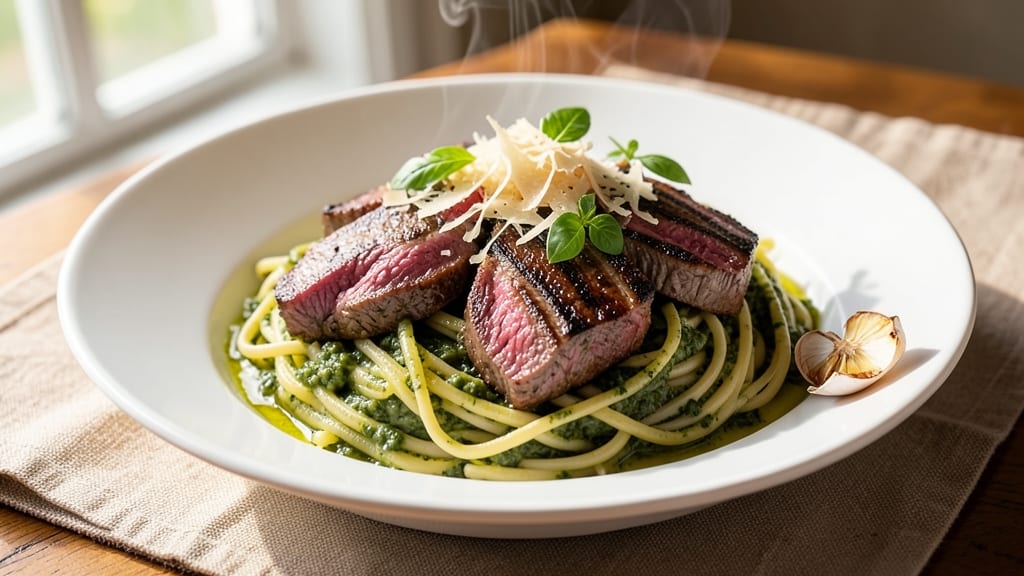
This beef basil pesto pasta recipe transforms a weeknight dinner into an Italian-inspired masterpiece with minimal effort. The secret lies in perfectly seared beef strips paired with vibrant basil pesto, creating a rich, herb-infused sauce that clings to al dente noodles.
I developed this dish after craving restaurant-quality flavors without the fuss—now you can recreate it at home with just a few key techniques.
The foundation starts with high-heat searing of beef strips to lock in juices, followed by a quick toss in the same pan with garlic and fresh basil. While the beef rests, the pesto sauce comes together in minutes using fresh basil, garlic, parmesan, and olive oil—no blender required.
The pasta cooks just until al dente, ensuring it holds its bite while absorbing the flavorful sauce.
What results is a dish where tender beef and creamy pesto marry perfectly with al dente noodles, topped with a sprinkle of extra parmesan and fresh basil. The aroma alone will have everyone at the table anticipating each forkful.
This recipe delivers restaurant-worthy flavor with a streamlined process that fits seamlessly into any dinner routine.
The beauty of this dish lies in its versatility—serve it as a hearty main course or pair it with a simple arugula salad for a complete meal.
The beef can be swapped for shrimp or chicken if preferred, but the basil pesto remains the star, tying everything together with its bright, herby notes. Ready to elevate your pasta night? Let's get started.
Ingredients for beef basil pesto pasta
Fresh basil, tender beef, and al dente noodles—this Italian-inspired dish comes together faster than you'd think.
| Ingredient | Amount | Notes |
|---|---|---|
| Ribeye Steak 🥩 | 1 lb | Thinly sliced against grain |
| Spaghetti 🍝 | 12 oz | Or any pasta shape |
| Fresh Basil Leaves 🌿 | 2 cups | Packed, stems removed |
| Parmesan Cheese 🧀 | ¾ cup | Freshly grated from block |
| Extra-Virgin Olive Oil 🫒 | ½ cup | High quality, fruity |
| Garlic Cloves 🧄 | 4 cloves | Peeled, roughly chopped |
| Salt 🧂 | 1 ½ tsp | Kosher or sea salt |
| Black Pepper 🌶️ | ½ tsp | Freshly ground preferred |
| Lemon Juice 🍋 | 1 tbsp | Freshly squeezed |
| Pine Nuts 🥜 | ¼ cup | Toasted for richness |
| Red Wine Vinegar 🍷 | 1 tsp | For brightness |
| Arugula 🥬 | 2 cups | For optional salad |
The ribeye is your secret weapon here. Look for well-marbled cuts at the butcher counter—they stay juicier when sliced thin. I grab mine from Whole Foods when I can, but any good grocery store has quality options. Slice it against the grain for tender bites. Fresh basil is non-negotiable—Trader Joe's sells it in those little clamshells, but farmers markets have the freshest. Toast your pine nuts in a dry pan until golden—they add that nutty richness that makes this dish sing. For the Parmesan, grate it yourself—pre-grated is full of anti-caking agents that ruin the texture.
No ribeye? Flank steak or sirloin work just as well—slice it thin. Running low on pine nuts? Walnuts or cashews toasted in olive oil do the trick. The pesto can be made ahead (it actually tastes better the next day), but if you're short on time, store-bought basil pesto works in a pinch—just add extra lemon juice. For the pasta, al dente is key—test it 1 minute early. And if you're skipping the salad, toss the arugula with a little extra pesto and olive oil for a quick side. The red wine vinegar might seem like overkill, but it cuts through the richness beautifully—substitute balsamic if you don't have it.
Pasta water is liquid gold here—save about 1 cup before draining. The beef can be prepped ahead and kept in the fridge for 2 days before cooking. Pesto keeps for 5 days in the fridge if you cover it with olive oil. For a crowd, double the pesto and freeze half in ice cube trays—perfect for future pasta nights. The dish reheats beautifully, though it's best served fresh. Store leftovers in an airtight container, and trust me, they'll disappear fast.
Why You'll Love This Recipe
- Two-Pan Magic: I swear by this trick—sear the ribeye in the same skillet you’ll toss the pasta in later. That caramelized crust? It sticks to the noodles like a dream, and cleanup is basically nonexistent. Honestly, I’ve made this while chatting on the phone because it’s that unfussy.
- Pesto Powerhouse: Fresh basil and Parmesan turn this from "dinner" to "I’d pay for this at a restaurant." The ribeye adds richness without overpowering, and that bright olive oil finish? It’s the kind of flavor that makes you slow down mid-bite. (Yes, even on a Tuesday night.)
- Leftover Hero: This dish actually tastes better the next day—cold pasta with flaked ribeye? My lunchbox staple. I’ll double the batch just to have it for salads or quick wraps later. Between us, it’s the only beef pasta I don’t dread reheating.
- Weeknight Win: No fancy techniques, no last-minute grocery runs. You’ve got steak, pasta, and herbs? You’re golden. I’ve made this after work with a 10-minute grocery stop—juicy steak, al dente noodles, and zero stress. That’s my kind of reliable.
Step-by-step instructions for beef basil pesto pasta
Here's how to create a restaurant-worthy dish with tender beef, vibrant pesto, and perfectly al dente pasta.
Sear the Ribeye to Medium Rare Perfection
Pat the 1 lb ribeye steak dry with paper towels, then season generously with 1.5 tsp salt and 0.5 tsp black pepper on both sides. Let it sit at room temperature for 15 minutes while you prep the rest. Heat a heavy skillet over high heat until smoking, then add 2 tablespoons of the extra-virgin olive oil. Place the steak in the pan and sear for 3-4 minutes per side for medium rare (internal temp 130-135°F).
Here's the thing—don't move the steak during the first minute. Let it develop that perfect crust. You'll know it's ready to flip when it releases easily from the pan. Once cooked, remove the steak and let it rest on a cutting board for 5 minutes before thinly slicing against the grain. This resting step keeps the meat juicy while you finish the pasta.
Toast Pine Nuts and Make the Basil Pesto
While the steak rests, toast the 0.25 cup pine nuts in a dry skillet over medium heat for 2-3 minutes, stirring constantly, until they're golden and fragrant. Remove them immediately to prevent burning. In the same skillet, add 2 tablespoons more extra-virgin olive oil and cook the 4 cloves garlic cloves for 30 seconds until fragrant—don't let them brown.
Transfer the garlic oil to a food processor along with the toasted pine nuts, 2 cups fresh basil leaves, 0.75 cup parmesan cheese, 1 tbsp lemon juice, 1 tsp red wine vinegar, 0.5 tsp salt, and 0.25 tsp black pepper. Pulse until smooth but still slightly textured. With the processor running, slowly drizzle in the remaining 0.25 cup extra-virgin olive oil until fully combined. Taste and adjust seasoning if needed.
Cook the Spaghetti Al Dente
Bring a large pot of water to a rolling boil and add 1.5 tsp salt. Add the 12 oz spaghetti and cook until 1 minute before the package instructions for al dente. Reserve 1 cup pasta water before draining. The starchy water is key for binding the pesto sauce. Drain the pasta, but don't rinse—those surface starches help the sauce cling.
Return the drained pasta to the pot and toss with 2 tablespoons of the basil pesto, adding 2-3 tablespoons of reserved pasta water at a time until the strands are fully coated and glossy. Keep the remaining pesto separate for serving. Here's where it gets fun—toss in the sliced ribeye and mix gently to warm through.
Assemble and Serve with Fresh Arugula
Divide the pasta between four plates, topping each with additional pesto and any accumulated juices from the steak. For the optional salad, toss the 2 cups arugula with the remaining 2 tablespoons extra-virgin olive oil and a pinch of salt. Arrange the arugula alongside the pasta or serve it on the side for a peppery contrast.
Finish with extra grated parmesan and a final crack of black pepper. The dish should be vibrant, with bright basil flavors cutting through the richness of the beef and pesto. Serve immediately while the pasta is hot and the steak is still juicy—this isn't a dish that waits.
Pro Tips For Making Beef Basil Pesto Pasta
- SEAR THE RIBEYE FAST: I learned this the hard way—low heat means gray, flavorless beef. Crank your pan to screaming hot, add a drizzle of olive oil, and sear the ribeye for 2-3 minutes per side before pulling it to rest. That crust? It’s the thing that matters most when pairing with basil pesto.
- STACK THE PASTA WATER: Skip the crowded pot and save time by boiling two batches of spaghetti at once—just stack the nests vertically in the pot. This lets you cook both perfectly al dente without waiting. (Yes, it looks weird, but it works every time.)
- TOSS BASIL LAST MINUTE: Basil wilts faster than you think. Pulse the pesto base (garlic, nuts, Parmesan, olive oil) first, then fold in the leaves after the pasta hits the plate. Cold pasta + fresh basil = vibrant green, not sad brown.
- REST THE MEAT TWICE: Give the ribeye a solid 5-10 minutes under foil before slicing, then let it sit another 3-5 minutes on the cutting board. This guarantees juicy slices that won’t turn to rubber when tossed with the pesto. (Your future self will thank you.)
Troubleshooting perfect results
Pesto Too Thick?
If your pesto clumps or feels too dense, it's likely from over-processing or insufficient olive oil. Pulse the ingredients in your food processor in short bursts—just until combined but still slightly chunky.
Gradually add the remaining 0.25 cup olive oil while processing to emulsify. For extra smoothness, strain through a fine-mesh sieve. 💫
Beef Overcooked?
Medium-rare beef should reach 130-135°F internal temperature for perfect tenderness. Use an instant-read thermometer to check—insert it horizontally into the thickest part. If your steak overcooks, slice it thinner than usual and toss with extra pesto to compensate. For next time, reduce heat to medium-high instead of high.
Pasta Too Dry?
If your pasta feels dry after tossing with pesto, it's likely because the sauce wasn't properly emulsified with pasta water. Reserve 1 cup pasta water before draining, then add it 1 tablespoon at a time while tossing.
The starch in the water acts as a natural binder. For extra richness, stir in 1 tablespoon butter or a splash of cream.
Basil Wilting?
Fresh basil wilts quickly when chopped, which can make your pesto watery. Pack the leaves tightly in your food processor and pulse them briefly before adding other ingredients. For extra flavor, add 1-2 ice cubes to the processor with the basil—the cold temperature helps preserve color and texture.
Store any unused basil in a glass of water in the fridge like flowers.
Sauce Separating?
If your pesto sauce separates, it means the oil and water components aren't properly emulsified. Recombine by whisking vigorously or blending briefly with a splash of pasta water.
For prevention, always add olive oil gradually while processing. A pinch of xanthan gum (⅛ tsp) can help stabilize if you're making a large batch ahead of time.
Pine Nuts Burning?
Pine nuts burn faster than you'd think! Keep them moving constantly in a dry skillet over medium heat—they're ready in just 2-3 minutes. Remove them immediately when golden.
For a smoky flavor, toast them in the same skillet you'll later use for garlic. If they burn, start fresh—they'll taste bitter and ruin your pesto. 🔥
Nutrition facts
Frequently asked questions
Can I use ground beef instead of sliced ribeye?
Ground beef works perfectly for this recipe. Use 1 lb lean ground beef (85/15 ratio) and brown it in the same skillet over medium-high heat for 4-5 minutes until fully cooked. Drain excess fat before adding to the pasta. The texture will be slightly different but still delicious with the basil pesto.
How do I make this dish vegetarian?
Swap the beef for 1 lb grilled portobello mushrooms or 12 oz chickpeas (roasted with olive oil, salt, and pepper). For extra protein, add 1 cup cooked lentils or 12 oz white beans. The pesto will still be the star, tying all the flavors together beautifully.
What's the best pasta shape for this recipe?
While spaghetti works perfectly, try fettuccine, linguine, or pappardelle for broader surfaces to catch the pesto sauce. For a fun twist, use penne or farfalle—just toss with a fork instead of twirling. The key is al dente texture that holds its shape when tossed.
Can I make the pesto ahead of time?
Yes! The pesto actually tastes better the next day as the flavors meld. Store it in an airtight container with a thin layer of olive oil on top to preserve freshness. It keeps well in the fridge for 5 days or can be frozen for 3 months. Just let it come to room temperature before using.
What wine pairs best with this dish?
A medium-bodied red like Chianti or Pinot Noir complements the beef and basil perfectly. For white wine lovers, try a crisp Pinot Grigio or Sauvignon Blanc. The acidity in both balances the richness of the pesto while enhancing the beef's flavors. Serve slightly chilled for whites.