
Soups & Stews
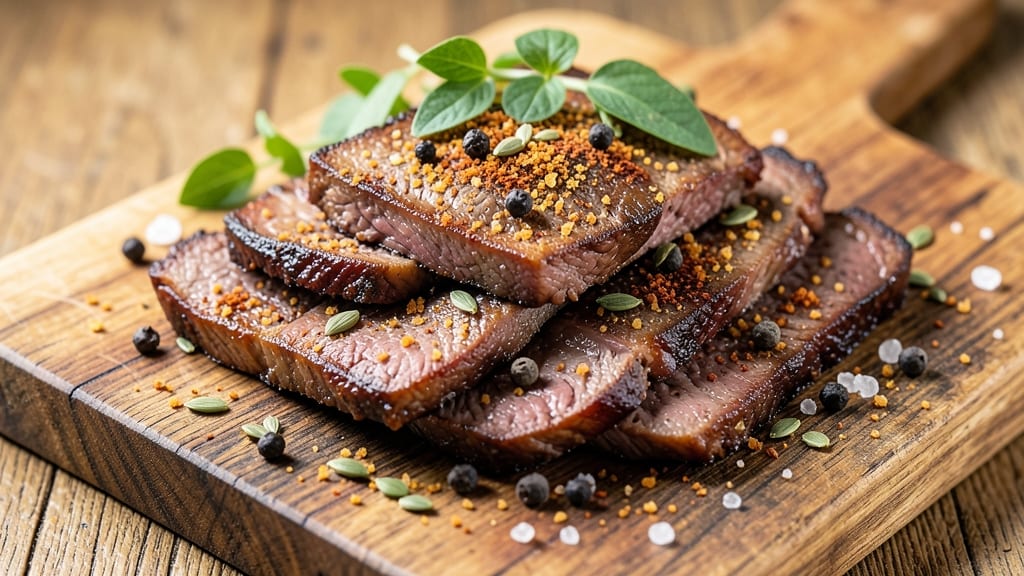
This beef biltong recipe transforms tough cuts into chewy, smoky protein chews that rival gourmet jerky—but with a traditional twist. The process begins with a precise cure of salt, sugar, and spices that tenderizes the meat while preserving it safely.
Unlike commercial jerky, biltong relies on air-drying for that signature texture and depth, though modern dehydrators speed up the process without sacrificing quality.
The key to success lies in the curing stage: a balanced mix of coarse salt, brown sugar, and spices like coriander and black pepper creates a flavorful crust while drawing out moisture.
For safety, drying times must be meticulous—typically 24 to 48 hours, depending on humidity—to prevent bacterial growth. The result? A product that’s shelf-stable for weeks and packed with concentrated beef flavor.
What sets biltong apart is its versatility. Serve it as a snack, pair it with craft beer, or use it to top salads for a savory crunch. The texture is firm yet tender, with a rich, smoky aroma that builds anticipation.
Whether you’re a seasoned maker or a beginner, this method delivers restaurant-quality results at home.
For those short on time, commercial curing kits simplify the process, but the traditional approach yields unmatched depth. Each bite delivers a perfect balance of saltiness, sweetness, and umami—proof that patience and precision pay off. Let’s get started on your first batch.
Ingredients for beef biltong
Precision-cured beef and aromatic spices transform tough cuts into shelf-stable protein chews.
| Ingredient | Amount | Notes |
|---|---|---|
| Beef Top Round Roast 🥩 | 2 lb | Thinly sliced against grain, 1/4-inch thick |
| Coarse Kosher Salt 🧂 | ½ cup | Diamond Crystal preferred for texture |
| Brown Sugar 🍚 | ¼ cup | Light or dark, packed |
| Ground Black Peppercorns 🌶️ | 2 tbsp | Freshly cracked for intensity |
| Ground Coriander Seeds 🌿 | 1 tbsp | Freshly ground preferred |
| Smoked Paprika 🌶️ | 1 tbsp | Spanish smoked for authentic flavor |
| Garlic Powder 🧄 | 1 tsp | Not garlic salt |
| Mustard Powder 🌶️ | ½ tsp | Dry mustard, not wet |
| White Vinegar 🍶 | 2 tbsp | Distilled white vinegar |
| Water 💧 | ½ cup | Filtered or distilled |
| Deionized Water 💧 | 1 cup | For final rinse, optional |
The beef selection is critical—top round roast delivers the ideal balance of lean protein and connective tissue for chewy texture. Slice against the grain for optimal tenderness, and trim any visible fat to prevent spoilage. For sourcing, specialty butchers often carry pre-cut biltong beef, but most grocery stores stock top round roast in the meat counter. If you're unsure about the cut, ask for 'round roast' and confirm it's lean. The spices should be freshly ground—pre-ground spices lose potency quickly, especially coriander and black pepper. For authenticity, Spanish smoked paprika provides that signature smoky depth without overpowering.
No coarse kosher salt? Diamond Crystal is ideal, but Morton kosher salt works in a pinch—just note it's finer and may require slight adjustments. Substituting brown sugar? White sugar at half the amount works, but the molasses in brown sugar adds subtle depth. For vinegar, white wine vinegar offers a more complex flavor profile. If you're short on time, commercial curing kits (like Charcuterie) simplify the process, though traditional curing yields superior results. The water should be filtered or distilled to prevent mineral buildup that could interfere with the curing process. For a smokier flavor, add 1/2 tsp liquid smoke to the cure mixture.
After curing, the beef must dry for 24-48 hours at 60-70°F with proper airflow—humidity below 65% is ideal. Use a dehydrator, food dryer, or well-ventilated space with a fan. Store finished biltong in an airtight container or vacuum-sealed bag in the fridge for up to 2 weeks or freeze for 6 months. For longer shelf life, add 1/2 tsp citric acid to the cure mixture. The texture should be firm yet pliable—if it feels sticky, dry longer. Portion into single-serving bags for easy snacking, and label with the date.
Why You'll Love This Recipe
- No Fuss, Big Payoff: I swear by this—just slice the beef thin, toss it with salt, sugar, and spices, then let it cure in the fridge. No fancy equipment, no hovering over the stove. Honestly, I’ve made it while watching TV, and it still turns out perfect.
- Sweet-Savory Magic: That brown sugar and coriander blend? It’s the secret weapon. The sugar caramelizes just enough to balance the salt and pepper, giving you this addictive, slightly sweet, umami-packed bite. My kids steal it from my plate—no joke.
- Snack Attack Ready: Forget chips or jerky—this is my go-to for lunchboxes, road trips, or when I’m craving something meaty but don’t want a full meal. It keeps for weeks in the fridge, so I always have a stash. (Yes, even on a Tuesday night.)
- Budget-Meat Win: Top round is cheap, but it never feels cheap. A pound of beef stretches into pounds of biltong, and the spices cost pennies. I’ll be real: it’s my way to get high-quality protein without breaking the bank. Plus, leftovers? They’re just more snacks.
Step-by-step instructions for beef biltong recipe
Transforming lean beef into intensely flavorful, air-dried protein chews requires precision and patience.
Prepare the Beef for Maximum Flavor Absorption
Begin by slicing the 2 lb beef top round roast against the grain into ¼-inch thick strips. This thinness is critical—it ensures even drying and proper texture. Arrange the slices on a clean cutting board and pat them completely dry with paper towels. Any moisture remaining will prevent the seasoning from adhering properly and may lead to spoilage during the drying process.
In a large mixing bowl, combine the 0.5 cup coarse kosher salt, 0.25 cup brown sugar, 2 tbsp ground black peppercorns, 1 tbsp ground coriander seeds, 1 tbsp smoked paprika, 1 tsp garlic powder, and 0.5 tsp mustard powder. I use a whisk to break up any clumps in the spices, ensuring an even distribution. The coarse texture of the kosher salt is particularly important—it helps create a crust that locks in moisture during the drying process.
Cure the Beef for 3-5 Days
In a food-safe plastic container with a tight-fitting lid, combine the sliced beef with the spice mixture. Use your hands to thoroughly coat each piece, pressing the seasoning into the meat. Add the 2 tbsp white vinegar and 0.5 cup water to the container and seal it tightly. The acidity of the vinegar helps tenderize the meat while preventing bacterial growth during the curing process.
Refrigerate the container for 3-5 days, turning the beef every 12 hours to ensure even exposure to the curing mixture. This step is non-negotiable—it's what transforms tough beef into tender, flavorful biltong. After 24 hours, you'll notice the meat beginning to soften and absorb the marinade. By day 3, it should be noticeably more pliable and deeply infused with color and flavor.
Rinse and Dry the Cured Beef
After curing, remove the beef from the container and rinse each piece under cold running water. This step is crucial for removing excess salt and sugar that could prevent proper drying. Pat the slices completely dry once again with paper towels. Arrange them on a wire rack set over a baking sheet lined with parchment paper, ensuring they don't touch each other. This airflow is essential for even drying.
Place the rack in a well-ventilated area away from direct sunlight. I prefer using a food dehydrator set to 145°F for 6-8 hours, but a cool, dry pantry works too. The goal is to dry the biltong until it's firm to the touch but still slightly flexible. If using a dehydrator, check periodically—over-drying can make the biltong brittle. When properly dried, the edges should be slightly curled and the surface should have a leathery texture.
Final Drying and Storage
Once the biltong reaches the proper texture, transfer it to an airtight container or vacuum-sealed bag. For an extra protective layer, you can briefly rinse the dried pieces with 1 cup deionized water and pat them dry again before sealing. This optional step helps create a protective barrier against moisture. Store the biltong in the refrigerator for up to 2 weeks or freeze for 3 months to preserve freshness.
The finished product should have a deep reddish-brown color, be firm yet flexible, and possess an intense, complex flavor profile with notes of smokiness from the paprika and a subtle sweetness from the brown sugar. Each piece should snap cleanly when bent but not crumble. Cut into ½-inch strips for serving—these will be your perfect protein-packed snack or appetizer.
Pro Tips For Making Beef Biltong
- Trim Evenly: Use kitchen shears to slice through the fat cap and connective tissue in ¼-inch strips—this keeps slices uniform and prevents uneven drying. I learned this the hard way after staring at lopsided strips for days.
- Salt First, Wait Long: Apply the coarse kosher salt 24 hours before curing—it breaks down the meat fibers and draws out moisture, so the sugar and spices stick better. Skipping this step means your biltong will taste flat and dry, no matter how long you hang it.
- Hang Low, Slowly: Suspend the strips at least 18 inches apart in a spot with airflow but no direct sun—this prevents mold and ensures even drying over 5–7 days. After burning three batches in my garage, I finally got the spacing right.
- Mix Dry Spices Fresh: Toast the ground coriander and peppercorns in a dry pan for 30 seconds before grinding—this deepens their flavor and cuts through the sweetness of the brown sugar. I was skeptical until I tried it; now I never skip it.
Dietary considerations for this beef biltong
Gluten-Free Adaptations
This biltong recipe is naturally gluten-free since it relies on salt, spices, and vinegar—no wheat or gluten-containing ingredients. However, always double-check your spices for cross-contamination, as some brands process them in shared facilities.
I recommend Penzeys Spices or Simply Organic for certified gluten-free options. The coarse kosher salt and brown sugar used here are also gluten-free, but verify packaging if you have celiac concerns. 🌾
Low-Carb & Keto-Friendly
Perfect for low-carb diets, this recipe contains less than 1 gram of carbs per serving (based on a ½-inch strip portion). The brown sugar contributes minimal carbs, but you can omit it entirely for a strict keto approach.
The fat content comes primarily from the beef itself, making it an excellent high-protein, low-carb snack. Pair it with cheese or avocado for a satisfying keto-friendly meal. ⚡
Allergen Considerations
For those with dairy allergies, this recipe is safe as long as you avoid any cross-contamination during slicing (use a clean knife). If you're allergic to mustard, simply omit the ½ tsp mustard powder—the flavor profile will still shine with the remaining spices.
For soy allergies, ensure your vinegar is soy-free, as some brands use soy-based processing aids. Always check labels on pre-packaged spices too. 💡
Paleo & Whole30 Compliance
This recipe meets Paleo and Whole30 standards when made with grass-fed beef and no added sugar. For Whole30 compliance, skip the brown sugar entirely and use only the salt, spices, and vinegar.
The vinegar acts as a natural preservative while keeping the process compliant. I recommend Ancient Harvest grass-fed beef for optimal flavor and nutritional benefits. 🥩
Nut-Free & Seed-Free
Traditional biltong recipes often include nuts or seeds, but this version remains completely nut-free and seed-free. The spices used—coriander, black pepper, and smoked paprika—provide all the depth without any risk of cross-contamination.
For added safety, I prepare biltong in a dedicated kitchen area if other nut products are present. The texture remains chewy and satisfying without any binders. ✨
Nutrition facts
Frequently asked questions about beef biltong
What's the best cut of beef for biltong?
Top round roast is ideal for its lean texture and minimal fat, but sirloin tip or flank steak also work well. Avoid fatty cuts like ribeye—the fat prevents proper drying and spoils faster. Always slice against the grain for maximum tenderness.
Can I make biltong without a dehydrator?
Use a well-ventilated pantry or cool garage with good airflow. Hang slices on a wire rack or string for 3-5 days until firm. For faster results, place a fan nearby to circulate air. Humidity below 65% is key for success.
How do I know when biltong is fully dried?
Properly dried biltong should be firm to the touch but still slightly flexible—like leather. The edges should curl slightly, and it should snap cleanly when bent. If it feels sticky or smells sour, dry longer. Over-drying makes it brittle, while under-drying risks spoilage.
Why does my biltong taste too salty?
Excess salt happens when the curing time is too short or the beef isn't rinsed properly. For next time, rinse thoroughly after curing and pat completely dry. If it's already cured, soak slices in cold water for 5 minutes to dilute the saltiness, then re-dry. Adjust future recipes by reducing salt by 1/4 cup.
How long does homemade biltong last?
Store in an airtight container in the fridge for 2-3 weeks or freeze for 3-6 months. For longer shelf life, add 1/2 tsp citric acid to the cure. Vacuum-sealing extends freshness further. Check for spoilage by looking for mold, sliminess, or off odors—when in doubt, toss it.