
Soups & Stews
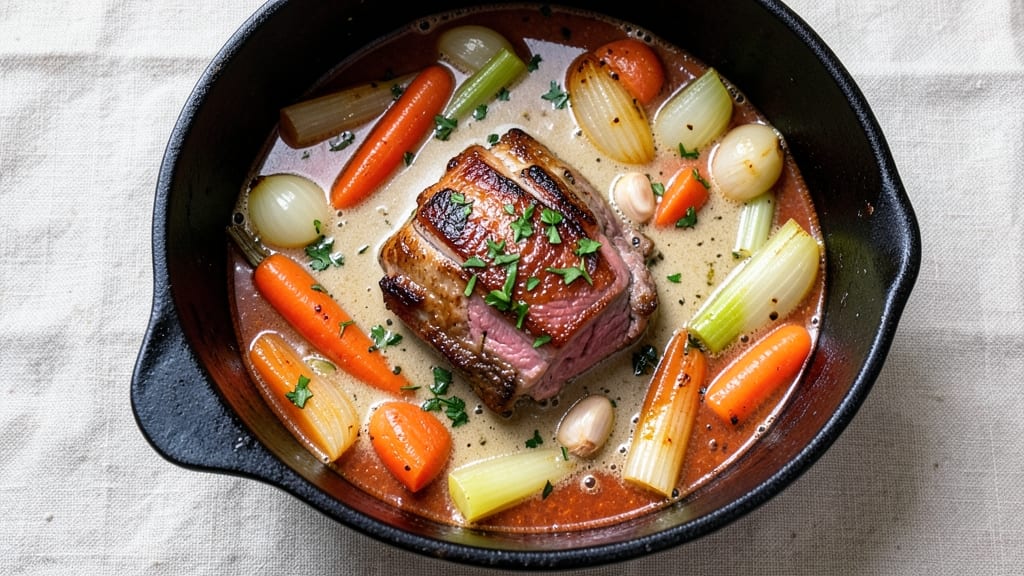
An 8-hour beef stew transforms tough cuts into melt-in-your-mouth tenderness through slow braising—a technique that builds unmatched depth of flavor in every bite. The secret lies in proper searing and a long, low cook that lets collagen dissolve into a rich, velvety broth.
This isn't just a recipe; it's a method that rewards patience with restaurant-quality results at home.
Start with a chuck roast—its marbled fat ensures juicy meat and flavorful broth. Browning the beef deeply in a hot Dutch oven develops a caramelized crust called the fond, which forms the foundation of your stew's complexity.
Then, simmering for 8 hours at 300°F breaks down connective tissue while vegetables soften and spices meld into harmony. No pressure cooker? No problem—this method works just as well in a slow cooker or oven.
By the final hour, your stew will smell like a warm kitchen on a chilly evening—the aroma of caramelized onions, thyme, and bay leaves mingling with the deep umami of beef. The broth should coat a spoon thickly, and the meat should pull apart easily.
Garnish with fresh parsley and serve with crusty bread to soak up every last drop of that deep umami depth you've worked so hard to achieve.
Leftovers taste even better the next day as flavors continue to develop. This isn't just dinner—it's a meal that becomes a memory, one where the kitchen transforms into the heart of the home. Ready to master the art of slow braising? Let's get started.
Ingredients for 8 hour beef stew
Six core ingredients build the foundation for this restaurant-quality beef stew.
| Ingredient | Amount | Notes |
|---|---|---|
| Chuck Roast 🥩 | 3 lb | With good marbling for flavor |
| Yellow Onions 🧅 | 2 whole | Cut into 1-inch chunks |
| Carrots 🥕 | 4 whole | Cut into 2-inch chunks |
| Celery Stalks 🥬 | 4 whole | Cut into 2-inch pieces |
| Garlic Cloves 🧄 | 6 cloves | Smashed, not minced |
| Tomato Paste 🍅 | ½ cup | High-quality for depth |
| Dry Red Wine 🍷 | 1 cup | Bold, like Cabernet |
| Beef Broth 💧 | 4 cups | Homemade or high-quality |
| Fresh Thyme 🌿 | 2 tbsp | Leaves only, stems removed |
| Fresh Rosemary 🌿 | 1 tbsp | Chopped, not ground |
| Bay Leaves 🌿 | 2 whole | Standard size, not crumbled |
| Olive Oil 🫒 | 2 tbsp | For searing beef |
| All-Purpose Flour 🌾 | 2 tbsp | For dusting meat |
| Kosher Salt 🧂 | 1 ½ tsp | For seasoning |
| Ground Black Pepper 🌶️ | 1 tsp | Freshly cracked |
The chuck roast is non-negotiable—its marbled fat ensures juicy meat and a rich broth. Costco and Whole Foods carry excellent cuts, but any well-marbled roast works. Look for pieces with visible fat streaks throughout. If buying from a butcher, ask for a bone-in section—it adds flavor. For the vegetables, organic carrots and celery from the store's produce section hold up best during long cooking. The onions should be firm with no soft spots. Fresh herbs like thyme and rosemary? Trader Joe's sells them in small bundles that last a week in the fridge.
No red wine? Beef broth with 1 tbsp balsamic vinegar mimics the depth. Substitute dried thyme at one-third the amount, but fresh is ideal. The tomato paste can be from a squeeze tube if you're lazy—just measure carefully. For the broth, homemade is best, but store-bought works in a pinch (look for low-sodium). The flour is just for dusting the meat before searing—don't skip this step. It helps create that crucial fond at the bottom of the pot. If you're short on time, pre-chop all vegetables while the stew simmers—it saves cleanup later.
Stew tastes even better the next day as flavors meld. Store in an airtight container for up to 5 days in the fridge or freeze for 3 months. For freezing, portion into individual containers—perfect for quick lunches. The broth can be used as a base for other dishes, so make extra. If you're prepping ahead, brown the meat and vegetables the day before, then refrigerate until ready to simmer. The Dutch oven becomes your best friend—it retains heat beautifully for that 8-hour cook.
Why You'll Love This Recipe
- One-Pot Magic: I swear by this—just dump everything in a slow cooker, walk away, and come back to actual dinner. No extra bowls, no messy counters, just that deep, rich aroma filling your whole house.
- Garlic-Kissed Tenderness: That chuck roast? It falls apart like butter, especially after hours in the broth with onions, carrots, and celery sweating into sweetness. The garlic? Oh, it’s the star—simmered just enough to melt into every bite without overpowering.
- Leftovers That Don’t Suck: Honestly, I make this on purpose to have for lunch the next day. The flavors only get better after sitting overnight, and it reheats like a dream—perfect for packing or feeding unexpected guests.
- Budget-Friendly Crowd-Pleaser: A pound of chuck roast and a few veggies stretch to feed four (or five if someone’s extra hungry). It’s the kind of meal where everyone asks for seconds, and you’re not stressing over takeout prices. Win-win.
Step-by-step instructions for 8 hour beef stew
This method transforms tough chuck roast into fork-tender perfection through slow braising.
Sear the Chuck Roast for Deep Flavor
Pat the 3 lb chuck roast completely dry with paper towels—this ensures maximum browning. Heat a heavy Dutch oven over medium-high heat until very hot, then add 2 tablespoons olive oil. Once shimmering, place the roast in the pot and sear on all sides for 4-5 minutes total, turning occasionally, until deeply browned. This step develops the rich, meaty foundation for your stew.
While the roast browns, prepare the vegetables by cutting the 2 whole yellow onions into 1-inch chunks, the 4 whole carrots into 2-inch pieces, and the 4 whole celery stalks into 2-inch segments. Set them aside—they'll join the pot shortly. The deep caramelization from searing creates those complex flavors that define a great stew.
Brown Vegetables and Create the Base
Remove the seared roast from the pot and set it aside on a plate. In the same Dutch oven, add the prepared vegetables in a single layer. Cook over medium heat for 5-6 minutes, stirring occasionally, until they begin to soften and develop color. This step builds additional flavor through the Maillard reaction.
Push the vegetables to one side of the pot and add the 6 smashed garlic cloves to the empty space. Cook for 30 seconds until fragrant—this prevents burning while infusing the vegetables with garlic's aromatic oils. Sprinkle 2 tablespoons all-purpose flour over the vegetables and stir to coat them evenly. Cook for another 1 minute to remove the raw flour taste.
Deglaze and Build the Stew Foundation
Pour in the 1 cup dry red wine, scraping up all the browned bits from the bottom of the pot with a wooden spoon. These bits, called fond, contain concentrated flavor that will dissolve into your stew. Let the wine simmer for 3-4 minutes until reduced by half, then stir in the 0.5 cup tomato paste and cook for another 2 minutes to thicken slightly.
Add the seared chuck roast back to the pot, along with the 4 cups beef broth, 1.5 teaspoons kosher salt, and 1 teaspoon ground black pepper. Bring to a gentle boil, then immediately reduce heat to low to maintain a bare simmer. Cover the pot and transfer to a 300°F oven for the long braising period.
Braise for 8 Hours Until Fork-Tender
The key to perfect stew lies in this slow cooking phase. Let the stew braise in the oven for 8 hours, maintaining the 300°F temperature. Every 2 hours, carefully remove the pot from the oven and stir the contents, then return it to the oven. This prevents the vegetables from settling at the bottom and ensures even cooking.
After 6 hours, add the 2 tablespoons fresh thyme, 1 tablespoon fresh rosemary, and 2 whole bay leaves to the pot. These aromatic herbs will infuse the stew with their distinctive flavors during the final cooking period. The stew should be nearly tender by this point, with the meat beginning to pull apart easily.
Finish and Adjust Seasoning
Once the 8-hour cooking time is complete, remove the stew from the oven and let it rest for 15-20 minutes off the heat. This resting period allows the flavors to meld and the meat to become even more tender. Skim off any excess fat that has risen to the surface with a spoon.
Taste and adjust the seasoning if needed. The stew should be rich and flavorful, with a balance of meaty, herbal, and slightly tangy notes from the wine and tomato paste. Serve hot, with crusty bread to soak up the delicious sauce. The result is a deeply flavorful, comforting stew where each bite delivers perfect texture and complex umami depth.
Pro Tips For Making 8 Hour Beef Stew
- SEAR THE ROAST FIRST: After browning the chuck roast in batches (don’t overcrowd the pan), let the meat rest 10 minutes before adding liquid—this keeps the juices locked in. I used to skip this and wondered why my stew always tasted dry.
- CUT VEGETABLES UNIFORM: Carrots and celery should be roughly ½-inch chunks, onions ½-inch slices—this ensures even cooking. My grandmother swore by this, and she was right: uneven pieces mean some get mushy while others stay crunchy.
- SKIP THE BOIL: Once the stew reaches a simmer, reduce to the lowest heat possible and cover tightly. After burning three batches, I finally figured out that "low and slow" isn’t just a phrase—it’s the only way to tenderize that chuck.
- ADD GARLIC LATE: Toss the minced garlic in with the last 30 minutes of cooking—this prevents it from turning bitter. I was skeptical until I tried it; now I never add it earlier, and the flavor stays bright.
Flavor customization for this recipe
Herb Variations
Swap out the thyme and rosemary for 1 tbsp fresh sage and 1 tsp dried oregano for an Italian-inspired twist. The sage adds earthy depth, while oregano brings Mediterranean brightness.
For a French bistro style, use 1 tbsp fresh tarragon and ½ tsp fennel seeds—the anise notes complement the beef beautifully. 🌿
Spice Boosts
Add ½ tsp smoked paprika and ¼ tsp cayenne pepper during the final hour for a smoky kick. For warmth without heat, try 1 tsp ground coriander and ½ tsp cinnamon—these spices add complexity without overpowering.
I love adding 1 star anise pod during the braising for a subtle licorice note.
Umami Enhancers
Stir in 1 tbsp soy sauce or 1 tsp fish sauce during the last 30 minutes to deepen the savory profile. For a vegetarian-friendly boost, add 1 tbsp mushroom powder or 2 dried shiitake mushrooms (rehydrated) to the broth. The umami from these ingredients elevates the beef's natural richness.
Acid Balance
Brighten the stew with 1 tbsp apple cider vinegar or ½ cup cranberry juice during the final 15 minutes of cooking. The acidity cuts through the richness, balancing the dish. For a tangy finish, squeeze in 1 tbsp lemon juice at the end—it’s a game-changer for freshness.
Sweet Contrasts
Add 1 tbsp honey or 1 tbsp brown sugar during the last hour to caramelize slightly, creating a beautiful contrast with the savory beef. For a Middle Eastern touch, include ½ cup pomegranate molasses—its sweet-tart profile adds unexpected depth. 🍯
Regional Twists
For a French version, add 1 cup pearl onions and a splash of white wine instead of red. A Mexican-inspired stew incorporates 1 tsp cumin and 1 chipotle pepper in adobo for smoky heat.
The key is adjusting the cooking time slightly—these variations often need 30-60 minutes less due to different liquid ratios.
Nutrition facts
Frequently asked questions
Can I use a slow cooker instead of an oven for this 8-hour beef stew? For a slow cooker version, sear the beef and brown the vegetables as directed, then transfer everything to your slow cooker. Add 1 cup water to the pot, cover, and cook on low for 8 hours or high for 5-6 hours. The texture will be slightly different but still delicious. Just
What cut of beef works best for an 8-hour stew?
The chuck roast is ideal because its marbled fat ensures tender meat and rich broth. Other great options include stew meat (often from the chuck or round) or brisket. Avoid lean cuts like sirloin—they won't become tender enough during the 8-hour cook. Look for pieces with visible fat marbling for the best results.
Can I make this stew in a pressure cooker?
Yes! Use the same searing and browning steps, then add all ingredients to your pressure cooker. Cook on high pressure for 90 minutes (no need to add extra water). The meat will be fork-tender, but the broth won't reduce as much as with oven braising. For extra depth, finish with 10 minutes on sauté mode to thicken the sauce.
Why does my beef stew turn out watery?
Watery stews usually happen from too much liquid or insufficient cooking time. Start with the 4 cups broth as written, and if needed, reduce it by 1 cup during the final hour of cooking. For extra richness, skim excess fat from the surface and reduce the broth uncovered for 5-10 minutes at the end. The 8-hour cook should give you a thick, velvety sauce.
How do I reheat leftover beef stew?
Reheat gently on the stove over low heat for 10-15 minutes, stirring occasionally, until warmed through. Avoid microwaving—it can make the broth watery. For best results, reheat only what you'll serve immediately. The flavors actually improve after the first day, so leftovers taste even better! Store in an airtight container for up to 5 days.