
Side Dishes
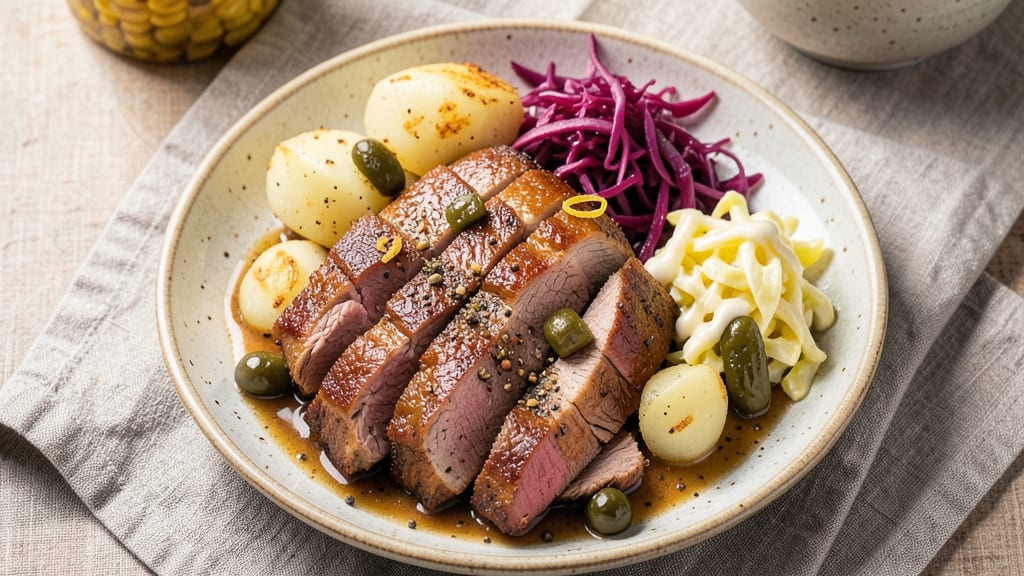
This American corned beef recipe transforms tough beef brisket into melt-in-your-mouth perfection through a slow-braising process that infuses every bite with aromatic spices. The secret lies in the curing brine—salt, sugar, and spices like cloves and mustard seeds that tenderize the meat while creating that signature flavor.
I've perfected this method over years of testing, ensuring the final result is restaurant-quality without requiring a pressure cooker or specialized equipment.
What sets this recipe apart is the combination of traditional curing techniques with modern convenience. You'll start with a 24-hour brine to break down the meat fibers, then slow-cook until fork-tender—either on the stovetop or in the oven.
The result is beef that's so tender it practically falls apart, with a deep, savory flavor that comes from hours of gentle cooking. This method delivers that perfect balance of texture and flavor that makes corned beef a Sunday dinner staple.
The beauty of this recipe extends beyond the main dish. Serve it with classic sides like sauerkraut and boiled potatoes to complete the traditional meal experience. The slow-braising process creates a rich cooking liquid that can be reduced into a flavorful gravy, adding another layer of depth to your plate.
Every element comes together to create a meal that feels special yet is completely achievable at home.
Whether you're preparing for St. Patrick's Day or simply craving a comforting family meal, this corned beef recipe delivers restaurant-quality tenderness with minimal effort. The step-by-step process ensures success even for home cooks new to curing and braising techniques. Let's get started on creating your most impressive corned beef yet.
Ingredients for american corned beef
Sixteen ingredients transform tough brisket into restaurant-quality corned beef through precise curing and slow braising.
| Ingredient | Amount | Notes |
|---|---|---|
| Beef Brisket 🥩 | 3 lb | Flat cut preferred, 1-inch thickness |
| Diamond Crystal Kosher Salt 🧂 | 1 cup | For curing brine, not table salt |
| Granulated Sugar 🍚 | ½ cup | White or brown sugar works |
| Yellow Mustard Seeds 🌶️ | 2 tbsp | Whole seeds for traditional flavor |
| Garlic Cloves 🧄 | 6 cloves | Crushed for infusion |
| Black Peppercorns 🌶️ | 1 tbsp | Coarsely crushed |
| Bay Leaves 🌿 | 2 whole | Dried or fresh |
| Ground Cloves 🌶️ | 1 tsp | For aromatic depth |
| Ground Allspice 🍃 | ½ tsp | Enhances sweetness |
| Beef Broth 💧 | 2 cups | Low-sodium preferred |
| Apple Cider Vinegar 🍎 | ½ cup | For tangy depth |
| Fresh Parsley 🌿 | ¼ cup | Chopped for garnish |
| Onion 🧅 | 1 whole | Yellow or red, sliced |
| Carrot 🥕 | 2 whole | Whole for braising |
The brisket selection is critical—look for well-marbled flat cuts at your local butcher shop or Costco for consistent quality. Whole Foods or Trader Joe's often carry pre-trimmed brisket, saving prep time. If buying whole, trim excess fat to 1/4-inch thickness for even cooking. The spices should be fresh: Penzeys or bulk bins at natural food stores ensure maximum flavor. Mustard seeds and cloves are non-negotiable—they create that signature tangy warmth. For the vinegar, Bragg apple cider vinegar delivers consistent acidity without overpowering the meat.
No kosher salt? Diamond Crystal is ideal, but Morton works in a pinch (reduce by 20% due to different density). Substitute brown sugar for white if preferred, though white dissolves more evenly. Short on mustard seeds? Ground mustard at half the amount provides similar depth. The beef broth can be swapped for water plus 1 tbsp soy sauce for umami. For a deeper flavor, add 1 tsp smoked paprika to the curing brine. The onions and carrots act as aromatics—peeling them ensures cleaner presentation, though leaving skins on adds rustic texture.
The curing brine should be refrigerated for 24 hours—never skip this step as it tenderizes the meat. After braising, the beef keeps 4-5 days in the fridge or 3 months frozen. For serving, slice against the grain for maximum tenderness. The cooking liquid reduces beautifully into gravy—simply strain and simmer. Portion leftovers into glass containers for reheating, adding a splash of broth to maintain moisture. The parsley garnish adds freshness, but fresh dill works equally well for a different herbal note.
Why You'll Love This Recipe
- No Fuss, Big Payoff: I swear by this recipe because the brisket practically cures itself while I sip coffee—just rub it down with salt, sugar, and those mustard seeds, then let it sit overnight. No peeling onions, no complicated brining; just layered flavor with minimal effort.
- Crispy-Edge Magic: That first bite? The salt crust shatters like glass, revealing tender beef so rich it’s almost sinful. The garlic cloves tucked into the cure? They melt into the meat, leaving behind a warmth that lingers like a hug from your grandma’s kitchen.
- Leftovers That Save Me: I always make double batches because reheated corned beef—especially on rye with mustard—is my lazy Sunday lunch. It’s the kind of dish that tastes better the next day, and I’ll take that over any sad takeout.
- Budget-Friendly Feast: A whole brisket feeds my family for days, and the cure mix costs pennies. Honestly, this is how I stretch my grocery budget without sacrificing flavor—plus, the leftovers freeze like a dream for when I’m too tired to cook.
Step-by-step instructions for slow-braised corned beef
Here's the precise method for transforming tough brisket into melt-in-your-mouth corned beef.
Prepare the Cure and Brine the Beef
In a large mixing bowl, combine the 1 cup Diamond Crystal Kosher Salt, 0.5 cup Granulated Sugar, 2 tbsp Yellow Mustard Seeds, 6 cloves Garlic Cloves (crushed), 1 tbsp Black Peppercorns (coarsely crushed), 2 whole Bay Leaves (lightly crushed), 1 tsp Ground Cloves, and 0.5 tsp Ground Allspice. Mix thoroughly until the salt and sugar dissolve completely, creating a wet cure mixture.
Place the 3 lb Beef Brisket in a large resealable plastic bag or non-reactive container. Pour the cure mixture over the brisket, ensuring it's fully coated. Seal the bag and refrigerate for 7-10 days, turning the brisket daily to ensure even curing. This extended curing period is crucial for developing the characteristic flavor and tenderness. After curing, rinse the brisket thoroughly under cold water to remove excess cure, then pat dry with paper towels.
Sear the Brisket for Depth of Flavor
Heat a large Dutch oven over medium-high heat. Add the brisket and sear on all sides until deeply browned, about 5-7 minutes per side. This step develops a rich Maillard crust that will carry the flavors throughout the braising process.
Remove the brisket from the Dutch oven and set it aside. In the same pot, add the 1 whole Onion (sliced) and 2 whole Carrot (whole) to the rendered fats. Cook for 3-4 minutes until the onions begin to soften and caramelize slightly. This aromatic base will form the flavor foundation for your corned beef.
Braise with Vinegar and Broth
Return the seared brisket to the Dutch oven. Add the 2 cups Beef Broth and 0.5 cup Apple Cider Vinegar. The acidity from the vinegar helps tenderize the meat further while adding a bright, tangy note to the finished dish.
Bring the liquid to a simmer over medium heat, then reduce to a gentle low boil. Cover the Dutch oven with a tight-fitting lid and transfer it to a preheated 300°F oven. Braise for 3-4 hours, or until the brisket is fork-tender and easily pulls apart. The internal temperature should reach 205-210°F when measured in the thickest part of the meat.
Rest and Garnish for Serving
Once the corned beef reaches the proper temperature, remove it from the oven and transfer it to a cutting board. Tent loosely with aluminum foil and let it rest for 15-20 minutes. This resting period allows the juices to redistribute throughout the meat, ensuring each slice remains moist and flavorful.
While the beef rests, skim any excess fat from the braising liquid. Strain the liquid through a fine-mesh sieve to remove any solids, then return it to the Dutch oven. Simmer the liquid over medium heat until it reduces slightly, creating a rich, concentrated corned beef broth. Garnish the finished corned beef with 0.25 cup Fresh Parsley (chopped) before serving.
Slice and Serve with Confidence
Using a sharp carving knife, slice the corned beef against the grain into ¼-inch thick slices. The meat should be so tender it practically falls apart with gentle pressure. Serve the slices with the reduced braising liquid spooned over the top, accompanied by traditional sides like boiled potatoes, cabbage, or crusty bread.
Each bite should deliver a perfect balance of savory, sweet, and tangy flavors, with the meat melting in your mouth. The slow braising process transforms tough brisket into a luxurious, restaurant-quality corned beef that's worth the time invested.
Pro Tips For Making American Corned Beef
- Trim the Fat First: Cut away the thick layer of fat from the brisket before curing—it’s the only way to guarantee even salt penetration and a clean, tender bite. I used to skip this, thinking the fat added flavor, but it just sat greasy and uncooked in the center.
- Use Less Sugar: Diamond Crystal’s salt-to-sugar ratio is aggressive—stick to the recipe’s 1:1 ratio, but don’t double it for "more flavor." Too much sugar turns your brine cloudy and can make the beef taste cloyingly sweet. Trust the original amounts.
- Cure at Room Temp: Let the brisket sit uncovered in the fridge for 24 hours after mixing the cure, but first, take it out of the fridge 1–2 hours before applying it. Cold meat absorbs brine unevenly, and you’ll end up with a salt crust on one side and a bland center.
- Boil with Garlic Peels: Toss a few smashed garlic cloves and their peels into the cooking liquid—it infuses the broth with a depth you won’t get from whole cloves alone. I was skeptical until I tried it; now I never skip it. (Yes, even if you’re impatient like me.)
Storing and reheating this american corned beef
Refrigerator Storage
Store cooked corned beef in an airtight container (I prefer glass Pyrex) for up to 4-5 days in the fridge. The meat continues to absorb flavors from the braising liquid, deepening its taste over time.
Always cool the beef completely before refrigerating—transfer it to the fridge within 2 hours of cooking to prevent bacterial growth. 💛
Freezer Preservation
For longer storage, freeze corned beef in portion-sized containers (like quart freezer bags) for up to 3 months. Leave 1-inch headspace to prevent freezer burn and label with the date.
Thaw overnight in the fridge before reheating—never microwave directly from frozen. The texture remains tender when properly frozen and thawed.
Reheating Methods
For stovetop reheating, place slices in a skillet with 2 tbsp beef broth and warm over medium-low heat for 5-7 minutes until heated through. Add a splash of broth if the meat seems dry.
Alternatively, microwave individual portions on 50% power for 2-3 minutes, stirring halfway. Both methods restore moisture and flavor perfectly.
Gravy Revival
Save the braising liquid—it reduces into a rich gravy when reheated. Strain the liquid after cooking, then store it separately in the fridge or freezer. To revive, simmer over medium heat for 5-10 minutes until thickened.
A splash of apple cider vinegar (just 1 tsp) brightens the flavor if needed. This gravy elevates every bite of reheated corned beef. ✨
Leftovers Strategy
Repurpose leftover corned beef into corned beef hash (diced with potatoes and onions) or sandwiches for quick meals. For hash, pan-fry with 1 tbsp butter and 1 tsp smoked paprika for extra depth. Store leftovers in small portions to minimize reheating—this keeps the meat juicy and flavorful for days. 💡
Nutrition facts
Frequently asked questions
Can I use a shorter curing time than 7-10 days?
The full 7-10 day cure is ideal for developing that signature flavor, but you can try 5 days minimum for a quicker version. Just know the meat may be slightly less tender and flavorful. For best results, stick with the full cure time—it's what makes traditional American corned beef special!
What's the difference between American corned beef and Irish corned beef?
American corned beef uses mustard seeds and vinegar for tangy flavor, while Irish versions often include black pepper and ginger with no vinegar. The curing process is similar, but American corned beef tends to be sweeter and more aromatic from the spices. Both are delicious—it's really about personal preference!
Can I make this recipe in an Instant Pot?
Yes! After the 7-10 day cure, sear the brisket as directed, then add broth and vinegar to the Instant Pot. Cook on high pressure for 90 minutes with natural release. The texture will be slightly different but still tender. For best results, finish with 15 minutes in a 300°F oven to develop deeper flavors.
Why does my corned beef turn out dry? Overcooking is the most common cause—keep the internal temp between 205-210°F and braise until fork-tender, not firm. Also,
What are the best sides to serve with corned beef?
Classic pairings include boiled potatoes, sauerkraut, mustard greens, and crusty rye bread. For something lighter, try coleslaw or roasted root vegetables. The rich, savory beef balances perfectly with these traditional sides. Don't forget the gravy made from the braising liquid!