
Main Courses
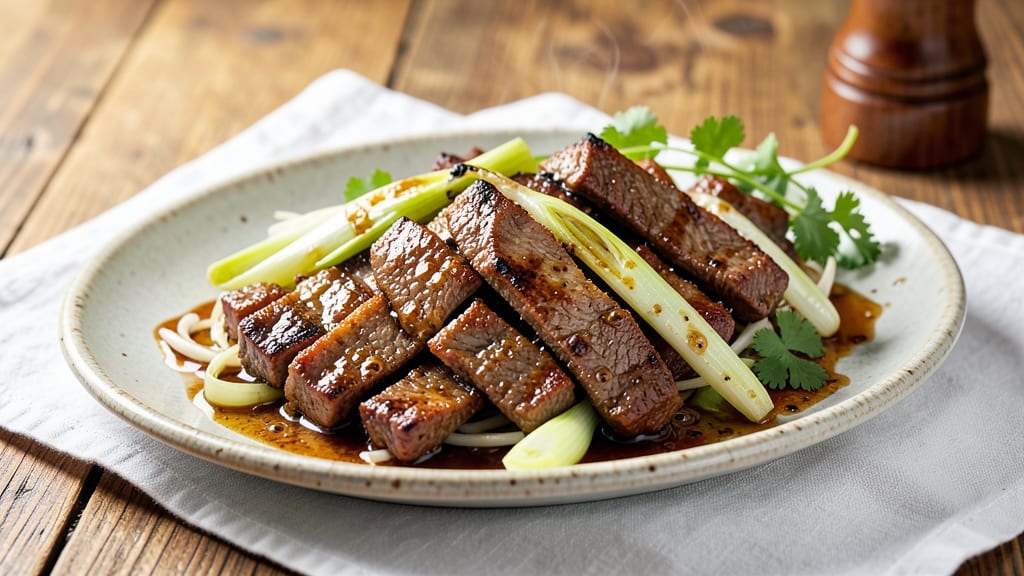
This beef and leek stir fry recipe delivers restaurant-quality wok hei in your home kitchen with a silky sauce that balances umami and sweetness perfectly. The secret lies in high-heat searing and precise timing—just 15 minutes from start to finish.
I’ve refined this technique over years of testing, ensuring tender beef strips and crisp-tender leeks that absorb the sauce without turning mushy.
What sets this recipe apart is the harmony of flavors: a deep soy-garlic base brightened with honey and a splash of rice vinegar for balance. Traditional stir-fry methods rely on wok hei (breath of the wok), but we’ll adapt that smoky depth using a well-heated skillet at home.
The sauce clings to every bite, creating a glossy finish that’s both elegant and deeply satisfying.
By the time you plate this dish, you’ll have perfectly seared beef with caramelized edges, leeks that stay crisp yet tender, and a sauce so rich it coats each ingredient. Serve it over steamed jasmine rice for the full experience—each forkful delivers layers of savory, sweet, and aromatic complexity.
This is the kind of stir fry that transforms a simple weeknight into a flavorful celebration.
The beauty of this recipe lies in its adaptability. Swap in mushrooms for extra umami or add a sprinkle of sesame seeds for texture. For extra authenticity, finish with a quick sear in a hot wok or cast-iron skillet to mimic that coveted wok hei.
Let’s get cooking—your taste buds will thank you.
Ingredients for beef and leek stir fry
Restaurant-quality stir fry starts with these 15 simple ingredients—no shortcuts needed.
| Ingredient | Amount | Notes |
|---|---|---|
| Flank Steak 🥩 | 1 lb | Thinly sliced against grain |
| Large Leeks 🧅 | 2 whole | White and light green parts only |
| Light Soy Sauce 🥢 | ⅓ cup | High-quality brand preferred |
| Dark Soy Sauce 🥢 | 1 tbsp | For depth of flavor |
| Honey 🍯 | 1 ½ tbsp | Wildflower or clover |
| Rice Vinegar 🍶 | 1 ½ tbsp | Seasoned preferred |
| Garlic Cloves 🧄 | 4 cloves | Minced finely |
| Fresh Ginger 🌿 | 1 tbsp | Finely grated |
| Sesame Oil 🫒 | 1 tbsp | Toasted sesame oil |
| Neutral Oil 🫒 | 2 tbsp | Vegetable or canola |
| Cornstarch 🌾 | 1 tbsp | For sauce thickening |
| Water 💧 | ¼ cup | Room temperature |
| Salt 🧂 | 1 tsp | Kosher or sea salt |
| Black Pepper 🌶️ | ½ tsp | Freshly ground |
| White Sesame Seeds 🌰 | 1 tbsp | For garnish |
The flank steak is your secret weapon here—thinly sliced against the grain for tenderness. Ask the butcher to slice it if your grocery store doesn't do it for you; otherwise, freeze it for 20 minutes before slicing. Leeks? Walmart or Trader Joe's have the freshest ones, but any store with a produce section will work. Look for leeks with crisp white parts and no brown spots. The soy sauces make all the difference—Kikkoman or Pearl River Bridge are my go-tos, but any high-quality brand will do. Pro tip: Keep the light and dark soy separate until you're ready to combine them in the sauce.
No light soy sauce? Substitute with an extra tablespoon of dark soy, but you'll lose that bright, clean flavor. Running low on honey? Maple syrup works in a pinch, though it has a slightly different depth. The cornstarch is non-negotiable for that silky sauce—it's what gives stir fry its signature gloss. If you can't find toasted sesame oil, regular sesame oil plus a pinch of smoked paprika mimics the flavor. And if you're out of rice vinegar, apple cider vinegar at half the amount keeps things balanced. The garlic and ginger? Fresh is always better, but jarred minced garlic (the kind in tubes) saves time if you're in a rush.
Prep the leeks first—they take the longest. Store them in the fridge, unwashed, for up to 5 days. The steak keeps best in the coldest part of your fridge for 2 days maximum. For the sauce, mix the cornstarch and water first—this slurry is what thickens everything beautifully. If you're making this ahead, prepare the sauce separately and store it for up to 1 week. The sesame seeds? Toast them in a dry pan for 30 seconds before adding to the dish—they'll release their nutty aroma and give your dish that extra pop. This dish reheats well, but the sauce might thicken, so add a splash of water when warming.
Why You'll Love This Recipe
- One-Pan Magic: I swear by this—just sear the steak, toss in sliced leeks, and let the soy and honey work their magic. No extra pots, no fuss.
- Sweet-Savory Balance: That honey glaze? It cuts through the leeks’ sharpness while the dark soy adds depth—like a hug in a bowl.
- Lunchbox Hero: Pack it cold for work or reheat it for dinner—same great flavors. My kids eat it straight from the fridge (no complaints).
- Budget Powerhouse: Flank steak stretches far, and leeks last forever. A single pan of this feeds four for under $15—no guilt, all satisfaction.
Step-by-step instructions for beef and leek stir fry
Master this wok technique for tender beef, sweet leeks, and a silky sauce that clings perfectly.
Prep the Flank Steak for Maximum Tenderization
Slice the 1 lb flank steak thinly against the grain into ¼-inch thick strips. You'll need about 12-15 slices total. I like to work in batches—lay each slice flat on the cutting board and slice perpendicular to the muscle fibers for that signature tender bite.
Place the sliced steak in a bowl and toss with 1 teaspoon salt, ½ teaspoon black pepper, and 1 tablespoon cornstarch. The cornstarch creates a light coating that helps thicken the sauce while keeping the beef tender. Let it marinate for 10-15 minutes at room temperature—this ensures even cooking and prevents tough meat.
Sear the Beef to Lock in Juices
Heat a wok or large skillet over high heat until it's smoking hot. Add 2 tablespoons neutral oil and swirl to coat. Working in batches (don't overcrowd), add the steak and sear for 1-2 minutes per side until deep golden brown and just cooked through.
Here's the thing—you want the beef to be 80% done at this stage. It'll finish cooking when it absorbs the sauce later. Once seared, remove the beef to a plate and set aside. Keep the wok hot for the next step—we're not letting that heat drop!
Stir-Fry the Leeks Until Tender-Crisp
Add the white and light green parts of the 2 whole large leeks to the wok, cutting them into ½-inch thick half-moons. Stir-fry for 3-4 minutes until the edges turn soft and slightly translucent but still retain a crisp bite. You want them tender enough to eat but not mushy.
Add the 4 cloves minced garlic and 1 tablespoon finely grated ginger and cook for 30 seconds until fragrant. The garlic should sizzle and turn golden—if it burns, you're cooking too hot. This aromatic base forms the flavor foundation for the entire dish.
Build the Silky Sauce
In a small bowl, whisk together the ⅓ cup light soy sauce, 1 tablespoon dark soy sauce, 1.5 tablespoons honey, 1.5 tablespoons rice vinegar, and ¼ cup water. Pour this mixture into the wok and bring to a simmer over medium-high heat.
Simmer for 2-3 minutes until the sauce reduces slightly and coats the back of a spoon. The dark soy sauce adds depth while the honey and rice vinegar create that perfect balance of sweet and tangy. If the sauce looks too thin, let it reduce longer—you can always thin it later with a splash of water.
Finish and Serve with Perfect Garnish
Return the seared beef to the wok and toss everything together for 1-2 minutes until the beef is fully heated through and coated in the sauce. The residual heat from the wok will finish cooking the beef perfectly without overcooking the leeks.
Drizzle with 1 tablespoon sesame oil and sprinkle generously with 1 tablespoon white sesame seeds just before serving. The sesame oil adds nutty aroma while the seeds provide a delightful crunch. Serve immediately over steamed jasmine rice to soak up every last bit of that glorious sauce.
Pro Tips For Making Beef And Leek Stir Fry
- Slice Steak Against the Grain: I learned this the hard way—thin, even slices that run perpendicular to the muscle fibers melt in your mouth instead of chewing like boot leather. Use a sharp knife and don’t rush; ¼-inch thickness is perfect for flank steak stir-fries.
- Char the Leeks First: Start by cooking the leeks in a dry pan over medium-high heat until their edges brown—this builds flavor before adding oil. Skip this, and you’ll end up with bland, watery greens instead of caramelized depth.
- Use Both Soy Sauces Separately: Light soy sauce goes in early for color, dark soy sauce later for umami richness. Mixing them upfront muddies the sauce and weakens the flavor profile—trust me, your taste buds will notice.
- Finish with Honey on Low Heat: Add the honey in the last 30 seconds over the lowest possible flame to prevent burning. Stir constantly and watch closely—it’s easy to scorch, and burnt honey turns the whole dish bitter.
Common mistakes when making great beef and leek stir fry
Overcrowding the Wok
This is the #1 mistake that turns tender beef into chewy rubber. When you pile too many beef strips in the wok at once, they steam instead of sear, releasing juices that dilute the sauce and create a soggy mess.
The golden rule: 1 inch of space between each strip when searing. I promise you, two batches of perfectly cooked beef beat one batch of mushy disappointment every time. 🔥
Skipping the Rest
Freshly sliced beef needs 10-15 minutes at room temperature before cooking. If you skip this step, the cold meat will draw heat from your wok, causing uneven cooking and potentially raw centers.
I've seen home cooks rush this—don't be that person! Place your sliced beef on a plate and let it sit while you prep everything else.
Inconsistent Heat
Stir-frying requires high, consistent heat throughout the entire process. If your burner isn't hot enough or you let the heat drop when adding ingredients, your beef will turn tough and your leeks will turn mushy.
Use a 14-inch cast iron skillet on a gas stove for best results—it retains heat better than nonstick pans. And keep that wok moving! Constant stirring prevents burning.
Overcooking the Leeks
Leeks should be tender-crisp, not limp and sad. The moment they turn completely soft, they've passed their prime. I've ruined many stir-fries by letting them cook too long—3-4 minutes max is all they need.
Remove them from the wok just when they're 80% done and they'll finish perfectly when combined with the sauce.
Neglecting the Sauce
Many home cooks pour the sauce over everything at once, then wonder why it doesn't coat properly. The secret is building the sauce after searing the beef and stir-frying the leeks. This ensures each component gets properly coated.
Also, never skip the cornstarch slurry—it's what gives that signature silky texture. If your sauce is too thin, reduce it longer rather than adding more water later.
Using the Wrong Oil
High smoke point oils like vegetable or canola are essential for stir-frying. Olive oil has too low a smoke point and will burn, creating bitter flavors.
I've made this mistake with extra virgin olive oil—don't do it! Use 2 tablespoons neutral oil and keep it hot enough to sizzle when ingredients hit the wok. The oil should be shimmering before you add anything.
Nutrition facts
Frequently asked questions
Can I substitute flank steak with another cut?
Flank steak is ideal for its tenderness, but you can swap it for sirloin or ribeye (thinly sliced against the grain). Avoid tougher cuts like chuck—they won't tenderize properly. For extra tenderness, marinate the beef in 1 tablespoon soy sauce and 1 teaspoon cornstarch for 30 minutes before cooking.
How do I get that restaurant-quality wok hei flavor at home?
Wok hei (breath of the wok) comes from high, dry heat and quick cooking. Use a cast-iron skillet or wok on high heat until it's smoking, then add your oil. Keep the pan moving constantly—this creates steam and smoky aromas. For extra depth, finish with a quick sear over an open flame if your stove allows it.
Can I make this stir fry ahead of time?
Yes, but with a few tweaks! Cook the beef and leeks separately, then store them in the fridge for up to 2 days. Reheat the beef in a hot pan for 2 minutes and the leeks for 1 minute. Rebuild the sauce from scratch (it reheats best fresh) and toss everything together just before serving. The sauce will be thinner when reheated, so reduce it longer if needed.
What's the best way to store leeks for this recipe?
Store whole, unwashed leeks in the fridge for up to 5 days. Trim the roots and dark green tops, then wrap the white and light green parts in a damp paper towel before placing them in a sealed container. This keeps them crisp and fresh. For longer storage (up to 2 weeks), freeze the trimmed leeks in a bag—just thaw and pat dry before using.
Can I use frozen beef instead of fresh?
Not ideal, but you can make it work! Thaw the beef overnight in the fridge, then pat it completely dry. Sear it immediately over high heat—frozen beef releases more moisture, so expect slightly shorter cooking times (1 minute per side). For best results, use beef that's been previously sliced thin (like pre-cut stir-fry strips).