
Main Courses
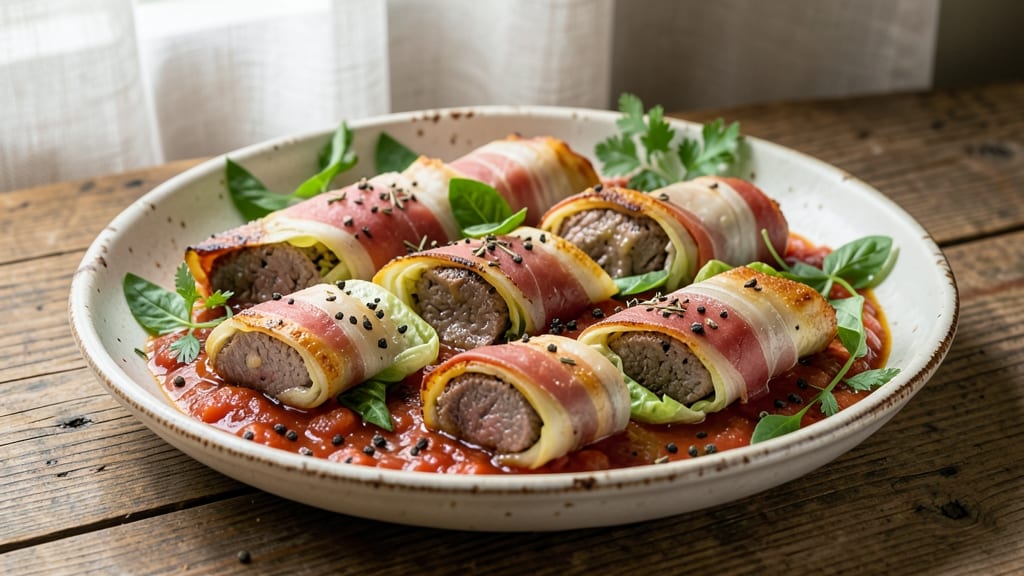
This authentic Italian beef braciole recipe brings Rome's rustic tradition to your kitchen with layers of spiced meat wrapped in prosciutto or cabbage leaves, then slow-braised to perfection. The technique I've perfected—balancing rich tomato sauce with aromatic herbs—transforms tough cuts into melt-in-your-mouth tenderness that feels like a home-cooked hug.
What makes this dish truly special is the marriage of Italian regional styles, where Roman versions lean toward prosciutto wraps and Sicilian ones embrace cabbage, both delivering that signature juicy, flavor-packed result.
The secret to tender braciole lies in the slow cooking process, where meat absorbs the deep flavors of garlic, rosemary, and red wine over hours.
Unlike quick-cooked dishes, this recipe rewards patience with a texture that's impossibly succulent—each bite revealing layers of seasoning and a sauce that clings perfectly to the meat.
The prosciutto or cabbage leaves not only hold the filling together but also infuse the dish with their own subtle flavors, creating a harmony that's distinctly Italian yet approachable for home cooks.
By the time you serve this dish, you'll have a restaurant-quality meal that pairs beautifully with creamy polenta or crusty bread to soak up every last drop of sauce.
The aroma alone—tomato, garlic, and herbs mingling—will have your kitchen feeling like a trattoria, while the presentation of golden-brown braciole slices served over polenta makes it feel special enough for company.
This is the kind of recipe that turns a simple weeknight dinner into an Italian feast without requiring advanced skills.
The beauty of braciole is its versatility—it's hearty enough for a family dinner but elegant enough for gatherings, and the leftovers reheat beautifully, making it a meal that gives back. Whether you're recreating a Roman classic or exploring Sicilian traditions, this recipe delivers on authenticity while keeping the process straightforward.
Let's get started on creating a dish that tastes like a taste of Italy.
Ingredients for authentic italian beef braciole
Italian flavors wrapped in tender beef—this recipe delivers restaurant-quality braciole with simple, authentic ingredients.
| Ingredient | Amount | Notes |
|---|---|---|
| Beef Chuck Roast 🥩 | 2 ½ lb | Trimmed of excess fat, cut into thin strips |
| Prosciutto Slices 🥓 | 12 slices | Thinly sliced, high-quality Italian |
| Fresh Cabbage Leaves 🥬 | 12 whole | Large, sturdy leaves, blanched briefly |
| Extra-Virgin Olive Oil 🫒 | ½ cup | For cooking and finishing |
| San Marzano Crushed Tomatoes 🍅 | 2 cups | High-quality, no added salt |
| Red Wine 🍷 | ½ cup | Bold dry red, like Chianti |
| Fresh Rosemary 🌿 | ¼ cup | Chopped, stems removed |
| Garlic Cloves 🧄 | 6 cloves | Peeled and minced |
| Dried Oregano 🍃 | 1 tbsp | Italian variety preferred |
| Ground Black Pepper 🌶️ | 1 ½ tsp | Freshly cracked |
| Diamond Crystal Kosher Salt 🧂 | 1 ½ tsp | For seasoning and finishing |
| Tomato Paste 🍅 | 2 tbsp | High-quality, no sugar added |
| Fresh Parsley 🌿 | ⅛ cup | Chopped, for garnish |
| Parmesan Cheese 🧀 | ¼ cup | Freshly grated, for serving |
The beef is the star, so choose chuck roast for its rich flavor and tender texture—Costco or Whole Foods carry excellent cuts. If prosciutto feels pricey, Trader Joe's offers high-quality slices at a reasonable cost. For cabbage leaves, opt for green cabbage with large, sturdy leaves—local farmers markets often have the freshest selection. The San Marzano tomatoes are non-negotiable here; their sweetness and acidity balance perfectly with the rich meat. If you can't find them, Muir Glen is a solid alternative. Rosemary should be fragrant and vibrant—fresh is best, but dried works in a pinch at half the amount. The garlic cloves should be plump and firm, not sprouting or shriveled.
No prosciutto? Thinly sliced pancetta or extra cabbage leaves work beautifully as wraps. Short on red wine? Beef broth with a splash of balsamic vinegar mimics the depth. Fresh rosemary unavailable? Dried oregano at half the amount keeps the flavor profile intact. The tomato paste can be swapped for tomato sauce if preferred, but the concentrated flavor is worth the effort. For extra richness, add a splash of heavy cream at the end of cooking. If using cabbage leaves, blanch them for 30 seconds to soften before wrapping—this prevents tearing when handling the raw meat.
Prosciutto and cabbage leaves can be prepped ahead and stored in the fridge for up to 2 days wrapped in damp paper towels. The raw beef mixture stays fresh for 1 day in the fridge before wrapping. Once cooked, braciole reheats beautifully—cover with foil and warm in the oven for best results. Leftovers keep for 4-5 days in the fridge or 3 months frozen. For a quick weeknight dinner, double the batch and freeze half—perfect for lazy days when you crave Italian comfort.
Why You'll Love This Recipe
- One-Pan Magic: I swear by this recipe because it’s that simple—just a sheet pan, some olive oil, and 15 minutes of hands-on work. The prosciutto and cabbage leaves do all the heavy lifting while you simmer the tomatoes, and honestly? The cleanup is just wiping one pan. No fuss, no stress.
- Umami Bomb: That first bite when the beef melts through the prosciutto crust? Chef’s kiss. The San Marzano tomatoes add sweetness that cuts through the richness, and the cabbage leaves stay tender without turning to mush. It’s the kind of dish where every mouthful feels like a little Italian vacation.
- Weeknight Workhorse: Between us, this is my go-to when I need something hearty but not labor-intensive. Double the batch on Sunday, and you’ve got Monday dinner, potluck leftovers, or a last-minute guest situation covered. (Yes, even on a Tuesday night.)
- Budget-Friendly Luxury: A chuck roast stretches farther than you’d think, and prosciutto—even in small amounts—makes it feel special without breaking the bank. The cabbage leaves are free if you’ve got a garden, or cheap if you don’t, and the tomatoes? A can lasts forever. Tastes like a restaurant, costs like a grocery run.
Step-by-step instructions for authentic Italian beef braciole
Here's how to create restaurant-quality braciole with layers of flavor and melt-in-your-mouth tenderness.
Prepare the Beef Filling with Perfect Seasoning
In a food processor, combine the 2.5 lb beef chuck roast (cut into thin strips), 12 slices prosciutto slices (chopped), 0.25 cup fresh rosemary, 6 cloves garlic cloves, 1 tbsp dried oregano, 1.5 tsp ground black pepper, and 1.5 tsp diamond crystal kosher salt. Pulse until the mixture forms a coarse paste but still retains some texture—this ensures maximum flavor infusion without turning into a paste.
Transfer the mixture to a bowl and let it sit at room temperature for 15 minutes. This resting period allows the seasonings to penetrate the beef fibers deeply. Here's the thing—don't skip this step. The resting time ensures the flavors meld completely, creating that authentic Italian depth we're after.
Assemble the Braciole Rolls with Cabbage Wraps
Blanch the 12 whole fresh cabbage leaves in boiling water for 30 seconds, then immediately plunge them into ice water to stop the cooking process. This brief blanching makes them pliable enough to wrap around the beef filling. Drain well and pat dry with paper towels.
Take one cabbage leaf and place 2 tablespoons of the beef mixture in the center. Fold the sides inward, then roll tightly from the bottom up, tucking in the sides as you go. You'll end up with 12 neat little rolls. I like to make them about 3 inches long—this size ensures even cooking and easy handling. Keep the assembled rolls on a plate covered with a damp towel to prevent drying.
Sear the Braciole Rolls for Maximum Flavor
Heat 0.25 cup extra-virgin olive oil in a large, heavy-bottomed Dutch oven over medium-high heat. Working in batches (don't overcrowd the pan), sear the braciole rolls on all sides until they develop a deep golden-brown crust—this should take about 2-3 minutes per side. You'll know they're ready when they release easily from the pan and have that irresistible caramelized aroma.
As you sear, build the sauce in the same pot. Add 2 tbsp tomato paste and cook for 1 minute until it darkens slightly. Pour in the 0.5 cup red wine and scrape up all those delicious browned bits from the bottom of the pan—this is where all the flavor lives. Let the wine reduce by half before adding the 2 cups san marzano crushed tomatoes. Stir everything together and bring to a gentle simmer.
Braise Until Fork-Tender with Rich Tomato Sauce
Return all the seared braciole rolls to the Dutch oven, nestling them into the tomato sauce. The sauce should come about halfway up the sides of the rolls—this ensures they cook evenly and stay moist. Cover the pot and transfer it to a 325°F oven. Here's where patience pays off: braise for 2 to 2.5 hours until the beef is fork-tender and the cabbage leaves are completely soft.
Check for doneness by piercing one of the rolls with a fork—it should slide in easily with no resistance. The sauce should have thickened slightly, coating the rolls beautifully. If it's too thin, uncover and simmer for an additional 10 minutes to reduce it. The rolls should be so tender they practically fall apart when you cut into them.
Finish and Serve with Authentic Italian Flair
Remove the braciole rolls from the oven and let them rest for 10 minutes before serving. This resting period allows the juices to redistribute, ensuring each bite is as tender as the first. While they rest, heat 0.25 cup extra-virgin olive oil in a small skillet over low heat. Add the 0.125 cup fresh parsley and 0.25 cup parmesan cheese, stirring constantly until the cheese melts into a creamy sauce.
Drizzle this finishing sauce over each serving of braciole, garnishing with additional fresh parsley if desired. Serve immediately with crusty bread to soak up every last bit of that rich tomato sauce. The combination of tender beef, crispy prosciutto, and the perfect balance of herbs and acidity makes this dish truly authentic and unforgettable.
Pro Tips For Making Authentic Italian Beef Braciole
- Sear the Meat First: I used to skip this step, thinking the long braise would handle everything—but a quick 3-minute sear in a screaming-hot pan with olive oil locks in flavor and keeps the beef juicy. Use a heavy skillet and don’t overcrowd, or you’ll steam instead of brown.
- Blanch Cabbage Leaves: Fresh cabbage leaves are tougher than they look. Drop them in boiling water for 30 seconds, then shock in ice water to soften them enough to wrap without tearing. This makes rolling the braciole way easier, and your layers stay intact.
- Don’t Overfill the Rolls: Stuffing those cabbage leaves with too much filling is how you end up with a messy pile instead of neat rolls. Keep the beef mixture snug but not packed—think "firm but flexible," like a well-wrapped burrito. Loose rolls unravel; tight ones stay together.
- Use Prosciutto Wisely: Skip the pre-sliced deli stuff—real prosciutto adds saltiness and fat that melts into the beef. Wrap just 1-2 slices around each roll (or tuck them inside) so the flavor infuses without overpowering. Too much turns your braciole into ham-flavored beef.
Flavor customization for this authentic italian beef braciole
Roman Prosciutto Style
For the classic Roman approach, stick with prosciutto wraps and a drier, more concentrated tomato sauce. Use San Marzano tomatoes reduced by 25% for a thicker consistency, and add 1 tbsp tomato paste directly to the Dutch oven before adding wine.
The prosciutto's salty-sweet flavor pairs beautifully with the deep, caramelized sauce—this is how Nonnas in Rome prepare it for family gatherings. 🍷
Sicilian Cabbage Wraps
In Sicily, they often use cabbage leaves instead of prosciutto, creating a more rustic, hearty dish. Blanch the leaves for 45 seconds (longer than Roman style) to soften them further, then wrap with a filling that includes 1 tbsp grated pecorino cheese mixed into the beef paste.
The cabbage adds a subtle bitterness that balances the richness, and the dish benefits from a splash of white wine instead of red. This version feels more like a peasant meal but is equally delicious.
Spicy Calabrian Twist
Add 1 tbsp Calabrian chili paste to the tomato sauce for a fiery kick that's popular in Southern Italy. I like to use 'nduja (spicy spreadable salami) instead of prosciutto for the filling—it adds a deep, smoky heat that pairs perfectly with the cabbage wraps.
For extra authenticity, finish with a drizzle of hot honey and toasted breadcrumbs to contrast the spice. This version is perfect for those who love bold flavors. 🌶️
Creamy Tuscan Adaptation
Tuscans often enrich their braciole with heavy cream or mascarpone cheese in the sauce. After braising, stir in ½ cup heavy cream and 2 oz mascarpone until smooth, then finish with freshly grated pecorino.
This creates a luxurious, velvety sauce that's ideal for serving with creamy polenta or fresh pasta. The richness balances the acidity of the tomatoes beautifully.
Herb-Forward Umbrian Version
Umbria is known for its herbs, so this version swaps rosemary for fresh sage and adds 1 tsp fennel seeds to the beef mixture. The filling also includes ½ cup finely chopped pancetta for extra depth.
The sauce gets a touch of balsamic vinegar (1 tbsp) to brighten the flavors. This earthy, aromatic twist makes it feel like a true Umbrian countryside dish. 🌿
Quick Weeknight Hack
For a faster version, use pre-cooked beef strips (like rotisserie chicken or leftover roast beef) mixed with 1 tbsp soy sauce and 1 tsp smoked paprika for umami depth. Wrap in store-bought cabbage leaves (blanched) and braise for just 1 hour instead of 2.5.
This keeps the technique authentic while cutting prep time in half—perfect for busy nights when you still want Italian flavors. ⏰
Nutrition facts
Frequently asked questions
Why does the recipe call for both prosciutto AND cabbage leaves?
This gives you two authentic wrapping options! Prosciutto creates a delicate, salty-sweet flavor while cabbage adds rustic texture. Use whichever you prefer—just adjust the quantity to match the recipe's 12 wraps. The cabbage leaves work beautifully for a more budget-friendly version.
Can I make braciole in a slow cooker instead of oven?
Transfer the seared rolls to your slow cooker with the sauce, then cook on low for 6-7 hours or high for 3-4 hours. The slow cooker's gentle heat works perfectly for tenderizing the beef. Just add ¼ cup water to prevent sticking and check doneness with a fork.
What's the best way to store and reheat leftovers?
Store cooked braciole in an airtight container in the fridge for 4-5 days or freeze for 3 months. To reheat, cover with foil and warm in a 350°F oven for 20-25 minutes or until heated through. The sauce will thicken slightly—just add a splash of water or broth if needed.
Is there a quicker version for weeknights?
Yes! Use pre-cut beef strips (like flank steak) and reduce braising time to 1.5 hours. For extra speed, use store-bought cabbage leaves (blanched) and skip the resting time. The flavor will be slightly less developed but still delicious in 1 hour total.
Can I substitute other meats like pork or chicken?
While beef is traditional, you can use pork shoulder (adjust cooking time to 1.5 hours) or chicken thighs (cook for 45 minutes). For chicken, reduce the red wine to ¼ cup and add ½ cup chicken broth to the sauce. The texture will be different but still flavorful!