
Soups & Stews
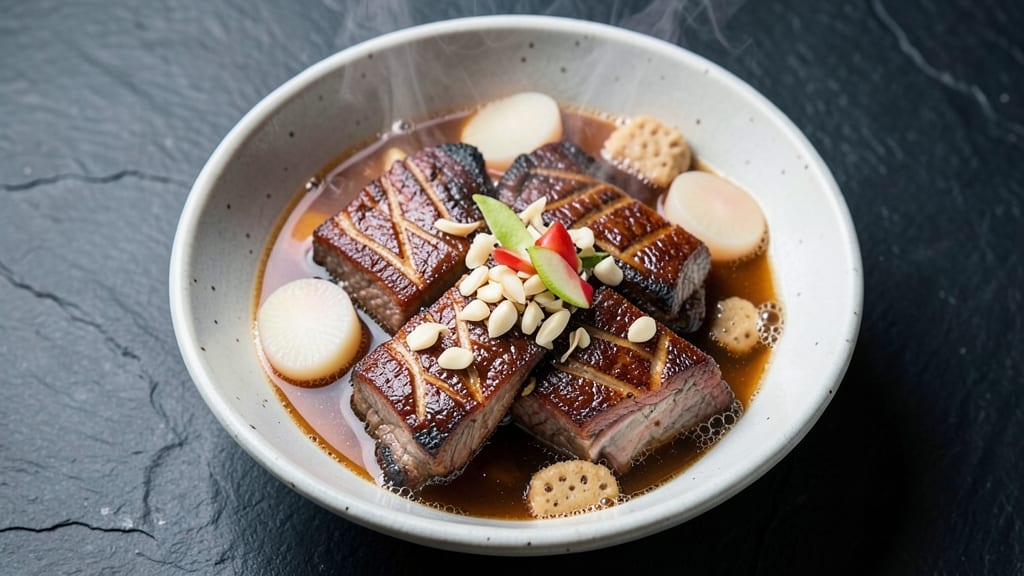
This authentic Korean beef stew recipe delivers the rich, umami-packed flavors of Galbi Jjim—tender beef braised with fermented soybean paste, silky rice cakes, and aromatic vegetables. The secret lies in slow simmering, which transforms tough cuts into melt-in-your-mouth perfection while developing deep, savory notes.
Unlike quick recipes, this dish rewards patience with layers of flavor that build over 1.5 to 2 hours of simmering, making it ideal for special occasions or cozy weeknight dinners.
The recipe stays true to Korean traditions using key ingredients like short ribs or ribeye, doenjang (fermented soybean paste), Korean radish (mu), and garlic-ginger aromatics. The addition of rice cake bites (tteok) adds a delicate, silky texture that contrasts beautifully with the hearty beef.
While it may sound complex, the technique is straightforward—marinate the beef overnight, then simmer everything together until the sauce thickens into a glossy, velvety consistency.
What you’ll end up with is a steaming bowl of restaurant-quality stew—tender beef that falls apart at the touch of a fork, glossy sauce rich with umami, and subtle sweetness from the rice cakes.
Serve it over steamed rice with classic banchan (side dishes) for an authentic Korean meal experience. The aroma alone will transport you to a bustling Seoul restaurant, but the taste proves you don’t need to travel to recreate it at home.
Perfect for feeding a crowd or meal prepping for the week, this stew keeps well in the fridge for up to 3 days, with flavors deepening as it rests. The long simmer also makes it a great make-ahead dish—just reheat gently before serving.
Whether you’re hosting a dinner party or craving comfort food, this recipe delivers the warmth and depth of Korean home cooking.
Ingredients for authentic korean beef stew
Sixteen ingredients, two hours of simmering—authentic Korean beef stew that rivals Seoul's best.
| Ingredient | Amount | Notes |
|---|---|---|
| Beef Short Ribs (Bone-In) 🥩 | 3 lb | Cut into 2-inch pieces, marbled preferred |
| Doenjang (Fermented Soybean Paste) 🥫 | ½ cup | Korean fermented soybean paste, not miso |
| Korean Radish (Daikon or Mu) 🥕 | 1 lb | Julienned into matchsticks, skin removed |
| Rice Cake Bites (Tteok) 🍡 | 1 package | Korean sweet rice cakes, 12 oz |
| Garlic Cloves 🧄 | 8 cloves | Minced, skin removed |
| Fresh Ginger 🌿 | ½ cup | Finely grated, peeled |
| Green Onions 🧅 | ½ cup | Whole, for garnish |
| Sesame Oil 🫒 | 2 tbsp | Toasted sesame oil, not flavored |
| Soy Sauce 🥫 | ¼ cup | Korean soy sauce preferred |
| Brown Sugar 🍚 | ¼ cup | Packed, light brown preferred |
| Asian Pear (or Substitute) 🍐 | 1 whole | Peeled, sliced for natural sweetness |
| Water 💧 | 2 cups | For simmering, room temperature |
| Diamond Crystal Kosher Salt 🧂 | 1 ½ tsp | For seasoning, adjust to taste |
| Black Peppercorns 🌶️ | ½ tsp | Freshly cracked, coarse grind |
| Steamed White Rice 🍚 | 3 cups | For serving, short-grain preferred |
The beef is non-negotiable for this dish. Short ribs with bone-in deliver the richest flavor and tender texture, though ribeye works in a pinch if you're pressed for time. Look for cuts with good marbling at your local Asian market—H Mart or 99 Ranch Market carry the best quality. If you can't find doenjang, miso paste is the closest substitute, though it lacks the deep fermentation profile. The Korean radish should be firm and crisp—avoid any with soft spots, as it won't hold up during simmering. For the rice cakes, Korean sweet rice cakes are essential; they dissolve beautifully into the stew, adding subtle sweetness without overpowering.
No doenjang? Miso paste at half the amount works, but the flavor will be less complex. Short on Korean radish? Daikon radish or regular radish in thin julienne strips gets you close. The Asian pear is key for natural sweetness—if unavailable, 1 tbsp honey or maple syrup can substitute. For the ginger, freshly grated is ideal, but powdered works at one-third the amount. The sesame oil should be toasted—non-toasted or flavored versions lack the nutty depth. Pro tip: Toast the sesame seeds separately and sprinkle over each bowl before serving for extra texture. The green onions are purely decorative but add a fresh contrast to the rich stew.
This stew tastes even better the next day as flavors meld. Store in an airtight container in the fridge for up to 3 days, or freeze for 3 months in portions. For meal prep, double the batch and freeze half—just thaw overnight in the fridge before reheating. The rice cakes will soften during storage, so add them fresh when reheating. If the stew thickens too much after chilling, stir in 1-2 tbsp water when reheating. Always serve over steamed rice to soak up every last drop of that velvety sauce—short-grain rice is traditional, but jasmine works beautifully too.
Why You'll Love This Recipe
- One-Pot Magic: I swear by this—just toss the ribs, radish, and rice cakes into one pot with the doenjang, and let it simmer. No chopping, no fuss, and the flavors meld like they’ve been cooking all day (even though they haven’t).
- Umami Bomb: That doenjang paste? It’s the secret weapon—deep, funky, and so satisfying. The garlic and bone-in ribs add richness, while the radish keeps it from feeling too heavy. Honestly, the first bite makes me close my eyes.
- Weeknight to Party: Same recipe, different vibes. Serve it over rice for a quick weeknight meal, or add a splash of sesame oil and toasted sesame seeds for a restaurant-worthy dish. My friends ask for it at gatherings, and I always bring it—because it’s that good.
- Leftovers That Win: This stew tastes better the next day. The ribs get fall-apart tender, and the rice cakes soak up all the flavor. I make a double batch on Sundays—breakfast for lunch, dinner for dinner, and still have leftovers for my lazy days.
Step-by-step instructions for authentic Korean beef stew
Master this traditional technique for rich umami depth and tender beef every time.
Prepare the Beef and Aromatics for Maximum Flavor
Cut the 3 lb beef short ribs into 2-inch pieces, ensuring you preserve the bone-in structure for natural flavor infusion. Pat each piece dry with paper towels—this step is critical for achieving that signature caramelized crust later. In a large bowl, combine the ribs with 0.5 cup doenjang, 0.25 cup soy sauce, 0.25 cup brown sugar, 1.5 tsp kosher salt, and 0.5 tsp cracked black peppercorns. Massage the marinade into the meat, coating every surface thoroughly. Let this mixture sit at room temperature for 30 minutes to allow the flavors to penetrate deeply.
While the beef marinates, julienne the 1 lb Korean radish into matchstick-sized pieces and set aside. Peel and slice the 1 whole Asian pear into thin half-moons—this fruit adds natural sweetness that balances the stew's complexity. Finely grate the 0.5 cup fresh ginger and mince the 8 cloves garlic. These aromatics will form the flavor base of your stew, so take your time to achieve an even, fine texture.
Build the Stew Base with Layered Flavors
Heat a large Dutch oven over medium-high heat and add 2 tbsp sesame oil. Once the oil shimmers, add the marinated beef in a single layer, working in batches if needed to avoid overcrowding. Sear each piece for 3-4 minutes per side until deeply browned—this creates the Maillard reaction that forms the stew's rich foundation. Remove the beef and set aside temporarily.
In the same pot, add the minced garlic and grated ginger, cooking for 30 seconds until fragrant but not browned. Immediately pour in 2 cups water and bring to a simmer. Add the julienned Korean radish and sliced Asian pear, stirring gently to combine. Return the beef to the pot, ensuring it's fully submerged in the liquid. The liquid should just cover the beef—if it's too shallow, add ¼ cup water to maintain proper moisture levels during cooking.
Simmer for Deep Umami Development
Reduce heat to low and cover the pot with a tight-fitting lid. Let the stew simmer gently for 2.5 hours, stirring occasionally to prevent any liquid from sticking to the bottom. The key here is patience—the long simmer allows the beef to become fork-tender while developing that signature deep umami flavor from the doenjang and soy sauce combination. After 1.5 hours, check the liquid level and add ¼ cup water if needed to maintain coverage.
About 30 minutes before the stew is done, add the 1 package rice cake bites (tteok) to the pot. These delicate bites will absorb the stew's rich flavors while maintaining their signature silky texture. The stew is ready when the beef easily separates with two forks and the liquid has reduced to a thick, velvety consistency. Taste and adjust seasoning—you may need to add a touch more soy sauce or brown sugar to balance the flavors.
Finish and Serve with Traditional Garnishes
Remove the stew from heat and let it rest for 10 minutes, allowing the flavors to meld and the rice cake bites to fully absorb the liquid. Before serving, garnish each bowl with 0.5 cup sliced green onions and a drizzle of toasted sesame oil for that authentic Korean restaurant finish. The stew should have a glossy surface with tender beef that falls apart easily, silky rice cake bites floating throughout, and a harmonious balance of sweet, salty, and umami flavors.
Serve immediately over 3 cups steamed white rice, allowing each diner to ladle the rich stew over their rice. The contrast of the warm, comforting stew against the neutral rice creates the perfect textural and flavor experience. This authentic Korean beef stew delivers restaurant-quality depth at home with proper technique and patience.
Pro Tips For Making Authentic Korean Beef Stew
- Sear the Ribs Twice: I learned this the hard way—bone-in short ribs need a two-stage sear. First, hit them hard over high heat for 3-4 minutes per side to brown the meat. Then, lower the heat to medium and let them render fat for another 5 minutes. The first sear locks in flavor; the second melts the collagen for that silky texture. Skimp on either, and you’ll end up with tough, dry chunks.
- Blend the Doenjang Paste: Doenjang isn’t just a thick paste—it’s the soul of the stew. For a smoother, more balanced flavor, blend it with a splash of water (about 2 tablespoons) before adding it to the pot. This prevents clumps and ensures it dissolves evenly into the broth. I was skeptical until I tried it: the stew tastes richer, and the color is deeper without extra stirring.
- Don’t Crowd the Pot: This isn’t the prettiest method, but it’s the tastiest. After searing, let the ribs rest in a single layer on a plate while you sauté the garlic and doenjang. Adding them all at once to a crowded pot steams the meat instead of browning it. Give them space to sizzle—even if it means two batches.
- Add Tteok Late: Rice cake bites (tteok) soak up liquid like sponges. Toss them in just 5 minutes before serving so they absorb the flavorful broth without turning to mush. If you’re worried about timing, keep them in a dry bowl until the last moment. Trust me, your stew will thank you—crispy edges, not soggy disappointment.
Essential equipment for authentic korean beef stew
Dutch Oven Essentials
A heavy-bottomed Dutch oven is non-negotiable for this recipe—it distributes heat evenly and prevents scorching during the long simmer. I swear by the Le Creuset Stoneware Dutch Oven (5.5-quart size) for its superior heat retention and durability, but Lodge Cast Iron is a budget-friendly alternative that works beautifully.
The deep sides prevent spills when stirring, and the tight-fitting lid traps steam for maximum flavor development. 🔥
Precision Thermometer
Use a meat thermometer to monitor the stew's internal temperature—aim for 195-205°F for perfectly tender beef. The Thermoworks Smoke or Meater Plus models offer instant-read accuracy and wireless monitoring.
I check the temperature at the thickest part of the beef after 2 hours of simmering to ensure it's reaching the ideal range without overcooking.
Julienne Tools
For the Korean radish and Asian pear, a mandoline with a julienne attachment makes quick work of uniform matchsticks. I use the OXO Good Grips Mandoline for its safety features and precision cuts.
If you don't have one, a sharp chef's knife and steady hand work—just take your time to achieve even strips. The radish should be 1/8-inch thick for proper texture.
Marinating Gear
A large mixing bowl (at least 8-quart capacity) and plastic wrap are essential for marinating the beef. I prefer Cambro food pans for their airtight seal, but a standard glass or stainless steel bowl works too.
For the marinade, a fine-mesh strainer helps remove any debris from the doenjang or soy sauce before combining with the beef. A wooden spoon is ideal for massaging the marinade into the meat.
Sesame Oil Tools
Toasted sesame oil should be added carefully—use a small squeeze bottle or baste brush to drizzle it over each serving at the end. I keep a small glass jar of toasted sesame seeds nearby to sprinkle over the stew for extra texture.
A microplane is perfect for grating the fresh ginger finely, while a garlic press ensures even mincing of the 8 cloves garlic without burning them.
Nutrition facts
Frequently asked questions about authentic Korean beef stew
Can I substitute doenjang with another ingredient?
The heart of this stew's umami lies in doenjang, but you can use ½ cup miso paste in a pinch. For best results, add 1 tbsp soy sauce extra to compensate for the different fermentation profiles. The texture will be slightly smoother, but the depth of flavor will still shine through.
How do I make this stew faster without sacrificing flavor?
For a quicker version, reduce simmering time to 1.5 hours and use pre-cut beef short ribs (2-inch pieces). Skip the overnight marinade and sear the beef for only 2 minutes per side—this still builds flavor while cutting prep time by 30 minutes. The result won't be as tender, but it'll still deliver authentic taste.
Why does my stew taste too salty?
This often happens when using store-bought doenjang (some brands are saltier) or adding extra soy sauce. Balance it by stirring in 1 tbsp brown sugar or ½ cup water to dilute the saltiness. Alternatively, add 1-2 slices of Asian pear (the natural sweetness helps). Taste as you go—Korean stews should have a harmonious sweet-salty balance.
Can I make this stew in an Instant Pot?
Yes! Sear the beef first in a skillet, then transfer to the Instant Pot with all ingredients. Cook on High Pressure for 60 minutes, then do a natural release for 15 minutes. The rice cakes will soften faster, so add them only in the last 10 minutes of cooking. The texture will differ slightly (less silky), but the flavors remain authentic.
What sides pair best with Korean beef stew?
Serve with steamed short-grain rice (essential for soaking up sauce) and classic banchan like kimchi, spicy cucumber salad, or pickled radish. For a complete meal, add mandu (dumplings) or grilled fish to balance the richness. The contrast of textures and temperatures makes every bite more satisfying.