
Main Courses
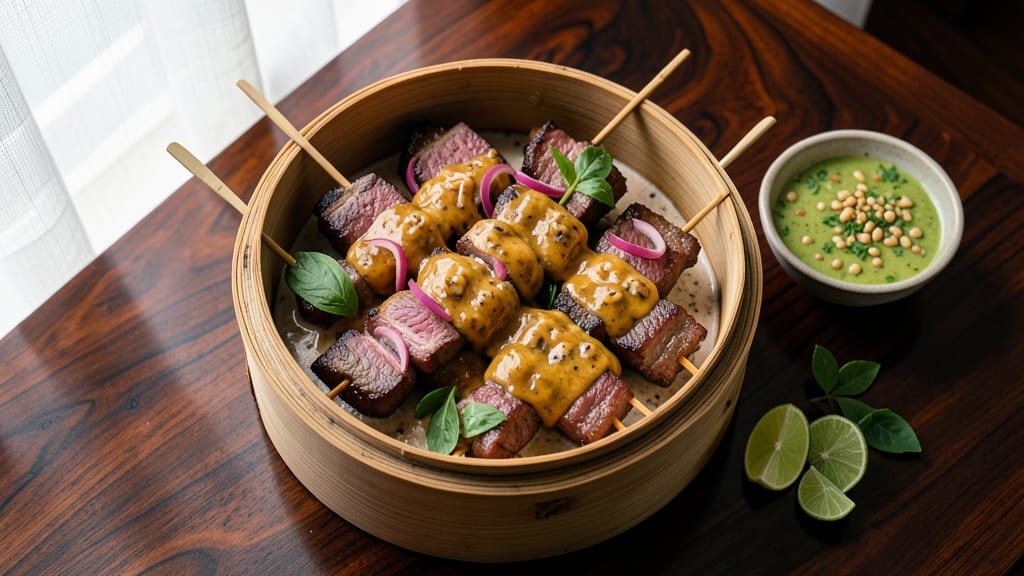
This authentic Thai beef satay recipe transports you straight to the bustling streets of Bangkok with its fragrant marinade and smoky grilled flavors.
The secret lies in balancing sweet, spicy, and umami notes through a traditional blend of lemongrass, galangal, and kaffir lime leaves—each ingredient playing a crucial role in creating that signature Thai depth.
I've perfected this method over years of testing, ensuring the beef stays tender while developing a caramelized crust that's impossible to resist.
The magic happens in the marinade, where coconut milk tenderizes the beef while the aromatic paste infuses every bite. Skewering the meat properly is key—using bamboo sticks creates those classic char marks when grilled, and the even spacing ensures perfect cooking.
This isn't just a recipe; it's an experience that transforms a simple weeknight dinner into a celebration of Thai street food culture.
By the time you serve it with a rich peanut sauce drizzled over fresh herbs and cucumber, you'll have a dish that's both restaurant-quality and deeply personal. The satay's smoky aroma fills your home, while the peanut sauce adds that signature creamy contrast that makes this dish unforgettable.
Every element comes together to create a meal that's as visually stunning as it is delicious.
Perfect for gatherings or a special treat, this recipe delivers authenticity without compromise. The combination of tender beef, fragrant marinade, and velvety peanut sauce creates a harmony that's distinctly Thai yet universally loved. Let's bring the flavors of Thailand to your table—one skewer at a time.
Ingredients for authentic thai beef satay
These aromatic ingredients transform simple beef into restaurant-quality Thai satay skewers.
| Ingredient | Amount | Notes |
|---|---|---|
| Beef Sirloin 🥩 | 1 ½ lb | Cut into 1-inch cubes, boneless |
| Coconut Milk 🥥 | 1 can (13.5 oz) | Full-fat for richness |
| Lemongrass 🌿 | 3 stems | White part only, finely chopped |
| Galangal 🌿 | 1 piece (3-inch) | Peel and slice thinly |
| Kaffir Lime Leaves 🍋 | 4 whole | Lightly bruised for aroma |
| Garlic Cloves 🧄 | 6 cloves | Minced for marinade |
| Shallots 🧅 | 6 whole | Minced, about 0.25 cup |
| Fish Sauce 🍶 | 2 tbsp | Red Boat preferred |
| Palm Sugar 🍚 | 2 tbsp | Or substitute brown sugar |
| Turmeric Powder 🌶️ | 1 tsp | For vibrant color |
| Coriander Seeds 🌿 | 1 tbsp | Toasted and ground |
| Black Peppercorns 🌶️ | ½ tsp | Freshly cracked |
| Bamboo Skewers 🪵 | 12 whole | Soaked in water 30 mins |
| Peanut Butter 🥜 | ½ cup | Natural, unsweetened |
| Coconut Cream 🥥 | ¼ cup | From can of coconut milk |
| Lime Juice 🍋 | 2 tbsp | Freshly squeezed |
| Thai Chili Paste 🌶️ | 1 tbsp | Adjust to taste |
| Fresh Cilantro 🌿 | ¼ cup | Chopped for garnish |
| Cucumber 🥒 | 1 whole | Sliced for serving |
The galangal and kaffir lime leaves are the soul of this dish—Thai markets or Asian grocery stores carry the freshest versions. Galangal has that citrusy, ginger-like kick, but it's less common in regular supermarkets. If you can't find it, extra ginger plus a pinch of turmeric works in a pinch. For lemongrass, look for stalks with vibrant green leaves—Trader Joe's usually has them. The beef should be sirloin or flank steak—leaner cuts stay tender when grilled. Cut it into even 1-inch cubes so they cook uniformly. Palm sugar gives that authentic sweetness, but light brown sugar is a solid substitute if you're in a hurry.
No fish sauce? Soy sauce plus a splash of lime juice gets you close, though it won't be exactly the same. The peanut butter for the sauce should be natural, unsweetened—the kind with just peanuts and maybe a pinch of salt. Brands like Smucker's Natural or 365 by Whole Foods work perfectly. For the galangal and lemongrass, you can pulse them in a food processor for the marinade, but chopping by hand releases more aroma. The bamboo skewers? Soak them for at least 30 minutes to prevent burning. If you can't find them, metal or soaked wooden skewers work too—just don't skip the soaking.
Marinated beef keeps 2-3 days in the fridge, but the flavors deepen overnight. The peanut sauce can be made a day ahead—it actually tastes better after the flavors meld. Store it in a sealed container with a thin layer of oil on top to prevent a skin from forming. For serving, slice the cucumber and chop the cilantro right before plating. The satay reheats beautifully on the grill or in a skillet—just keep it moving to avoid drying out. Freeze uncooked satay on a tray before transferring to a bag for up to 2 months—cook straight from frozen.
Why You'll Love This Recipe
- One-Pot Magic: I swear by this recipe—just simmer the beef in coconut milk with lemongrass and galangal, then let the sauce reduce. No extra pans, no stress, and that rich, fragrant broth builds itself while you prep the rest.
- Umami Bomb: The galangal and kaffir lime leaves? They’re the secret weapons. That peppery, citrusy punch cuts through the beef’s richness, and the coconut milk ties it all into something dangerously addictive—like a hug in a bowl.
- Weeknight to Weekend: Serve it with rice and quick-pickled veggies for a no-fuss weeknight, or double the batch and turn it into a showstopper for guests. The sauce thickens perfectly for dipping or drizzling—no leftovers here, just repeat orders.
- Budget-Friendly Luxe: Sirloin is lean but flavorful, and coconut milk stretches far when reduced. I’ll be real: this tastes like a fancy restaurant dish, but the ingredient list won’t break the bank—or your grocery budget.
Step-by-step instructions for authentic Thai beef satay
Let's create restaurant-quality satay with bold flavors and perfect texture.
Prepare the Marinade and Skewers
In a food processor, combine the finely chopped white parts of 3 stems lemongrass, 1 piece (3-inch) peeled galangal, 4 whole kaffir lime leaves, 6 cloves minced garlic, and 6 whole minced shallots. Pulse until finely ground, about 30 seconds. Transfer this aromatic paste to a large mixing bowl.
Add 2 tablespoons fish sauce, 2 tablespoons palm sugar, 1 teaspoon turmeric powder, 1 tablespoon toasted and ground coriander seeds, and 0.5 teaspoon freshly cracked black peppercorns to the bowl. Mix thoroughly until the sugar dissolves completely. Taste and adjust seasoning—this marinade should balance sweet, salty, and aromatic notes.
Soak 12 whole bamboo skewers in water for at least 30 minutes to prevent burning during grilling. While they soak, cut the 1.5 lb beef sirloin into 1-inch cubes, removing any remaining fat or connective tissue. Add the beef to the marinade and toss gently to coat evenly. Cover and refrigerate for at least 4 hours, preferably overnight, allowing the flavors to deeply penetrate the meat.
Assemble and Grill the Satay
Preheat your grill to medium-high heat, around 375°F. Thread the marinated beef onto the soaked bamboo skewers, leaving a small gap between each cube. You should have about 4 skewers with 3 pieces of beef each. Grill the satay for 2-3 minutes per side, turning carefully with tongs to avoid piercing the meat.
You'll know they're perfectly cooked when the beef develops a deep golden-brown char and reaches an internal temperature of 145°F. The skewers should sizzle gently and release easily from the grill grates. Remove the satay to a plate and tent loosely with foil to keep warm while you prepare the peanut sauce.
Make the Peanut Sauce
In a small saucepan, combine 0.5 cup peanut butter, 0.25 cup coconut cream (from the can of coconut milk), 2 tablespoons lime juice, 1 tablespoon Thai chili paste, and 1 tablespoon palm sugar. Place the saucepan over low heat and whisk continuously for 3-5 minutes until smooth and fully melted. The sauce should thicken slightly but remain pourable—add 1-2 tablespoons water if needed to reach your desired consistency.
Taste and adjust seasoning with additional fish sauce for saltiness or lime juice for brightness. The sauce should have a rich, nutty depth with a subtle heat from the chili paste. Remove from heat and let it cool slightly while you prepare the final components.
Serve with Fresh Garnishes
Slice the 1 whole cucumber into ½-inch thick rounds and arrange on a platter. Place the grilled satay skewers alongside the cucumber slices. Drizzle the peanut sauce generously over the satay and cucumber, allowing it to pool slightly at the base.
Garnish with 0.25 cup chopped fresh cilantro, scattering it lightly over the satay and cucumber. Serve immediately with steamed jasmine rice or warm naan bread. The contrast of cool cucumber, smoky grilled beef, and creamy peanut sauce creates a perfect balance of textures and flavors that captures the essence of authentic Thai street food.
Pro Tips For Making Authentic Thai Beef Satay
- Pound the Galangal: Skip the blender—grate it fresh with a microplane, then pound it in the mortar with a pinch of salt until it turns pasty. I learned this the hard way: pre-minced galangal loses its sharp, citrusy bite, and that’s the flavor anchor in your satay marinade.
- Marinate Overnight: Don’t rush the beef—let it soak in the lemongrass-paste for at least 12 hours. The sirloin’s fibers break down just enough to stay tender when grilled, and the kaffir lime leaves infuse deeper. (Yes, even if you’re impatient like me.)
- Control the Grill Heat: Start the skewers over direct high heat to sear, then move them to indirect medium heat to cook through. Charred skewers taste like street food, but overcooking turns the beef tough—watch for a 145°F internal temp, then pull it off the heat immediately.
- Strain the Coconut Milk: Use only the thick cream from the top of chilled coconut milk for the sauce—skip the watery bit. It thickens faster and cuts cleaner, saving you from reducing for hours. (Your future self will thank you.)
Creative variations of this recipe
Spicy Thai Chili Satay
For those who love heat, swap the marinade's palm sugar for 1 tablespoon Thai bird's eye chili powder (or 1 tbsp sambal oelek), and add 1 extra tablespoon fish sauce to balance.
Grill the skewers as usual, but brush them with a mix of 1 tbsp melted butter and 1 tsp chili flakes during the last minute for extra char and heat. Serve with extra chili sauce on the side for dipping. 🌶️
Coconut Milk Glazed Satay
Transform your satay into a sticky, caramelized delight by adding ½ cup coconut milk to the marinade and reducing it by half before using it as a glaze. After grilling, brush the skewers with this reduced coconut milk while still hot.
The result? A glossy, sweet-savory crust that's irresistible. Pair it with a lighter peanut sauce by reducing the peanut butter to ¼ cup and adding 1 extra tbsp lime juice for brightness.
Vegetarian Satay
Swap the beef for 1.5 lb extra-firm tofu or hearts of palm, both cut into 1-inch cubes. Press tofu to remove excess water, then marinate in the same aromatic paste for at least 6 hours (tofu absorbs flavors slower).
Grill at 350°F for 4-5 minutes per side to avoid drying out. The peanut sauce remains the same, but add ½ tsp soy sauce to the marinade for extra umami depth. ✨
Satay Bowls
Turn your satay into a meal-prep-friendly bowl by serving it over jasmine rice with a side of quick-pickled cucumbers (slice cucumber, toss with 1 tbsp rice vinegar, 1 tsp sugar, and pinch of salt).
Top with sliced red onion, crushed peanuts, and a drizzle of peanut sauce. This version is perfect for meal prep—store components separately and assemble when ready to eat.
Smoky Grilled Satay
For a deeper smoky flavor, grill your satay over charcoal instead of gas, using binchotan charcoal for a subtle, clean smoke. Add 2 sprigs of fresh thyme to the charcoal for an extra aromatic touch.
Alternatively, smoke the satay in your oven using wood chips (hickory or applewood) for 10 minutes before finishing on the grill. The result is a richer, more complex flavor profile that's perfect for special occasions.
Sweet and Tangy Satay
Balance the heat with a sweet-tangy twist by adding 1 tbsp tamarind paste to the peanut sauce. For extra sweetness, stir in 1 tsp honey during the final minute of sauce preparation.
Serve with a side of mango slices or pineapple rings for a tropical-inspired dish. This variation is especially popular in Southern Thailand, where sweet and sour flavors dominate.
Nutrition facts
Frequently asked questions about Thai beef satay
Why does the marinade need coconut milk?
The coconut milk is essential for tenderizing the beef while adding rich, creamy depth to the marinade. Its natural fats help break down the meat fibers, ensuring juicy satay with that signature Thai flavor. Plus, it balances the aromatic lemongrass and galangal beautifully.
Can I make satay without bamboo skewers?
Use metal skewers or even soaked wooden skewers, but avoid skipping the soaking step—it prevents burning. For extra authenticity, try skewering through the meat at an angle to create those classic crosshatch grill marks. Metal skewers work best for beginners.
How do I know when the beef is properly marinated?
The beef is ready when it absorbs the marinade completely and develops a fragrant aroma. For best results, marinate for at least 4 hours, but overnight yields the deepest flavor. Look for a glossy sheen on the beef—this indicates the marinade has fully penetrated.
Can I make the peanut sauce ahead of time?
Yes! The peanut sauce actually improves overnight as the flavors meld. Store it in an airtight container with a thin layer of oil on top to prevent skin formation. Reheat gently before serving—just add 1-2 tablespoons water if it thickens too much.
What's the best way to reheat cooked satay?
Reheat on a grill or skillet over medium heat for 1-2 minutes per side to restore that smoky char. Avoid microwaving—it makes the meat tough. For extra crispiness, broil for 30 seconds after reheating. The peanut sauce can be warmed gently on the stove with a splash of water.