
Main Courses
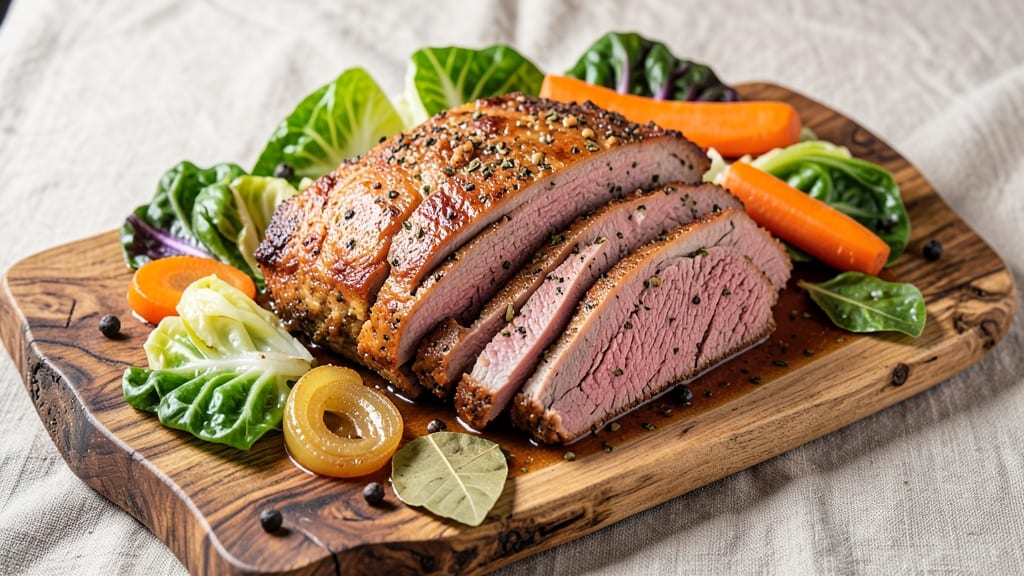
This baked corned beef brisket and cabbage recipe delivers the hearty, slow-braised richness of a classic Irish feast—tender meat falling apart in your mouth and perfectly softened cabbage, all infused with aromatic spices.
The secret lies in a low-and-slow bake that transforms tough brisket into melt-in-your-mouth perfection, while the cabbage absorbs the savory, herby sauce. I've perfected this method over years of St. Patrick's Day celebrations, ensuring every bite is packed with deep, satisfying flavor without requiring hours of active cooking.
What sets this recipe apart is the balance of tradition and convenience. While it honors the classic Irish preparation with corned beef brisket, bay leaves, and black peppercorns, I've streamlined the process to work in a standard oven—no need for a slow cooker or Instant Pot if you're not equipped.
The cabbage cooks directly in the pan, absorbing the rich juices from the beef, creating a dish that's as nourishing as it is delicious. This method yields a tender, juicy brisket with a crisp exterior and a sauce so flavorful it needs no extra gravy.
The result is a complete meal that feels like a celebration—golden-brown cabbage with tender leaves, brisket that shreds easily, and a sauce infused with the essence of the spices. Serve it with classic sides like creamy mashed potatoes, buttered carrots, or a simple mustard sauce for dipping.
The aroma alone will have everyone gathering around the table, and the first bite will make them ask for seconds. This is comfort food at its finest, perfect for St. Patrick's Day or any day you crave a hearty, satisfying meal.
Whether you're hosting a family gathering or simply treating yourself to a special dinner, this recipe delivers restaurant-quality results with minimal effort. The key is patience—letting the beef braise slowly until it's fork-tender while the cabbage softens just enough to soak up all the flavor.
The final dish is rich, aromatic, and deeply satisfying, the kind of meal that makes you feel like you're dining in a cozy Irish pub. Let's get started on creating this timeless classic.
Ingredients for baked corned beef brisket and cabbage
These classic ingredients transform into a hearty feast that tastes like a cozy Irish pub.
| Ingredient | Amount | Notes |
|---|---|---|
| Corned Beef Brisket 🥩 | 4 lb | Pre-cured or corned beef brisket |
| Green Cabbage 🥬 | 1 whole | Heads cut into wedges |
| Yellow Onion 🧅 | 1 whole | Sliced into wedges |
| Carrots 🥕 | 4 whole | Peeled and cut into chunks |
| Bay Leaves 🌿 | 2 whole | Fresh or dried |
| Black Peppercorns 🌶️ | 1 tbsp | Crushed lightly |
| Garlic Cloves 🧄 | 4 cloves | Smashed but not minced |
| Fresh Thyme 🌿 | ½ cup | Stems removed, chopped |
| Beef Broth 💧 | 2 cups | Low-sodium preferred |
| Apple Cider Vinegar 🍎 | 2 tbsp | For tangy depth |
| Brown Sugar 🍚 | 2 tbsp | Light or dark |
| Salt 🧂 | 1 ½ tsp | Kosher or sea salt |
| Olive Oil 🫒 | 2 tbsp | For coating |
The brisket is the star—look for a 4-pound piece with good marbling. Costco or Walmart usually have pre-cured corned beef brisket, which saves time. If buying fresh, soak it overnight in a mix of water, vinegar, and spices. The cabbage should be firm and heavy for its size—green cabbage works best, but purple willow works too. Carrots add natural sweetness, so grab a mix of orange and purple if you want color variety. Fresh thyme is ideal, but dried works at half the amount if you're in a pinch.
No fresh thyme? Dried oregano or marjoram works in a bind. Short on vinegar? Lemon juice at the same amount gives similar tang. The beef broth can be store-bought (Annie's or Swanson are solid choices) or homemade. If you prefer less sugar, cut the brown sugar to 1 tablespoon—it's just for balancing flavors. The carrots can be baby carrots if that's what's handy, but whole carrots add better texture. Don't skip the garlic—it's what makes this dish sing.
This reheats beautifully—just add a splash of water or broth and cover. Keeps for 4-5 days in the fridge, or freeze portions for 3 months. I always make double batches because it tastes even better the next day. Store the cabbage separately if you want to reheat it separately—it stays crisp longer that way. The sauce thickens as it cools, so thin with a splash of broth if needed.
Why You'll Love This Recipe
- One-Pan Magic: I swear by this recipe because it’s the kind of meal where you chop once, toss everything on a sheet pan, and walk away. The brisket and cabbage steam together while the onions caramelize—minimal effort, maximum flavor without the fuss of multiple pots.
- Deep, Smoky Richness: That corned beef brisket? It’s already cured with garlic, peppercorns, and bay leaves, so every bite has this perfect balance of salty, savory, and just a hint of spice. The cabbage softens into tender layers, and the carrots? Sweet and caramelized from the same oven. It’s the kind of dish that tastes like you spent hours, but honestly took 30 minutes.
- Leftovers for Days: Between us, this recipe makes way more than we need for one meal. I’ll be real: the second day is even better. The brisket gets more tender, the cabbage soaks up all the juices, and it’s the easiest way to feed a crowd without stressing. Just reheat slices with a splash of water and a sprinkle of pepper—game over.
- Budget-Friendly Feast: You’re getting a whole pound of brisket, a full head of cabbage, and enough veggies to fill a plate—all for less than a takeout meal. The onions and carrots bulk it up without breaking the bank, and the bay leaves add that restaurant-quality depth. It’s my go-to when I need to stretch a meal across lunches, dinners, and midnight snacks.
Step-by-step instructions for slow-braised corned beef brisket
Here's how to transform tough brisket into melt-in-your-mouth perfection with tender cabbage and aromatic vegetables.
Prep and Sear the Corned Beef Brisket
Preheat your oven to 300°F. Pat the 4 lb Corned Beef Brisket dry with paper towels—this helps the seasoning stick and creates a better crust. Place the brisket fat-side up in a large Dutch oven or heavy oven-safe pot.
Heat 2 tablespoons Olive Oil in the pot over medium-high heat until shimmering. Carefully add the brisket and sear for 4-5 minutes per side until the exterior develops a deep golden-brown crust. This step builds incredible flavor through the Maillard reaction—don't rush it. Once browned, remove the brisket and set it aside temporarily.
Sauté the Vegetables and Aromatics
In the same pot, add 2 tablespoons Olive Oil if needed and increase heat to medium-high. Add the sliced 1 whole Yellow Onion and cook for 3-4 minutes until softened and beginning to caramelize. Add the peeled and chunked 4 whole Carrots and cook for another 3 minutes until they start to soften.
Push the vegetables to one side of the pot and add the smashed 4 cloves Garlic Cloves and lightly crushed 1 tablespoon Black Peppercorns. Cook for 30 seconds until fragrant. Add the 0.5 cup Fresh Thyme and 2 whole Bay Leaves, stirring to combine. This aromatic base forms the flavor foundation for your dish.
Build the Braising Liquid
Pour in the 2 cups Beef Broth, scraping up any browned bits from the bottom of the pot with a wooden spoon. Add the 2 tablespoons Apple Cider Vinegar and 2 tablespoons Brown Sugar, stirring to combine. The vinegar adds tangy depth while the sugar helps caramelize the vegetables and brisket.
Return the brisket to the pot, fat-side up, and sprinkle 1.5 teaspoons Salt evenly over the top. The salt should dissolve into the braising liquid rather than clump on the surface. Bring the liquid to a gentle simmer—you should see small bubbles forming at the edges but not a rolling boil.
Braise Until Fork-Tender
Cover the pot with a tight-fitting lid and transfer to the preheated 300°F oven. Braise for 3 hours. After this initial cooking time, check the brisket's doneness by inserting a meat thermometer into the thickest part—it should read between 195-200°F. If it's not quite there, continue cooking for another 30-60 minutes until fork-tender.
Here's the thing—low and slow is key. The long cooking time breaks down tough connective tissues, transforming the brisket into succulent, melt-in-your-mouth perfection. If you peek, close the lid quickly to maintain heat. The brisket should be so tender that a fork slides in with virtually no resistance.
Prepare and Add the Cabbage
While the brisket braises, prepare the 1 whole Green Cabbage by cutting it into wedges, leaving the core intact. This keeps the cabbage together while cooking. Add the cabbage wedges to the pot, arranging them around the brisket. Pour any accumulated juices from the brisket over the cabbage to keep it moist.
Return the pot to the oven and continue cooking for another 1-1.5 hours. The cabbage should be tender with slightly wilted leaves but still holding its shape. The vegetables should be fork-tender and infused with the rich flavors of the braising liquid. The brisket should now be falling-apart tender with a rich, herby sauce coating every bite.
Rest and Serve
Remove the pot from the oven and let the brisket rest for 15-20 minutes before serving. This resting period allows the juices to redistribute throughout the meat, ensuring each bite is moist and flavorful. During this time, you can skim any excess fat from the surface of the braising liquid if desired.
Slice the brisket against the grain into ¼-inch thick slices and serve with the cabbage wedges and vegetables. The cabbage should have absorbed the rich, herby flavors of the braising liquid, creating a perfect complement to the tender brisket. Serve with crusty bread to soak up every last bit of that delicious sauce.
Pro Tips For Making Baked Corned Beef Brisket And Cabbage
- Trim the Fat First: Cut the thick white fat cap off the brisket before baking—it’s the part that stays rubbery and soggy while the meat gets tender. I learned this the hard way after serving a slice that felt like chewing on a shoe.
- Shred the Cabbage: Skip whole wedges—chop the cabbage into 1-inch chunks and slice the carrots into thick rounds. This ensures even cooking and lets the flavors soak in instead of leaving you with a half-raw center.
- Don’t Crowd the Pan: If using a sheet pan, space the brisket and veggies so they’re not touching. After burning three batches, I finally figured out that steam builds up and turns the bottom of the cabbage to mush.
- Baste with Pan Juices: Every 30 minutes, spoon the juices from the bottom of the pan over the brisket and veggies—this keeps everything moist and adds depth. (Yes, even if you’re impatient like me, resist skipping this.)
Dietary considerations for this recipe
Gluten-Free Adaptations
This recipe naturally accommodates gluten-free diets since it relies on simple, whole ingredients. The corned beef brisket itself is typically gluten-free (just double-check the packaging), and all other components—cabbage, carrots, onions, and spices—are inherently free of gluten.
For extra safety, use certified gluten-free beef broth like Annie's Organic or Pacific Foods. The only potential concern is cross-contamination if you're using shared utensils or cutting boards, so clean surfaces thoroughly before prepping.
Dairy-Free Considerations
Traditional corned beef and cabbage doesn't contain dairy, but some recipes add butter to the cabbage. For a dairy-free version, simply skip any butter and use olive oil (already in the recipe) to lightly coat the cabbage wedges before adding them to the pot.
The rich beef broth and vinegar provide enough moisture and flavor without dairy. If serving with mashed potatoes, opt for dairy-free versions made with coconut milk or olive oil instead of butter.
Low-Sodium Options
Store-bought corned beef brisket can be very salty, so I recommend using a low-sodium beef broth (like Swanson Low Sodium or Kirkland Signature) and reducing the added salt to 1 teaspoon instead of 1.5 teaspoons.
If your brisket is particularly salty, rinse it briefly under cold water before searing to remove excess surface salt. For the cabbage, add a splash of lemon juice (about 1 tablespoon) to brighten flavors without relying on salt.
Vegetarian Substitutions
For a vegetarian twist, replace the corned beef brisket with extra-firm tofu or portobello mushrooms.
Marinate the tofu in a mixture of 2 tablespoons soy sauce, 1 tablespoon apple cider vinegar, 1 teaspoon smoked paprika, and 1 teaspoon garlic powder for at least 30 minutes before searing.
For mushrooms, use 4 large portobellos and sear them whole for 4-5 minutes per side before adding to the pot. The cabbage and carrots will still absorb the rich, herby flavors beautifully.
Allergen-Friendly Tips
If you're dealing with nut allergies, this recipe is already safe—no nuts are involved. For soy allergies, ensure your beef broth is soy-free (check labels, as some brands use soy-based thickeners).
For egg allergies, no eggs are required in this dish, though some recipes might call for an egg wash on the brisket (skip it here). Always read labels carefully, especially for spices and broths, as some brands may process ingredients in facilities that handle common allergens.
Meal Prep Adjustments
To prep this dish ahead of time, cook the brisket and vegetables as directed, then refrigerate in an airtight container for up to 4 days. When reheating, add 2-3 tablespoons of water or broth to prevent drying out.
For the cabbage, store it separately if you prefer it less wilted—reheat it in a separate pot with a splash of broth for 5-10 minutes until tender. Freeze portions for up to 3 months, though the texture of the cabbage may soften further after thawing. 💪
Nutrition facts
Frequently asked questions
Can I use a slow cooker instead of an oven?
For a slow cooker version, sear the brisket first, then transfer it to your slow cooker with all the vegetables, broth, and spices. Cook on low for 8-10 hours or high for 5-6 hours, adding the cabbage wedges during the last 1-1.5 hours of cooking. The texture will be slightly different but still delicious—just make sure the brisket reaches 200°F internally.
Why does my brisket turn out tough instead of tender?
Tough brisket usually means it didn't cook long enough or at the right temperature. The key is low-and-slow cooking—never rush it! Keep the oven at 300°F and cook until the meat reaches 200°F internally (about 3-4 hours). If your oven runs hot, reduce the temperature to 275°F or use a meat thermometer to monitor doneness. Patience is everything!
How do I make the cabbage less bitter?
Cabbage bitterness comes from overcooking or undercooking. For perfect cabbage, add it to the pot 1-1.5 hours before the brisket is done, then cook until tender but still slightly crisp (about 30-45 minutes). A splash of lemon juice or apple cider vinegar in the braising liquid also helps balance flavors. Avoid boiling the cabbage—it softens best in the rich, herby juices.
What sides pair best with this dish?
Classic pairings include creamy mashed potatoes, buttered carrots, or a simple green salad with a tangy vinaigrette. For extra richness, try cornbread or crusty Irish soda bread to soak up the sauce. If you want something lighter, roasted parsnips or potatoes au gratin work beautifully too.
Can I make this recipe in a Dutch oven on the stovetop?
Yes! After searing the brisket, add all ingredients to your Dutch oven and bring to a gentle simmer (not a boil). Cover and cook on low heat for 3-4 hours, checking occasionally to ensure the liquid doesn't evaporate. Add the cabbage in the last 1 hour of cooking. The stovetop method works well if you don't have an oven or want to monitor the process closely.