
Soups & Stews
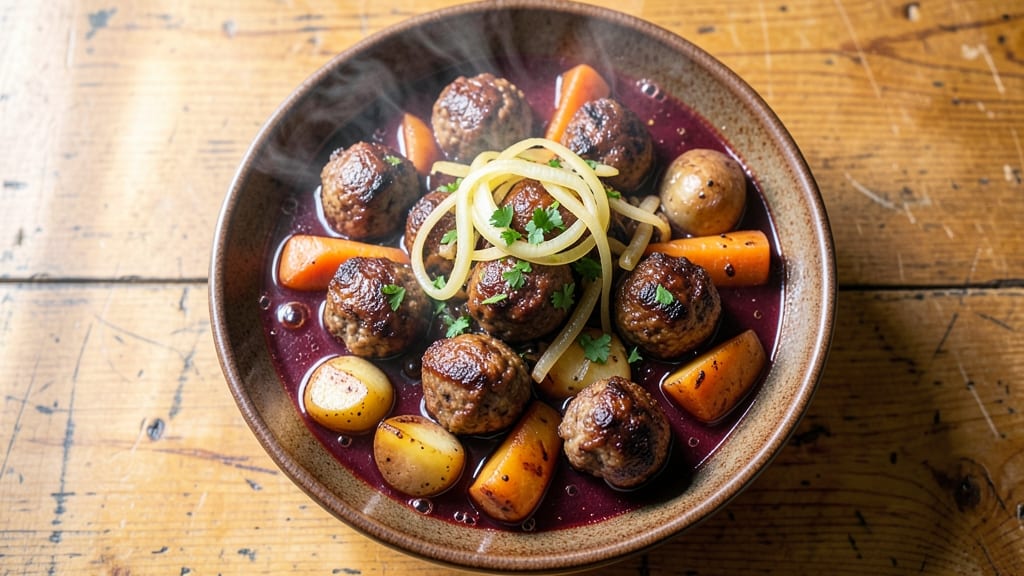
This ball beef stew recipe transforms tough cuts into melt-in-your-mouth perfection through slow braising—a technique that builds depth of flavor as the beef tenderizes in rich, aromatic broth.
The foundation lies in a deep onion fond, caramelized until it forms a glossy, flavorful base that infuses every spoonful with sweet, savory notes.
Unlike quick-cooked stews, this method rewards patience with a velvety texture and layers of umami that develop over hours, making it ideal for cold evenings or holiday gatherings.
The secret to restaurant-quality results at home starts with proper preparation: searing the beef balls first to create a flavorful crust before they braise, and using a combination of red wine and beef stock for a balanced, complex broth.
A touch of tomato paste adds depth, while herbs like thyme and bay leaves weave earthy aromatics throughout. The slow simmer ensures the beef becomes fork-tender while the vegetables—carrots, potatoes, and onions—absorb the rich flavors without turning mushy.
By the time you serve this stew, you’ll have a dish that’s hearty enough to stand alone or pair beautifully with crusty bread, mashed potatoes, or a simple green salad.
The aroma alone will draw everyone to the table, and the first bite delivers that perfect balance of tender beef, caramelized vegetables, and a broth so flavorful it disappears with each spoonful. This is comfort food at its finest—a recipe that feels like a hug in a bowl.
Whether you’re feeding a family or preparing for a special occasion, this stew delivers foolproof results with minimal effort after the initial prep. The beauty of slow cooking is that it lets you focus on other tasks while the flavors develop naturally.
Let’s get started on creating a stew that will become a staple in your recipe rotation.
Ingredients for ball beef stew
Sixteen ingredients, slow-cooked to perfection—this stew delivers restaurant-quality depth with minimal effort.
| Ingredient | Amount | Notes |
|---|---|---|
| Chuck Roast 🥩 | 2 ½ lb | Cut into 1.5-inch balls |
| Yellow Onions 🧅 | 3 whole | Peeled, sliced into wedges |
| Carrots 🥕 | 1 ½ lb | Peeled, cut into chunks |
| Russet Potatoes 🥔 | 2 lb | Peeled, cut into 2-inch pieces |
| Red Wine 🍷 | 1 cup | Dry, bold variety |
| Beef Stock 💧 | 4 cups | Homemade or high-quality |
| Tomato Paste 🍅 | 2 tbsp | Smooth, no sugar added |
| Fresh Thyme 🌿 | 2 tbsp | Leaves only, chopped |
| Bay Leaves 🌿 | 2 whole | Fresh preferred |
| Garlic Cloves 🧄 | 4 cloves | Peeled, smashed |
| Olive Oil 🫒 | ½ cup | Extra-virgin for richness |
| Salt 🧂 | 1 ½ tsp | Kosher or sea salt |
| Black Pepper 🌶️ | 1 tsp | Freshly ground |
| Flour 🌾 | ½ cup | All-purpose for coating |
The chuck roast is the heart of this stew—look for well-marbled cuts at your butcher or the meat department, where the fat distribution ensures tender results. Costco or Whole Foods often carry high-quality chuck roast in bulk, but even the regular supermarket selection works if it's fresh. For the onions, yellow onions caramelize best—avoid red or white, which can turn bitter. The potatoes should be firm and starchy, not waxy, to hold their shape during the long simmer. If you're short on time, pre-cut frozen vegetables (carrots and potatoes) work in a pinch, but fresh is always better.
No red wine? Substitute with beef stock plus 1 tbsp balsamic vinegar—it adds a similar depth. Fresh thyme is ideal, but dried thyme at half the amount gets you close. For the tomato paste, Trader Joe's or Whole Foods carry high-quality, no-sugar-added options that won’t overpower the dish. The flour is just for coating the beef balls—all-purpose works fine, but breadcrumbs would add a nice texture if you're feeling fancy. If you’re avoiding gluten, use cornstarch instead. The beef stock can be homemade, but high-end store-bought like Pacific Foods or Kettle & Fire are solid shortcuts.
This stew tastes even better the next day as flavors meld—plan ahead and make a double batch. Keeps for 5-6 days in the fridge or 3 months frozen. For serving, reheat gently on the stove with a splash of water or stock to restore moisture. The beef balls will fall apart beautifully, so use a slotted spoon to serve and let guests scoop up the rich broth. Pair with crusty bread or over buttered egg noodles for a complete meal.
Why You'll Love This Recipe
- One-Pot Magic: I swear by this—just toss everything into one pot, walk away, and come back to layers of flavor. No chopping boards, no extra dishes, just pure convenience.
- Wine-Infused Richness: That splash of red wine? It’s not just for show—it melts into the beef, giving it this deep, savory punch that makes every bite feel like a little celebration.
- Lunchbox Gold: Between us, this stew is my meal-prep hero. The potatoes stay tender, the beef stays juicy, and I pack it up for days without a second thought—no sad, soggy leftovers here.
- Budget-Friendly Feast: Chuck roast and potatoes stretch for miles, and the wine adds that restaurant-worthy touch without breaking the bank. Honestly, it’s the kind of dish that makes grocery day feel like a win.
Step-by-step instructions for ball beef stew
Here's how to transform tough chuck roast into melt-in-your-mouth beef with layers of caramelized onion and rich, velvety sauce.
Sear the Beef Balls for Deep Flavor
Heat 0.25 cup of the olive oil in a large Dutch oven over medium-high heat. Working in batches, add the chuck roast balls and sear for 2-3 minutes per side until deeply browned. This step develops the Maillard reaction, creating that fundamental meaty flavor we'll build upon.
As you sear, you'll notice the beef releases juices and fat into the pan. Don't rush this - let each piece develop a crust before moving to the next batch. Once all beef is browned, remove it from the pot and set aside. The beef will continue cooking slowly in the stew, so don't worry about full doneness yet.
Build the Onion Fond Foundation
Reduce heat to medium and add the remaining 0.25 cup olive oil to the Dutch oven. Add all the sliced yellow onions and cook for 15-20 minutes, stirring occasionally, until they're deeply caramelized - a rich, amber color with sweet, jammy texture. This slow caramelization creates the complex flavor base for your stew.
Here's the thing - don't walk away. You want those onions to break down completely, developing that deep, sweet fond that will form the heart of your stew. If they start to stick, add a splash of red wine to deglaze. The goal is a thick, syrupy onion mixture that coats the bottom of the pot.
Develop the Sauce Base
Add the tomato paste, minced garlic cloves, chopped thyme, and bay leaves to the caramelized onions. Stir well to combine, then sprinkle the flour evenly over the mixture. Cook for 2 minutes, stirring constantly, until the flour is fully incorporated and the mixture takes on a slightly thickened consistency.
This is where all the flavors come together. The flour will help thicken the stew slightly while the tomato paste adds depth. Pour in the red wine and scrape up any browned bits from the bottom of the pot - this deglazing captures all those precious meaty flavors. Let the wine simmer for 3-4 minutes until reduced by half.
Braise the Beef Until Tender
Return the seared beef balls to the Dutch oven along with the beef stock. Bring to a gentle simmer, then reduce heat to low and cover partially. The liquid should just barely bubble at the edges - this gentle simmer is crucial for tenderizing the beef without making it mushy.
Let the stew cook for 1.5 hours, then add the carrots and potatoes. Return to a simmer and cook uncovered for another 45-60 minutes, until the beef is fork-tender and pulls apart easily. The vegetables should be cooked through but still hold their shape. Taste and adjust seasoning with salt and pepper as needed.
Finish and Serve
Once the stew reaches perfect tenderness, let it rest off the heat for 10 minutes. This resting period allows the flavors to meld and the stew to thicken slightly. Skim off any excess fat that has risen to the surface if desired.
Ladle the stew into bowls, making sure each serving gets a generous portion of beef and vegetables. The perfect ball beef stew should have fork-tender beef, tender vegetables, and a rich, velvety sauce that coats every spoonful. Serve immediately with crusty bread to soak up every last drop of that flavorful broth.
Pro Tips For Making Ball Beef Stew
- Sear the Chuck Hard: Chuck roast needs that deep brown crust to build flavor, but don’t rush it—high heat for 5-6 minutes per side until it’s dark golden. I used to walk away too soon, and the stew always tasted dull. A hot pan and patience make all the difference.
- Cut Potatoes Uniformly: Russets break apart when cooked unevenly, turning your stew into a mushy mess. Slice them into 2-inch chunks (yes, big enough to hold their shape) and parboil for 3 minutes first. This keeps them tender without falling apart—trust me, your stew will look better too.
- Deglaze with Wine Early: Add the red wine right after searing the meat, while the pan is still hot. This pulls up all those caramelized bits that would otherwise stick and burn. Skip this, and you’re missing the richest flavor foundation—don’t let it go to waste.
- Add Carrots Last: Toss the carrots in just 15 minutes before serving so they stay crisp-tender, not mushy. I learned this after overcooking them once and ending up with a sad, watery stew. Timing is everything—don’t let them sit too long.
Common mistakes when making your ball beef stew
Overcrowding the Pot
One of the biggest mistakes is adding all your ingredients at once, which causes the stew to boil vigorously and turn the beef tough. I’ve learned the hard way—when I rushed and dumped everything in, the beef ended up chewy instead of tender.
Instead, add the beef first, then let it develop flavor before introducing the vegetables. This gradual cooking process ensures the beef becomes fork-tender without overcooking. 🌡️
Skipping the Sear
If you skip searing the beef balls, you’ll miss out on the deep, caramelized flavor that forms through the Maillard reaction. I used to think browning wasn’t necessary, but after trying it both ways, the difference is night and day.
Sear each ball until deeply browned before adding it to the pot—this step is non-negotiable for rich, restaurant-quality flavor.
Using the Wrong Cut
Not all beef cuts are created equal. Chuck roast is ideal because its marbling and connective tissue break down beautifully during slow cooking. I once tried this with sirloin, and it ended up dry and stringy.
Stick with chuck roast—it’s the secret to melt-in-your-mouth beef balls. If you can’t find it, ask your butcher for a well-marbled cut like short ribs or brisket.
Ignoring the Onion Fond
The caramelized onion fond is the flavor backbone of this stew. Rushing this step by cooking the onions too quickly will leave them bitter and underdeveloped. I’ve made the mistake of walking away, only to return to burnt onions.
Instead, cook them slowly over medium heat for 15-20 minutes, stirring occasionally, until they’re deep amber and sweet. This patience pays off with layers of flavor.
Adding Salt Too Early
Salting the beef before searing can draw out juices, making it harder to develop that crucial crust. I used to add salt right at the start, but now I wait until after the beef is seared and the onions are caramelized.
This way, the salt enhances the flavors without compromising texture. Taste and adjust seasoning toward the end of cooking for the best balance. 🧂
Lifting the Lid Too Often
Every time you lift the lid during simmering, you release steam and lower the internal temperature, extending cooking time. I used to peek constantly, thinking the stew needed attention, but this actually made the beef tougher.
After the initial simmer, only check the stew occasionally—trust the process and let it cook undisturbed for tender results.
Nutrition facts
Frequently asked questions about ball beef stew
Why does the recipe call for chuck roast instead of other beef cuts?
Chuck roast contains just the right amount of marbling and connective tissue to become fork-tender during slow cooking. Its fat distribution ensures rich flavor while the collagen breaks down into gelatin, creating that velvety texture. Other cuts like sirloin or flank steak lack this fat distribution and would turn dry or tough.
Can I make this stew in a slow cooker instead of a Dutch oven?
Sear the beef balls first, then transfer everything to your slow cooker. Cook on low for 8 hours or high for 5-6 hours, adding vegetables during the last hour. The slow cooker maintains gentle heat, which is perfect for tenderizing the beef. Just add a splash of water or stock if the stew gets too thick.
What's the best way to reheat leftovers without drying out the stew?
Reheat gently on the stove over low heat with a splash of beef stock or water. Stir occasionally and avoid boiling, which can make the beef tough. For microwave reheating, cover with a damp paper towel and heat in 30-second intervals, stirring between each. The stew tastes even better the next day as flavors meld!
How can I make this stew gluten-free?
Simply replace the all-purpose flour with cornstarch or arrowroot powder when coating the beef balls. Use the same amount (½ cup) and follow the same searing and braising steps. The texture will be slightly different but still delicious. For extra flavor, add a pinch of smoked paprika to the cornstarch mixture.
What vegetables can I substitute if I don't have carrots and potatoes?
Try turnips, parsnips, or celery root for a similar texture and earthy flavor. For a lighter option, add green beans or zucchini during the last 20 minutes of cooking. If you prefer root vegetables, sweet potatoes work well but will add sweetness to the stew. Just adjust cooking times accordingly!