
Main Courses
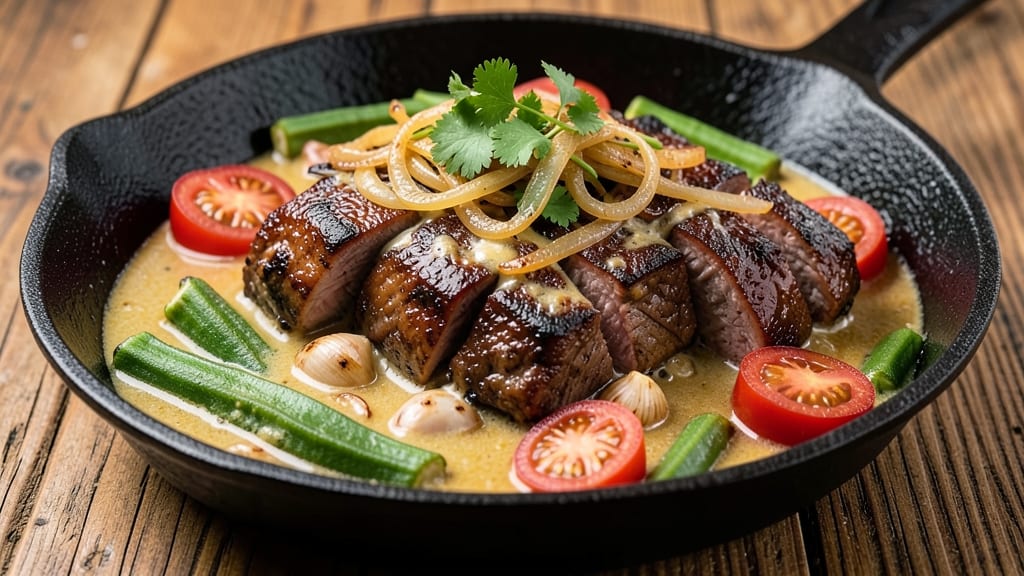
This Batangas beef caldereta recipe brings the rich, comforting flavors of Filipino home cooking to your kitchen with tender beef, coconut milk, and okra in a slow-simmered sauce.
The dish's signature blend of savory, slightly sweet, and tangy notes comes from carefully layered ingredients—tomatoes, garlic, and spices—that develop deep flavor over time. Unlike quick stews, this recipe rewards patience with a velvety texture and meat that practically melts in your mouth.
The secret to authentic caldereta lies in the slow cooking process, where beef simmers until fork-tender while absorbing the coconut milk's creaminess and the okra's subtle sliminess.
This isn't just a dish; it's a taste of nostalgia for those who grew up with Batangas' culinary traditions, yet approachable enough for home cooks to recreate. The dish balances hearty beef with the unique texture of okra, creating a meal that's both comforting and memorable.
What you'll achieve is a restaurant-quality stew that pairs perfectly with steamed white rice, soaking up every drop of that rich, aromatic sauce. The beef becomes tender enough to shred easily, while the okra adds a satisfying bite and natural thickening power.
This recipe delivers on the promise of home-style Filipino cooking—warm, flavorful, and deeply satisfying.
Perfect for family dinners or special occasions, this caldereta is designed to impress without requiring advanced techniques. The slow simmering method ensures deep flavor development, while the combination of ingredients creates a dish that's both familiar and exciting. Ready to bring Batangas' culinary heritage to your table?
Ingredients for batangas beef caldereta
Fifteen ingredients crafting Batangas' signature comfort stew with tender beef and velvety coconut milk.
| Ingredient | Amount | Notes |
|---|---|---|
| Beef Chuck Roast 🥩 | 2 lb | Cut into 1.5-inch cubes |
| Coconut Milk 🥥 | 1 can | Full-fat, 13.5 oz can |
| Okra Pods 🌱 | 1 lb | Trimmed, cut into 1-inch pieces |
| Tomatoes 🍅 | 4 whole | Medium, halved crosswise |
| Garlic Cloves 🧄 | 8 cloves | Minced, fresh preferred |
| Onion 🧅 | 1 whole | Yellow, sliced into half-moons |
| Fresh Ginger 🌿 | 1 ½ oz | Peeled, finely grated |
| Bay Leaves 🌿 | 2 whole | Dried, crushed lightly |
| Black Peppercorns 🌶️ | 1 tsp | Coarsely crushed |
| Salt 🧂 | 1 ½ tsp | Diamond Crystal preferred |
| Olive Oil 🫒 | 2 tbsp | Extra-virgin for frying |
| Tomato Paste 🍅 | 2 tbsp | Smooth, not chunky |
| White Vinegar 💧 | 1 tbsp | For brightness |
| Green Bell Pepper 🌶️ | 1 whole | Sliced, optional for color |
| Fresh Thyme 🌿 | ¼ cup | Leaves only, chopped |
The beef selection is critical—chuck roast delivers the best texture, though short ribs work beautifully too. Look for cuts with good marbling at Filipino markets or Whole Foods, where you'll also find authentic okra varieties. Fresh ginger and thyme should be vibrant—they carry the dish's aromatic foundation. For coconut milk, Thai Kitchen brand is reliable, but avoid brands with added stabilizers that can alter texture. Okra's texture is key: trim the ends and slice evenly for consistent cooking.
No okra? Substitute with 1 cup sliced eggplant or zucchini, though texture will differ. Short on fresh thyme? Dried thyme at one-third the amount suffices, but fresh is ideal. The tomato paste can be replaced with 2 tbsp tomato sauce if unavailable, though paste provides better depth. For a tangier profile, add 1 tsp calamansi juice if you have it. The green bell pepper is optional but adds visual contrast—skip if you prefer a traditional presentation. If using pre-minced garlic, toast it first in olive oil to deepen flavor.
This stew improves with time—reheat gently with a splash of water to restore richness. Keeps 4-5 days refrigerated or 3 months frozen. For meal prep, portion into containers with reserved sauce to maintain moisture. The okra and tomatoes can be prepped ahead, but add them last 20 minutes of cooking to preserve texture. Serve with steamed jasmine rice to soak up every velvety drop.
Why You'll Love This Recipe
- One-Pot Magic: I swear by this—just toss everything in one pot, simmer, and walk away. No chopping mountains of veggies or juggling multiple pans. That beef chuck roast practically melts into tender perfection while the coconut milk and garlic do all the heavy lifting.
- Creamy-Garlicky Bliss: Honestly, the moment those garlic cloves hit the hot oil, my kitchen smells like heaven. The okra adds that signature Batangas texture—slightly chewy, not slimy—while the tomatoes and coconut milk create a sauce so rich, it’ll make you forget takeout exists.
- Leftovers That Beg for More: Between us, this dish tastes better the next day. The flavors meld into something deeper, and reheating it is just about dumping it back in a pot with a splash of water. My freezer’s always stocked with portions—perfect for lazy Wednesdays or when company drops by unannounced.
- Budget Meal, Big Impact: A whole beef chuck roast and a can of coconut milk stretch this recipe into a feast for four (or more, if you’re like me). The okra and tomatoes are cheap staples, and the garlic? A dollar’s worth of cloves goes a long way. It’s the kind of dish that makes grocery day feel like a win.
Step-by-step instructions for slow-simmered Batangas beef caldereta
Master this rich Filipino stew with tender beef, velvety coconut milk, and okra's signature texture.
Sear the Beef for Deep Flavor
Heat the 2 tablespoons olive oil in a heavy Dutch oven over medium-high heat until shimmering. Add the 2 lb beef chuck roast, cut into 1.5-inch cubes, in batches to avoid crowding. Sear for 3-4 minutes per side until each piece develops a deep mahogany crust—this caramelization forms the flavor base of your caldereta.
Real talk: Don't rush this step. You'll know it's ready when the beef releases easily from the pan but still holds its shape. Transfer the seared beef to a plate and set aside. If the oil starts smoking, reduce heat slightly to maintain control. The goal is color, not char.
Build the Aromatic Base
In the same Dutch oven, add the 1 whole onion sliced into half-moons and cook for 5 minutes until softened and golden. Stir in the 8 cloves minced garlic and 1.5 oz finely grated fresh ginger, cooking for 1 minute until fragrant—this should take less than 30 seconds to prevent burning.
Add the 2 tablespoons tomato paste and cook for 2 minutes, stirring constantly, until it darkens slightly. This creates a rich, concentrated flavor that forms the backbone of the sauce. Pour in the 1 tablespoon white vinegar and scrape up any browned bits from the bottom of the pot—these contain precious flavor.
Simmer the Vegetables and Spices
Add the 1 lb okra pods cut into 1-inch pieces, 4 whole tomatoes halved crosswise, 1 whole green bell pepper sliced, 2 whole bay leaves crushed lightly, 1 teaspoon coarsely crushed black peppercorns, and 1.5 teaspoons salt. Stir to combine, then pour in the 1 can coconut milk.
Bring to a gentle simmer over medium-low heat, then reduce to the lowest setting that maintains a bare bubble at the surface. The okra will release its natural sliminess as it cooks—this is normal and essential for the caldereta's signature texture. Cover partially and simmer for 30 minutes, stirring occasionally to prevent sticking.
Finish with Tender Beef and Herbs
Return the seared beef to the pot along with any accumulated juices. Add the 0.25 cup chopped fresh thyme and stir gently to distribute. Increase heat to medium-low and simmer uncovered for 1.5 to 2 hours, stirring occasionally, until the beef is fork-tender with no pink center.
Here's the thing—your oven might run hot, so start checking at the 1-hour 45-minute mark. The sauce should reduce to a thick, velvety consistency that coats the back of a spoon. If it's too thin, uncover and simmer longer; if too thick, add 2-3 tablespoons water to reach your desired consistency.
Rest and Serve with Perfect Texture
Remove from heat and let the caldereta rest for 10 minutes** before serving. This resting period allows the flavors to meld and the okra to fully develop its characteristic texture. Discard the bay leaves before serving—unless you're feeling adventurous and want to experiment with their subtle flavor.
Serve immediately with steamed white rice to soak up the rich coconut sauce. Each bite should deliver tender beef, velvety coconut milk, and the distinctive okra texture that makes Batangas caldereta unforgettable. The dish improves overnight, so consider making extra for leftovers—it's even better the next day!
Pro Tips For Making Batangas Beef Caldereta
- Sear the Beef First: I learned this the hard way—skipping the sear means flavor gets lost in the coconut milk. Get that chuck roast screaming hot in a dry pan with oil until it’s deep brown on all sides. The crust locks in juices and adds depth that simmering alone can’t match.
- Blanch the Okra: Fresh okra turns slimy if you toss it raw into the pot. Give those pods a quick 30-second dip in boiling water, then shock in ice water. This keeps them crisp and prevents that dreaded mushiness that ruins the texture.
- Simmer Slow and Low: Rushing this stew on high heat turns the coconut milk greasy and the beef tough. Once everything’s in the pot, drop the heat to a gentle simmer—just enough to see tiny bubbles at the edges. Patience here makes the difference between fork-tender beef and chewy disappointment.
- Toast the Garlic: Raw garlic cloves just sit there, releasing their flavor too late. Sauté those minced cloves in oil until they’re golden and smell like a garlic festival—about 2 minutes. Burnt? Start over. This step builds the aromatic base the whole dish rests on.
Common mistakes when making perfect results
Overcooking the Beef
One of the biggest mistakes is letting the beef get too soft or mushy. Since chuck roast is already tender when cooked properly, 1.5 to 2 hours of simmering is plenty—any longer risks turning it into a pile of shredded meat.
I've learned the hard way that checking for doneness with a fork at 1-hour 45 minutes is crucial. The beef should be fork-tender but still hold its shape slightly. If it falls apart at the slightest touch, it's overdone. 🔥
Skipping the Sear
Many home cooks rush the searing step, thinking it's optional. But that deep mahogany crust from searing the beef is what builds the rich, complex flavor foundation of caldereta. I recommend working in batches to avoid crowding the pan—this ensures each piece gets that perfect crust.
If you skip this, your dish will taste flat and one-dimensional. Don't be tempted to skip it, even if you're in a hurry!
Ignoring the Okra Texture
The okra's signature slimy texture is what makes Batangas caldereta special, but many people either overcook it into mush or undercook it into a crunchy mess. Add the okra after the initial 30-minute vegetable simmer when you return the beef to the pot.
This ensures it develops that perfect tender-but-firm texture. If you add it too early, it'll turn into a gluey mess—trust me, I've made that mistake!
Using Low-Quality Coconut Milk
Not all coconut milk is created equal. Using light or stabilized coconut milk will result in a thin, watery sauce instead of the rich, velvety consistency you want. I always recommend full-fat, unflavored coconut milk like Thai Kitchen brand.
The fat content is essential for that luxurious mouthfeel. If your sauce seems too thin, don't just add more coconut milk—simmer uncovered for longer to thicken it naturally.
Rushing the Resting Time
Skipping the 10-minute rest before serving might seem like a time-saver, but it's a crucial step. This resting period allows the flavors to meld together and the okra to fully develop its texture.
If you serve it immediately, the sauce might be too runny and the flavors won't be as harmonious. I've found that even 15 extra minutes of resting makes a noticeable difference in the final result. ✨
Overcrowding the Pot
Adding all the ingredients at once can lead to uneven cooking and a watery sauce. I always recommend building the dish in stages—first sear the beef, then build the aromatic base, then add the vegetables and spices, and finally return the beef.
This layering approach ensures each component cooks properly and develops its full flavor. If you crowd the pot, you'll end up with steamed ingredients rather than properly cooked ones.
Nutrition facts
Frequently asked questions
Why does this recipe use okra, and can I substitute it?
Okra adds the signature slimy texture that makes Batangas caldereta unique—it's essential for that authentic mouthfeel. For substitutes, try 1 cup sliced eggplant or zucchini, though the texture will differ. If you're avoiding okra entirely, omit it and reduce the coconut milk by ¼ cup to maintain balance.
How do I make this recipe faster without sacrificing flavor?
Use pre-cut beef chuck roast (1-inch cubes) and pressure cook for 45 minutes instead of simmering. For the aromatic base, use garlic powder and ginger powder instead of fresh. The slow simmering builds deep flavor, but pressure cooking cuts time by 75% while keeping the dish delicious.
What's the best way to reheat leftovers?
Gently reheat in a pot over low heat with 2-3 tablespoons water or coconut milk to restore richness. Never microwave directly—it makes the sauce grainy. For best results, reheat just until warm (3-4 minutes) and let it sit covered for 5 minutes to redistribute flavors.
Can I make this vegetarian?
Replace the beef with firm tofu or mushrooms (sliced into thick pieces). For extra protein, add 1 cup chickpeas or lentils. The okra and coconut milk will still create that signature velvety texture, though the dish will have a lighter body. Simmer for 20-25 minutes instead of 2 hours.
What's the secret to making the sauce extra creamy?
Use full-fat coconut milk and add 1 tablespoon cornstarch mixed with 2 tbsp water at the end. Simmer for 2-3 minutes until thickened. For extra richness, stir in 1 tbsp melted butter before serving. The key is patience—don't rush the simmering process.