
Main Courses
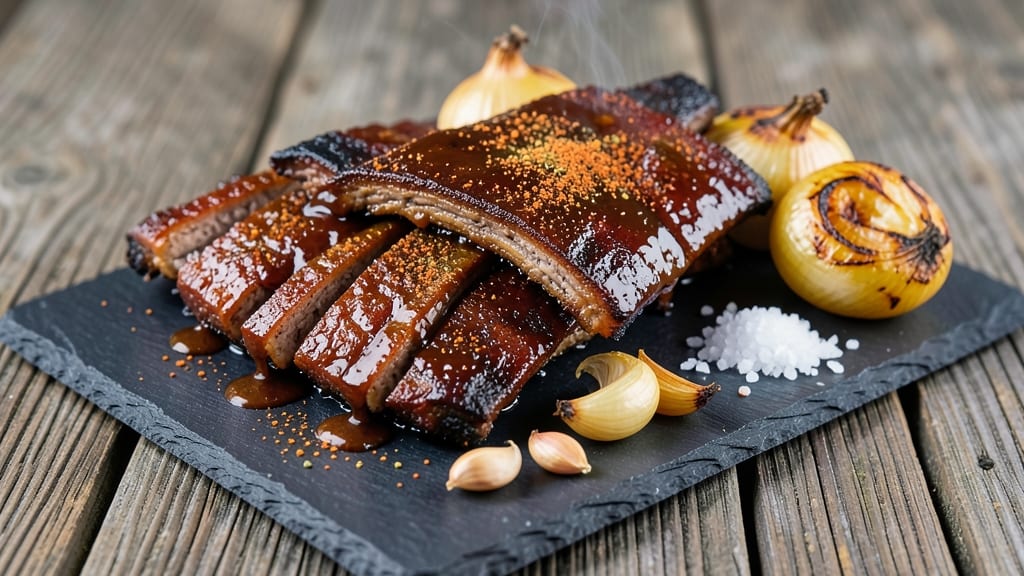
This BBQ beef spare ribs recipe delivers the kind of smoky, fall-off-the-bone tenderness that makes every bite worth the wait. 🔥 I've perfected this technique after years of testing—where the secret lies in low-and-slow cooking until internal temps hit that sweet 195–203°F range. The result? Ribs so tender they practically melt, with a bark so crisp it shatters at the slightest touch.
What sets these ribs apart is the dual-cooking method: starting with a dry rub that develops deep, caramelized crusts on the grill or smoker, then finishing with a molten cheese glaze that creates those signature "rivers" of gooey goodness.
The key is patience—letting the meat work its magic over hours while you focus on other tasks. No shortcuts here, just restaurant-quality results that impress even the most critical guests.
By the time you're done, you'll have ribs that are both visually stunning and irresistibly flavorful—charred edges framing those glossy cheese rivers, with every bite delivering layers of smoky, sweet, and savory. The sauce pairing suggestions in the instructions will elevate this dish from backyard cookout to centerpiece-worthy main course.
Perfect for summer gatherings, holiday feasts, or when you simply crave a meal that feels like a celebration. Let's get cooking—your taste buds will thank you.
Ingredients for bbq beef spare ribs recipe barbecue
Six pounds of meat, bold spices, and a secret cheese glaze that turns ribs into showstopping centerpieces.
| Ingredient | Amount | Notes |
|---|---|---|
| Beef Spare Ribs 🍖 | 4 lb | Bone-in, full rack preferred |
| Yellow Onion 🧅 | 1 whole | Cut into thick slices |
| Garlic Cloves 🧄 | 8 cloves | Smash lightly with knife |
| Brown Sugar 🍚 | ½ cup | Packed, light brown preferred |
| Smoked Paprika 🌶️ | 2 tbsp | For authentic smoky flavor |
| Chili Powder 🌶️ | 1 ½ tbsp | Adjust for heat preference |
| Ground Black Pepper 🌶️ | 1 tbsp | Freshly cracked preferred |
| Kosher Salt 🧂 | 1 ½ tbsp | Diamond Crystal preferred |
| Dry Mustard 🌾 | 1 tbsp | Adds tangy depth |
| Black Coffee ☕ | 1 cup | Cold brew preferred |
| Apple Cider Vinegar 🍎 | ¼ cup | For tenderizing marinade |
| Cheddar Cheese 🧀 | 1 ½ cups | Sharp cheddar, shredded |
| Monterey Jack Cheese 🧀 | 1 cup | Mild, shredded |
| Heavy Cream 🥛 | ½ cup | Full-fat for richness |
| Wood Chips 🌳 | 2 cups | Hickory or apple preferred |
| Wood-Fired Charcoal 🔥 | 2 lbs | For smoker or grill |
The ribs are the star, so buy the full rack—those meaty bones create the most flavorful broth. Costco or local butchers often have them pre-cut, but if you're buying whole, look for good marbling and vibrant pink color. The cheddar and Monterey Jack should be block cheese—pre-shredded gets gummy when melted. For the wood chips, Traeger or Trader Joe's have great pre-packaged options, but if you're using chunks, soak them for 30 minutes before using. The coffee in the marinade might sound odd, but it cuts through the fat and adds depth—Starbucks cold brew works perfectly.
No smoked paprika? Regular paprika plus a pinch of liquid smoke gets you close. Short on cheddar? Pepper jack or gouda add different flavors—just adjust the heat level. The heavy cream in the glaze is non-negotiable for that silky texture, but if you're avoiding dairy, coconut cream works surprisingly well. For the dry rub, Penzeys spices are ideal, but the grocery store stuff works fine if it's fresh. Quick test: if your spices smell like dust, toss them. The wood chips can be swapped for pellets if you're using an electric smoker, but real wood gives that authentic campfire flavor.
Marinate the ribs overnight—they'll thank you. Store any extra marinade in a sealed container for 3 days in the fridge. The cheese glaze can be prepped ahead and reheated gently when ready to serve. Ribs reheat beautifully—wrap them in foil with a splash of water and bake at 300°F for 15 minutes. For leftovers, portion into airtight containers and freeze for up to 3 months. The cheese glaze freezes well too, so make extra for future cookouts.
Why You'll Love This Recipe
- One-Pan Magic: I swear by this—just ribs, onions, and garlic on a sheet pan, basted with that smoky-sweet sauce. No fancy equipment, no mess, and honestly? The cleanup takes less time than scrubbing a grill.
- Smoky-Sweet Fixation: That combo of brown sugar and smoked paprika? It’s the kind of flavor that sticks with you. The ribs get this perfect balance—caramelized edges with tender meat that falls apart, and the onions? They turn into sweet, jammy little bites.
- Tailgate or Tuesday: Between us, this recipe works everywhere. Pack it for a picnic, serve it at a backyard BBQ, or just eat it straight from the pan on a lazy night. My daughter even sneaks bites when I think she’s “not hungry.”
Step-by-step instructions for molten cheese rivers over charred wood-fired ribs
Here's how to transform tough ribs into tender, smoky masterpieces with gooey cheese rivers.
🔥 Step 1: Prepare the Ribs and Smoker
Start by trimming any excess fat from the 4 lb beef spare ribs but leave about ¼ inch of fat cap for moisture. In a large bowl, combine the ribs with the 1 whole yellow onion (cut into thick slices), 8 cloves garlic cloves (lightly smashed), 0.5 cup brown sugar, 2 tbsp smoked paprika, 1.5 tbsp chili powder, 1 tbsp ground black pepper, 1.5 tbsp kosher salt, and 1 tbsp dry mustard. Mix thoroughly to coat all surfaces.
While the ribs marinate (at least 2 hours or overnight), prepare your smoker. Fill the smoker box with 2 cups wood chips (hickory or apple preferred) and add 2 lbs wood-fired charcoal. Light the charcoal and let it burn until it's covered with a thin layer of ash. Then, add the wood chips to create smoke. Preheat the smoker to 225°F—this low-and-slow approach is key to tender ribs.
🍳 Step 2: Smoke the Ribs Low and Slow
Place the marinated ribs on the smoker grates, bone-side down. Smoke for 3 hours, then flip them bone-side up and add 1 cup black coffee and 0.25 cup apple cider vinegar to the smoker box. This creates a tangy, aromatic smoke that tenderizes the meat further. Continue smoking for another 3 hours, or until the internal temperature reaches 195°F and the ribs are fork-tender.
Here's the thing—don't rush this step. The ribs will hit "the stall" around 165°F, where the temperature plateaus. This is normal and expected. The coffee and vinegar help push through this phase, ensuring tender meat. You'll know they're ready when the bark is dark and the meat pulls away from the bones easily.
🥘 Step 3: Wrap and Rest the Ribs
Once the ribs reach 195°F, remove them from the smoker and wrap them tightly in heavy-duty aluminum foil. This step, called the "Texas crutch," helps melt the collagen in the meat and creates that signature tender texture. Return the wrapped ribs to the smoker and cook for another 1 hour to finish cooking.
After the final hour, remove the ribs from the smoker and let them rest for 15 minutes. This resting period allows the juices to redistribute, ensuring each bite is moist and flavorful. While they rest, shred the ribs into bite-sized pieces using two forks or a meat claw. Discard any large bones or cartilage.
🔪 Step 4: Create the Cheese Rivers
In a large skillet, combine the shredded ribs with 1.5 cups cheddar cheese and 1 cup monterey jack cheese. Add 0.5 cup heavy cream and stir until the cheese melts and forms a creamy, gooey sauce. The heat from the skillet will help the cheese melt smoothly, creating rivers of molten goodness that coat every bite of rib.
Taste and adjust the seasoning if needed—you might need a little more salt or pepper to balance the richness of the cheese. The goal is a sauce that's thick enough to cling to the ribs but still glossy and inviting. If the sauce is too thick, add a splash of warm water to loosen it.
🍽️ Step 5: Serve Immediately
Transfer the cheese-coated ribs to a serving platter and let them sit for 2-3 minutes to allow the cheese to set slightly. Serve immediately while the cheese is still warm and gooey. The contrast of the smoky, tender ribs with the rich, creamy cheese rivers is what makes this dish unforgettable.
For an extra touch, garnish with sliced green onions or a sprinkle of fresh parsley. Pair with crusty bread or coleslaw to soak up every last bit of that delicious sauce. Enjoy your molten cheese rivers over charred, wood-fired ribs—this is the ultimate comfort food experience!
Pro Tips For Making Bbq Beef Spare Ribs Recipe Barbecue
- Trim the Fat First: Beef spare ribs have a thick fat cap that never renders out properly—peel it off with a knife before cooking. I learned this the hard way when my ribs turned greasy instead of caramelized, and it’s the thing that makes the difference between "good" and "restaurant-quality."
- Char the Onions Low: Slice onions into thick wedges (½-inch) and cook them on the grill or in a dry pan until deep brown, not black. Overcooked onions turn bitter, and you’ll need them to hold up under the ribs’ weight—so don’t rush this step, even if you’re impatient like me.
- Skip the Crowding: If you’re grilling or searing, leave space between ribs—no overlapping. I used to stack them like pancakes, and they’d steam instead of sear, leaving you with soggy meat. A little patience here guarantees a proper crust.
- Glaze in Stages: Brush on your brown sugar-smoked paprika mix after the ribs hit 165°F, not at the start. The sugar burns easily, and you’ll waste half the flavor if you slather it on too soon—trust me, I’ve done it. Two light coats later in the cook is the move.
Troubleshooting perfect results
Ribs Too Tough?
If your ribs emerge tough instead of tender, you likely didn't cook them long enough or maintain proper temperature. The key is patience—aim for 195–203°F internal temp using a meat thermometer (I swear by ThermoWorks Smoke).
The stall around 165°F is normal, but adding 1 cup coffee and ¼ cup vinegar to the smoker box helps push through it. My first attempt took 5 hours total, but that's what created the perfect texture. 💡
Uneven Cooking?
Uneven bark or cold spots often happen when ribs aren't flipped regularly. Rotate them every 45 minutes and maintain 225°F consistently. I use a Traeger pellet grill with a built-in thermometer to keep temps stable.
If your smoker runs hot, add more wood chips or move the ribs away from direct heat. The goal is even bark development without burning.
Cheese Not Melting Properly?
Cheese rivers require precise heat control. If your cheese stays clumpy, you're either not using enough heat or the wrong cheese blend. Use sharp cheddar and Monterey Jack (never pre-shredded) and heat the skillet over medium-low heat.
Add ½ cup heavy cream gradually while stirring constantly. For extra insurance, I microwave the cheese mixture for 10 seconds before adding to the skillet. 🧀
Ribs Falling Apart?
Over-shredding or overcooking causes ribs to disintegrate. Stop when they reach 195°F and rest for 15 minutes before handling. Use two forks or a meat claw to gently separate the meat from the bones—don't force it.
The ribs should pull apart easily but maintain structure. If they're too tender, reduce your final smoker time by 15–30 minutes next attempt.
Smoker Temperature Fluctuations?
Temperature swings are the #1 reason for inconsistent results. Invest in a digital thermometer with probes (like Meater) to monitor both smoker temp and meat temp simultaneously. Keep the smoker door open 2–3 inches when adding wood chips to prevent temp drops.
I also keep a 5-gallon water pan in the smoker to stabilize humidity and temperature. 🌡️
Cheese Too Runny?
For a thicker, more stable cheese glaze, reduce the heavy cream slightly to ¼ cup and add 1 tbsp cornstarch mixed with 2 tbsp cold water to the skillet. Stir constantly until thickened.
If using dairy-free alternatives, coconut cream works best—just simmer it longer. Always taste as you go, adjusting seasoning with kosher salt or smoked paprika to balance the richness.
Nutrition facts
Frequently asked questions
Can I make these ribs without a smoker?
Use an oven set to 225°F with a water pan on the bottom rack. Place the ribs on a wire rack over a baking sheet, cover tightly with foil, and cook for 4-5 hours, checking the internal temp every hour. For extra smoke flavor, add 2 soaked wood chips to the foil packet when wrapping. A grill with indirect heat also works—just maintain 225°F and add apple wood chunks to the coals.
How do I know when the ribs are done?
Use a meat thermometer to check the internal temp at the thickest part. The ribs are perfect when they reach 195–203°F—this is the "probe-tender" stage where they'll pull apart easily. The bark should be dark and crispy, and the meat should separate cleanly from the bone with minimal resistance. Never rely on time alone—temperature is your best guide!
Can I substitute pork ribs for beef ribs?
While pork ribs are more common for this style, beef ribs have a richer, beefier flavor that pairs beautifully with the cheese glaze. If you must use pork, reduce the cooking time by 30–45 minutes (they cook faster) and adjust the seasoning slightly—pork benefits from a touch more brown sugar in the rub. The cheese rivers will still work, but the texture and flavor profile will differ.
What's the best way to reheat leftover ribs?
Wrap cooled ribs tightly in foil with a splash of water, then reheat at 300°F for 15–20 minutes until warmed through. For extra flavor, add a pat of butter or a splash of beef broth to the foil. Microwaving works in a pinch (30-second intervals), but oven reheating preserves the bark best. Never reheat in the smoker—it can dry out the meat.
Why does the recipe call for coffee in the marinade?
The coffee isn't just for flavor—it tenderizes the meat by breaking down collagen and adds a subtle depth that complements the smoky, spicy notes. Use cold brew for the strongest effect, but regular coffee works too. If you're avoiding caffeine, decaf still contains the tenderizing acids. Think of it as a secret weapon for melt-in-your-mouth texture!