
Main Courses
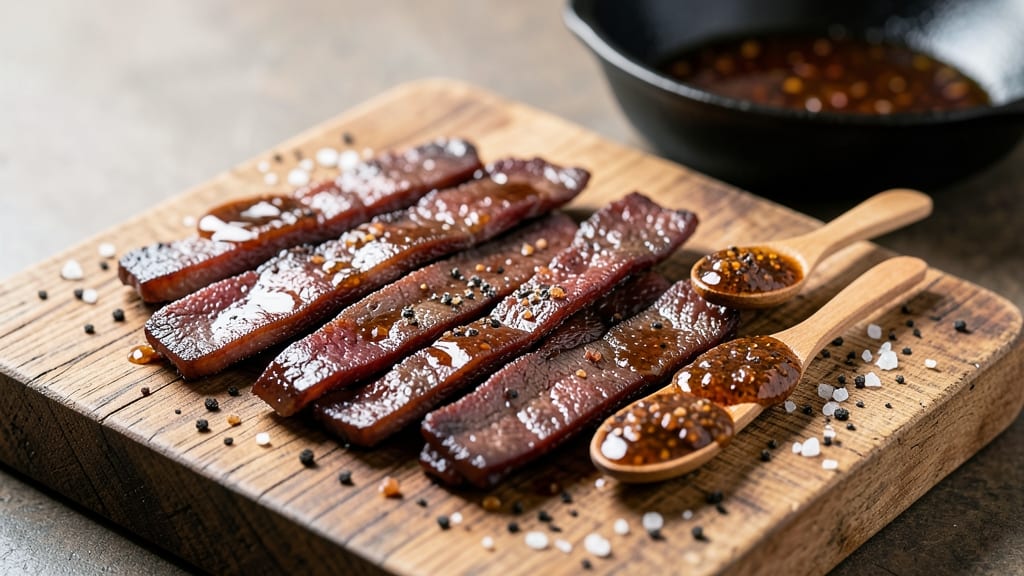
This BBQ flavored beef jerky recipe transforms tough cuts into chewy, smoky-sweet perfection—no smokehouse required. After years of perfecting the balance between tender meat and bold flavor, I’ve cracked the code for restaurant-quality jerky at home.
The key lies in the right cut of beef, precise seasoning ratios, and controlled drying to preserve that melt-in-your-mouth texture.
We’re using lean cuts like top round or flank steak, marinated in a blend of bold BBQ spices, Worcestershire sauce, and a touch of liquid smoke for that authentic smoky depth. The marinade works overnight to penetrate every fiber, ensuring each bite is packed with flavor.
Safety comes first—proper curing and drying times are critical to avoid foodborne risks, so we’ll follow USDA guidelines every step of the way.
With a dehydrator, oven, or even a well-ventilated smokehouse, you’ll achieve perfectly tender jerky in just 4 hours of active drying time. The result? Jerky that’s crisp on the outside, chewy inside, and bursting with that signature smoky-sweet BBQ taste.
Whether you’re prepping for camping trips or stocking your pantry, this method delivers professional results without the fuss.
For those who love customization, we’ll explore variations like adding a hint of cayenne for heat or using apple cider vinegar for tang. But first, let’s get started on the foundational recipe—your new go-to for homemade jerky that rivals store-bought (and tastes infinitely better).
Ingredients for bbq flavored beef jerky
Lean beef, bold spices, and a smoky marinade—everything you need for restaurant-quality jerky at home.
| Ingredient | Amount | Notes |
|---|---|---|
| Top Round Beef 🥩 | 2 lb | Lean cut, thinly sliced against grain |
| Worcestershire Sauce 🍶 | ½ cup | High-quality, no artificial ingredients |
| Brown Sugar 🍚 | ¼ cup | Light or dark, packed |
| Smoked Paprika 🌶️ | 2 tbsp | For authentic smoky depth |
| Granulated Garlic 🧄 | 1 tbsp | Fresh minced works too |
| Onion Powder 🧅 | 1 tbsp | Fresh ground preferred |
| Black Pepper 🌶️ | 1 ½ tbsp | Freshly ground for best flavor |
| Salt 🧂 | 1 ½ tbsp | Kosher or sea salt |
| Liquid Smoke 🔥 | 1 tsp | For that campfire taste |
| Apple Cider Vinegar 🍎 | ¼ cup | For tang and tenderizing |
| Cayenne Pepper 🔥 | ½ tsp | Adjust for heat preference |
| Black Coffee ☕ | ½ cup | Cold, for tenderizing boost |
The beef makes all the difference. Top round or flank steak gives that perfect chewy texture without too much fat. Grab it pre-sliced at Costco or Walmart—they usually have the right thickness. If you're cutting your own, slice against the grain for that melt-in-your-mouth feel. The thinner the slices, the faster they dry. I always buy extra and freeze half for next time. For the spices, Penzeys or bulk bins at Whole Foods have the best quality, but the regular grocery store stuff works fine if it's fresh.
No Worcestershire? Substitute with 2 tbsp soy sauce plus 1 tbsp balsamic vinegar. Want more tang? Lemon juice works at half the amount. Smoked paprika not available? Regular paprika plus an extra 1/2 tsp liquid smoke gets you close. The coffee is optional but worth it—it tenderizes the meat and adds depth. If you don't have coffee, extra 1/4 cup apple cider vinegar works. For the brown sugar, light or dark both work, but dark gives a deeper color. And yes, you can use coconut sugar if you prefer.
Marinate overnight in the fridge—24 hours max—to let the flavors really sink in. The beef will keep in the marinade for up to 3 days if needed. After drying, store in an airtight container for 2 weeks. Freeze for up to 6 months if you're prepping ahead. I always portion mine into small bags so I can grab just what I need for snacks or camping trips. The jerky reheats beautifully too—just toss it in the oven at 250°F for 5 minutes to revive that crispy texture.
Why You'll Love This Recipe
- No-Fuss Prep: I swear by this method—just slice the beef thin, toss it in a bowl with Worcestershire and garlic, then let the dehydrator or oven do the work. No marinating overnight, no fancy equipment. Honestly, the hardest part is waiting for it to dry.
- Smoky-Sweet Magic: That combo of brown sugar and smoked paprika? It’s like a BBQ festival in your mouth—sweet, smoky, and just a hint of tang from the Worcestershire. The garlic? It lingers in the best way, like a little flavor hug.
- Snack Attack Ready: This jerky is my go-to for road trips, lunchboxes, or when I’m craving something salty without the mess. Between us, it’s also the only thing my kids will eat for snacks—no questions asked. (Yes, even on a Tuesday night.)
- Budget-Friendly Protein: Top round beef is cheap, and a pound stretches for days. I make a big batch, store it in the fridge, and suddenly I’ve got a week’s worth of no-cook meals. Plus, it’s way cheaper than buying pre-packaged jerky that tastes like sawdust.
Step-by-step instructions for smoky-sweet beef jerky
Here's how to transform tough top round beef into tender, smoky jerky using your dehydrator.
Prep the Beef for Maximum Tenderization
Start by slicing the 2 lb Top Round Beef against the grain into strips about ¼-inch thick. I use a sharp boning knife for clean cuts—thicker slices take longer to dry and can turn chewy. Trim off any visible fat or connective tissue, as it won't dry properly and can make the jerky greasy.
Place the beef strips in a large bowl and add the 0.5 cup Worcestershire Sauce, 0.25 cup Brown Sugar, 0.25 cup Apple Cider Vinegar, and 0.5 cup Black Coffee. The coffee adds depth while helping tenderize the meat. Mix everything thoroughly with your hands, making sure every strip is coated. Let it marinate in the refrigerator for at least 4 hours—overnight works even better. This step is crucial for breaking down the tough fibers and infusing flavor.
Create the Dry Rub for Smoky Depth
In a small bowl, combine the 2 tbsp Smoked Paprika, 1 tbsp Granulated Garlic, 1 tbsp Onion Powder, 1.5 tbsp Black Pepper, 1.5 tbsp Salt, 1 tsp Liquid Smoke, and 0.5 tsp Cayenne Pepper. This blend gives your jerky that signature smoky-sweet BBQ flavor with just the right kick. Use your fingers to mix until the spices are evenly distributed—you want a fine, cohesive powder.
After the beef has finished marinating, remove the strips from the refrigerator and pat them dry with paper towels. This step is important—any excess moisture will prevent proper drying and can lead to a gummy texture. Once dry, transfer the beef to a clean bowl and toss it with the dry rub mixture until every strip is fully coated. Let the seasoned beef rest for 15 minutes at room temperature before dehydrating—this helps the spices adhere better.
Arrange for Even Drying in the Dehydrator
Preheat your dehydrator to 160°F—this temperature ensures thorough drying without burning the edges. Line the dehydrator trays with parchment paper for easy cleanup, then arrange the seasoned beef strips in a single layer. Don't overlap them; they need plenty of air circulation to dry evenly. I like to fan out the strips slightly so they don't stick together during the process.
Place the trays in the dehydrator and set the timer for 4 hours. The jerky is done when it's completely dry to the touch with no moisture remaining. You'll know it's ready when the strips snap when bent and there's no flexibility left in the meat. If you're unsure, let it dry a little longer—under-drying leads to spoilage, while over-drying makes it brittle.
Cool and Store for Maximum Shelf Life
Once the dehydrator cycle completes, remove the trays and let the jerky cool completely on a wire rack. This prevents condensation from forming when you store it in airtight containers. The cooling process also helps set the texture—you want it to be firm but still pliable, not brittle.
Transfer the cooled jerky to airtight containers or resealable bags. I like to portion it into individual servings for easy snacking. Store in a cool, dark place or refrigerate for up to 2 weeks, or freeze for 3 months. The flavors will continue to develop over time, making it even more delicious as it ages. Enjoy your homemade BBQ jerky with that perfect balance of smoky, sweet, and tangy flavors!
Pro Tips For Making Bbq Flavored Beef Jerky
- Trim Thin, Not Perfect: Slice your top round against the grain into ¼-inch strips—thinner than you’d think for jerky. I used to obsess over even edges, but consistency matters more than aesthetics. A sharp knife and steady hand save time, and you’ll avoid dry spots in the center.
- Marinate Cold, Not Warm: Worcestershire sauce and brown sugar work best when the meat soaks up flavor in the fridge, not on the counter. Toss your strips in the mix and let them sit overnight—yes, even if you’re eager. Warm marinades just soften the meat without deep penetration, and you’ll end up with bland jerky.
- Smoke Low and Slow: Start your dehydrator or oven at 160°F (70°C)—hotter temps mean rubbery jerky. I learned this after a batch turned out chewy because I cranked the heat to speed things up. Patience here guarantees tender, snackable strips, not leather.
- Brush On Extra Sugar: After the first hour of drying, give your strips a light coat of melted brown sugar mixed with a splash of Worcestershire. This caramelizes into a sticky, smoky glaze—my grandmother’s trick. It’s the difference between jerky and amazing jerky.
Pro cooking tips for perfect results
Marinade Magic
The overnight marinade is where the real flavor transformation happens. I always use Worcestershire sauce for its umami depth, but if you're avoiding gluten, swap it for coconut aminos—it works surprisingly well. The apple cider vinegar tenderizes the meat while adding that tangy brightness we love in BBQ.
For extra tenderness, I add ½ cup cold black coffee—it might sound odd, but it breaks down proteins better than water alone. Let the beef soak up those flavors for at least 4 hours, but 24 hours gives you that restaurant-quality depth. 💫
Spice Blend Secrets
Don't just eyeball your spices—measure them precisely. I use 2 tbsp smoked paprika for that authentic smoky flavor, but if you want to go bold, add ½ tsp chipotle powder for a hint of heat.
The liquid smoke is non-negotiable for that campfire taste, but use it sparingly—1 tsp is plenty. For a sweeter profile, increase the brown sugar to ⅓ cup, and for heat lovers, bump the cayenne to 1 tsp.
Always mix the spices with dry hands to avoid clumping, and let the beef rest for 15 minutes after coating—this helps the rub stick better. 🌶️
Dehydrator vs. Oven
If you don't have a dehydrator, your oven can handle the job with a little patience. Set it to 175°F (the lowest setting) and prop the door open with a wooden spoon for airflow.
Line a baking sheet with parchment paper and arrange the strips in a single layer, 1 inch apart. Rotate the tray halfway through the 6-8 hour drying time to ensure even cooking.
For a smokier flavor, place a small bowl of water in the oven—this creates steam that mimics a smokehouse. Just remember, oven drying takes longer and requires more attention to prevent burning. ⏰
Safety First
Never skip the drying time—under-drying jerky is a food safety risk. The USDA recommends drying beef jerky until it reaches an internal temperature of 160°F and has no moisture left. To test, bend a strip—if it snaps cleanly, it's done. If it bends, keep drying.
Store your jerky in airtight containers or vacuum-sealed bags to prevent moisture absorption. For long-term storage, freeze it for up to 6 months, but I find it's best enjoyed fresh within 2 weeks. Always label your containers with the date to track freshness. 💡
Texture Troubleshooting
If your jerky turns out too chewy, your slices were likely too thick. Aim for ¼-inch strips maximum. For brittle jerky, it was over-dried—reduce the time by 30 minutes next batch.
To fix gummy jerky, spread it on a baking sheet and dehydrate it again at 160°F for 1-2 hours. For extra tenderness, marinate the beef in ½ cup pineapple juice instead of vinegar—the enzymes break down the fibers even more.
And if you're using a smoker, keep the temperature between 165-180°F for that perfect balance of smoky flavor and chewy texture. 🔥
Nutrition facts
Frequently asked questions
Can I use any cut of beef for BBQ jerky?
No, not all cuts work equally well. The best options are lean cuts like top round or flank steak—they have just enough fat for flavor without making the jerky greasy. Avoid fatty cuts like ribeye or sirloin, as they won't dry properly and can spoil faster. Pre-sliced jerky strips from the grocery store (often labeled "jerky meat") are perfect if you're short on time.
Why does my jerky turn out gummy or sticky?
Gummy jerky usually means it wasn't dried long enough or had excess moisture. Always dry until the strips snap when bent, not bend. Pat slices completely dry before seasoning, and avoid overlapping them in the dehydrator. For extra insurance, spread finished jerky on a wire rack for 1 hour to evaporate any lingering moisture before storing.
How can I make my jerky last longer than 2 weeks?
For maximum shelf life, store your jerky in airtight containers or vacuum-sealed bags. Freezing extends freshness to 6 months—just thaw in the fridge overnight. To prevent freezer burn, wrap individual portions in plastic wrap before placing in bags. For room-temperature storage, add ¼ tsp citric acid to the marinade (it acts as a natural preservative).
Can I add other BBQ flavors like hickory or mesquite?
For a stronger smoky profile, add ½ tsp hickory or mesquite smoke powder to the dry rub. You can also infuse the marinade by steeping 1 tbsp wood chips (like hickory) in ½ cup hot water for 10 minutes, then straining and adding it to your marinade. Just remember—more smoke flavor means less room for other spices, so adjust the balance to taste.
What's the best way to reheat store-bought jerky?
For that fresh-from-the-dehydrator crispiness, place jerky on a baking sheet and warm in a 250°F oven for 5-7 minutes. You can also use a toaster oven or air fryer at 300°F for 3-4 minutes. Avoid microwaving—it makes jerky rubbery. Pro tip: Spritz with a little water before reheating to restore moisture and texture.