
Soups & Stews
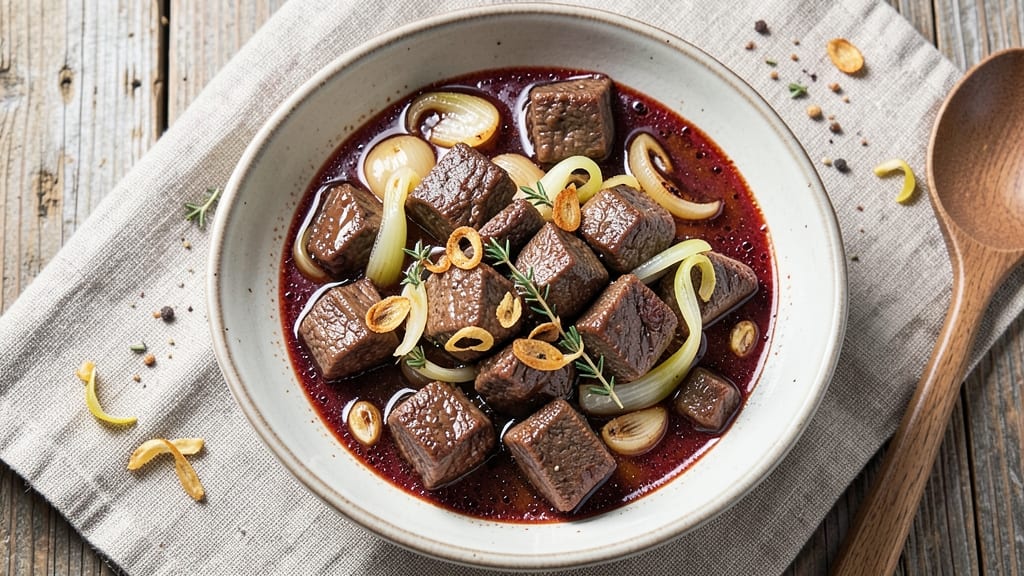
This beef and leek stew recipe delivers the kind of deep, wine-braised richness that transforms simple ingredients into a restaurant-worthy meal. The secret lies in slow simmering—where beef becomes fork-tender and leeks caramelize into sweet, golden strands.
I’ve perfected this over years of testing, balancing traditional techniques with modern shortcuts for home cooks.
The foundation starts with properly browning the beef, which builds a flavorful crust that dissolves into the stew. Leeks, with their delicate sweetness, are the star here—sautéed until golden before being submerged in a rich, aromatic broth.
A splash of red wine adds depth, while herbs like thyme and bay leaf infuse layers of earthy complexity. This isn’t just a stew; it’s a comforting, hearty dish that warms the soul.
What makes this recipe stand out is its versatility. You can prepare it in a Dutch oven for classic results or adapt it to a pressure cooker for faster cooking.
The final product is a velvety, deeply flavorful stew with tender beef, caramelized leeks, and a sauce so rich it clings to every bite. Serve it with crusty bread to soak up every last drop—this is the kind of meal that makes weeknights feel special.
Whether you’re feeding a family or meal prepping for the week, this stew delivers. The flavors only deepen as it sits, making leftovers taste even better the next day. Let’s get to the recipe—your table is about to get an upgrade.
Ingredients for beef and leek stew
The perfect balance of hearty beef, sweet caramelized leeks, and rich wine-infused broth makes this stew unforgettable.
| Ingredient | Amount | Notes |
|---|---|---|
| Chuck Roast 🥩 | 2 lb | Cut into 1.5-inch cubes |
| Leeks 🧅 | 3 medium | White and light green parts only, sliced thin |
| Yellow Onion 🧅 | 1 large | Diced, for browning beef |
| Garlic Cloves 🧄 | 4 cloves | Minced, for depth of flavor |
| Red Wine 🍷 | 1 cup | Bold dry variety like Cabernet Sauvignon |
| Beef Broth 💧 | 3 cups | Low-sodium preferred |
| Tomato Paste 🍅 | 2 tbsp | For richness and color |
| Fresh Thyme 🌿 | 2 sprigs | Or 1 tsp dried thyme |
| Bay Leaves 🌿 | 2 whole | For aromatic depth |
| Olive Oil 🫒 | 2 tbsp | Extra-virgin for browning |
| All-Purpose Flour 🌾 | 2 tbsp | For thickening sauce |
| Salt 🧂 | 1 ½ tsp | Kosher or sea salt |
| Black Pepper 🌶️ | 1 tsp | Freshly ground preferred |
| Butter 🧈 | 2 tbsp | For finishing sauce |
The chuck roast is non-negotiable here—it's the only cut that delivers that melt-in-your-mouth tenderness. Costco or Walmart usually have it pre-cut into cubes, which saves you time. If you're buying a whole roast, ask your butcher to cube it for you. The leeks are the star, so choose ones with crisp white and light green parts—avoid any that feel wilted or have brown spots. Trader Joe's often has great organic leeks in season, but regular grocery stores usually carry them too. For the wine, any bold dry red works—Cabernet Sauvignon, Merlot, whatever's open. The beef broth should be low-sodium to control the seasoning balance.
No red wine? Beef broth with a splash of balsamic vinegar gets you close, though you'll lose some depth. Fresh thyme is ideal, but dried works at one-third the amount. The tomato paste can be substituted with 1/4 cup crushed tomatoes if you prefer. For the flour, all-purpose works fine, but if you have bread flour, it'll give the sauce a slightly thicker texture. The butter at the end is crucial—it adds richness that you just can't get from oil. If you're watching calories, you can reduce it to 1 tbsp without sacrificing too much flavor.
This stew tastes even better the next day as the flavors meld together. Store leftovers in an airtight container in the fridge for up to 5 days, or freeze portions for 3 months. I always make a double batch because it reheats beautifully—just add a splash of broth if it gets too thick. The sauce will thicken as it cools, so don't be tempted to add extra flour when reheating. For serving, I like to sprinkle with fresh parsley and a drizzle of the leftover wine reduction from the pan.
Why You'll Love This Recipe
- One-Pot Magic: I swear by this—just toss everything in one pot, walk away, and let the red wine and garlic work their magic. No fancy techniques, no stress.
- Deep Umami Bomb: That chuck roast gets fork-tender while soaking up the leeks and wine, turning into something rich and satisfying. Honestly, the first bite makes me forget about takeout.
- Leftovers That Shine: This stew actually improves the next day—better flavors melded together. I freeze half for lazy nights, and it reheats like it was just made.
- Budget Feast: A whole chuck roast for a fraction of the cost of steak, plus leeks and onions that stretch into multiple meals. My wallet and my family thank me every time.
Step-by-step instructions for beef and leek stew
This method delivers deep flavor through precise timing and technique—every step builds richness.
Sear the Chuck Roast for Maximum Flavor
Heat a heavy Dutch oven over medium-high heat until hot. Add 2 tablespoons olive oil and swirl to coat the bottom. Working in batches to avoid crowding, add the 2 lb chuck roast cut into 1.5-inch cubes, letting each piece sear undisturbed for 2-3 minutes until deeply browned on all sides. This step develops the Maillard reaction, creating that fundamental depth of flavor.
Transfer the browned beef to a plate as you work. If the pan looks dry, add another 1 tablespoon olive oil before continuing. Don't rush this process—golden brown meat equals rich, caramelized flavor in your finished stew. The beef should release easily from the pan when ready to flip.
Build the Aromatic Base with Onions and Leeks
In the same Dutch oven, add the 1 large yellow onion and 3 medium leeks (white and light green parts only, sliced thin). Cook over medium heat for 5-6 minutes, stirring occasionally, until softened and beginning to caramelize. This process should take longer than you might expect—patience here creates sweetness that carries through the entire dish.
Add the 4 minced garlic cloves and cook for another 30 seconds until fragrant. Stir in the 2 tablespoons tomato paste and cook for 1 minute to deepen the color. Sprinkle with 1.5 teaspoons salt and 1 teaspoon black pepper, then add the 2 sprigs fresh thyme and 2 whole bay leaves to infuse their aromatic oils into the base.
Deglaze and Simmer the Stew
Pour in the 1 cup red wine and scrape up all the browned bits from the bottom of the pan with a wooden spoon. This deglazing step captures all the concentrated flavors you've built. Let the wine simmer for 2-3 minutes until reduced by half, then add the 3 cups beef broth and return the beef to the pot.
Bring to a gentle boil, then reduce heat to low and cover partially. Simmer for 2.5-3 hours, stirring occasionally, until the beef is fork-tender and the sauce has thickened. The stew should have a rich, velvety consistency with beef that pulls apart easily. If the sauce reduces too quickly, add a splash of water or broth to maintain the proper balance.
Finish with Butter for Richness
Once the beef is tender, remove the thyme sprigs and bay leaves (they've done their job). Stir in the 2 tablespoons butter and let it melt completely, coating the beef and vegetables. This final step adds luxurious mouthfeel and balances the acidity from the wine.
Taste and adjust seasoning if needed—this is your opportunity to perfect the balance of flavors. The stew should be rich but not overpowering, with a harmonious blend of wine, beef, and aromatic vegetables. Serve immediately with crusty bread or over mashed potatoes to soak up every last drop of that velvety sauce.
Pro Tips For Making Beef And Leek Stew
- SEAR THE ROAST HARD: Chuck roast needs that deep, caramelized crust to hold up in long cooking. Hit the pan with high heat and let it brown undisturbed for 5-6 minutes per side—yes, even if it looks messy. I used to rush this, and the stew always tasted flat compared to when I actually let it develop that dark, sticky crust.
- CUT LEEKS THIN AND RINSE WELL: Leeks pack dirt between their layers, and thick slices won’t soften properly. Slice them paper-thin and run them under cold water while shaking vigorously to dislodge grit. My grandmother swore by this, and she was right: the stew won’t taste bitter or gritty if you take the 30 seconds to clean them properly.
- DEGLAZE WITH WINE IMMEDIATELY: As soon as you remove the roast, pour in that red wine while the pan is still hot—the alcohol will sizzle and lift all those browned bits into the sauce. Scrape the bottom with a wooden spoon; this isn’t the prettiest method, but it’s the tastiest. Skip this, and you’re basically leaving flavor on the stove.
- ADD ONIONS LAST TO SOFTEN: Yellow onions need time to melt into sweetness, but they’ll turn mushy if cooked too early. Toss them in with the garlic and herbs only in the final 30 minutes of simmering. I was skeptical until I tried it—now I double-check the clock so they don’t overcook into oblivion.
Creative variations of this beef and leek stew
Wine-Infused Variations
Swap the red wine for white wine like Chardonnay for a lighter profile—just use 1 cup and add ½ cup dry vermouth for depth. For a bold twist, try Port wine (½ cup) with 1 cup beef broth and a pinch of cinnamon.
My favorite shortcut? Use 1 cup beef broth + 1 tbsp balsamic vinegar if you're skipping wine entirely. 🍷
Herb & Spice Swaps
Replace thyme with rosemary for an earthy aroma or fresh tarragon for a subtle anise note. Add ½ tsp smoked paprika for depth or 1 tsp Dijon mustard to brighten the sauce.
For heat, stir in ½ tsp crushed red pepper flakes at the end—just don’t overdo it, or the wine’s richness will get lost. 🌿
Vegetable Upgrades
Boost nutrition by adding 1 cup sliced mushrooms with the leeks—they absorb the wine beautifully. For a winter twist, include 2 parsnips (peeled and diced) and 1 carrot (chopped) to thicken the stew naturally.
If you love creaminess, stir in ½ cup heavy cream in the last 10 minutes of cooking. 🥕
Pressure Cooker Adaptation
For a 1-hour version, brown the beef and onions as directed, then transfer everything to a 6-quart Instant Pot. Add the wine, broth, and herbs, seal, and cook on high pressure for 40 minutes.
Release pressure naturally, then finish with butter. The beef will be just as tender, and the sauce will be velvety. Pro tip: Skip the flour—pressure cooking thickens the sauce naturally. ⚡
Global Twists
Make it French-inspired by adding 1 tbsp brandy with the wine and finishing with 1 tbsp crème fraîche. For a Moroccan touch, include 1 tsp ground cumin and ½ tsp cinnamon, then top with cilantro.
A German rösti twist? Swap leeks for potatoes (thinly sliced) and add 1 tbsp caraway seeds. 🗺️
Dietary Adaptations
For a low-carb version, replace flour with 1 tbsp cornstarch mixed with 2 tbsp water. Make it gluten-free by using tamari instead of soy sauce (if added) and ensuring broth is GF.
For dairy-free, omit the butter and use 2 tbsp olive oil instead. The flavors stay rich—promise! 💪
Nutrition facts
Frequently asked questions
Can I use a different cut of beef instead of chuck roast?
Chuck roast is ideal for its marbling and tenderness, but you can use stew meat or brisket in a pinch. Avoid lean cuts like sirloin—they won't become tender enough. If using brisket, slice it thinly against the grain and simmer for 3 hours instead of 2.5. The beef should pull apart easily when fork-tender.
How do I prevent the stew from being too watery?
Simmer uncovered for the last 10-15 minutes to reduce the liquid naturally. If it's still too thin, mix 1 tbsp flour with 2 tbsp cold water and stir in. For a gluten-free option, use 1 tsp cornstarch with 1 tbsp water. The sauce should coat the back of a spoon by the end.
What's the best way to reheat leftovers?
Gently reheat on the stovetop over low heat with 2-3 tbsp water or broth to loosen the sauce. Avoid microwaving—it makes the beef tough. For best results, reheat only until warmed through (3-5 minutes), then let it sit covered for 5 minutes to thicken. Leftovers taste even better the next day!
Can I make this stew in a slow cooker?
Brown the beef first, then transfer everything to a 6-quart slow cooker. Cook on low for 8 hours or high for 4-5 hours. The slow cooker's gentle heat ensures tender beef without drying it out. Add a splash of broth if needed—it's hard to overcook in this method.
Why do my leeks taste bitter?
Bitter leeks often have too much green (the toughest part) or haven't been cleaned properly. Use only the white and light green parts, and thoroughly rinse between layers to remove dirt. Soak in cold water for 10 minutes before slicing to remove excess sulfur compounds. If they still taste bitter, reduce the amount to 2 leeks and add 1 extra yellow onion for balance.