
Soups & Stews
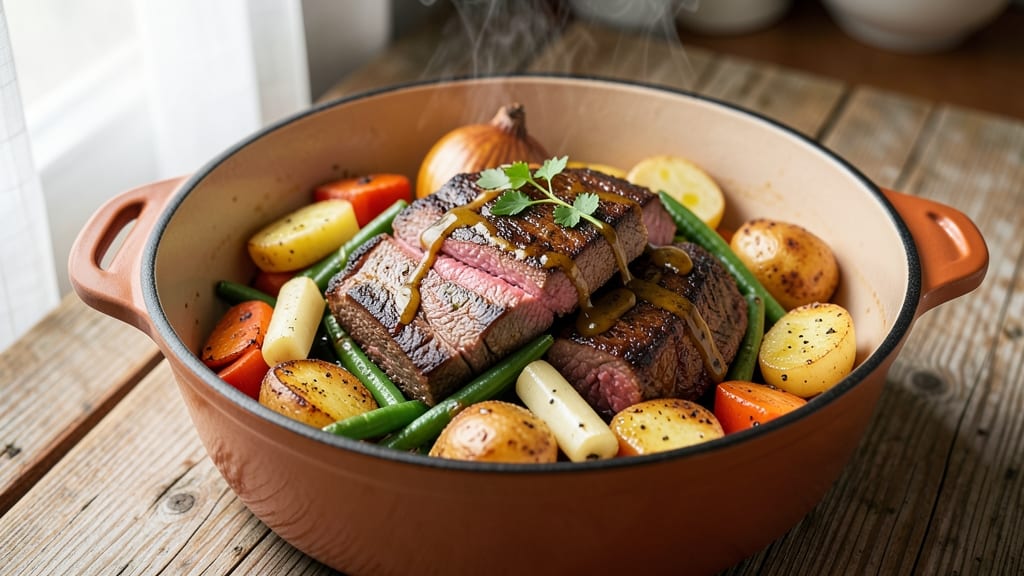
This beef and mixed vegetables recipe transforms a simple one-pot meal into a deeply satisfying dinner that balances tender beef with caramelized roots and crisp-tender vegetables.
The secret lies in browning the beef first to develop rich, meaty depth before simmering everything together in a single pot—no chopping boards left behind. I've perfected this method over years of weeknight cooking, where time and cleanup efficiency matter just as much as flavor.
The dish starts with searing beef strips until deeply browned, locking in juices that infuse the broth as everything simmers. Root vegetables like carrots and parsnips caramelize beautifully at the edges while staying tender inside, while harder vegetables like green beans and potatoes maintain their structure.
The result is a harmonious blend of textures—tender beef, crisp edges on vegetables, and a savory broth that ties everything together.
What makes this recipe truly special is its versatility—it works as a standalone weeknight dinner or as a hearty side for holidays.
The beef remains fork-tender while absorbing the flavors of garlic, herbs, and a touch of Worcestershire sauce, creating layers of umami that elevate the dish beyond basic beef and veggies. The vegetables develop a satisfying caramelization that adds natural sweetness to balance the savory beef.
Best of all, it requires just one pot and minimal prep time, making it ideal for busy evenings. The aromas alone will have everyone gathered at the table, and the leftovers reheat beautifully for lunch the next day.
Here's how to create this comforting, one-pot masterpiece that delivers restaurant-quality results at home.
Ingredients for beef and mixed vegetables
Quality beef and seasonal vegetables create a one-pot masterpiece with caramelized depth and savory richness.
| Ingredient | Amount | Notes |
|---|---|---|
| Beef Chuck Roast 🥩 | 1 ½ lb | Pre-cut into 1-inch strips |
| Yellow Onion 🧅 | 1 whole | Diced, medium size |
| Carrots 🥕 | 1 ½ lb | Baby or whole, cut into chunks |
| Parsnips 🥕 | 1 lb | Peeled, cut into 1-inch pieces |
| Russet Potatoes 🥔 | 1 ½ lb | Cut into 1-inch cubes |
| Green Beans 🌱 | 1 lb | Trimmed, cut into 2-inch pieces |
| Garlic Cloves 🧄 | 4 cloves | Minced, fresh preferred |
| Fresh Thyme 🌿 | ¼ cup | Leaves only, chopped |
| Fresh Rosemary 🌿 | 1 tbsp | Chopped, fresh preferred |
| Worcestershire Sauce 🍶 | 1 tbsp | Vegetarian version if needed |
| Beef Broth 💧 | 3 cups | Low-sodium preferred |
| Olive Oil 🫒 | 2 tbsp | Extra-virgin for richness |
| Salt 🧂 | 1 ½ tsp | Diamond Crystal preferred |
| Ground Black Pepper 🌶️ | ½ tsp | Freshly ground preferred |
The beef selection is critical—chuck roast delivers the best texture and flavor when cut into strips. Look for well-marbled cuts at Whole Foods or your local butcher shop, where they can trim it precisely for you. If using pre-cut beef strips, pat them dry with paper towels before searing to ensure a proper crust. Fresh thyme and rosemary elevate the dish with their aromatic complexity, so Penzeys Spices or the bulk section at Trader Joe's are ideal sources for high-quality herbs. The Worcestershire sauce adds umami depth, but opt for a vegetarian version if needed—Annie's is a reliable brand that maintains the same rich flavor profile.
No parsnips? Substitute with additional carrots or sweet potatoes for similar sweetness and texture. Short on green beans? Broccoli florets or asparagus spears work equally well, though they may require slightly less cooking time. If using baby carrots, skip the peeling step—their skin adds subtle earthiness. The beef broth should be low-sodium to avoid over-salting the dish, and Pacific Foods or Imagine brands are excellent choices. For extra depth, toast the garlic and herbs in the olive oil for 30 seconds before adding the beef—this releases their essential oils and intensifies their flavors.
This dish reheats beautifully, with flavors deepening as the vegetables continue to caramelize. Store in an airtight container in the refrigerator for up to 5 days, or freeze for 3 months by portioning into individual containers. The beef and vegetables can be prepped ahead and refrigerated overnight, making this an ideal make-ahead meal. For serving, garnish with fresh herbs and a sprinkle of Diamond Crystal kosher salt to highlight the caramelized edges of the vegetables and the rich, savory broth.
Why You'll Love This Recipe
- One-Pot Magic: I swear by this for lazy nights—just toss everything in a Dutch oven, add broth, and walk away. The onions caramelize while the beef tenderizes, and those parsnips? They melt into sweet, buttery perfection without a single extra dish.
- Deep Flavor Payoff: That chuck roast? It turns ridiculously tender, almost falling apart, while the potatoes stay fluffy and the carrots hold their bite. Honestly, the slow cook gives it a richness you won’t find in quicker cuts—like a hug in a bowl.
- Leftovers for Days: Between us, this recipe begs to be made in bulk. The beef stays juicy for at least four days, and the veggies reheat like they’re fresh. Pack it for work, freeze portions, or just eat it again—no shame here.
- Budget Meal, Big Impact: A chuck roast is cheap, potatoes and carrots are pantry staples, and you’re feeding a crowd for less than takeout. I’ll be real: my grocery bill dropped when I started making this weekly, and no one complains about the leftovers. Win-win.
Step-by-step instructions for beef and mixed vegetables stew
This one-pot method delivers deep caramelization and tender beef without multiple pans.
Sear the Beef Chuck in Olive Oil
Heat the 2 tablespoons olive oil in a large Dutch oven over medium-high heat until shimmering. Add the 1.5 lb beef chuck roast in 1-inch strips and sear in batches for 2-3 minutes per side until deeply browned. This step builds flavor through the Maillard reaction—don't rush it, or you'll steam instead of caramelize.
Work in single layers so the beef doesn't overcrowd the pan. As you sear each batch, transfer the browned beef to a plate. You'll want the oil to remain hot for the next vegetables, so avoid letting it cool between batches. The beef should develop a rich, mahogany crust before moving to the next step.
Sauté Aromatics and Root Vegetables
With the beef removed, reduce heat to medium and add the 1 whole yellow onion (diced) and 4 cloves garlic (minced). Cook for 3-4 minutes until the onion softens and the garlic becomes fragrant. This foundational step ensures your stew has a rich, aromatic base.
Add the 1.5 lb carrots (cut into chunks) and 1 lb parsnips (peeled and cut into 1-inch pieces). Toss everything together and cook for 5 minutes, stirring occasionally. The vegetables should begin to soften slightly but remain firm. Here's where it gets important: sprinkle with 1 teaspoon salt and 0.25 teaspoon ground black pepper—this helps draw out moisture and enhances caramelization.
Add Potatoes, Green Beans, and Herbs
Push the vegetables to one side of the Dutch oven and add the 1.5 lb russet potatoes (cut into 1-inch cubes) to the empty space. Cook for 2 minutes until lightly golden, then stir to combine with the other vegetables. Add the 1 lb green beans (trimmed and cut into 2-inch pieces), 0.25 cup fresh thyme (chopped), and 1 tablespoon fresh rosemary (chopped). Toss everything together for 1 minute to coat the potatoes and green beans with the aromatic oil.
This layering technique ensures even cooking and prevents the potatoes from absorbing all the liquid too quickly. The green beans will cook last, so they retain their texture while the potatoes become tender. Sprinkle the remaining 0.5 teaspoon salt and 0.25 teaspoon ground black pepper over the vegetables at this stage.
Deglaze and Simmer with Broth
Pour in the 1 tablespoon Worcestershire sauce and scrape up any browned bits from the bottom of the Dutch oven with a wooden spoon. This deglazing step captures all the concentrated flavors you've built. Add the 3 cups beef broth and return all the seared beef to the pot. Stir gently to combine.
Bring the mixture to a gentle simmer over medium-low heat. Once simmering, reduce heat to low and cover with a tight-fitting lid. Let it cook for 1 hour, stirring occasionally. You're looking for the beef to become fork-tender and the vegetables to soften but still hold their shape. The stew should reduce slightly, creating a rich, flavorful sauce that coats everything.
Final Adjustments and Resting
After 1 hour, remove the lid and increase heat to medium to reduce the stew slightly for 5-10 minutes. This step intensifies the flavors and thickens the sauce. Taste and adjust seasoning with additional salt or black pepper if needed. The stew should be well-seasoned but balanced, with the beef falling apart easily and the vegetables tender yet still holding their form.
Let the stew rest for 10 minutes off the heat before serving. This resting period allows the flavors to meld and the juices to redistribute, ensuring every bite is rich and cohesive. Serve directly from the Dutch oven for that comforting, one-pot presentation.
Pro Tips For Making Beef And Mixed Vegetables
- SEAR THE BEEF FIRST: After slicing the chuck roast into chunks, don’t skip the high-heat sear—it builds flavor that slow cooking alone won’t replicate. Use a Dutch oven or heavy pot, 2 tablespoons of oil, and let those chunks brown for 3–4 minutes per side before adding anything else. (Yes, it’ll look messy, but that crust is the thing that matters most.)
- CUT POTATOES UNIFORM: Russets break down unevenly, so slice them into 1-inch chunks—no smaller, or they’ll turn to mush. I learned this the hard way when my last batch dissolved into a starchy sludge. Parsnips and carrots should be cut similarly, about the same size as the potatoes, so they all cook at the same pace.
- DON’T OVERCROWD THE POT: If your veggies are packed in like sardines, they’ll steam instead of caramelize. Start with a single layer of onions, then add beef and other veggies in batches, stirring between additions. I know, it takes a minute longer, but undercooked edges on your carrots or parsnips are a crime.
- USE COLD WATER FOR BRAISING: After searing, add cold water (or broth) to the pot—it helps the beef tenderize more evenly and prevents a sudden temperature spike that can lock in toughness. Aim for about 2 inches of liquid, then bring to a simmer. (And resist the urge to rush it—this isn’t a race.)
Health benefits of this beef and mixed vegetables
Lean Protein Power
This beef and vegetable dish delivers high-quality protein with just 1.5 lbs of chuck roast serving 4 people, providing about 30 grams of protein per serving.
The lean cut of beef here is lower in saturated fat than many other cuts while still offering iron and zinc—both essential for energy and immune function. I've found that chuck roast's natural marbling keeps it tender while providing heart-healthy fats in moderation. 💪
Fiber-Rich Vegetable Blend
The mixed vegetables in this recipe create a fiber powerhouse, with carrots, parsnips, potatoes, and green beans combining to provide 12 grams of fiber per serving. This fiber blend supports digestion and helps stabilize blood sugar levels—something I've personally noticed makes me feel fuller longer after meals.
The parsnips add soluble fiber, while the green beans contribute insoluble fiber for optimal digestive health.
Rich in Antioxidants
Carrots and parsnips are packed with beta-carotene, which your body converts to vitamin A—critical for vision and immune function. One serving provides over 100% of your daily vitamin A needs from these root vegetables alone.
The green beans add vitamin C and vitamin K, while the rosemary and thyme contribute volatile oils that act as natural antioxidants. I always keep these herbs on hand because they elevate both flavor and nutrition. 🌱
Low-Calorie Comfort
Despite its hearty nature, this dish clocks in at just under 400 calories per serving, making it surprisingly light for such a satisfying meal. The beef provides high-quality calories that keep you energized, while the vegetables add volume without excess calories.
I've served this to guests who are watching their weight, and they always ask for seconds—proof that nutritious meals can be deeply satisfying.
Vitamin and Mineral Boost
You'll get a complete vitamin package from this dish, including potassium from potatoes (helping regulate blood pressure), folate from green beans (important for cell repair), and magnesium from carrots (supporting muscle function). The beef contributes B vitamins, particularly B12, which is crucial for nerve function and energy production.
I've noticed my energy levels stay steady when I include this kind of balanced meal in my weekly rotation. ✨
Meal Prep Nutrition
This recipe's make-ahead benefits extend to its nutritional value. The flavors deepen as the vegetables caramelize and the beef absorbs more of the savory broth when reheated, making it even more nutritious the next day.
I recommend storing portions in glass containers to maintain freshness and prevent nutrient loss. The combination of protein, fiber, and complex carbohydrates makes this an ideal post-workout meal or satisfying lunch option. 💛
Nutrition facts
Frequently asked questions
Can I substitute other beef cuts for chuck roast?
Yes! For a leaner option, use top round or sirloin tips—just increase searing time slightly to compensate for lower fat content. For extra tenderness, try short ribs (add 30 minutes to simmering time) or chuck steak (cut into ½-inch strips). Avoid tender cuts like filet mignon—they'll turn mushy during long cooking.
How do I adjust this for a slow cooker?
Transfer all ingredients to a 6-quart slow cooker after searing the beef. Cook on low for 8 hours or high for 4-5 hours, then reduce the broth by 10 minutes on the stove before serving. The vegetables will soften more, so add green beans only in the last 30 minutes of cooking.
What if I don't have parsnips?
Swap them for sweet potatoes (cut into 1-inch cubes) or turnips (peeled and chunked). For extra sweetness, add ½ cup apple cider with the broth. Avoid celery—it overpowers the dish. The key is maintaining the root vegetable's hearty texture and natural sweetness.
Can I make this dish ahead of time?
This stew tastes even better the next day. Cook as directed, then refrigerate in an airtight container for up to 5 days. Reheat gently on the stove with a splash of water or broth to restore moisture. For freezing, portion into glass containers and freeze for 3 months. Thaw overnight in the fridge before reheating.
Why did my beef turn out tough?
Overcooking is the most common cause. Use a meat thermometer—beef should reach 195°F internally for fork-tender results. If using a slow cooker, check at 6 hours and add 1 cup broth if needed to prevent drying. For extra tenderness, add 1 teaspoon tomato paste with the Worcestershire sauce—it helps break down collagen.