
Soups & Stews
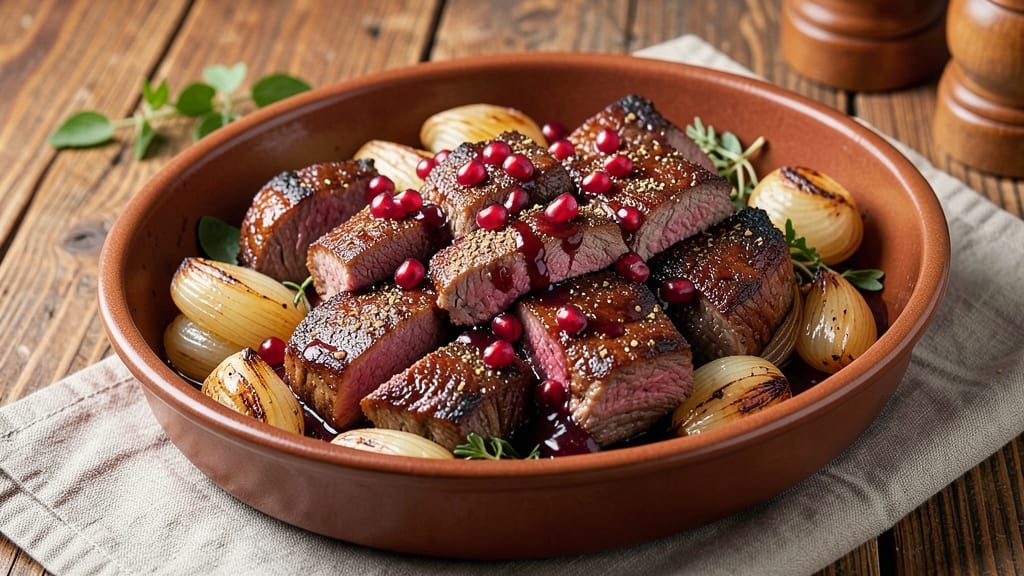
This beef and pomegranate recipe transforms humble ingredients into a dish that feels like a celebration. The rich, spiced beef pairs beautifully with the bright, jewel-like bursts of pomegranate, creating a balance of flavors that's both comforting and sophisticated.
I developed this one-pot wonder after craving something hearty yet vibrant—something that delivers deep, savory notes while keeping a refreshing, fruity edge.
The secret lies in slow-cooking tender beef with aromatic spices until it's fork-tender, then finishing it with a tangy pomegranate glaze that adds a touch of sweetness and acidity. This method ensures every bite is packed with flavor without requiring complicated techniques.
The result is a dish that's perfect for family dinners or special occasions, where the ruby jewels of pomegranate seeds add a stunning visual contrast to the deep, spiced beef.
By the end, you'll have a dish that's rich and satisfying, with the pomegranate glaze cutting through the richness of the beef. The recipe is designed to be adaptable—serve it over fluffy basmati rice, with warm flatbread, or even as a filling for stuffed pita pockets.
The combination of textures and flavors makes this one of those dishes that feels like a restaurant-quality meal, but with the ease of a home-cooked dinner.
Whether you're cooking for a crowd or treating yourself to a special meal, this beef and pomegranate recipe delivers on both flavor and presentation. The best part? It’s a one-pot wonder, so cleanup is minimal. Let’s bring this dish to life—where ruby jewels meet spiced depth in every bite.
Ingredients for beef and pomegranate
Rich spices, tender beef, and ruby pomegranate glaze transform simple ingredients into a showstopping one-pot meal.
| Ingredient | Amount | Notes |
|---|---|---|
| Chuck Roast 🥩 | 2 lb | Pre-cut into 1.5-inch cubes |
| Yellow Onion 🧅 | 1 whole | Large, sliced into half-moons |
| Garlic Cloves 🧄 | 6 cloves | Minced, fresh preferred |
| Pomegranate Molasses 🍇 | ½ cup | For glaze, not seeds |
| Fresh Pomegranate Seeds 🍈 | ½ cup | For garnish, jewel-like presentation |
| Ground Cumin 🌿 | 1 tbsp | Toasted for deeper flavor |
| Ground Coriander 🌶️ | 1 tbsp | Freshly ground preferred |
| Smoked Paprika 🌶️ | 1 tbsp | For smoky depth |
| Ground Turmeric 🌿 | ½ tsp | Brightens the dish |
| Salt 🧂 | 1 ½ tsp | Kosher or sea salt |
| Black Peppercorns 🌶️ | ½ tsp | Freshly cracked |
| Beef Broth 💧 | 2 cups | Low-sodium preferred |
| Tomato Paste 🍅 | 2 tbsp | Squeeze tube or canned |
| Extra-Virgin Olive Oil 🫒 | 2 tbsp | For searing beef |
| Fresh Lemon Juice 🍋 | 1 tbsp | Brightens the glaze |
The chuck roast is the heart of this dish—its marbling ensures fork-tender results when slow-cooked. Look for well-marbled cuts at your local butcher or grocery store's meat counter. Costco often has excellent pre-cubed chuck at a great price, but if buying whole, ask for it to be cut into 1.5-inch cubes. The pomegranate molasses adds depth, so grab a small bottle from the international aisle at Whole Foods or Trader Joe's. Fresh pomegranate seeds for garnish? Whole Foods sells them pre-seeded, or crack open a pomegranate yourself—it's worth the effort for that jewel-like presentation.
No pomegranate molasses? Substitute with equal parts balsamic vinegar and honey, though the flavor won't be identical. Swapping chuck roast for brisket or short ribs works, but adjust cooking time accordingly. The spices are non-negotiable—toast the cumin and coriander seeds in a dry pan for 30 seconds before grinding for deeper flavor. For the glaze, if you can't find pomegranate molasses, reduce balsamic vinegar with a touch of brown sugar as a quick alternative. The tomato paste can be from a squeeze tube if you're short on time—just measure carefully.
This dish tastes even better the next day, as flavors meld. Store leftovers in an airtight container in the fridge for up to 5 days, or freeze portions for 3 months. The pomegranate glaze can be made ahead and reheated gently. For serving, keep the fresh pomegranate seeds chilled until ready to garnish—they lose their jewel-like quality when exposed to heat. Serve over basmati rice or with warm flatbread to soak up every last bit of that ruby-spiced sauce.
Why You'll Love This Recipe
- One-Pot Magic: I swear by this recipe when I’m too tired to scrub pots—just brown the chuck roast, toss in onions and garlic, then let the pomegranate molasses do its thing. No extra pans, no fuss, and the sauce thickens right in the pot.
- Sweet-Savory Balance: That tangy molasses and bright pomegranate seeds? They cut through the richness of the beef like a breath of fresh air. Honestly, the first bite makes me forget it’s a weeknight dinner.
- Leftover Heaven: This beef stays tender for days, so I make a big batch and repurpose it—stuffed into wraps, tossed into salads, or reheated with crusty bread. My freezer’s always stocked with it.
- Budget Stretch: Chuck roast is the ultimate wallet-friendly cut, and pomegranate molasses adds luxury without breaking the bank. I’ll be real: this feeds six for under $20, and everyone asks for seconds.
Step-by-step instructions for beef and pomegranate stew
Transform simple ingredients into a rich, jewel-toned stew where spiced beef meets vibrant pomegranate flavors.
Sear the Chuck Roast for Deep Flavor
Heat the 2 tablespoons extra-virgin olive oil in a heavy Dutch oven over medium-high heat. Working in batches to avoid crowding, sear the 2 lb chuck roast (pre-cut into 1.5-inch cubes) until deeply browned on all sides—about 3-4 minutes per batch. This step builds the foundation of flavor through the Maillard reaction.
As the beef browns, you'll notice the oil shimmering and the meat releasing juices that sizzle in the pan. Don't rush this—golden brown crust means maximum flavor. Transfer the seared beef to a plate and set aside temporarily.
Build the Spiced Base
In the same Dutch oven, add the 1 whole yellow onion (sliced into half-moons) and cook for 5 minutes until softened and slightly caramelized. Stir in the 6 cloves minced garlic and cook for 30 seconds until fragrant—this prevents the garlic from burning.
Add the 1 tablespoon ground cumin, 1 tablespoon ground coriander, 1 tablespoon smoked paprika, 0.5 teaspoon ground turmeric, 1.5 teaspoons salt, and 0.5 teaspoon freshly cracked black peppercorns. Stir constantly for 1 minute to toast the spices, releasing their aromatic oils. This step unlocks the warm, earthy depth that defines the dish.
Develop the Sauce
Stir in the 2 tablespoons tomato paste and cook for 2 minutes until it darkens slightly. Pour in the 2 cups beef broth, scraping up any browned bits from the bottom of the pot. Bring to a gentle simmer, then return the seared beef to the pot, along with any accumulated juices.
Add the 0.5 cup pomegranate molasses and 1 tablespoon fresh lemon juice. The molasses will give the sauce its signature ruby hue and sweet-tart balance. Partially cover the pot and let it simmer gently for 1 hour 30 minutes, stirring occasionally, until the beef is fork-tender and the sauce has thickened.
Finish with Pomegranate Jewels
Once the beef is tender, skim off any excess fat from the surface of the sauce. Stir in the 0.5 cup fresh pomegranate seeds just before serving—this adds a burst of jewel-like texture and freshness that contrasts beautifully with the rich beef.
Taste and adjust seasoning if needed, then serve immediately over fluffy rice or crusty bread. The stew should be thick enough to coat the back of a spoon, with tender beef that falls apart easily and a sauce that glistens with ruby pomegranate flecks.
Pro Tips For Making Beef And Pomegranate
- Sear the Roast Hard: Chuck roast needs a good crust to hold up during slow cooking. Hit it with high heat in a cold pan—no oil needed at first—until it’s deep brown, then add a little fat. I used to rush this, and the meat turned out dry; patience here makes all the difference.
- Char the Onions Low: Caramelizing onions for this dish is non-negotiable, but don’t walk away. Keep heat low and stir often—you’re aiming for deep amber, not burnt bits. After burning three batches, I finally figured out: cover the pan for the last 5 minutes to trap steam and speed it up.
- Use Molasses Sparingly: Pomegranate molasses is intense—start with 1 tablespoon, not the whole bottle. Taste as you go; you can always add more, but you can’t take it out. I was skeptical until I tried it: a little goes a long way, and it balances the richness of the beef perfectly.
- Toast the Seeds: Fresh pomegranate seeds add texture, but toasting them first (just 1-2 minutes in a dry pan) brings out their nutty flavor. Sprinkle them over the finished dish while the beef is still hot—this guarantees they stay vibrant and slightly crisp, not soggy. (Yes, even if you’re impatient like me.)
Common mistakes when making perfect results
Overcooking the Beef
One of the biggest mistakes is letting the beef cook too long, which turns it dry and chewy. Chuck roast needs patience, but after 2 hours of simmering, check for tenderness with a fork. If it's still tough, add ¼ cup warm beef broth to keep it moist.
I’ve ruined a few batches by walking away and forgetting—set a timer for 1 hour 30 minutes max, then taste-test. 🌡️
Skipping the Sear
Skipping the sear means missing out on the rich, caramelized crust that builds flavor. Work in batches to avoid crowding the pan, and let the beef brown for 3-4 minutes per side.
If your pan isn’t hot enough, the oil will smoke instead of searing. I use a heavy Dutch oven to distribute heat evenly—it’s worth the investment for this dish. 🔥
Ignoring the Pomegranate Molasses
Pomegranate molasses isn’t just for color—it’s the secret to balancing sweetness and acidity. If you skip it, your sauce will lack depth. Use ½ cup as written, and don’t substitute with honey or vinegar alone.
The molasses also helps thicken the sauce naturally. I’ve tried shortcuts, but nothing beats the authentic ruby glaze. 🍇
Overcrowding the Pot
Adding all the beef at once steams it instead of searing, leading to bland, watery results. Cook in batches to maintain medium-high heat and let the meat develop that golden crust.
I’ve learned this the hard way—my first attempt was a soggy mess. Use a 12-inch Dutch oven or larger for this recipe. ✨
Not Toasting the Spices
Toast the cumin and coriander for 30 seconds in a dry pan before adding them to the pot. This releases their essential oils, making the dish taste deeper and more aromatic.
I often forget this step, and the spices just sit there, flavorless. A quick toast makes all the difference. 🌿
Adding Pomegranate Seeds Too Early
Fresh pomegranate seeds should be stirred in just before serving—they’ll turn mushy if cooked. Their jewel-like texture and bright flavor are best preserved raw. I’ve ruined a few presentations by adding them too soon, so always save them for the final step. 💫
Nutrition facts
Frequently asked questions
Can I substitute pomegranate molasses in this recipe?
Yes, but the flavor will differ. For a quick substitute, mix ¼ cup balsamic vinegar with ¼ cup honey or brown sugar. For authenticity, try grenadine syrup (found in baking aisles) or reduce ½ cup pomegranate juice until syrupy. The molasses adds depth and natural sweetness that's hard to replicate.
How do I store leftovers with pomegranate seeds?
Store the stew (without seeds) in an airtight container in the fridge for up to 5 days. Keep the seeds separate in a small container—they'll stay fresh for 3 days. When reheating, add seeds just before serving to preserve their jewel-like texture. For freezer storage, freeze the stew without seeds for up to 3 months.
What's the best way to serve this dish for a crowd?
Double the recipe and serve family-style with warm flatbread or steamed basmati rice on a large platter. For extra presentation, arrange pomegranate seeds in a circular pattern around the edges. Use slow cookers for large batches—just follow the same steps but transfer to the cooker after searing. Garnish with fresh cilantro and toasted pine nuts for added texture.
Can I make this recipe without a Dutch oven?
Yes, but use a heavy pot with a tight-fitting lid. A 5-6 quart pot works well. For searing, use a large skillet first, then transfer everything to the pot. If your pot isn't heavy enough, the beef may cook unevenly. A cast iron skillet can substitute for searing, then transfer to a pot for simmering.
Why does my sauce look too thin?
Simmer uncovered for 10-15 minutes to thicken naturally. If still too thin, mix 1 tablespoon cornstarch with 2 tablespoons water, stir into the sauce, and simmer for 2-3 minutes until thickened. The pomegranate molasses should help thicken as it cooks, but sometimes extra reduction is needed.