
Soups & Stews
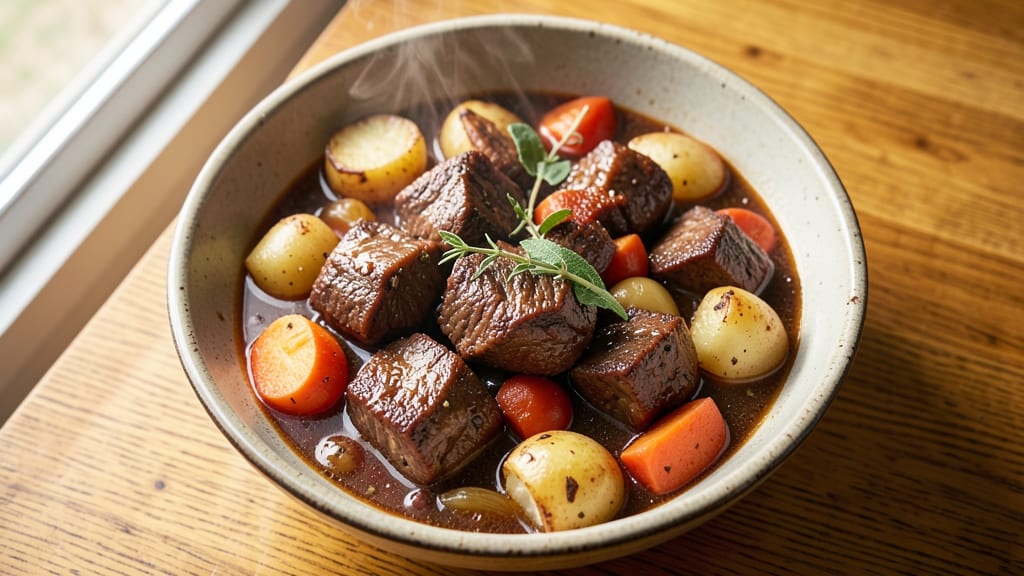
This apple cider beef stew recipe from Rachael Ray delivers the ultimate cozy meal—rich, sweet, and deeply comforting in every spoonful. The star ingredient? Apple cider, which transforms tough beef into tender, melt-in-your-mouth perfection while balancing savory and sweet flavors.
What makes this stew special is how effortlessly it comes together: slow-simmered for hours until the aromas fill your kitchen and the flavors meld into something extraordinary.
The recipe relies on simple, hearty ingredients—beef chuck, carrots, potatoes, and onions—all bathed in a deep, caramelized apple cider broth. Unlike other stews, this one doesn’t rely on heavy cream or butter; instead, the cider’s natural sweetness and acidity create a velvety texture without overpowering the beef.
The key is patience—letting the stew simmer low and slow until the beef falls apart and the vegetables are tender yet still hold their shape.
By the time you serve this stew, your home will smell like autumn, and every bite will be packed with warmth. The apple cider adds a subtle tang that cuts through the richness of the beef, while the carrots and potatoes soak up the flavorful broth.
It’s the kind of dish that feels like a hug in a bowl—perfect for chilly evenings or when you need a meal that’s both nourishing and deeply satisfying.
Pair it with crusty bread to soak up every last drop of that aromatic broth, or serve alongside a simple green salad for balance. The beauty of this recipe is its versatility—it’s hearty enough for a family dinner but elegant enough for a weeknight treat.
Let’s get started on creating this Rachael Ray-inspired comfort classic.
Ingredients for apple cider beef stew recipe rachael ray
These hearty ingredients transform simple pantry staples into Rachael Ray's legendary apple cider beef stew.
| Ingredient | Amount | Notes |
|---|---|---|
| Beef Chuck Roast 🥩 | 3 lb | Cut into 1.5-inch cubes |
| Yellow Onions 🧅 | 2 whole | Medium size, chopped |
| Carrots 🥕 | 4 whole | Medium size, peeled and chopped |
| Russet Potatoes 🥔 | 4 whole | Medium size, peeled and cubed |
| Apple Cider 🍎 | 4 cups | Unfiltered, unsweetened preferred |
| Beef Broth 💧 | 4 cups | Low-sodium preferred |
| Tomato Paste 🍅 | 2 tbsp | Or 1 small can crushed tomatoes |
| Garlic Cloves 🧄 | 4 cloves | Minced or finely chopped |
| Fresh Thyme 🌿 | 2 tbsp | Leaves only, or 1 tsp dried |
| Bay Leaves 🍃 | 2 whole | Remove before serving |
| Allspice Berries 🌶️ | 4 whole | Crushed lightly |
| Salt 🧂 | 1 ½ tsp | Kosher or sea salt |
| Black Peppercorns 🌶️ | 1 tsp | Freshly cracked |
| Olive Oil 🫒 | 2 tbsp | Extra-virgin preferred |
The beef is non-negotiable—chuck roast has the perfect fat-to-meat ratio for slow cooking. Grab a 3-pound roast at Costco or Walmart for the best price, or ask your butcher to cube it for you. Look for good marbling (little white flecks of fat)—that's what keeps the meat tender. The potatoes should be firm and unblemished, not waxy. For the apple cider, Mott's or Woodchuck are reliable brands, but any unfiltered, unsweetened cider works—just avoid the sweetened kind. The carrots can be baby carrots if that's what's in your fridge, but whole carrots stay prettier in the stew.
No beef broth? Water plus 1 bouillon cube works in a pinch, but it won't taste as deep. Fresh thyme is ideal, but dried thyme at one-third the amount is fine if that's what you've got. The tomato paste can be swapped for crushed tomatoes (use 1 cup), but you'll get a chunkier texture. Allspice berries? They're the secret weapon here—if you can't find them, 1/4 tsp ground allspice is a decent stand-in. For the garlic, jarred minced garlic is fine, but fresh minced has better flavor. The olive oil is just for browning the beef—don't skimp, but don't go crazy either.
This stew tastes even better the next day, so make extra if you can. Store it in the fridge for up to 5 days or freeze portions for 3 months. I like to portion it into containers with some broth so it reheats beautifully. The potatoes will soak up all the flavor, so if you want them firmer, add them 20 minutes before serving. For leftovers, a quick stir on the stove with a splash of water or broth brings it back to life—no microwave needed. The broth freezes well too, so you can save it for soups later.
Why You'll Love This Recipe
- Foolproof Prep: I swear by this recipe—you brown the beef, dump in everything else, and walk away. No fancy searing tricks or last-minute adjustments; the slow cooker does all the heavy lifting while you sip wine and pretend you’re not cooking.
- Cider Magic: That apple cider isn’t just flavor—it’s the star. It tenderizes the beef, caramelizes the onions into sweet perfection, and leaves you with a depth that’s almost like a fancy French stew, but way easier. (Between us, my husband still asks for seconds.)
- Leftovers That Shine: This stew only gets better the next day. The potatoes soak up all the rich, tangy cider, and the beef? Fall-apart tender. I make a double batch because reheating it for lunch is basically a free meal—no guilt, just comfort.
- Budget-Friendly Feast: Chuck roast is cheap, but it feels like a splurge. You’re feeding a crowd for under $20, and the leftovers stretch into school lunches or a quick reheat for a lazy Sunday. Plus, the veggies bulk it up so no one feels like they’re eating "stew" as a side dish.
Step-by-step instructions for apple cider beef stew
This hearty stew delivers deep, comforting flavors with minimal fuss—just follow the slow-simmer method.
Sear the Beef for Maximum Flavor
Heat a large Dutch oven over medium-high heat and add the 2 tablespoons olive oil. Once shimmering, add the 3 lb beef chuck roast cut into 1.5-inch cubes, working in batches if needed. Let the beef sear undisturbed for 3-4 minutes per side until deeply browned—this builds rich, caramelized crusts that dissolve into the stew later.
As you sear, sprinkle the beef with 1 teaspoon salt and 1 teaspoon black peppercorns (freshly cracked). Don't overcrowd the pan, or the temperature will drop and the beef won't brown properly. Transfer the seared beef to a plate and set aside—you'll add it back later.
Sauté Vegetables and Build the Base
In the same Dutch oven, reduce heat to medium and add the 2 chopped yellow onions. Cook for 5 minutes until softened and translucent. Add the 4 minced garlic cloves and 2 tablespoons fresh thyme leaves, stirring for 30 seconds until fragrant—this releases the aromatic oils that will infuse the stew.
Stir in the 2 tablespoons tomato paste and cook for 1 minute to deepen its flavor. Add the 4 whole allspice berries (lightly crushed) and 2 whole bay leaves, then pour in the 4 cups apple cider and 4 cups beef broth. Scrape up any browned bits from the bottom of the pot—they're packed with flavor.
Simmer the Stew Low and Slow
Return the seared beef to the pot and bring everything to a gentle boil. Once boiling, reduce heat to low and cover partially. Let the stew simmer for 1 hour 30 minutes, stirring occasionally. This slow cook transforms tough beef into tender, fork-friendly pieces while allowing the apple cider to meld into a sweet-tart broth.
After 1 hour 30 minutes, add the 4 peeled and chopped carrots and 4 peeled and cubed russet potatoes. Continue simmering for another 30-45 minutes until the vegetables are tender and the stew has thickened slightly. The potatoes should be fork-tender with a slight resistance—this ensures they hold their shape without turning mushy.
Finish and Serve with Warmth
Remove the bay leaves and discard them—you don't want their tough edges in your stew. Taste and adjust seasoning with additional salt if needed. The stew should balance sweet apple cider, rich beef, and earthy spices with a touch of saltiness.
Serve the stew hot in deep bowls, garnished with extra fresh thyme leaves if desired. Pair it with crusty bread to soak up every last drop of that velvety, spiced broth. The longer it sits, the better the flavors develop—this stew tastes even better the next day, so make extra if you can!
Pro Tips For Making Apple Cider Beef Stew Recipe Rachael Ray
- SEAR THE ROAST FIRST: I learned this the hard way—skipping the sear means flavorless beef, no matter how long you simmer. Brown that chuck roast in two batches (yes, it’s messy) over medium-high heat until deep crust forms—this locks in juices and builds the base for the cider’s sweetness.
- CHOP POTATOES UNIFORM: Rachael’s recipe relies on tender potatoes, not mushy ones. Cut them into 1.5-inch chunks—big enough to hold shape but small enough to cook through. I used to eyeball it and ended up with some rock-hard bits; measuring with a knife (or even a ruler) fixes that.
- SIMMER LOW AND COVERED: This isn’t a race. After the initial sear and deglazing, reduce heat to low and keep the lid on tight. I’ve rushed it before, and the cider reduces too fast, leaving the beef dry. Aim for 2.5–3 hours—enough time for the chuck to melt like butter.
- SAVE THE CIDER FOR LATER: Don’t dump all the apple cider in at once. Reserve 1 cup to add in the last 30 minutes—this brightens the stew and balances the richness. I was skeptical until I tried it: the acidity cuts through the fat, making every bite taste fresh.
Essential equipment for great apple cider beef stew recipe rachael ray
Dutch Oven
This 6-quart Dutch oven is your secret weapon for apple cider beef stew. The heavy-duty construction ensures even heat distribution, preventing hot spots that can burn your stew. I recommend a Lodge cast iron Dutch oven—it retains heat beautifully and develops a natural nonstick patina over time.
If you don’t have cast iron, a stainless steel Dutch oven from All-Clad works perfectly too. Just avoid thin aluminum pots, as they can’t handle the slow simmer without warping. 🔥
Heavy-Bottomed Pot
If you don’t own a Dutch oven, a 5-6 quart heavy-bottomed pot will do the trick. Look for one with thick, even walls—brands like Le Creuset or Calphalon are excellent choices. The key is preventing temperature fluctuations that can make your stew uneven.
Avoid thin, lightweight pots that heat up too quickly and cool down just as fast. A stainless steel pot with a tight-fitting lid is ideal for trapping steam and keeping flavors concentrated.
Measuring Cups & Spoons
Precision matters when balancing the 4 cups apple cider and 4 cups beef broth. Use liquid measuring cups with clear markings for accuracy—Pyrex or OXO Good Grips are my go-tos.
For dry ingredients like tomato paste and allspice berries, a set of stainless steel measuring spoons ensures consistency. I keep mine near the stove for easy access while cooking. Don’t skimp on quality here; cheap plastic spoons can wear out quickly and give inaccurate measurements.
Wooden Spoon
A long-handled wooden spoon is essential for stirring the stew without scratching your pot. I prefer olive wood spoons—they’re gentle on cookware and durable. Avoid metal utensils, as they can react with acidic ingredients like apple cider over time.
The long handle keeps your fingers safe from the heat, especially during the 1 hour 30 minutes simmer. A 12-inch spoon is perfect for reaching every corner of the pot.
Tongs for Serving
Serve the stew with kitchen tongs to avoid breaking up the beef and potatoes. I use stainless steel tongs with silicone grips for comfort. They’re also great for lifting crusty bread to soak up the broth.
Avoid slotted spoons, which can let precious chunks slip through. A 10-inch pair is ideal for family-sized portions. 💫
Slow Cooker Option
For hands-off cooking, a 6-quart slow cooker simplifies the process. Transfer the seared beef and sautéed veggies directly into the slow cooker, then add the liquids and spices. Cook on low for 8 hours or high for 5 hours—the long cook time tenderizes the beef perfectly.
Brands like Hamilton Beach or Crock-Pot work well. Just skip the Dutch oven’s caramelization step; the slow cooker’s gentle heat does the work for you.
Nutrition facts
Frequently asked questions
Can I substitute apple cider vinegar for apple cider in this stew?
No, you shouldn't use apple cider vinegar—it's much more acidic and lacks the sweet, complex notes that make this stew special. The cider's natural sweetness balances the savory beef and spices, while vinegar would make the dish overly tart. If you're out of cider, try a mix of 1 cup apple juice and 3 cups beef broth for a similar effect, but the flavor won't be identical.
How do I make this stew in a slow cooker instead of a Dutch oven?
Brown the beef in a skillet first, then transfer everything to a 6-quart slow cooker. Add all ingredients and cook on low for 8 hours or high for 5 hours. The slow cooker's gentle heat mimics the Dutch oven's slow simmer, keeping the beef tender and flavors melded. Just skip the initial browning step if you're using a nonstick pot.
Why does my stew taste too sweet? How do I fix it?
Too much sweetness usually means the apple cider was too dominant. Balance it by adding 1/2 teaspoon black pepper or a pinch of smoked paprika to deepen the savory notes. For immediate fixes, stir in 1 tablespoon tomato paste or a splash of beef broth to dilute the sweetness. If using sweetened cider, reduce the amount to 3 cups and add 1 extra cup broth.
Can I use ground beef instead of chuck roast?
While ground beef would work, it won't give the same rich, tender texture. Chuck roast is ideal because its connective tissue breaks down during slow cooking, creating melt-in-your-mouth beef. If you must use ground beef, try 80/20 lean-to-fat ratio and cook it for only 1 hour (no veggies) to avoid drying out. The stew will be heartier but less luxurious.
What's the best way to reheat leftovers?
Reheat gently on the stove over low-medium heat with a splash of water or beef broth to prevent drying. Stir occasionally for 5-7 minutes until warmed through. Avoid microwaving—it can make the potatoes mushy. For extra richness, add a pat of butter or a spoonful of apple cider while reheating. Leftovers taste even better the next day!