
Soups & Stews
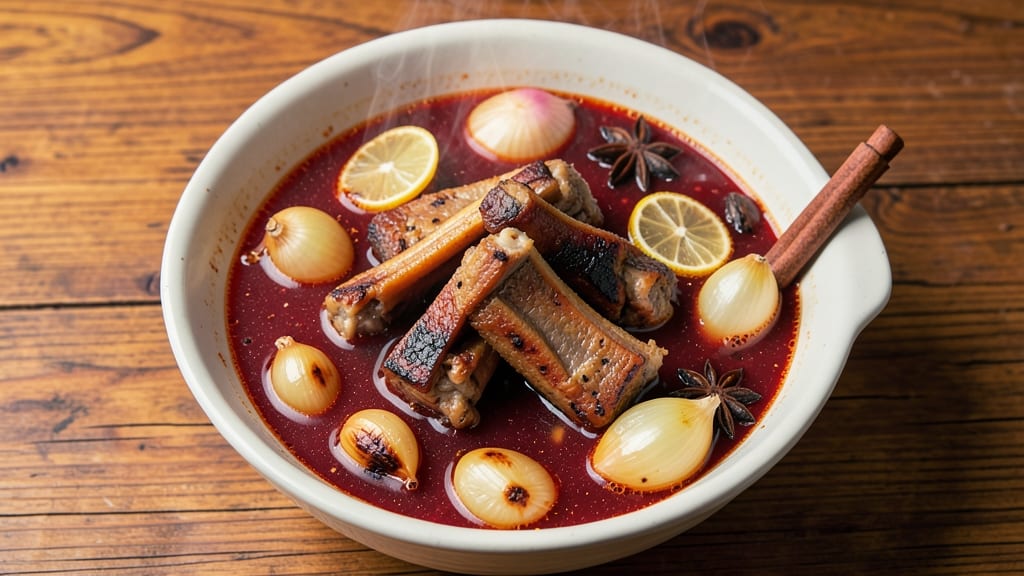
This Asian beef bone soup recipe delivers restaurant-quality depth with a rich, umami-packed broth that simmers for hours to extract maximum flavor from beef bones and aromatics. The slow-cooked process transforms tough cuts into tender, melt-in-your-mouth pieces while infusing the broth with layers of savory complexity.
What sets this apart is the balance of traditional techniques—like charring aromatics and using a pressure cooker for efficiency—with simple pantry ingredients you likely already have.
The foundation of this soup lies in its broth: beef bones simmered with ginger, garlic, star anise, and cinnamon until the liquid turns deep amber and fragrant. The secret? A long, gentle simmer (or pressure cooker shortcut) that develops a velvety texture and concentrated flavor without bitterness.
Meanwhile, silky rice noodles soak up the broth while maintaining their delicate bite, creating the perfect harmony of textures.
By the time you serve this soup, you’ll have a steaming bowl of golden broth filled with tender beef, soft vegetables, and fragrant herbs—each component perfectly balanced.
The aroma alone will draw everyone to the table, while the first sip delivers that unmistakable umami richness that makes this dish a comfort food staple.
Ready in just 2 hours (or 45 minutes with a pressure cooker), it’s the kind of meal that feels like a hug in a bowl.
Serve it with fresh herbs on top and a sprinkle of chili oil for heat, or pair it with steamed dumplings for a hearty meal. The broth freezes beautifully too, so you can enjoy this foolproof recipe all winter long.
Let’s get started on creating your own pot of golden perfection.
Ingredients for asian beef bone soup
Simple pantry staples plus a few key ingredients transform into restaurant-quality beef bone soup.
| Ingredient | Amount | Notes |
|---|---|---|
| Beef Bones 🦴 | 3 lb | Marrow or knuckle bones preferred |
| Yellow Onions 🧅 | 2 whole | Chopped, charred for depth |
| Garlic Cloves 🧄 | 8 cloves | Smashed, charred with onions |
| Fresh Ginger 🌿 | ½ cup | Julienned, peeled |
| Star Anise Pods 🌟 | 4 whole | Lightly crushed |
| Cinnamon Sticks 🌳 | 2 whole | 2-inch pieces |
| Dried Bay Leaves 🍃 | 2 whole | Standard size |
| Black Cardamom Pods 🌿 | 2 whole | Lightly crushed |
| Rice Noodles 🍜 | 1 lb | Flat or round, medium width |
| Baby Carrots 🥕 | 1 lb | Whole, scrubbed clean |
| Green Onions 🧅 | ½ cup | Sliced, for garnish |
| Fresh Cilantro 🌿 | ¼ cup | Chopped, for garnish |
| Chili Oil 🌶️ | ¼ cup | For serving, optional |
| Soy Sauce 🍶 | ¼ cup | Dark or light, to taste |
| Fish Sauce 🐟 | 1 tbsp | Red Boat preferred |
| Salt 🧂 | 2 tsp | Kosher or sea salt |
| White Peppercorns 🌶️ | ½ tsp | Freshly cracked |
The bones are everything here. Marrow or knuckle bones from the butcher section give you that rich, velvety broth—neck bones work too, but marrow is the gold standard. Look for bones with good meat still attached for extra flavor. If you can't find beef bones, pork trotter bones are a decent substitute (they're cheaper and still flavorful). For the aromatics, char them first—this step is non-negotiable. It adds a smoky depth that takes the broth to the next level. Buy ginger in small chunks at Asian markets—it stays fresher longer than the pre-grated stuff.
No star anise? Skip it—it's more about aroma than flavor. The fish sauce is crucial though—Red Boat is my go-to, but any good quality brand works. Running short on soy sauce? Coconut aminos in a pinch, though it'll taste different. The rice noodles should be flat or round—the wider ones need more time to cook. If you can't find them, egg noodles work in a bind, but they'll be chewier. For the chili oil, homemade is best (chili flakes + neutral oil), but store-bought works too. Just avoid the kind with vinegar—it'll clash with the broth.
This broth freezes beautifully—portion it into ice cube trays for easy single servings later. Keeps in the fridge for 5 days or freezer for 3 months. The noodles should be cooked right before serving (they get mushy if prepped ahead), but the broth and meat can be reheated directly from frozen. For extra convenience, prep the broth ahead and finish the soup on serving day. The flavors only get better with time, so don't rush the simmering—at least 2 hours for maximum umami.
Why You'll Love This Recipe
- Pantry-Friendly Start: I swear by this recipe because it uses ingredients I already have—no last-minute grocery runs. The beef bones and star anise simmer into something rich without needing fancy tools, just a pot and patience.
- Deep Umami Magic: That first sip? Pure flavor payoff. The ginger and garlic caramelize into the broth, while the star anise adds this subtle, warm depth—like a cozy hug in a bowl.
- Leftovers That Shine: This soup only gets better the next day. I’ll make a big batch on Sunday, and by Wednesday, it’s still the star of my lunch—just reheat and add a splash of water.
- Budget Booster: Beef bones stretch into gallons of broth, and the onions/ginger/garlic cost pennies. It’s my go-to when I need to feed the family without breaking the bank or stressing over prep.
Step-by-step instructions for Asian beef bone soup with silky noodles
Here's how to build a rich, aromatic broth that transforms simple ingredients into a comforting bowl.
Char the Aromatics for Deep Flavor
Heat a dry skillet over medium-high heat. Add the 2 whole yellow onions and 8 cloves garlic cloves (peeled and smashed) and cook, stirring occasionally, until deeply charred in spots—about 8-10 minutes. The onions should be soft with blackened edges and a caramelized aroma. Transfer to a cutting board and chop roughly.
While the onions char, peel and julienne the 0.5 cup fresh ginger, removing any fibrous strings. Lightly crush the 4 whole star anise pods, 2 whole cinnamon sticks, 2 whole dried bay leaves, and 2 whole black cardamom pods with the side of a knife to release their essential oils without breaking them apart.
Build the Umami-Packed Broth
In a large stockpot, combine the 3 lb beef bones with 8 cups cold water (enough to cover the bones by 2 inches). Bring to a boil over high heat, then reduce to a simmer and skim off any foam that rises to the surface for 10 minutes. This removes impurities and ensures a clear broth.
Add the charred onions and garlic, ginger, and crushed spices. Stir once, then add the 2 tsp salt and 0.5 tsp cracked white peppercorns. Cover and simmer gently for 2-2.5 hours, maintaining a temperature between 180-200°F. The broth should develop a deep amber color and rich, meaty aroma—this is your signal that the collagen is breaking down into gelatin.
Add Vegetables and Season
About 30 minutes before the broth is ready, add the 1 lb baby carrots (scrubbed clean) and 1 lb rice noodles (rinsed under cold water). The carrots should soften slightly but remain crisp, while the noodles will absorb the broth's flavor without overcooking. Stir gently to prevent the noodles from sticking to the bottom.
Remove the broth from heat and let it sit for 5 minutes to allow any settled particles to sink. Carefully ladle the broth into bowls, leaving the solids in the pot. Discard the spices and bones, but reserve the carrots and noodles for the final assembly.
Finish with Bright, Tangy Flavors
Return the reserved carrots and noodles to the pot and stir in the 0.25 cup soy sauce and 1 tbsp fish sauce. Taste and adjust seasoning—you want a balance of salty, sweet, and umami. The broth should coat your spoon with a silky texture and a depth of flavor that lingers.
Divide the noodles and carrots among bowls, then ladle the hot broth over the top. Garnish with 0.5 cup sliced green onions and 0.25 cup chopped fresh cilantro. For an extra kick, drizzle with 0.25 cup chili oil just before serving. The contrast of the spicy oil against the warm, savory broth creates a perfect bite.
Pro Tips For Making Asian Beef Bone Soup
- Char the Bones First: Blackened bones mean deeper flavor—toss them in a dry skillet over high heat until they turn dark brown in spots (about 5 minutes). I learned this the hard way: skipping this step leaves your broth tasting bland, no matter how long you simmer. The Maillard reaction works magic here, even if it looks dramatic.
- Slice Ginger Thick: Use ½-inch thick ginger slices instead of mincing—this keeps the texture intact and prevents it from turning to mush after hours of simmering. Thin slices dissolve too fast, leaving you with just a hint of ginger flavor instead of a bold, aromatic presence.
- Add Star Anise Late: Toss the star anise pods in at the 2-hour mark, not the start—this prevents them from oversteeping and turning the broth bitter. Remove them 15 minutes before serving so they don’t linger too long, but long enough to infuse that warm, licorice-like depth.
- Simmer Low and Slow: Keep the heat at a bare simmer—no rolling boil—after the first hour or the broth will turn cloudy and lose its clarity. I used to rush it, and the result was always murky. Patience here guarantees a silky, restaurant-quality soup.
Flavor customization for asian beef bone soup
Spicy Heat Level
Adjust the heat to your preference by controlling the chili oil—start with 1 tbsp and add more up to the full ¼ cup. For a milder kick, swap it for sriracha (½ cup) or gochujang (2 tbsp).
If you love intense heat, add 1-2 slices of fresh Thai chilies to the broth during the last 30 minutes of simmering. 🌶️
Sweet-Tangy Balance
Brighten the broth with 1 tbsp of honey or maple syrup during the final 15 minutes of cooking for a subtle sweetness. For tanginess, stir in 1 tbsp of rice vinegar or lime juice right before serving.
I often add ½ cup of pineapple juice (reduced by half) to the broth for a tropical twist that pairs beautifully with the umami.
Herb Variations
Swap the cilantro for Thai basil or mint for a Southeast Asian-inspired flavor. For a more Chinese-inspired bowl, add 1 tbsp of chopped Thai basil and a sprinkle of toasted sesame seeds.
If you prefer a lighter garnish, use shredded bok choy or bean sprouts instead of carrots—they add a fresh crunch that contrasts perfectly with the rich broth.
Protein Swaps
Replace the beef with pork trotter bones for a sweeter, gelatin-rich broth (simmer for 3-4 hours). For a vegetarian option, use shiitake mushrooms (8 oz, sliced) and kelp flakes (1 tsp) to mimic the umami depth.
If you want extra protein, add 1 lb of firm tofu (cubed) during the last 20 minutes of cooking—it absorbs the broth beautifully.
Broth Depth Boosters
Deepening the umami flavor is key! Add 1 tbsp of miso paste (white or red) during the last 30 minutes of simmering. For extra richness, stir in 2 tbsp of oyster sauce or 1 tbsp of mushroom powder (like Better Than Bouillon).
I also love adding 1 tbsp of fermented black beans (soaked and rinsed) for a funky, savory punch that’s classic in many Asian soups.
Texture Contrasts
For a heartier bowl, add ¼ cup of cooked jasmine rice or chewy tapioca pearls (soaked for 20 minutes before adding to the broth). If you prefer a lighter texture, use rice vermicelli noodles instead of the wider rice noodles—they cook faster and stay delicate.
For crunch, top with toasted peanuts or crispy fried shallots right before serving. ✨
Nutrition facts
Frequently asked questions
Can I use chicken or pork bones instead of beef?
Chicken bones will give you a lighter, clearer broth perfect for summer, while pork trotter bones create a sweeter, gelatin-rich version. For pork, simmer 3-4 hours to extract maximum collagen. Chicken bones work best with 2 hours of simmering. Just adjust the spices—pork benefits from extra star anise, while chicken pairs well with lemongrass.
How do I know when the broth is ready?
Your broth is perfect when it turns deep amber and smells intensely meaty with no fishy or burnt odors. The bones should feel soft when squeezed, and you'll see a thin gelatinous layer form on the surface when chilled. For extra assurance, taste it—it should coat your spoon with a silky, umami-rich texture without being bitter.
Can I make this soup in an Instant Pot?
Yes! Use the high pressure setting for 90 minutes after adding all ingredients. Release pressure naturally, then strain and reduce the broth on the stovetop for 15 minutes to concentrate flavors. The noodles should be added fresh to the broth after pressure cooking to prevent mushiness. This cuts cooking time to just 1.5 hours!
What if my broth tastes too bitter?
Bitterness usually means the bones simmered too long. To fix it, strain out the bones and add 1 tbsp of honey or 1 tsp of sugar while simmering for 10 minutes. For a more dramatic fix, stir in 1 tbsp of fish sauce or 1 tsp of soy sauce—both add depth while balancing bitterness. Always skim foam during the initial boil to prevent this.
How can I make this soup ahead of time?
The broth freezes beautifully—cool it completely, then store in airtight containers for up to 3 months. Thaw overnight in the fridge. For the full soup, cook the noodles and vegetables fresh, then assemble with reheated broth. The broth actually tastes better after freezing as flavors meld! For quick prep, store the broth in ice cube trays for single-serving convenience.