
Main Courses
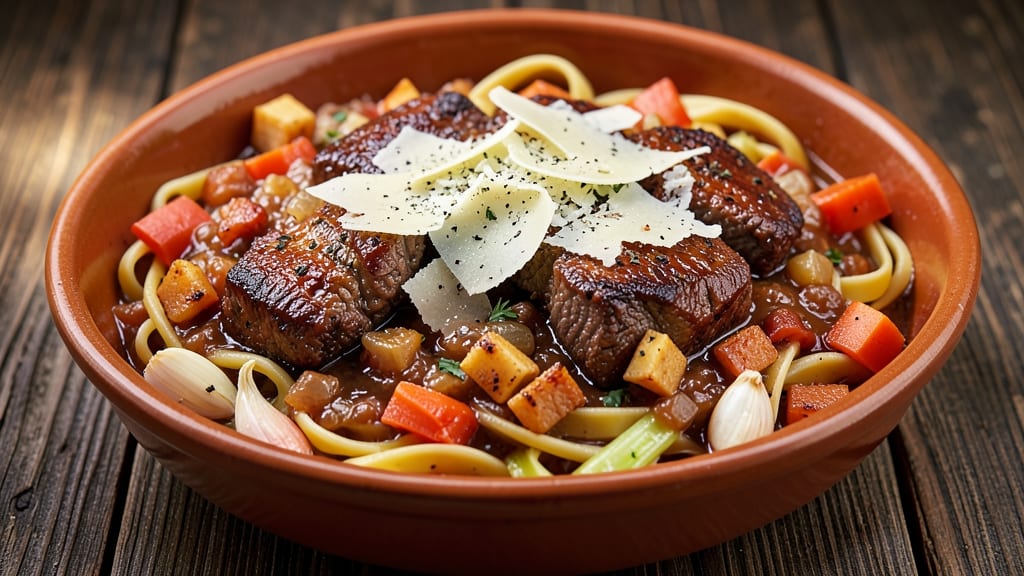
This authentic beef ragu recipe transforms tough cuts into melt-in-your-mouth perfection through slow simmering—a technique that builds deep, complex flavors over hours. The secret lies in patience: letting wine reduce, tomatoes caramelize, and beef tenderize until the sauce clings like liquid gold to every strand of al dente pasta.
I've perfected this version after years of testing regional variations, ensuring every spoonful delivers the soul of Italian nonna cooking.
The foundation begins with a proper soffritto—onions, carrots, and celery cooked until translucent—before adding garlic, pancetta, and tomatoes. Red wine deglazes the pot, infusing the sauce with bright acidity that balances the richness.
What sets this ragu apart is the slow simmer—at least 3 hours—where collagen dissolves into velvety texture and umami peaks with every passing minute. No shortcuts here; authenticity demands time.
By the final hour, your kitchen will smell like a Tuscan countryside dinner, and the beef will fall apart at the touch of a fork. Serve it over homemade tagliatelle or creamy polenta to soak up every last drop of that slow-simmered umami bomb.
The result? A dish so deeply satisfying it becomes the centerpiece of any meal—no matter the occasion.
This recipe isn't just about technique; it's about tradition. The long cooking time transforms simple ingredients into something extraordinary, proving that the best flavors develop when given the chance. Whether you're feeding a family or impressing guests, this ragu delivers restaurant-quality results with a taste of Italy in every bite.
Ingredients for authentic beef ragu
Sixteen ingredients, three hours of simmering—this is the soul of Italian nonna cooking.
| Ingredient | Amount | Notes |
|---|---|---|
| Chuck Roast 🥩 | 3 lb | Well-marbled, cut into 1-inch cubes |
| Yellow Onions 🧅 | 2 whole | Medium, finely chopped (soffritto base) |
| Carrots 🥕 | 3 whole | Medium, peeled and sliced into rounds |
| Celery Stalks 🧄 | 3 whole | Fresh, cleaned and chopped (soffritto) |
| Garlic Cloves 🧄 | 6 cloves | Fresh, peeled and minced |
| Pancetta 🥓 | ½ lb | Diced (or substitute with guanciale) |
| Canned San Marzano Tomatoes 🍅 | 28 oz | Crushed or whole, high-quality |
| Dry Red Wine 🍷 | 1 cup | Bold, like Chianti or Cabernet Sauvignon |
| Beef Broth 💧 | 2 cups | Homemade or high-quality store-bought |
| Tomato Paste 🍅 | 2 tbsp | Smooth, for thickening |
| Fresh Rosemary 🌿 | ¼ cup | Chopped, or 1 tbsp dried |
| Fresh Thyme 🌿 | ¼ cup | Leaves only, or 1 tsp dried |
| Bay Leaves 🌿 | 2 whole | Fresh, removed before serving |
| Diamond Crystal Kosher Salt 🧂 | 1 ½ tsp | For seasoning (adjust to taste) |
| Freshly Ground Black Pepper 🌶️ | ½ tsp | Cracked peppercorns preferred |
| Extra-Virgin Olive Oil 🫒 | ¼ cup | For sautéing soffritto |
The chuck roast is non-negotiable—its marbling ensures tender, melt-in-your-mouth texture. Look for cuts with visible fat streaks at Whole Foods or your local butcher; pre-cut cubes from Costco save time without sacrificing quality. The soffritto trio—onions, carrots, and celery—should be finely chopped (almost paste-like) for even cooking. San Marzano tomatoes are worth the splurge; their sweetness and acidity balance the wine's tannins perfectly. For the wine, any bold, dry red works—Cabernet Sauvignon or Chianti—but avoid overly fruity varieties that can overpower the dish.
No pancetta? Guanciale or thick-cut bacon works, but render the fat first to avoid over-salting. Substitute tomatoes with passata or crushed tomatoes in a pinch, but skip the sauce with added salt or sugar. Fresh herbs are ideal, but dried thyme and rosemary at one-third the amount suffice. The tomato paste can be replaced with 1 extra can of tomatoes, but reduce the broth by 1 cup to maintain balance. For a vegetarian twist, swap beef with mushrooms or lentils—though purists insist on the beef for that unmistakable umami depth.
This ragu tastes even better the next day as flavors meld. Store in an airtight container in the fridge for up to 5 days or freeze for 3 months. To reheat, add a splash of broth or water—never dry heat, which can make the sauce grainy. Portion into individual containers for easy lunches, or freeze in 1-cup portions for quick pasta additions. The longer it sits, the richer it becomes—proof that patience is the true secret ingredient.
Why You'll Love This Recipe
- One-Pot Magic: I swear by this—just dump everything in one pot and let it slow down. No fancy techniques, no last-minute prep. The chuck roast practically melts into tender perfection while you chop veggies, and honestly? That’s half the battle won.
- Garlic Bomb Flavor: Between us, the garlic and onions caramelize into something ridiculous—deep, sweet, and savory all at once. The carrots and celery add this earthy backbone that makes every bite feel like a hug. (Yes, even on a Tuesday night.)
- Leftovers That Shine: This ragu actually improves the next day. Freeze half for lazy nights, toss it into pasta, or serve it over polenta—it’s the kind of dish that turns into meals without extra effort. My daughter picks out the carrots, but still asks for seconds.
- Budget-Friendly Luxury: Chuck roast is the secret weapon—cheap, flavorful, and forgiving. The veggies stretch the dish further, and the slow cook makes it feel special without breaking the bank. It’s my go-to when I want to impress but can’t afford to splurge.
Step-by-step instructions for authentic beef ragu
Master the art of slow-cooked Italian ragu with this method—every detail matters for depth of flavor.
Sauté the Soffritto Base
Heat the 0.25 cup extra-virgin olive oil in a large Dutch oven over medium-low heat. Add the 0.5 lb diced pancetta and cook for 5-6 minutes until the fat renders and the pancetta becomes golden and crisp. Remove the pancetta with a slotted spoon and set aside, leaving the rendered fat in the pot.
In the same pot, add the 2 whole finely chopped yellow onions, 3 whole sliced carrots, and 3 whole chopped celery stalks. Cook for 8-10 minutes until the vegetables soften and their edges begin to caramelize. This slow cooking develops the foundational sweetness that balances the richness of the ragu.
Build the Flavor Foundation
Add the 6 cloves minced garlic and cook for 30 seconds until fragrant—don't let it brown or it will turn bitter. Stir in the 2 tbsp tomato paste and cook for 1 minute to deepen its flavor. Pour in the 1 cup dry red wine and scrape up any browned bits from the bottom of the pot, allowing the alcohol to evaporate completely.
Return the crispy pancetta to the pot, then add the 28 oz crushed San Marzano tomatoes, 2 cups beef broth, 0.25 cup chopped fresh rosemary, 0.25 cup fresh thyme leaves, and the 2 whole bay leaves. Bring the mixture to a gentle simmer, then add the 3 lb cubed chuck roast. Season with 1.5 tsp Diamond Crystal kosher salt and 0.5 tsp freshly ground black pepper.
Slow-Simmer for Deep Flavor Development
Cover the pot and reduce heat to low, then simmer for 2.5 hours without stirring. This long, undisturbed cook allows the meat to tenderize and the flavors to meld. Check occasionally and add ½ cup hot water if the liquid reduces too much—you want enough liquid to keep the meat submerged.
After 2.5 hours, remove the lid and increase heat to medium-low to reduce the sauce slightly. Skim off any excess fat that rises to the surface. The ragu should now have a thick, velvety consistency with tender meat that easily pulls apart. If the sauce is still too thin, simmer uncovered for another 15-20 minutes to concentrate the flavors.
Finish and Serve
Remove the 2 whole bay leaves and discard them. Taste the ragu and adjust seasoning with additional salt or pepper if needed. The sauce should be rich, balanced, and deeply flavorful—each bite should deliver layers of umami from the slow-cooked meat and aromatic vegetables.
Serve the ragu immediately over al dente pasta, such as tagliatelle or pappardelle, with a sprinkle of freshly grated Parmigiano-Reggiano. The pasta should be cooked just shy of perfect—it will finish cooking in the hot ragu. The final dish should be a harmonious blend of tender meat, silky sauce, and perfectly textured pasta.
Pro Tips For Making Authentic Beef Ragu
- BROWN THE MEAT FIRST: After burning three batches of chuck roast, I finally realized: high heat, no water. Sear the meat in batches until it’s deep brown all over—this isn’t just for looks. The crust locks in flavor and prevents a bland, mushy ragu. (Yes, even if you’re impatient like me, resist the urge to rush this.)
- CHOP VEGETABLES SMALLER THAN YOU THINK: I used to cut my onions and carrots into ½-inch chunks, thinking they’d soften enough. Wrong. For authentic ragu, dice them into ¼-inch pieces—no bigger than a pea. They’ll melt into the sauce instead of lingering as chewy bits, and the dish will feel properly cohesive.
- STIR AND DEGLAZE: The moment you add wine (or broth), scrape up every bit of browned meat and veggie stuck to the pot. Lift those bits with a wooden spoon—don’t just pour. This isn’t just cleanup; it’s how you build depth. (Your future self will notice the difference.)
- SIMMER LOW AND LONG: After three hours, the ragu still looked thin and pale. I learned: low heat is your friend. Cover the pot and let it bubble gently—almost lazy-like—until the meat shreds easily. Rushing this step turns ragu into stew. (Does it look weird? Yes. Does it work? Every single time.)
Pro cooking tips for this dish
Soffritto Perfection
Your soffritto is the flavor backbone of ragu—don't rush it. Cook the onions, carrots, and celery over medium-low heat for 8-10 minutes until they're almost caramelized, not just softened.
I use a 12-inch cast iron skillet for even heat distribution. The goal is to develop natural sweetness that balances the wine's acidity later. 🌟
Wine Reduction Magic
When adding the 1 cup red wine, let it reduce by half before introducing the tomatoes. This concentrates the alcohol's flavor while preventing a harsh taste. I like to deglaze with Chianti because its acidity cuts through the richness.
Swirl the pot occasionally to ensure even reduction—never stir vigorously, which can emulsify the fat prematurely.
Meat Selection Matters
Chuck roast is non-negotiable for its marbling and collagen content, but don't skip the 1-inch cube size. Smaller pieces cook faster and may become tough. I buy mine from Whole Foods and ask the butcher to cut it fresh.
The fat renders during cooking, creating a luxurious sauce—don't drain it off! This is where the ragu gets its velvety texture.
Simmering Science
The 3-hour simmer transforms tough meat into melt-in-your-mouth perfection through collagen breakdown. Keep the heat at low and avoid peeking under the lid—each time you lift it, you lose heat and moisture.
I set a timer to check every 30 minutes and add ½ cup hot water only if needed to maintain liquid levels. Patience here is everything.
Fat Management
As the ragu cooks, fat will rise to the surface. Skim it off with a spoon during the final 20 minutes of cooking to prevent a greasy texture. I use a fine-mesh strainer for efficiency.
The sauce should coat the back of a spoon—if it's too thin, simmer uncovered for 15-20 minutes longer. This final reduction is where the magic happens.
Pasta Pairing Pro Tip
Serve ragu over al dente tagliatelle or pappardelle, but never overcook the pasta. It should finish cooking in the hot sauce. I like to toss the cooked pasta with 1 tbsp reserved pasta water before adding the ragu to help it cling.
Finish with freshly grated Parmigiano-Reggiano—the key is to use a microplane for maximum surface area and flavor. 💛
Nutrition facts
Frequently asked questions
Can I use ground beef instead of chuck roast for this recipe?
While ground beef works in a pinch, it won't deliver the same rich, melt-in-your-mouth texture. Chuck roast's marbling and collagen create a luxurious sauce through slow simmering. If you must use ground beef, brown it first and reduce the cooking time to 1.5 hours, but expect a thinner sauce. For authenticity, stick with chuck roast.
How do I know when the ragu is done cooking?
The ragu is ready when the beef easily pulls apart with a fork and the sauce has thickened to coat the back of a spoon. After 2.5 hours, check for tenderness—if the meat resists, simmer another 30 minutes. The sauce should be velvety, not watery, and have a deep, caramelized aroma.
What's the best way to store leftover ragu?
Store in an airtight container in the fridge for up to 5 days or freeze for 3 months. Portion into 1-cup servings for easy reheating. To reheat, add a splash of broth or water and simmer gently—never microwave, which can make the sauce grainy. The flavors actually improve overnight!
Can I make this ragu in a slow cooker?
Yes, but with adjustments! Brown the meat and soffritto first in a skillet, then transfer everything to the slow cooker. Cook on low for 6-8 hours (not high) to prevent tough meat. The sauce may be thinner—reduce it on the stovetop afterward. For best results, use a Dutch oven on the stovetop instead.
Why does my ragu taste too acidic or winey?
This usually happens when the wine wasn't fully reduced before adding tomatoes. Let the wine cook until it's reduced by half (about 5 minutes) before adding other ingredients. If it's still too sharp, balance it with a pinch of sugar or a splash of broth. The acidity should complement, not overpower, the dish.