
Main Courses
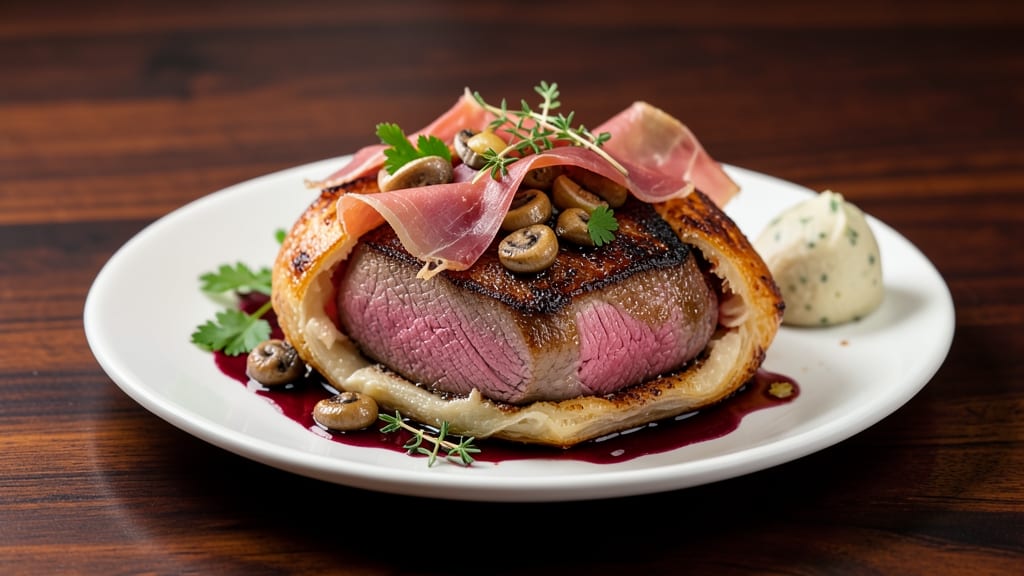
This Barefoot Contessa beef Wellington recipe delivers restaurant-quality elegance with a perfectly seared crust and tender beef fillet wrapped in prosciutto and mushroom duxelles. The secret lies in mastering the pâte à choux crust—light, airy, and crispy—while ensuring the beef stays juicy through precise searing and en papillote techniques.
After years of perfecting this classic, I've simplified the process without sacrificing authenticity, so you can achieve the same impressive results at home.
The key to success begins with the mushroom duxelles—a finely chopped mixture of mushrooms, shallots, and herbs that forms the flavorful base between the beef and pastry. This recipe emphasizes traditional methods, from properly searing the beef fillet to wrapping it tightly in prosciutto before baking it en papillote.
The pâte à choux crust, though delicate to work with, transforms the dish into a showstopper that's worth every effort.
By following these steps, you'll achieve a beef Wellington with a golden, crispy crust that shatters when cut, revealing tender beef and rich mushroom filling beneath. The prosciutto adds a delicate saltiness that complements the earthy mushrooms and buttery crust.
This is the kind of dish that elevates any dinner from ordinary to extraordinary, making it perfect for special occasions or when you want to impress guests.
While this recipe requires patience and attention to detail, the results are undeniably worth it. The combination of perfectly cooked beef, flavorful duxelles, and a crispy crust creates a harmonious balance that defines a classic Wellington.
Let's get started on creating this timeless masterpiece that will have everyone asking for seconds.
Ingredients for barefoot contessa beef wellington
Master these 15 ingredients to craft a restaurant-worthy Wellington with a crispy crust and tender beef fillet.
| Ingredient | Amount | Notes |
|---|---|---|
| Beef Tenderloin 🥩 | 1 ½ lb | Center-cut, 1.5-inch thick |
| Prosciutto di Parma 🍖 | 8 oz | Thinly sliced, high-quality |
| Shallots 🧅 | ½ cup | Finely minced, about 6 medium |
| Cremini Mushrooms 🍄 | 8 oz | Finely chopped, stems removed |
| Fresh Thyme 🌿 | 1 tbsp | Leaves only, finely chopped |
| Fresh Parsley 🌿 | 2 tbsp | Leaves only, finely chopped |
| Unsalted Butter 🧈 | ½ cup | Cold, cut into small pieces |
| All-Purpose Flour 🌾 | 1 ½ cups | For pâte à choux crust |
| Whole Milk 🥛 | 1 ½ cups | Room temperature |
| Large Eggs 🥚 | 4 whole | Room temperature |
| Diamond Crystal Kosher Salt 🧂 | 1 ½ tsp | For crust seasoning |
| Freshly Ground Black Pepper 🌶️ | ½ tsp | For crust seasoning |
| Dijon Mustard 🍯 | 1 tbsp | For beef searing |
| Extra-Virgin Olive Oil 🫒 | 2 tbsp | For searing and brushing |
| Bacon Fat or Duck Fat 🥓 | ¼ cup | For crust brushing |
The beef tenderloin is non-negotiable here—center-cut ensures tenderness, and 1.5-inch thickness guarantees even cooking. Source from a high-end butcher like D'Artagnan or your local specialty shop for optimal marbling. Prosciutto di Parma elevates the dish, so skip the generic deli ham—look for air-cured, uncooked slices at Italian markets or gourmet stores. The shallots and mushrooms form the duxelles foundation; use cremini mushrooms for earthy depth, and mince them finely for a velvety texture. Fresh herbs like thyme and parsley should be vibrant—wilted leaves will compromise flavor. For the pâte à choux, all-purpose flour must be sifted for a light crust, and whole milk should be room temperature to avoid lumps.
No prosciutto? High-quality smoked ham works in a pinch, but reduce to 6 oz to avoid excess saltiness. Swap cremini mushrooms for shiitake (sautéed first) for umami richness, but stick to 8 oz total. Fresh herbs unavailable? Dried thyme at half the amount suffices, but texture will differ. For the crust, butter must be cold—microwave it 40 seconds to soften without melting. Diamond Crystal kosher salt dissolves cleanly; if using another brand, adjust to 1 tsp equivalent. The Dijon mustard is critical for beef adhesion—whole-grain versions work best. Olive oil should be fruity and peppery (like California Extra Virgin), not mild. Bacon fat or duck fat adds richness; render your own if possible, or buy pre-rendered from specialty stores.
The beef should rest 2 hours at room temperature before searing. Duxelles can be prepped 1 day ahead and stored in an airtight container in the fridge. Pâte à choux must rest 30 minutes after piping to set before baking. Assembled Wellingtons keep 1 day in the fridge, but bake day-of for best crust texture. Reheat at 350°F for 15 minutes—never microwave. Leftovers freeze well for 2 months if wrapped tightly in plastic and foil. Pro tip: Brush the crust with egg wash before baking for extra shine.
Why You'll Love This Recipe
- One-Pan Magic: I swear by this—just slice the prosciutto, sauté the shallots and mushrooms, wrap it all around the tenderloin, and pop it in the oven. No mess, no fuss, and honestly, the cleanup is just wiping a sheet pan.
- Prosciutto Perfection: That salty-sweet prosciutto layer? It’s the secret weapon. When it crisps up against the beef, every bite feels like a little luxury—no fancy plating, just pure flavor that makes you close your eyes.
- Weeknight to Dinner Party: Between us, this is my go-to for when my in-laws drop by unannounced. The mushrooms soak up all the thyme, the crust stays golden, and no one ever guesses it took less than an hour. (Yes, even on a Tuesday night.)
- Leftovers That Don’t Suck: Cold slices the next day? Still rich, still satisfying. I’ll be real: I’ve reheated this in the oven or even straight from the fridge, and it’s never let me down. Budget-friendly, too—one tenderloin feeds a crowd, and the rest turns into sandwiches.
Step-by-step instructions for beef Wellington
Master this French classic with precise technique and professional results every time.
Prepare the Beef Tenderloin
Begin by trimming the 1.5 lb beef tenderloin of any excess fat or silver skin, leaving the natural fat cap intact. This ensures even cooking and a clean presentation. Using a sharp boning knife, make a shallow pocket along one side of the tenderloin and slide in 1 tablespoon Dijon mustard. This step is crucial—it adds depth of flavor and prevents the meat from drying out during the long bake.
Season the beef generously with 1.5 teaspoons Diamond Crystal kosher salt and 0.5 teaspoon freshly ground black pepper, pressing the seasoning into the surface for even distribution. Allow the seasoned tenderloin to sit at room temperature for 30 minutes before cooking. This resting period ensures the meat cooks evenly from edge to center, preventing any risk of undercooked interior while maintaining a perfect crust.
Create the Duxelles Filling
In a large skillet, heat 2 tablespoons extra-virgin olive oil over medium heat. Add the 0.5 cup finely minced shallots and cook for 5 minutes until completely softened and translucent. Add the 8 oz finely chopped cremini mushrooms and continue cooking for 8-10 minutes, stirring occasionally, until all moisture has evaporated and the mushrooms are deeply browned.
Remove the skillet from heat and stir in 1 tablespoon finely chopped fresh thyme and 2 tablespoons finely chopped fresh parsley. Let the mixture cool completely before spreading it evenly over the seasoned beef tenderloin, creating a ½-inch thick layer. This duxelles filling provides moisture and rich flavor while preventing the beef from drying out during baking.
Wrap with Prosciutto and Chill
Lay out 8 oz thinly sliced prosciutto di Parma on a clean work surface and arrange the beef tenderloin in the center. Gently fold the prosciutto over the beef, sealing it completely to form a tight package. This step is essential for keeping the filling contained and creating that signature crispy exterior.
Place the wrapped tenderloin on a plate and refrigerate for at least 1 hour before proceeding. This chilling period allows the prosciutto to adhere to the beef and the filling to set slightly, ensuring the Wellington holds its shape during baking. Real talk: Don't skip this step—it makes all the difference in presentation and texture.
Prepare the Pâte à Choux Crust
In a medium saucepan, combine 1.5 cups whole milk and 0.5 cup unsalted butter, bringing to a gentle simmer over medium heat. Once the mixture reaches a rolling boil, immediately remove from heat and add 1.5 cups all-purpose flour all at once. Stir vigorously with a wooden spoon until the dough forms a smooth ball that pulls away from the sides of the pan.
Transfer the dough to a stand mixer fitted with the paddle attachment and beat on medium speed for 2 minutes until cool. Add 4 large eggs, one at a time, beating well after each addition until the dough is smooth, glossy, and holds its shape when dropped from a spoon. This pâte à choux will create that signature crispy, golden-brown crust that's the hallmark of a perfect Beef Wellington.
Assemble and Bake to Perfection
Preheat your oven to 400°F. Using a piping bag fitted with a large round tip, pipe a ½-inch thick layer of the pâte à choux around the prosciutto-wrapped beef, creating a smooth, even crust. Brush the crust generously with 0.25 cup melted bacon fat or duck fat for extra crispiness and shine.
Place the Wellington seam-side down on a parchment-lined baking sheet and bake for 35-40 minutes until the crust is deep golden brown and crispy. The internal temperature should reach 130°F—this is crucial for medium-rare doneness. Don't overbake; the beef will continue cooking slightly as it rests. Let the Wellington rest for 15 minutes before slicing to allow the juices to redistribute throughout the meat.
Pro Tips For Making Barefoot Contessa Beef Wellington
- SEAR THE DUCK FAT: Use the fat from the prosciutto—yes, the whole slab—rendered in a cold pan over medium heat. That golden, crackling fat is what makes the crust stick to the beef, and scraping it up with the mushrooms gives you a flavor bomb no store-bought butter can match. (I used to waste it; now I hoard it.)
- SLICE MUSHROOMS UNIFORM: Cut those cremini mushrooms into even, paper-thin slices—about 1/8-inch thick—so they cook through without turning to mush. A mandoline makes this faster, but a sharp knife works if you take your time. Uneven slices mean some parts stay raw while others turn to paste.
- DON’T OVERWORK THE DUCK CONFIT: Once the prosciutto fat is sizzling, add the shallots and thyme, then immediately toss in the mushrooms. Stir just once—let them brown undisturbed for 3-4 minutes. Overstirring turns them to gray sludge, and no one wants sad, watery mushrooms under that beef.
- REST THE BEEF UNDER FOIL: After roasting, tent that tenderloin with foil and let it rest for a solid 10 minutes. I know, you’re hungry now, but cutting into it too soon means juices pooling on the plate instead of staying where they belong—in the meat. (Yes, even if you’re impatient like me.)
Regional styles of this dish
British Classic
The Beef Wellington originated in 19th-century England as a way to elevate simple beef tenderloin into a luxurious dish fit for royalty. The original version used puff pastry instead of pâte à choux, but modern adaptations—like this one—often incorporate French techniques for extra refinement.
In traditional British kitchens, the dish was served at high-society dinners, where the crispy pastry and tender beef made it a showstopper. 🥩
For an authentic British touch, some chefs recommend adding a layer of English mustard between the beef and prosciutto. The Dijon mustard in this recipe serves a similar purpose—adding depth while keeping the dish true to its roots.
If you want to lean even more into the British style, swap the prosciutto for thinly sliced gammon (cured ham) and use butter basting instead of bacon fat for the crust.
French Influence
While the Wellington itself is British, its pâte à choux crust is pure French technique, hailing from the 19th-century pâtisserie tradition. The French version often includes shallots caramelized in butter as part of the duxelles, which we’ve incorporated here.
The en papillote wrapping method (using prosciutto as a natural barrier) also has French origins, ensuring the juices stay contained during baking. 🍄
In France, this dish is sometimes called "Filet en Croûte" when prepared with a pastry crust. The French approach often includes a splash of brandy in the duxelles for extra depth—worth trying if you want to add a boozy dimension.
The key French technique here is the precise temperature control during baking, ensuring the crust stays crisp while the beef remains juicy.
American Adaptations
American versions of Beef Wellington often simplify the process for home cooks, sometimes using store-bought puff pastry instead of homemade pâte à choux. The Barefoot Contessa style, however, stays true to the traditional method while making it accessible.
In the U.S., this dish is a holiday and special-occasion staple, often served at Thanksgiving or Christmas dinners to impress guests. 🎄
One common American adaptation is adding a layer of spinach or arugula between the beef and prosciutto for extra freshness. Another shortcut is using pre-made duxelles from gourmet stores, though I recommend making it fresh for the best flavor.
For a modern twist, some chefs add a sprinkle of smoked paprika to the crust for a subtle smoky note.
Italian Twist
Given the use of prosciutto di Parma, this recipe naturally leans into Italian influences. In Italy, the Wellington is sometimes called "Filetto al Tartufo" (Truffle Filet) when truffles are added to the duxelles.
For an Italian-inspired version, replace the cremini mushrooms with wild mushrooms (like porcini) and finish the duxelles with a touch of truffle oil or freshly grated Parmigiano-Reggiano. 🍷
Another Italian touch is using fontina cheese in the duxelles for a creamy, melty texture. Some Italian chefs also prefer baking the Wellington at a lower temperature (375°F) for a longer time to ensure the crust is golden without overcooking the beef.
If you love Italian flavors, consider adding a splash of white wine to deglaze the mushrooms for extra depth.
Nutrition facts
Frequently asked questions
Can I substitute prosciutto with another type of ham?
Yes, but choose carefully! Use high-quality smoked ham like Black Forest ham or thinly sliced gammon (British-style). Avoid deli hams—they're too salty and lack the delicate flavor. Reduce the amount to 6 oz if using ham to prevent excess saltiness. The key is thin, cured slices that won't overpower the beef.
How do I fix a soggy pâte à choux crust?
Soggy crusts happen when steam escapes during baking. First, ensure your oven is fully preheated to 400°F. Pipe the crust slightly thicker (½-inch) and make a small slit in the top before baking to release steam. Brush with bacon fat (not butter) before and after baking for extra crispiness. Bake on a wire rack over a baking sheet to allow air circulation.
Can I make the duxelles ahead of time?
The duxelles keeps well in an airtight container in the fridge for up to 3 days or freezes for 2 months. Reheat gently in a skillet before spreading on the beef. For best texture, let it cool completely before refrigerating. The flavor actually improves overnight as the mushrooms release more moisture and deepen in flavor.
What's the best way to slice Beef Wellington?
Use a sharp chef's knife and cut against the grain of the beef for maximum tenderness. Make 4-6 even slices (about 1-inch thick) to maintain the presentation. Slice through the crust first, then carefully separate the layers. Serve immediately with red wine reduction to prevent the crust from becoming soggy.
Why is my beef tough instead of tender?
Overcooking is the most common culprit. The beef should reach 130°F internal temp (medium-rare) and rest 15 minutes before slicing. Use a meat thermometer for accuracy. Another issue could be using a thicker cut than 1.5-inch—this requires longer cooking. For extra tenderness, pound the beef gently before seasoning to even out thickness.