
Soups & Stews
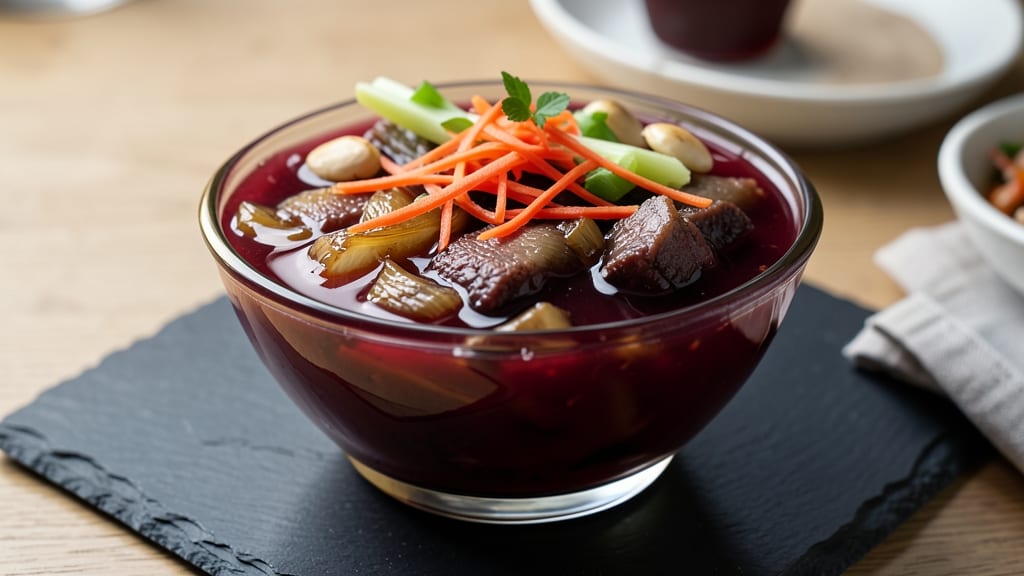
This beef aspic recipe transforms humble beef broth into a showstopping centerpiece with its gelatinous clarity and rich meat flavor. 💛 The secret lies in slow-cooking beef bones to create a deeply flavorful broth, then carefully setting it with gelatin for that signature wobble.
It's a dish that feels luxurious yet requires surprisingly simple techniques—perfect for special occasions or when you want to impress without stress.
The process begins with simmering beef bones and aromatics until the broth develops intense depth, then straining it through cheesecloth for crystal-clear perfection. Gelatin sheets are soaked and dissolved into the hot broth, which is then poured over chilled beef slices to create those elegant, jiggly layers.
Patience is key—the aspic needs time to set properly, but the result is worth every minute of waiting.
What you'll end up with is a visually stunning dish that's as impressive to serve as it is delicious to eat. The translucent gel encases tender beef slices, creating a harmonious balance of textures—silky smooth gel contrasting with firm, flavorful meat.
It's the kind of dish that elevates any meal from ordinary to extraordinary, especially when paired with classic accompaniments like pickles or fresh vegetables.
This recipe also excels as a make-ahead option, keeping beautifully in the refrigerator for up to a week. The flavors actually deepen over time, making it ideal for holiday gatherings or when you want to prepare ahead of company.
Whether you're serving it as a first course or a centerpiece, beef aspic delivers restaurant-quality elegance with minimal fuss.
Ingredients for beef aspic
Six ingredients transform simple beef bones into a crystal-clear, wobbling masterpiece.
| Ingredient | Amount | Notes |
|---|---|---|
| Beef Bones 🦴 | 4 lb | Knuckle or marrow bones preferred |
| Yellow Onion 🧅 | 1 whole | Peeled, halved lengthwise |
| Carrot 🥕 | 2 whole | Scrubbed, cut into chunks |
| Celery Stalks 🌿 | 4 whole | Trimmed, cut into pieces |
| Garlic Cloves 🧄 | 6 cloves | Peeled, lightly crushed |
| Bay Leaves 🌿 | 2 whole | Fresh preferred |
| Black Peppercorns 🌶️ | 1 tbsp | Crushed, not ground |
| Salt 🧂 | 1 tsp | Diamond Crystal preferred |
| Unsalted Butter 🧈 | 2 tbsp | For richness |
| Gelatin Sheets 🥩 | 2 sheets | 7g each, bloom in cold water |
| Beef Tenderloin 🥩 | 1 ½ lb | Thinly sliced, chilled |
| Fresh Parsley 🌿 | ¼ cup | Chopped, for garnish |
| Cheesecloth 🧵 | 1 sheet | For straining broth |
The bones are everything here. Knuckle or marrow bones from Costco or Whole Foods give the richest flavor, but any beef bones work in a pinch. Look for good marrow content—those yellow spots inside mean extra richness. If you can't find beef bones, beef marrow bones from specialty butchers are worth hunting down. The aromatics—onion, carrot, celery—are classic for a reason: they build deep, sweet base notes that shine through the aspic's clarity. Fresh bay leaves elevate the broth, but dried work at half the amount if you're in a hurry.
No beef bones? Beef marrow or chicken carcass can stand in, though the flavor won't be identical. Short on gelatin? Unflavored powdered gelatin works at the same weight—just bloom it in cold water first. The butter adds richness, but olive oil or extra broth keeps it vegetarian. For the beef slices, tenderloin or sirloin stay firm when chilled, while cheaper cuts might turn mushy. Always slice against the grain for tender bites. The cheesecloth is non-negotiable—muslin or even a clean kitchen towel in a pinch—but don't skip straining if you want that crystal-clear look.
Broth keeps 3-4 days in the fridge before setting, so plan ahead. Once set, the aspic stays 5-7 days covered in the fridge—flavors deepen over time, making it perfect for holiday prep. For serving, chill the aspic for at least 4 hours before unmolding. Garnish with fresh parsley right before serving, as it wilts quickly. Leftover aspic? Slice and reheat gently in broth for a quick appetizer. Never reheat fully set aspic—it'll turn rubbery.
Why You'll Love This Recipe
- One-Pot Magic: I swear by this recipe—just toss in the bones, a handful of onions, carrots, celery, and garlic, then let the slow simmer do the work. No chopping boards, no extra pans, and honestly? The cleanup is just a quick rinse.
- Umami Bomb: That deep, savory richness from the bones? It’s next-level. The onions caramelize just enough to sweeten the broth, while the garlic and celery add a bright, herby punch—like a warm hug in a bowl.
- Meal Prep MVP: Make a big batch on Sunday, and you’ve got flavorful broth for soups, stews, or even grains all week. I freeze it in ice cube trays—perfect for quick flavor boosts when I’m too tired to cook.
- Budget-Friendly Gold: Beef bones are cheap, and this recipe stretches them into something luxurious. Between us, it’s the secret to making even simple meals taste like you slaved over them—no fancy ingredients needed.
Step-by-step instructions for beef aspic with perfect clarity
Here's how to transform humble beef bones into a crystal-clear, meat-infused aspic that's elegant enough for any table.
🍳 Step 1: Build the Flavorful Broth Foundation
In a large stockpot, combine the 4 lb beef bones, 1 whole yellow onion, 2 whole carrots, 4 whole celery stalks, 6 cloves garlic, 2 whole bay leaves, 1 tbsp crushed black peppercorns, and 1 tsp salt. Cover with cold water by about 2 inches—this prevents scum formation during cooking.
Bring to a boil over high heat, then immediately reduce to a gentle simmer. Skim off any foam that rises to the surface during the first 15 minutes using a fine-mesh skimmer. This ensures your final aspic remains crystal clear. Simmer uncovered for 3-4 hours, maintaining a steady simmer—not a rolling boil—to extract maximum flavor from the bones.
🥘 Step 2: Strain and Prepare the Gelatin
After simmering, strain the broth through the cheesecloth lined with a fine-mesh sieve into a clean pot. Discard the solids. While the broth cools slightly (to about 160°F), bloom the 2 sheets gelatin in cold water for 5 minutes—they should soften but not dissolve completely.
Squeeze out excess water from the bloomed gelatin and add it to the warm broth. Stir gently until fully dissolved. If the broth is too hot, the gelatin won't activate properly. For perfect clarity, avoid letting the broth cool completely—it should be warm to the touch but not scalding when you add the gelatin.
🔥 Step 3: Prepare the Meat and Assemble the Aspic
Arrange the chilled, thinly sliced beef tenderloin in a loaf pan or individual molds, creating your desired presentation. Pour the warm gelatin-infused broth over the meat, covering it completely. The slices should be submerged for even cooking and maximum flavor infusion.
Refrigerate for at least 4 hours, or until completely set. For restaurant-quality results, let it set overnight. The aspic should have a jelly-like firmness that wobbles slightly when gently shaken. If using molds, dip them in hot water for 5 seconds before unmolding to release the aspic cleanly.
🍽️ Step 4: Finish with Butter and Garnish
Once set, carefully unmold the aspic onto a serving platter. In a small saucepan, melt the 2 tbsp unsalted butter over low heat until foaming but not browned. Drizzle this butter generously over the aspic just before serving to add richness and shine.
Garnish with the 0.25 cup chopped fresh parsley for a pop of color and freshness. Slice into portions if needed, ensuring each serving maintains that glass-like clarity and meaty elegance. Serve chilled with crusty bread or as an accompaniment to your main course.
Pro Tips For Making Beef Aspic
- Simmer Slow and Steady: Start with a rolling boil for 10 minutes to extract impurities, then drop the heat to a gentle simmer—not a bubble—once you add the bones. I learned this the hard way: rushing it turns the broth cloudy and weak. Cover the pot and let it work its magic at 150°F (65°C) for at least 8 hours (12+ is better).
- Blanch Bones First: Give those beef bones a quick 5-minute boil in fresh water before adding them to the aspic pot. This removes blood and grime, which otherwise makes your broth taste metallic. Rinse them well afterward—your future aspic will thank you.
- Strain Twice, Strain Right: Use a fine-mesh strainer first to catch big bits, then line it with cheesecloth for the final pass. I used to skip this, and my aspic always looked murky. Press the cloth with a spoon to squeeze out every last drop—don’t be shy.
- Upgrade with Gelatin: Skip the store-bought shortcut and use 1 tablespoon of high-quality beef gelatin (or 2 sheets of plain gelatin) per quart of broth. Bloom it in cold water first, then whisk it into the hot broth before chilling. This guarantees a firm, wobble-free aspic—no rubbery disappointment here.
Serving suggestions for this dish
Classic Accompaniments
Serve your beef aspic with crusty baguette slices for dipping—its crisp texture contrasts beautifully with the silky gel. I always keep a French-style baguette from my local bakery on hand for this purpose. For something lighter, offer mixed greens with a light vinaigrette to cut through the richness. 🥖
Cornichons (tiny French pickles) are a must—their tangy bite balances the aspic's richness perfectly. If you can't find them, dill pickles work in a pinch. Another great option is quick-pickled red onions (slice 1 red onion thin, soak in ½ cup vinegar, 1 tbsp sugar, and ½ tsp salt for 30 minutes).
Modern Twists
For a contemporary touch, pair with roasted root vegetables like carrots, parsnips, or beets—toss them in olive oil, sea salt, and rosemary, then roast at 400°F for 30 minutes. Their caramelized sweetness complements the aspic's savory depth. 🍠
Add charcuterie elements like prosciutto-wrapped melon or aged cheddar cubes for a sophisticated spread. The salty, fatty notes of the cured meats elevate the dish, making it feel like a gourmet charcuterie board. I often serve this as a centerpiece at holiday gatherings.
Presentation Pro Tips
Use ring molds or ramekins for individual servings—they create elegant portions perfect for parties. For a dramatic effect, arrange the aspic on a chilled platter and garnish with edible flowers or thinly sliced radishes for a pop of color.
The contrast between the translucent gel and bright garnishes is stunning. 💫
For a rustic touch, serve the aspic in hollowed-out bread loaves—just slice the top off a baguette or ciabatta, scoop out the center, and pour the aspic inside. Chill until set, then slice into rounds. This method adds a playful, interactive element to your presentation.
Nutrition facts
Frequently asked questions
Why does my beef aspic turn cloudy instead of crystal clear?
Cloudiness usually means your broth didn't cool enough before adding gelatin or you didn't skim the foam properly during cooking. Always cool the broth to 160°F before dissolving gelatin, and skim vigorously for the first 15 minutes of simmering. For extra clarity, strain through cheesecloth twice.
Can I make beef aspic without gelatin sheets?
Yes! Use 2 tbsp unflavored powdered gelatin instead—just bloom it in cold water first. The ratio is the same by weight, but powdered gelatin requires more precise temperature control (160°F max) to avoid clumping. For vegetarian versions, try agar-agar (follow package instructions).
How do I prevent the beef slices from floating to the top?
Weigh down the meat with a small plate or parchment paper during chilling. Place your beef slices in the mold, then cover them with a thin layer of broth first—this helps them stay submerged. For extra security, use a loaf pan with a tight-fitting lid to prevent movement while setting.
Is it safe to eat beef aspic that's been left out overnight?
No—once set, aspic should never be left at room temperature for more than 2 hours. The gelatin creates a protective barrier, but bacteria can still grow. Always refrigerate fully set aspic and consume within 5-7 days. If in doubt, reheat gently in broth until fully liquid before serving.
What's the best way to reheat leftover aspic?
Slice the aspic and gently reheat in a small amount of beef broth over low heat until just melted. Never microwave—it creates a rubbery texture. For appetizers, serve warm slices on toast with a drizzle of reduced broth. The texture will be softer than when cold, but still delicious!