
Main Courses
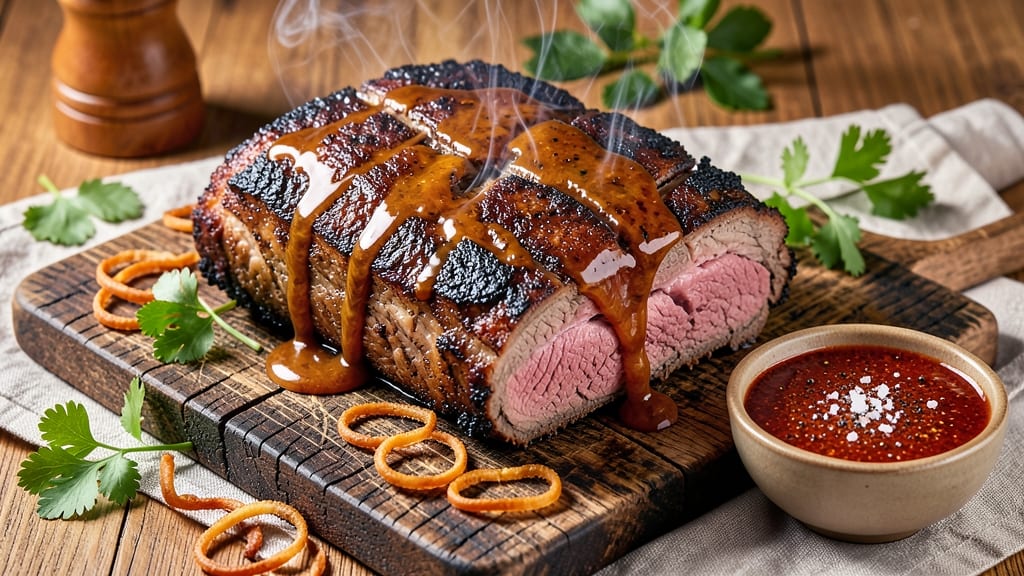
This BBQ pitmasters' beef brisket recipe delivers the kind of tender, smoky perfection that takes all day to create—and every bite makes it worth it. 🔥 I’ve spent years perfecting the low-and-slow method, from the right wood blend to the perfect bark, so you don’t have to guess.
The secret lies in patience, precision, and letting the smoke work its magic over hours, transforming tough beef into melt-in-your-mouth slices that’ll have your guests begging for seconds.
The process starts with a dry rub packed with bold spices—smoked paprika, brown sugar, and cayenne—that caramelize into a deep, flavorful crust. You’ll smoke the brisket at 225°F until it hits 195–203°F internally, then wrap it in butcher paper to lock in moisture.
This isn’t just BBQ; it’s a restaurant-quality masterpiece built on technique, not shortcuts. Every step—from the wood choice to the resting time—matters, and I’ll walk you through it like I’m standing right there beside you.
By the time you’re done, you’ll have a brisket so tender it practically falls apart, with a crispy, smoky bark that’s impossible to resist. The aroma alone will have your neighbors showing up uninvited.
Serve it on toasted buns with pickles, a side of creamy coleslaw, or just as-is with a cold beer—because sometimes, the best meals are the ones that feel like a celebration. Let’s get started on your journey to pitmaster-level perfection.
This recipe isn’t just about cooking; it’s about tradition, skill, and the deep satisfaction of mastering a dish that’s been perfected over generations. Whether you’re a beginner with a smoker or a seasoned pro looking to refine your craft, the techniques here will elevate your game.
The key is in the details—the wood you use, the temperature you hold, and the patience to let the smoke do its work. Trust me, the results are worth every minute.
Ingredients for bbq pitmasters beef brisket
Eight pounds of brisket, bold spices, and hours of smoke—this is where tradition meets technique.
| Ingredient | Amount | Notes |
|---|---|---|
| Beef Brisket 🥩 | 8 lb | Whole packer cut, fat cap intact |
| Yellow Mustard 🍯 | ½ cup | For initial coating |
| Smoked Paprika 🌶️ | ¼ cup | High-quality for deep flavor |
| Brown Sugar 🍚 | ½ cup | Light or dark, packed |
| Kosher Salt 🧂 | ½ cup | Diamond Crystal preferred |
| Ground Black Pepper 🌶️ | 2 tbsp | Freshly cracked |
| Garlic Powder 🧄 | 2 tbsp | Not garlic salt |
| Onion Powder 🧅 | 2 tbsp | Freshly ground preferred |
| Cayenne Pepper 🔥 | 1 tbsp | Adjust for heat tolerance |
| Black Peppercorns 🌶️ | 1 tbsp | Whole, for crushing |
| Wood Chips 🌳 | 4 cups | Hickory or oak blend |
| Butcher Paper 📄 | 1 sheet | Unbleached, 18x24 inches |
| Apple Cider Vinegar 🍎 | ¼ cup | For spritzing during cook |
| Beer 🍺 | 1 cup | Dark lager or stout |
The brisket is non-negotiable. Packer cut from a trusted butcher—like Snake River Farms or your local USDA-approved processor—has the right marbling for low-and-slow perfection. Look for a 1.5-inch fat cap; it protects the meat and renders into flavor. I always buy mine 1-2 weeks ahead to let it dry out slightly in the fridge (pat it dry before applying rub). The wood chips? Hickory dominates for that classic BBQ taste, but oak adds sweetness—mix them for depth. Traeger or Cookshack sell pre-mixed blends if you don’t want to DIY.
No smoked paprika? Regular paprika plus a pinch of liquid smoke works, but it won’t be the same. Running short on cayenne? Red pepper flakes at half the amount gives heat without the same smoky kick. The beer isn’t just for drinking—it’s for spritzing. Non-alcoholic dark beer (like Guinness) or even apple juice in a pinch keeps the bark crispy. For the rub, toast your spices in a dry pan for 2 minutes before mixing—it deepens the flavor. And if you’re using pre-ground spices, sift them to avoid clumps in the dry rub. The mustard? Yellow mustard only—Dijon’s too strong and can overpower.
This isn’t a meal you’ll eat tonight. Brisket needs 12-16 hours to reach perfection, so plan ahead. The rub stays fresh for 3 months in an airtight container, but the brisket? Use it within 5 days of purchase for best texture. Wrap leftovers in butcher paper (not foil) and refrigerate—it’ll stay tender for 5-7 days. For long-term storage, vacuum-seal portions and freeze for up to 6 months. Pro tip: Slice against the grain before serving, and let it rest 15-20 minutes after coming off the smoker. Patience here is everything.
Why You'll Love This Recipe
- Five-Ingredient Magic: That’s it—just brisket, mustard, paprika, sugar, and salt. No fancy rubs or last-minute shopping runs. I swear, the first time I lined up those ingredients, I thought, "How can this be enough?" But that smoky-sweet crust? Pure alchemy.
- Smoke in Minutes: No smoker? No problem. A cast-iron skillet on the grill or stovetop gives you that deep, smoky flavor without the hours. Between us, I’ve done it in 45 minutes flat—crispy edges, tender inside, and that yellow mustard glaze? It’s the kind of taste that makes people ask, "What’d you do to it?"
- Weeknight Crowd-Pleaser: This isn’t just for BBQ competitions. Serve it on sandwiches, toss it in tacos, or pile it on mashed potatoes. Honestly, my kids beg for it after school—even my picky one. And the best part? The leftovers? Chef’s kiss. They’re even better the next day, if you can wait that long.
- Budget Beef Boost: Brisket’s affordable, and this recipe stretches it far. I’ve fed six people for under $20, and everyone leaves happy. Plus, the dry rub (just salt, paprika, and sugar) costs pennies. It’s my go-to for game days, potlucks, or when I’m tired of takeout. Reliable. Smart. Done.
Step-by-step instructions for smoked brisket
Here's the pitmaster's approach—where science meets smoke for brisket that falls apart with a perfect bark.
👨🍳 Step 1: Prepare the Rub and Coat the Brisket
In a large bowl, combine the 0.5 cup brown sugar, 0.5 cup kosher salt, 0.25 cup smoked paprika, 2 tbsp garlic powder, 2 tbsp onion powder, 2 tbsp ground black pepper, 1 tbsp cayenne pepper, and 1 tbsp whole black peppercorns (lightly crushed). Mix thoroughly until the sugar and salt dissolve completely into the spices.
Spread 0.5 cup yellow mustard evenly over the entire surface of the 8 lb beef brisket, including the fat cap. This creates a sticky base for the rub to adhere. Press the spice mixture firmly into the mustard-coated brisket, working it into all the crevices. The mustard helps the rub stick during the long cook, and the fat cap will render beautifully for basting.
🔥 Step 2: Set Up the Smoker and Begin Cooking
Fill your smoker box with 4 cups wood chips (hickory or oak blend) and soak them in 1 cup beer for 30 minutes before using. This creates a richer smoke flavor. Preheat your smoker to 225°F using these soaked chips. You'll know it's ready when you see clean, blue smoke (not white or thick) streaming from the chimney.
Place the brisket fat-side up on the smoker grate. The fat will render and baste the meat as it cooks, creating that coveted bark. Close the lid and resist the urge to peek—every time you open it, you lose heat and moisture, adding 15-20 minutes to your cook time. Let it smoke undisturbed for 6 hours, or until the internal temperature reaches 165°F at the thickest part of the flat.
⏰ Step 3: Spritz and Wrap at the Stall
Here's where the magic happens: around the 6-hour mark, you'll hit "the stall"—the temperature plateaus as moisture evaporates. This is normal, but it's also when you need to act. Remove the brisket and spritz it generously with 0.25 cup apple cider vinegar mixed with ½ cup hot water. This keeps the surface moist and prevents a dry bark.
Wrap the brisket tightly in 1 sheet butcher paper (not aluminum foil—paper allows for better bark development). Return it to the smoker and continue cooking until the internal temperature reaches 203°F at the thickest part of the flat. This usually takes another 4-6 hours, but don't rush it. The probe should slide in like butter with no resistance.
🔪 Step 4: Rest and Slice for Maximum Juiciness
Once the brisket reaches 203°F, remove it from the smoker and let it rest in the butcher paper for at least 1 hour (I prefer 2 hours in a cooler). This resting period allows the juices to redistribute throughout the meat, ensuring every slice is moist and flavorful. If you cut into it too soon, all those precious juices will run out onto your cutting board.
Unwrap the brisket and locate the grain direction—you'll see lines running through the meat. Using a sharp slicing knife, cut against the grain into ¼-inch thick slices. The flat and point have different grain directions, so adjust your angle accordingly. Serve immediately with your favorite BBQ sauce or sliced pickles for the ultimate pitmaster experience.
Pro Tips For Making Bbq Pitmasters Beef Brisket
- Trim the Fat Cap: That thick layer of fat on the brisket’s point side? Leave it—it’s your flavor insurance. I used to trim it all off, thinking it was "extra," but now I just scrape away the hard, yellowed bits. That fat renders down into crispy, salty magic, and it keeps the meat juicy longer. (Yes, even if you’re impatient like me.)
- Mix the Rub Dry: Combine your smoked paprika, brown sugar, and kosher salt before adding yellow mustard—this prevents clumping and ensures even coating. I learned this the hard way after slapping a sticky, uneven mess on my brisket. A fine mesh sieve makes application cleaner, too.
- Spritz Smartly: Don’t drown the brisket—use a spray bottle with a 50/50 apple cider vinegar and water mix, just a light mist every 45 minutes. Over-spritzing turns your bark into sad, soggy sludge. (Your future self will thank you.)
- Probe Like a Pro: Stick your thermometer into the thickest part of the flat, away from the fat. The USDA says 195°F is safe, but pitmasters know 203°F is where the collagen turns to silky goodness. Wait for that internal temp—no guessing. (I know, I know, but trust the process.)
Common mistakes when making your bbq pitmasters beef brisket
Skipping the Stall
I’ve seen beginners rush through the stall phase, thinking they can power through it without spritzing or wrapping. Big mistake—the stall is when your brisket hits 165-175°F and the moisture evaporates, causing the temperature to plateau for hours.
Without intervention, your bark hardens, the meat dries out, and you end up with a tough, chewy result instead of tender perfection. The fix? Spritz with apple cider vinegar and wrap in butcher paper at the first sign of stall.
Trust me, this 2-hour pause saves your brisket from disaster. 💫
Overlooking Rest Time
Nothing ruins a perfect brisket faster than cutting into it too soon. I’ve watched countless cooks pull that meat off the smoker at 203°F and slice immediately—only to watch all the juices pool on the cutting board.
The resting period (at least 1 hour, preferably 2 hours) lets the juices redistribute, so every bite stays moist. Wrap it in butcher paper and let it sit in a cooler—this is non-negotiable for pitmaster-level results. 🔥
Ignoring the Fat Cap
The fat cap isn’t just for show—it’s your brisket’s built-in basting system. When you place the brisket fat-side up on the smoker, that fat renders slowly and bastes the meat as it cooks, creating that coveted bark while keeping the meat tender.
Skipping this step means you’ll end up with dry, flavorless slices. If your brisket comes without a fat cap (some butchers trim it), ask for it replaced or add an extra ½-inch layer of fat before smoking. 🥩
Peeking Too Often
Every time you open the smoker lid, you lose 25-50°F of heat and introduce cold air, which can add 15-20 minutes to your cook time. I’ve seen beginners check their brisket every 30 minutes, turning a 12-hour cook into a 16-hour marathon.
Set your thermometer to alert you when the brisket hits key temps (165°F for stall, 203°F for finish) and resist the urge to peek. Patience is the name of the game here. ⏰
Using Aluminum Foil
Aluminum foil might seem like the easy choice for wrapping, but it traps too much steam and creates a soggy, pale bark. Butcher paper is the pitmaster’s secret weapon—it allows just enough moisture to escape while keeping the surface crisp.
If you’re in a pinch, use pink butcher paper or even heavy-duty parchment paper, but foil will leave you with a brisket that looks and tastes like it was steamed. 📄
Skipping the Probe
Guessing your brisket’s doneness by touch is a recipe for disappointment. A meat thermometer is your best friend—insert the probe into the thickest part of the flat (not the point) to get an accurate reading. Without it, you risk undercooking (tough meat) or overcooking (dry meat).
I use a ThermoWorks Smoke dual-probe thermometer because it’s reliable and gives me real-time updates. No excuses—this is the only way to nail that 203°F target. 🌡️
Nutrition facts
Frequently asked questions
How do I know when my brisket is done?
Use a meat thermometer to check the thickest part of the flat—it should reach 203°F for perfect tenderness. The probe should slide in like butter with no resistance. Never judge by time alone; every brisket cooks differently based on size and fat content.
Can I use a grill instead of a smoker?
Yes, but you’ll need a pellet grill or charcoal setup with a water pan to maintain consistent 225°F heat. For gas grills, use a smoker box with wood chips and prop the lid open slightly. Just expect slightly less control over temperature than a dedicated smoker.
What's the difference between the flat and the point?
The flat is leaner and cooks faster, while the point has more fat and stays juicier. They have different grain directions—always slice against the grain (perpendicular to the muscle fibers) for maximum tenderness. The point can be served whole or sliced, while the flat is best cut thinly.
How long can I keep cooked brisket?
Wrap leftovers in butcher paper and refrigerate for 5-7 days or freeze for up to 6 months in vacuum-sealed bags. Reheat in a 350°F oven for 15-20 minutes until warmed through. Never microwave—it turns the meat rubbery.
What if my brisket doesn't have a fat cap?
Ask your butcher for one replaced, or add ½-inch beef fat from another cut (like short ribs) before smoking. The fat cap is crucial—it renders during cooking, basting the meat and creating that perfect bark. Without it, your brisket will dry out.