
Soups & Stews
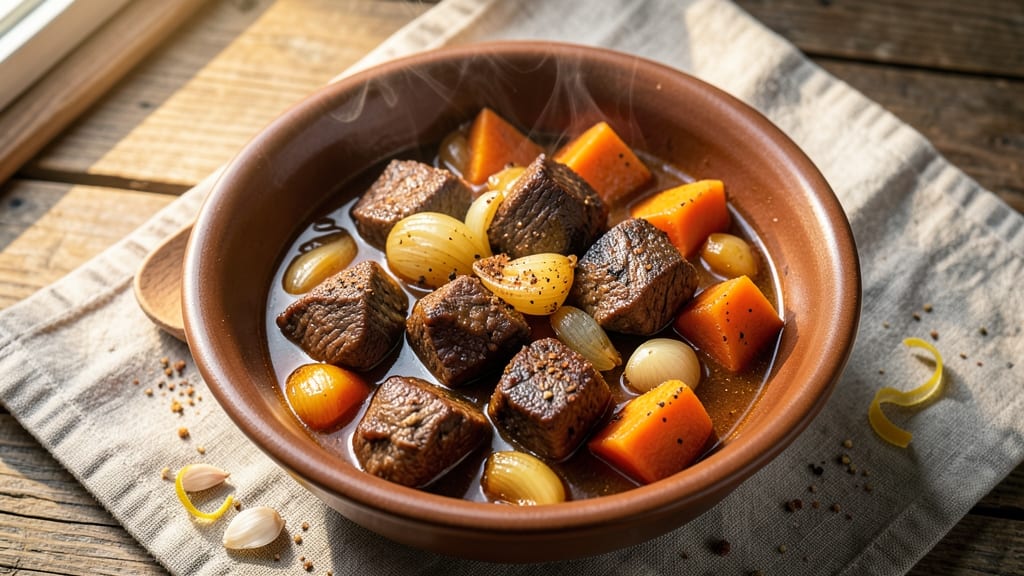
This beef and butternut squash stew recipe transforms humble ingredients into a deeply satisfying meal that tastes like autumn on a plate.
The secret lies in slow-roasting the squash to caramelized perfection before simmering it with tender beef and aromatic herbs—a technique that builds layers of flavor without requiring hours at the stove. I developed this version after testing countless methods, and it consistently delivers restaurant-quality results with minimal effort.
The beauty of this stew is its balance: sweet butternut squash pairs beautifully with rich beef, while warm spices like cinnamon and thyme add depth that lingers long after the last bite.
Unlike many stews that rely on heavy cream, this version uses a simple broth base that lets the natural sweetness of the squash shine through. The beef cooks until fork-tender, absorbing all those rich flavors while maintaining its structure.
What makes this recipe truly special is its versatility—it works equally well as a weeknight dinner or a showstopping centerpiece for holiday gatherings. The slow simmer develops complex flavors, while the caramelized squash adds natural sweetness that balances the hearty beef.
Serve with crusty bread to soak up every last drop of that velvety broth, or pair it with roasted greens for a complete meal.
Whether you're using a traditional Dutch oven or an Instant Pot for faster results, this method ensures tender beef and perfectly cooked squash every time. The key is patience—allowing the flavors to meld during the slow cook creates a depth you can't achieve with quick cooking methods.
Here's how to make it perfectly every time.
Ingredients for beef and butternut squash stew
Transform simple pantry staples and seasonal produce into a rich, hearty stew with restaurant-quality depth.
| Ingredient | Amount | Notes |
|---|---|---|
| Beef Chuck Roast 🥩 | 1 ½ lb | Trimmed of excess fat, cut into 1-inch cubes |
| Butternut Squash 🎃 | 2 lb | Peeled, seeded, cut into 1-inch cubes |
| Yellow Onion 🧅 | 1 whole | Medium size, diced |
| Garlic Cloves 🧄 | 4 cloves | Fresh, minced |
| Beef Broth 💧 | 3 cups | Low-sodium preferred |
| Dry Red Wine 🍷 | ½ cup | Bold variety like Cabernet Sauvignon |
| Tomato Paste 🍅 | 2 tbsp | Smooth, not chunky |
| Fresh Thyme 🌿 | 2 tbsp | Leaves only, chopped |
| Ground Cinnamon 🌶️ | ½ tsp | Freshly ground preferred |
| Ground Cloves 🌶️ | ¼ tsp | Lightly toasted for warmth |
| Olive Oil 🫒 | 2 tbsp | Extra-virgin for roasting |
| Salt 🧂 | 1 ½ tsp | Kosher or sea salt |
| Black Pepper 🌶️ | ½ tsp | Freshly ground |
| Fresh Parsley 🌿 | ¼ cup | Chopped, for garnish |
The beef and squash are the stars here. Chuck roast delivers that melt-in-your-mouth texture when cooked low and slow, while butternut squash needs that initial roast to develop its natural sweetness. For the beef, look for well-marbled cuts—the fat renders out during cooking, keeping the meat tender. Butternut squash should be firm with no soft spots; local farmers markets often have the freshest selection in fall. If you can't find fresh squash, canned pumpkin puree in a pinch (though it won't caramelize the same way).
No red wine? Substitute an extra 0.5 cup beef broth with 1 tbsp balsamic vinegar—it adds depth without alcohol. Fresh thyme is ideal, but dried thyme at one-third the amount works if you're in a hurry. The tomato paste can be tricky—Trader Joe's squeeze tubes are perfect for this since you only need a small amount. For extra warmth, add a pinch of smoked paprika. If you're using an Instant Pot, reduce the wine to 0.25 cup to prevent pressure issues.
Roasted squash keeps in the fridge for 4-5 days if stored in an airtight container, but it's best used within 2 days for peak flavor. The stew itself reheats beautifully—simmer on low heat for 10-15 minutes, stirring occasionally. For meal prep, portion into glass containers with lids to preserve flavor. Freezes well for up to 3 months if you want to make a big batch for holiday gatherings. The broth thickens as it cools, so add a splash of water when reheating if needed.
Why You'll Love This Recipe
- One-Pot Magic: I swear by this—just dump everything in a Dutch oven, let it simmer, and walk away. No chopping like a fine chef, no fancy techniques. The beef chuck roast practically melts into tender shreds while the squash caramelizes right in the broth. (Yes, even on a Tuesday night.)
- Rich, Deep Umami: That beef broth and slow-cooked chuck roast? It’s like a warm hug in a bowl. The butternut squash adds natural sweetness, but the real star is the garlic—sautéed until it’s just shy of crispy—because we’re not making garlic bread here, we’re making flavor.
- Leftovers That Feel Fresh: Between us, this stew tastes better the next day. I make a double batch on Sundays, freeze half, and reheat it for lazy nights. The squash gets even sweeter, the beef more tender, and honestly? No one ever guesses it’s reheated.
- Budget-Friendly Feast: A chuck roast stretches farther than you’d think, and butternut squash is cheaper than it looks. This feeds four for under $15 at my grocery store, and I’ve never had complaints—even from my picky teenager. (She picks out the onions, but still asks for seconds.)
Step-by-step instructions for beef and butternut squash stew
Here's the method for developing deep, roasted flavors that transform simple ingredients into a hearty, aromatic stew.
Roast the Beef and Vegetables for Deep Flavor
Preheat your oven to 400°F and line two baking sheets with parchment paper. In a large bowl, toss the 1.5 lb beef chuck roast cubes, 2 lb butternut squash cubes, and 1 whole yellow onion with 1.5 tsp salt, 0.5 tsp black pepper, 0.5 tsp ground cinnamon, and 0.25 tsp ground cloves. Spread everything evenly on the prepared baking sheets.
Roast for 25-30 minutes, stirring halfway through, until the beef begins to brown and the squash edges soften slightly. This initial roasting develops the Maillard reaction, creating complex flavors that will infuse the entire stew. The squash should release its natural sweetness while the beef develops a caramelized crust.
Build the Stew Base with Wine and Broth
While the vegetables roast, heat 2 tbsp olive oil in a large Dutch oven over medium-high heat. Add the 4 minced garlic cloves and cook for 30 seconds until fragrant. Then stir in 2 tbsp tomato paste, scraping up any browned bits from the bottom of the pot.
Pour in the 0.5 cup dry red wine and let it simmer for 2-3 minutes until reduced by half. This step deglazes the pan and creates a rich foundation for the stew. Immediately add the roasted beef, squash, and onion mixture along with 3 cups beef broth and 2 tbsp chopped fresh thyme. Bring to a gentle boil, then reduce heat to medium-low.
Simmer Until Tender with Spiced Harmony
Cover the Dutch oven and let the stew simmer gently for 1 hour to 1 hour 15 minutes, stirring occasionally. The beef should become fork-tender while the squash softens to a creamy consistency. Here's the thing—don't rush this step. The slow simmer allows all the flavors to meld together while the spices infuse throughout the liquid.
After 45 minutes, taste the stew and adjust seasoning if needed. The natural sweetness of the squash should balance with the rich beef and spiced notes. If the stew seems too thick, add ¼ cup water to reach your desired consistency. The final texture should coat the back of a spoon but still allow the individual components to be identifiable.
Finish with Fresh Herbs and Garnish
Once the beef is fork-tender and the squash easily pierces with a knife, remove the stew from heat. Stir in the 0.25 cup chopped fresh parsley and let it sit covered for 5 minutes to allow the flavors to settle. This resting period lets the spices fully infuse and the stew reach its peak flavor.
Ladle the stew into bowls and serve immediately. The perfect bowl should showcase tender beef with caramelized edges, sweet butternut squash that melts in your mouth, and a rich broth infused with wine and spice. The aroma alone should make your kitchen smell like a cozy autumn evening.
Pro Tips For Making Beef And Butternut Squash Stew
- SEAR THE CHUCK ROAST: Walk away after the first sear—don’t rush the second side. A deep, dark crust forms when you let the pan cool slightly between flips (about 30 seconds), and that’s what keeps the stew rich. I used to flip too soon, and the meat just turned gray. Now it stays tender and adds depth to the broth.
- PEEL THE SQUASH IN STRIPS: Skip the peeler—use a sharp knife to cut off the ends, then slice the squash lengthwise into wedges before peeling. The skin stays intact while you work, and you avoid the messy, uneven scraps from peeling first. Bonus: The wedges hold together better in the stew.
- DEGLAZE WITH BROTH IMMEDIATELY: As soon as you remove the beef, pour in half the beef broth and scrape every last bit of fond from the pan. That browned stuff? It’s flavor gold. I learned this the hard way—skipping it leaves the stew tasting flat, no matter how long you simmer.
- SIMMER LOW AND LONG: Cover the stew and cook on low heat (or transfer to a 275°F oven) for at least 3 hours. The beef needs time to melt like butter, and the squash to soften without turning to mush. High heat makes the broth watery—trust the slow game.
Troubleshooting great beef and butternut squash stew
Beef Too Tough?
If your beef ends up chewy instead of tender, you likely didn’t cook it long enough. Chuck roast needs at least 1.5 hours of simmering at low heat to break down properly.
I’ve found that using a meat thermometer is key—pull the beef when it hits 195°F to 203°F internal temperature. If it’s still tough, try adding ½ cup beef broth and simmering uncovered for another 20-30 minutes to reduce the liquid and intensify the flavors. 💡
Squash Overcooked?
Butternut squash can turn mushy if left too long in the stew. To prevent this, remove the squash pieces when they’re just tender (about 45 minutes into simmering) and set them aside. Return the beef and broth to the pot to cook another 15-20 minutes until the beef is tender.
The squash will stay firm and sweet while the beef absorbs all the rich flavors. If it’s already too soft, mash a few pieces into the broth to thicken it slightly. ⚡
Broth Too Watery?
A thin stew often happens when too much liquid is added or the ingredients aren’t cooked long enough. To fix this, simmer uncovered for 10-15 minutes to reduce the liquid.
For extra thickness, mix 1 tbsp cornstarch with 2 tbsp cold water, stir it into the stew, and simmer for another 5 minutes.
Alternatively, roast the squash longer (up to 40 minutes) before adding it to the stew—this caramelizes it more, releasing natural sugars that thicken the broth. 🌡️
Flavor Too Mild?
If your stew lacks depth, it might need more umami and spice. Boost the flavor by adding 1 tbsp soy sauce or 1 tsp Worcestershire sauce during the simmer. For warmth, sprinkle in ½ tsp smoked paprika or a pinch of ground nutmeg.
If the spices are too subtle, toast the whole spices (like cinnamon and cloves) in a dry pan for 1 minute before adding them to the stew—this intensifies their aroma and flavor. 🌶️
Wine Taste Too Strong?
If the wine flavor overpowers the dish, reduce it longer before adding the broth. Simmer the wine until it’s reduced by half (about 5-7 minutes) to concentrate its flavor.
For a milder taste, substitute an extra ¼ cup beef broth and add 1 tsp balsamic vinegar to mimic the depth of wine without the alcohol. If you’re using an Instant Pot, reduce the wine to ¼ cup to avoid pressure issues. 🍷
Onion Too Bitter?
Yellow onions can turn bitter if cooked too long. To prevent this, add the diced onion to the stew only after the beef and squash have roasted and been transferred to the pot. This way, it cooks just long enough to soften without overcooking.
If the onion is already bitter, remove it before serving or blend the stew briefly to smooth out the texture. For a sweeter onion flavor, caramelize it in olive oil for 5 minutes before adding it to the stew. 🧅
Nutrition facts
Frequently asked questions
Can I substitute other winter squash for butternut?
Acorn, delicata, or kabocha squash work beautifully—they all have that sweet, creamy texture when roasted. Just adjust the cooking time slightly since some varieties soften faster. For example, delicata squash typically needs 15-20 minutes less roasting than butternut. The key is to cut them into similar-sized pieces for even cooking.
How do I make this stew in an Instant Pot?
Use the sauté function to brown the beef and roast the squash for 5 minutes first. Then add all ingredients (reduce wine to ¼ cup to avoid pressure issues) and cook on high pressure for 25 minutes. Quick-release the pressure, then let it sit for 10 minutes before serving. The Instant Pot version cuts cooking time to about 45 minutes total!
What's the best way to reheat leftovers?
Gently reheat on the stove over low heat for 10-15 minutes until steaming hot. The broth thickens as it cools, so add 1-2 tbsp beef broth or water if it seems too thick. For microwave reheating, cover with a damp paper towel and heat in 1-minute intervals, stirring between each. Never reheat to a boil—this can make the beef dry out.
Can I make this stew vegetarian?
Yes! Swap the beef for 1.5 lbs portobello mushrooms or 1 can lentils (drained). For extra heartiness, add 1 lb extra-firm tofu pressed and cubed. Use vegetable broth instead of beef broth, and consider adding 1 tbsp soy sauce for umami depth. The squash and spices will still shine through beautifully.
Why does my stew taste better the next day?
The flavors develop and deepen as the spices and ingredients meld overnight! The natural sweetness of the squash caramelizes further, while the beef continues to absorb the rich broth. This is why many stews taste even better reheated. For maximum flavor, store leftovers in an airtight container in the fridge for 1-2 days before reheating.