
Sauces & Condiments
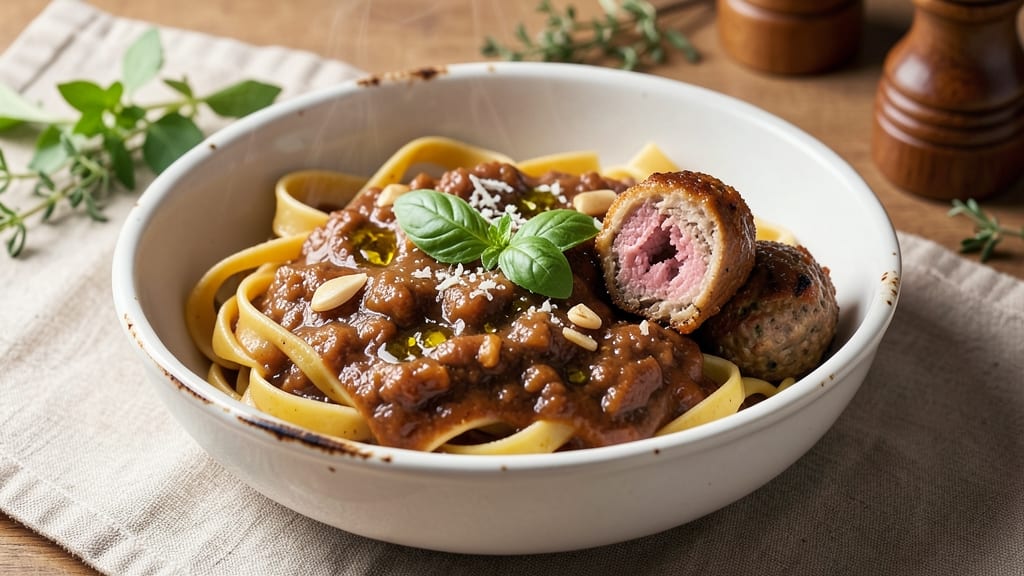
This beef and pork Bolognese sauce recipe delivers the kind of slow-simmered umami depth that transforms ordinary meals into restaurant-worthy dishes. 🔥 The secret lies in properly browning both meats—beef for structure, pork for richness—before combining them with caramelized onions, aromatic herbs, and a perfect balance of tomatoes, wine, and stock.
What sets this sauce apart is the two-stage cooking process: first browning the meat in batches to develop deep flavor, then simmering it low and slow for hours to create a velvety, complex sauce.
The pork adds natural fat that keeps the sauce luxuriously rich, while the beef provides hearty texture. This isn't your quick weeknight sauce—it's a labor of love that rewards patience with layers of flavor.
By the time you're done, you'll have a sauce so rich and flavorful it practically tastes like it's been simmering all day. The caramelized onions add sweetness that balances the acidity of the tomatoes, while herbs like thyme and bay leaf infuse subtle earthy notes.
This sauce keeps beautifully in the fridge for up to 5 days, letting flavors deepen with each passing day.
Perfect for elevating pasta, braised meats, or even as a standalone dish with crusty bread. The technique is straightforward once you understand the fundamentals—proper browning, precise liquid ratios, and that essential slow simmer. Let's get started on creating a sauce that will become your new signature dish.
Ingredients for beef and pork bolognese sauce
Fifteen ingredients that transform simple proteins into restaurant-worthy sauce perfection.
| Ingredient | Amount | Notes |
|---|---|---|
| Ground Beef (Chuck Roast) 🥩 | 1 ½ lb | 80% lean, finely ground |
| Ground Pork 🐖 | 1 lb | Finely ground for even texture |
| Yellow Onions 🧅 | 2 whole | Thinly sliced, caramelized |
| Garlic Cloves 🧄 | 6 cloves | Minced, fresh preferred |
| Extra-Virgin Olive Oil 🫒 | ½ cup | For browning meat and onions |
| Dry Red Wine 🍷 | 1 cup | Bold variety like Cabernet |
| Canned San Marzano Tomatoes 🍅 | 28 oz | Crushed, whole peeled |
| Beef Stock 💧 | 2 cups | Homemade or high-quality |
| Tomato Paste 🍅 | 2 tbsp | Smooth, no sugar added |
| Fresh Thyme Leaves 🌿 | ¼ cup | Or 1 tbsp dried thyme |
| Fresh Rosemary 🌿 | ½ tsp | Chopped, finely |
| Bay Leaves 🌿 | 2 whole | Removed before serving |
| Diamond Crystal Kosher Salt 🧂 | 1 ½ tsp | Adjust to taste |
| Freshly Ground Black Pepper 🌶️ | ½ tsp | Freshly cracked preferred |
| Granulated Sugar 🍚 | 1 tsp | Balances acidity |
The meats are non-negotiable here—chuck roast for beef gives you that signature texture, while pork adds fat for richness. Trader Joe’s and Whole Foods carry finely ground options that brown beautifully. Look for bright red, well-marbled meat at the butcher counter if you're buying whole cuts to grind yourself. The onions? Yellow onions caramelize best, but red or white work too—just expect slightly different flavors. Fresh thyme and rosemary from the grocery store's produce section (not the dried aisle) pack the most aroma, but dried works in a pinch at one-third the amount.
No red wine? Dry white wine or extra beef stock works, though the flavor will differ slightly. The tomato paste can be swapped for tomato sauce if needed, but it's worth the extra minute to open a can of San Marzano tomatoes—their sweetness is unmatched. Penzeys or McCormick dried herbs are solid if you don't have fresh, but nothing beats the real thing. The sugar might seem odd, but it's essential to balance the acidity of the tomatoes and wine. If you're watching sugar intake, reduce to ½ teaspoon and add a pinch more salt instead.
This sauce tastes even better the next day as flavors meld. Store in an airtight container in the fridge for up to 5 days, or freeze portions for 3 months. I like to portion it into 1-cup containers for easy reheating—just thaw overnight in the fridge and warm gently on the stove. For best results, bring it to a simmer before serving, as it thickens as it cools. The bay leaves can be removed early if you're impatient, but leaving them in for the full simmer adds depth to the flavor profile.
Why You'll Love This Recipe
- One-Pan Magic: I swear by this—just brown the beef and pork together, toss in the onions and garlic, and let it simmer. No chopping boards, no extra pots, just one pan that does all the work while you sip wine (or coffee, no judgment).
- Rich Without Fuss: That combo of chuck roast and pork? Deep, meaty flavor with zero effort. The onions caramelize right in the sauce, and the garlic? Oh, it’s there—like a warm hug for your taste buds, but better because it’s edible.
- Leftovers That Beg: This sauce tastes even richer the next day. I make a double batch on Sundays, freeze half, and pull it out for lazy nights when I just want something hearty. (Spoiler: my kids argue over who gets seconds.)
- Budget Stretch: Ground beef and pork are affordable, and this recipe stretches far. Honestly, I’ve fed six people for under $15 with this—plus, the leftovers turn into next-day sandwiches or pasta. Smart, tasty, and guilt-free.
Step-by-step instructions for beef and pork Bolognese sauce
Here's how to craft a rich, slow-simmered Bolognese with layers of caramelized onions and deep umami flavor.
🔥 Step 1: Brown the Meat for Maximum Flavor
Heat a large Dutch oven over medium-high heat and add the 0.5 cup extra-virgin olive oil. Working in batches if needed, add the 1.5 lb ground beef (chuck roast) and 1 lb ground pork. Break it up with a wooden spoon, letting the meat brown deeply for 8-10 minutes until it loses its raw color and develops a rich crust.
Here's the thing—don't rush this step. You want the meat to release its natural juices and develop that deep, meaty flavor that forms the foundation of your sauce. If the pan gets too crowded, reduce heat slightly to prevent burning. Once fully browned, transfer the meat to a plate using a slotted spoon, leaving all the rendered fat behind—this is liquid gold for your sauce.
🍳 Step 2: Caramelize the Onions and Garlic
In the same Dutch oven, reduce heat to medium-low and add the 2 whole yellow onions, sliced thinly. Cook them undisturbed for 10 minutes, stirring occasionally, until they turn golden brown and sweet. This caramelization is what gives traditional Bolognese its signature depth of flavor.
After the onions are deeply caramelized, add the 6 cloves minced garlic and cook for another 1-2 minutes until fragrant. Be careful not to let the garlic burn—it should smell sweet and nutty, not bitter. Here's where it gets fun: sprinkle in the 2 tbsp tomato paste and stir vigorously to coat the onions completely. Cook for 1 minute to develop its rich, concentrated flavor.
🍷 Step 3: Deglaze and Simmer with Wine and Tomatoes
Pour in the 1 cup dry red wine and scrape up all those delicious browned bits from the bottom of the pan with a wooden spoon. Let the wine simmer for 3-4 minutes until it reduces by half and the alcohol cooks off. This step is crucial—it removes the harshness of the wine and builds complexity in your sauce.
Add the 28 oz canned San Marzano tomatoes (crushed or whole peeled), breaking them up with your spoon. Stir in the 2 cups beef stock, 0.25 cup fresh thyme leaves, 0.5 tsp chopped fresh rosemary, 2 whole bay leaves, 1.5 tsp kosher salt, 0.5 tsp freshly ground black pepper, and 1 tsp granulated sugar. Return the browned meat to the pot and bring everything to a gentle simmer.
⏰ Step 4: Slow-Simmer for Deep Flavor Development
Here's where patience pays off. Cover the Dutch oven and transfer it to a 300°F oven (or keep it on the stovetop at a very low simmer). Let the Bolognese cook for 2.5-3 hours, stirring occasionally, until the sauce has thickened and the flavors have melded together beautifully. You're looking for a sauce that coats the back of a spoon and has that rich, velvety consistency.
I know it seems like forever, but this slow cooking process is what transforms simple ingredients into something extraordinary. The meat should be tender, falling apart easily when stirred. If the sauce gets too thick before it's fully cooked, simply add a splash of water or stock to loosen it. The sugar balances the acidity of the tomatoes, while the herbs infuse their aromatic qualities into every spoonful.
🍽️ Step 5: Finish and Serve with Perfect Texture
Once your Bolognese reaches that perfect consistency, remove the bay leaves and adjust the seasoning if needed. For the final touch, I like to stir in an extra tablespoon of tomato paste to deepen the color and intensify the flavor. Let the sauce sit off the heat for 10 minutes to thicken slightly more and allow all the flavors to come together.
Serve your Bolognese over al dente pasta (like tagliatelle or pappardelle), topped with freshly grated Parmesan cheese and a sprinkle of fresh parsley. Each bite should deliver layers of rich, meaty flavor, sweet caramelized onions, and the bright acidity of the tomatoes—all perfectly balanced. This sauce tastes even better the next day, so make extra if you can—it's worth every minute of slow cooking.
Pro Tips For Making Beef And Pork Bolognese Sauce
- CRACK THE MEAT FIRST: I learned this the hard way—sweating the onions and garlic before adding the raw meat ruins the sauce’s depth. Brown the beef and pork in batches at high heat until deeply caramelized (5-7 minutes per batch), then set aside. That crust packs serious flavor and prevents a greasy, pale sauce.
- MINCE THAT GARLIC: Whole garlic cloves in bolognese? Nope. Smash or finely mince them (or use a garlic press) so they dissolve into the sauce instead of sitting as bitter chunks. I used to skip this, and the texture always felt off—like someone dropped a coin in the pot.
- SALT THE MEAT BEFORE SEASONING: Season the ground beef and pork with 1 teaspoon of salt per pound before browning. This guarantees the meat absorbs flavor from the start, not just after it’s already cooked. (Yes, even if you’re impatient like me—just let it sit 5 minutes while you prep the onions.)
- DEGLAZE WITH WINE, NOT WATER: After browning the meat, splash in ½ cup of dry red wine (or broth) and scrape every last bit of crust from the pan. Water works, but wine adds complexity that turns a good sauce into a great one. I skip this when lazy, and the dish is noticeably better when I don’t.
Essential equipment for this dish
Dutch Oven Essentials
A heavy-duty Dutch oven is my non-negotiable tool for Bolognese—specifically, a Lodge 5.5-quart cast iron or All-Clad Stainless Steel. The cast iron retains heat beautifully and develops a natural nonstick patina over time, while the All-Clad offers lighter weight and easier handling.
Both handle the 3-hour simmer without hot spots, and their tight lids keep moisture trapped for even cooking. I've made hundreds of batches in my Lodge, and it's still going strong after years of abuse. 🔥
Meat Thermometer
While Bolognese doesn't require checking internal temps like roasts, a meat thermometer helps verify the sauce's doneness. I use a ThermoWorks Smoke with a probe to monitor the sauce's temperature—aim for 195-200°F before removing it from heat.
This ensures the meat is tender and the sauce has fully reduced. For those without a fancy thermometer, simply test the meat's texture with a fork—it should easily shred when stirred.
Wooden Spoons
Never use metal utensils when stirring Bolognese—wooden spoons are essential to prevent scraping up the fond (browned bits) too aggressively. I keep a 12-inch hickory spoon in my Dutch oven at all times.
The wood gently stirs without damaging the pot's seasoning, and its long handle makes it easier to reach into deep pans. For extra durability, I occasionally oil the wood with mineral oil to prevent cracking.
Fine-Mesh Strainer
A fine-mesh strainer becomes handy if you prefer a smoother sauce without visible meat chunks. I use a OXO Good Grips for its sturdy build and easy grip. Simply strain the finished Bolognese through it before serving—this works especially well for sauces destined for lasagna layers or polenta toppings.
If you prefer texture, skip this step entirely; the meat adds wonderful depth to each bite.
Kitchen Timer
With Bolognese requiring 2.5-3 hours of simmering, a kitchen timer prevents overcooking or burning. I set a timer for 2 hours first, then check the sauce's consistency before deciding if it needs more time. A digital timer with large display (like the Taylor Precision) is ideal for busy kitchens.
Pro tip: Set a second timer for 10 minutes before the end to remind you to remove the bay leaves—easy to forget in the excitement!
Chef's Knife
A sharp 8-inch chef's knife is critical for chopping onions and garlic to the perfect consistency. I use a Wüsthof Classic with its Granton edge—the dimples prevent sticking while slicing. For onions, aim for paper-thin slices (about 1/16-inch thick) to ensure even caramelization.
The knife should glide through ingredients with minimal effort; dull knives crush rather than cut, leading to uneven cooking and bitter flavors. 🌟
Nutrition facts
Frequently asked questions about beef and pork Bolognese sauce
Why do you use both beef and pork in this sauce?
The combination creates a perfect balance of flavors and textures. Pork adds natural fat that keeps the sauce luxuriously rich, while beef provides hearty structure and deep umami flavor. The pork tenderizes during the long simmer, creating a velvety texture that beef alone can't match. This classic pairing is what makes traditional Italian Bolognese so irresistible.
Can I substitute ground beef with another cut?
For best results, stick with chuck roast—it's the gold standard for Bolognese due to its fat content and flavor. However, you could use ground short ribs for extra richness or ground lamb for a Mediterranean twist. Avoid lean cuts like sirloin—they won't develop the same depth of flavor during the long simmer. The pork remains essential for fat content.
What's the secret to making this sauce taste better after reheating?
The magic happens during the initial cooking process! The long 2.5-3 hour simmer at low heat develops complex flavors that only deepen when reheated. Store the sauce in an airtight container and let it cool completely before refrigerating. When reheating, warm it gently on the stove with a splash of water or stock to restore the perfect consistency. The flavors actually improve over time as the ingredients meld together.
How can I make this sauce less acidic?
If you find the tomatoes too bright, reduce the San Marzano tomatoes to 24 oz and increase the beef stock to 2.5 cups. The sugar in the recipe already helps balance acidity, but you can add an extra ½ tsp if needed. For a smoother flavor, strain the sauce through a fine-mesh strainer before serving. The caramelized onions and pork fat will naturally mellow the acidity as the sauce simmers.
Can I make this sauce in a slow cooker?
Brown the meat and onions as directed, then transfer everything to a 6-quart slow cooker. Add the remaining ingredients and cook on low for 6-7 hours or high for 4-5 hours. The texture will be slightly looser, so reduce it on the stove afterward by simmering uncovered for 15-20 minutes. The slow cooker method works well for busy days but lacks the depth of flavor from oven simmering.