
Soups & Stews
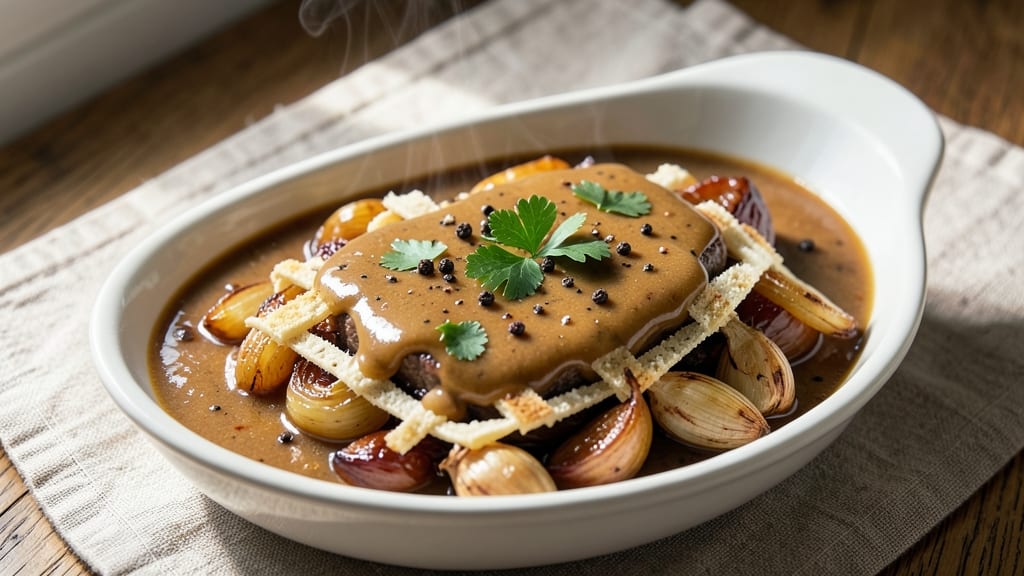
This beef base gravy recipe transforms simple pan drippings into a velvety, restaurant-worthy sauce that elevates any meal. The secret lies in a rich roux and slow reduction, creating depth that turns ordinary dishes into something extraordinary.
I developed this recipe after years of perfecting the art of deglazing—where every browned bit on your pan becomes flavor gold.
What sets this gravy apart is its deep-roasted richness, achieved through a balanced blend of beef stock, aromatics, and a proper roux. Unlike store-bought versions, this sauce builds flavor layer by layer, starting with caramelized onions and garlic before thickening with butter and flour.
The result? A smooth, glossy gravy with a perfectly thick yet silky texture that clings to every bite.
This versatile sauce works as a pan sauce for steak, a drizzle over mashed potatoes, or a finishing touch for roasted vegetables. The key is patience—letting the sauce simmer until it reaches the ideal consistency ensures it won’t be too thin or grainy.
Once mastered, you’ll never settle for anything less than homemade again.
Store leftovers in the refrigerator for up to 5 days or freeze for months, making it the ultimate make-ahead condiment. Whether you’re serving a holiday feast or a weeknight dinner, this gravy delivers unmatched depth and comfort with minimal effort. Let’s get started!
Ingredients for beef base gravy
Eight ingredients that transform ordinary drippings into velvety restaurant-quality richness.
| Ingredient | Amount | Notes |
|---|---|---|
| Yellow Onions 🧅 | 1 ½ cups | Diced, medium dice preferred |
| Garlic Cloves 🧄 | 6 cloves | Minced, fresh preferred |
| Unsalted Butter 🧈 | ¾ cup | Cold, cut into 8 pieces |
| All-Purpose Flour 🌾 | ¾ cup | Sifted, Diamond Crystal preferred |
| Beef Stock 🥩 | 4 cups | Homemade or high-quality store-bought |
| Dry Red Wine 🍷 | ½ cup | Bold Cabernet Sauvignon or Merlot |
| Fresh Thyme Leaves 🌿 | 1 ½ tbsp | Chopped, stems removed |
| Fresh Parsley 🌿 | ¼ cup | Chopped, for finishing |
| Salt 🧂 | 1 ½ tsp | Diamond Crystal kosher salt |
| Ground Black Pepper 🌶️ | ½ tsp | Freshly cracked preferred |
The onions and garlic are the flavor foundation—caramelizing them slowly unlocks their sweetness. Yellow onions work best for this recipe, but red onions add a subtle sweetness if you prefer. Whole Foods and Trader Joe's carry pre-diced onions, but I always chop mine fresh for better texture. For garlic, fresh clovesCostco's bulk garlic is a game-changer, but don't skip the mincing step. The butter should be cold when you start—this ensures proper roux formation without burning. Plugrá or Land O'Lakes unsalted work perfectly.
No red wine? Beef stock with a splash of balsamic vinegar mimics the depth. Fresh thyme is ideal, but dried thyme at one-third the amount works in a pinch. The flour matters here—Diamond Crystal kosher salt is my go-to because it dissolves completely, but Arm & Hammer works too. For a richer sauce, swap half the beef stock for chicken stock, but keep the wine for acidity. The parsley is purely for finishing—flat-leaf has more flavor than curly, but use what you've got. If you're making this ahead, let the sauce cool completely before refrigerating to prevent skin formation.
This gravy keeps beautifully—5 days in the fridge or 3 months frozen. For freezing, portion into ice cube trays first, then transfer to a bag. Reheat gently on the stove, stirring constantly until smooth. The sauce thickens as it cools, so if it's too thick after reheating, thin with a splash of warm beef stock. I always make extra—it's the perfect make-ahead sauce for holiday meals. The flavor actually improves after a day or two as the ingredients meld together.
Why You'll Love This Recipe
- Five-Ingredient Magic: I swear by this—just butter, flour, onions, garlic, and stock. That’s it. No fancy gadgets, no stress, and no measuring cups that make you question your life choices.
- Rich Without Effort: The moment that toasted flour hits the beef stock? Pure satisfaction. It’s creamy, it’s deep, and it takes zero skill—just patience while the pan does the work.
- Game for Any Meal: Drizzle it over mashed potatoes, stir it into pasta, or smother steak fries. Honestly, I’ve even used it as a soup base when I’m lazy. It’s the ultimate flavor multiplier.
- Leftovers That Don’t Suck: Unlike most gravies that turn gluey, this one reheats like a dream. Store it in the fridge for up to five days, or freeze it—perfect for when you’re too tired to cook but still want flavor.
Step-by-step instructions for beef base gravy
Master this fundamental technique for velvety, restaurant-quality gravy every time.
Develop Deep Flavor with Roasted Vegetables
Preheat your oven to 400°F and spread the 1.5 cups diced yellow onions and 6 cloves minced garlic on a rimmed baking sheet. Roast for 20-25 minutes until the onions are deeply caramelized and the garlic is golden brown—this builds complex, sweet-savory depth that no raw aromatics can match.
Here's the thing—roasting concentrates the natural sugars in the onions, creating a caramelized base that forms the flavor foundation. You'll know they're ready when they're dark golden with crisp edges. Transfer the roasted vegetables to a bowl and set aside, leaving any rendered oils in the pan for later use.
Create a Rich Roux Foundation
In a large, heavy-bottomed saucepan, melt the 0.75 cup cold unsalted butter over medium-low heat. Once fully melted, whisk in the 0.75 cup sifted all-purpose flour all at once. Cook and stir constantly for 3-4 minutes until the mixture turns a deep golden brown—this is your roux, and color equals flavor development.
This slow cooking process creates a flavorful base through the Maillard reaction. If the roux darkens too quickly, reduce the heat slightly. You're aiming for a nutty, toasty aroma that signals proper development. The roux should coat the back of a spoon and leave a distinct mark when rubbed between fingers.
Deglaze with Wine and Stock
Remove the saucepan from heat and carefully pour in the 0.5 cup dry red wine, scraping up any browned bits from the bottom of the pan with a wooden spoon. Return to medium heat and simmer for 2-3 minutes until the wine has mostly evaporated. Then gradually whisk in the 4 cups beef stock, about ½ cup at a time, allowing each addition to incorporate completely.
The wine serves two purposes: it deglazes the pan to capture all those flavorful browned bits, and its acidity helps break down the roux for a smoother sauce. As you add the stock, you'll notice the mixture will thicken slightly before thinning out—this is normal and indicates proper sauce development.
Build Depth with Aromatics and Seasoning
Return the roasted onions and garlic to the saucepan along with the 1.5 tsp salt, 0.5 tsp ground black pepper, and 1.5 tbsp chopped fresh thyme leaves. Bring to a gentle simmer and cook for 10-15 minutes until the sauce has thickened slightly and the flavors have melded together. Taste and adjust seasoning if needed—this is your opportunity to balance the flavors before finishing.
Real talk: this is where the magic happens. The roasted vegetables infuse the sauce with their concentrated flavors, while the thyme adds an earthy herbal note. The sauce should coat the back of a spoon but still be fluid enough to drizzle. If it thickens too much, whisk in a splash of warm water or stock to reach your desired consistency.
Finish and Serve with Fresh Herbs
Remove the saucepan from heat and stir in the 0.25 cup chopped fresh parsley. Let the gravy rest for 5 minutes to allow the flavors to fully integrate. Strain through a fine-mesh sieve if you prefer a completely smooth texture, or leave it slightly textured for added depth.
Serve immediately over your favorite protein or vegetables. The gravy should be rich, velvety, and deeply flavorful with notes of caramelized onions, roasted garlic, and thyme. For best results, use this gravy within 2-3 days or freeze for up to 3 months. The flavor only improves with time as the ingredients continue to meld together.
Pro Tips For Making Beef Base Gravy
- Cook Onions Slow: I learned this the hard way—drowning onions in butter at high heat just makes them bitter and watery. Instead, cook them over medium-low for 8-10 minutes until they’re soft and translucent, stirring occasionally. You want them to melt into the butter without browning, or you’ll taste regret later.
- Melt Butter Fully: This isn’t the prettiest method, but it’s the tastiest: melt the butter completely before adding onions. I used to rush this, and the flour would clump like glue. Let the butter foam and settle into a golden liquid—about 3-4 minutes on medium heat—so the flour incorporates smoothly.
- Skip the Cold Stock: Pouring cold beef stock straight into the roux is a one-way ticket to lumps. Warm the stock in a separate pot or microwave for 30 seconds—just enough to take the chill off. The roux will thank you by staying silky instead of fighting for its life.
- Whisk Like Your Gravy Depends on It: Yes, even if you’re impatient like me. Once you add the stock, whisk vigorously for the first 2 minutes to break up any flour clumps. I used to let it simmer too long before stirring, and the result was a grainy, sad paste. Keep that whisk moving until it’s smooth, then let it thicken on its own.
Flavor customization for this dish
Herb Variations
Swap the thyme for rosemary (1 tbsp) and bay leaves (2 leaves) for a classic French-inspired profile. The rosemary adds piney brightness that pairs beautifully with roasted meats.
For a Mediterranean twist, use oregano (1 tsp) and dried basil (1 tsp) instead—this works wonderfully with Italian dishes like osso buco. 🌿
Spicy Kick
Add ½ tsp smoked paprika and ¼ tsp cayenne pepper during the simmering phase for a subtle smoky heat. For more pronounced spice, stir in 1 tbsp hot sauce (like Tabasco) or ½ tsp chipotle powder at the end.
This version elevates Mexican-inspired dishes like carne asada or tacos. 🌶️
Umami Boost
Enhance depth with 1 tbsp soy sauce or 1 tsp fish sauce when adding the stock. For extra richness, stir in 1 tsp Worcestershire sauce during the final simmer. These additions create a savory complexity that pairs exceptionally with Asian-inspired proteins like beef stir-fry. 🍜
Creamy Twist
For a velvety texture, whisk in ¼ cup heavy cream or ½ cup whole milk during the last 5 minutes of cooking. This works beautifully with mashed potatoes or as a finishing sauce for roasted chicken. For a dairy-free option, use ½ cup coconut milk instead. 🥛
Acid Balance
Brighten the gravy by adding 1 tbsp balsamic vinegar or 1 tsp Dijon mustard when deglazing with wine. This cuts through the richness and adds a tangy contrast. The mustard also introduces a subtle complexity that works well with hearty winter dishes. 🍷
Smoky Depth
Infuse the gravy with smokiness by adding ½ tsp liquid smoke or simmering with 1-2 slices of bacon (removed before serving). For a BBQ-inspired version, reduce the stock by half and add 2 tbsp BBQ sauce at the end. This variation shines with pulled pork or smoked brisket. 🔥
Nutrition facts
Frequently asked questions
Can I make this gravy without wine?
Replace the ½ cup dry red wine with an equal amount of beef stock or a mix of ¼ cup beef stock + ¼ cup balsamic vinegar for acidity. The key is maintaining the same liquid volume—just omit the deglazing step if you're not using a wine-based liquid. For extra depth, add 1 tsp soy sauce when incorporating the stock.
Why did my gravy turn out lumpy?
Lumpy gravy usually means the roux wasn't cooked long enough or the flour wasn't fully incorporated. For a silky texture, cook the roux until it's a deep golden brown (3-4 minutes) and whisk vigorously when adding liquids. If lumps appear, blend the gravy briefly with an immersion blender or strain through a fine-mesh sieve. Always whisk constantly when adding stock to prevent clumping.
How do I adjust the thickness?
Gravy should coat the back of a spoon but still be pourable. If too thick, whisk in 1-2 tablespoons warm stock or water at a time until smooth. For a thicker consistency, simmer uncovered for 5-10 minutes to reduce. The sauce will naturally thicken as it cools, so adjust while still warm. Pro tip: Always reheat gently to avoid separation.
Can I use this gravy as a pan sauce for chicken?
While this recipe is designed for beef-based dishes, it works beautifully with chicken! The rich, savory profile complements poultry perfectly. For extra harmony, add ½ tsp poultry seasoning or ¼ tsp smoked paprika during the final simmer. The wine and thyme create a balanced flavor that won't overpower lighter meats. Just reduce the cooking time slightly when using with chicken.
How long can I store homemade gravy?
Refrigerate for up to 5 days in an airtight container. For long-term storage, freeze in 2-tablespoon portions (using ice cube trays) for up to 3 months. Thaw overnight in the fridge and reheat gently on the stove, stirring constantly. The flavor actually improves with time—this makes it perfect for meal prep! Always reheat to a rolling boil before serving.